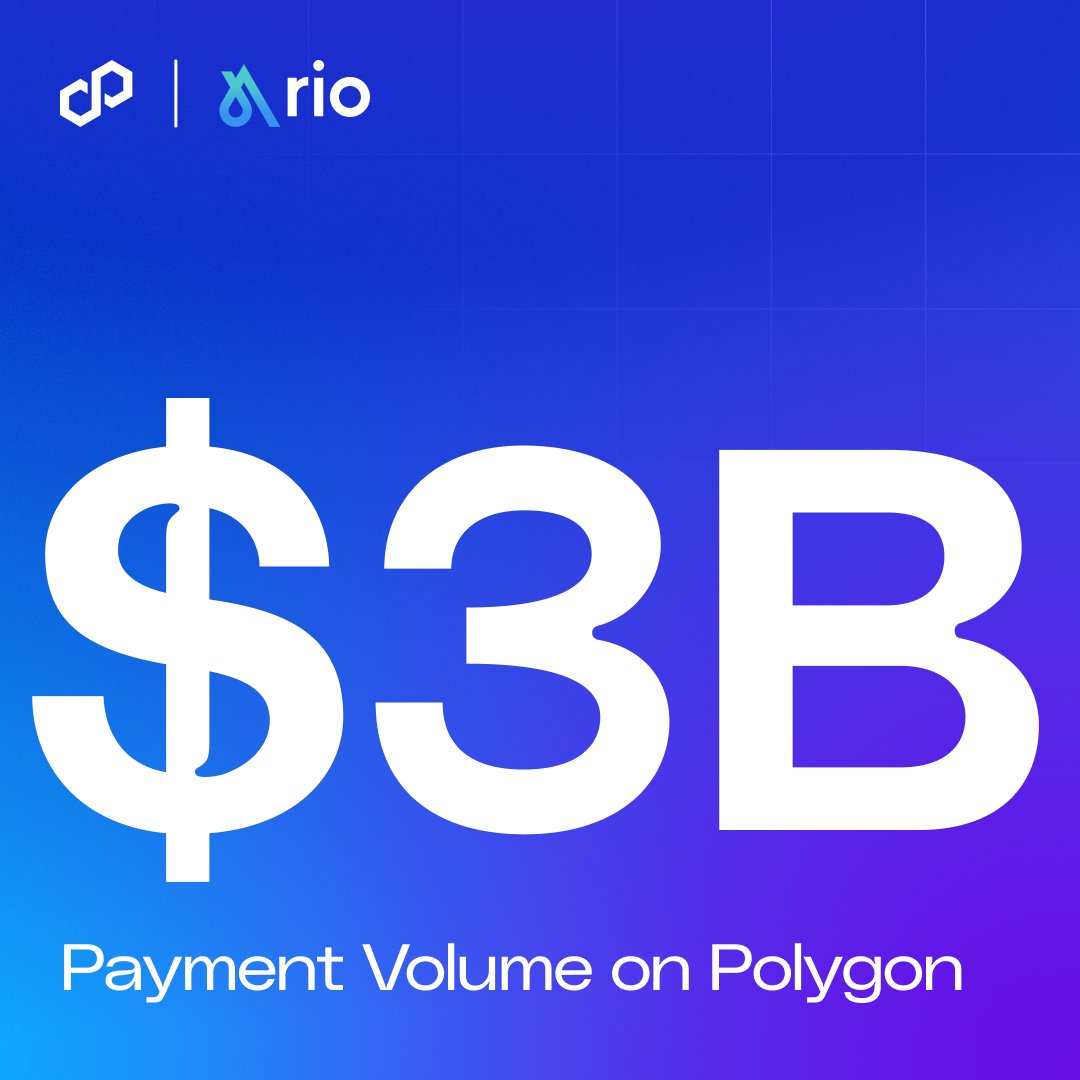
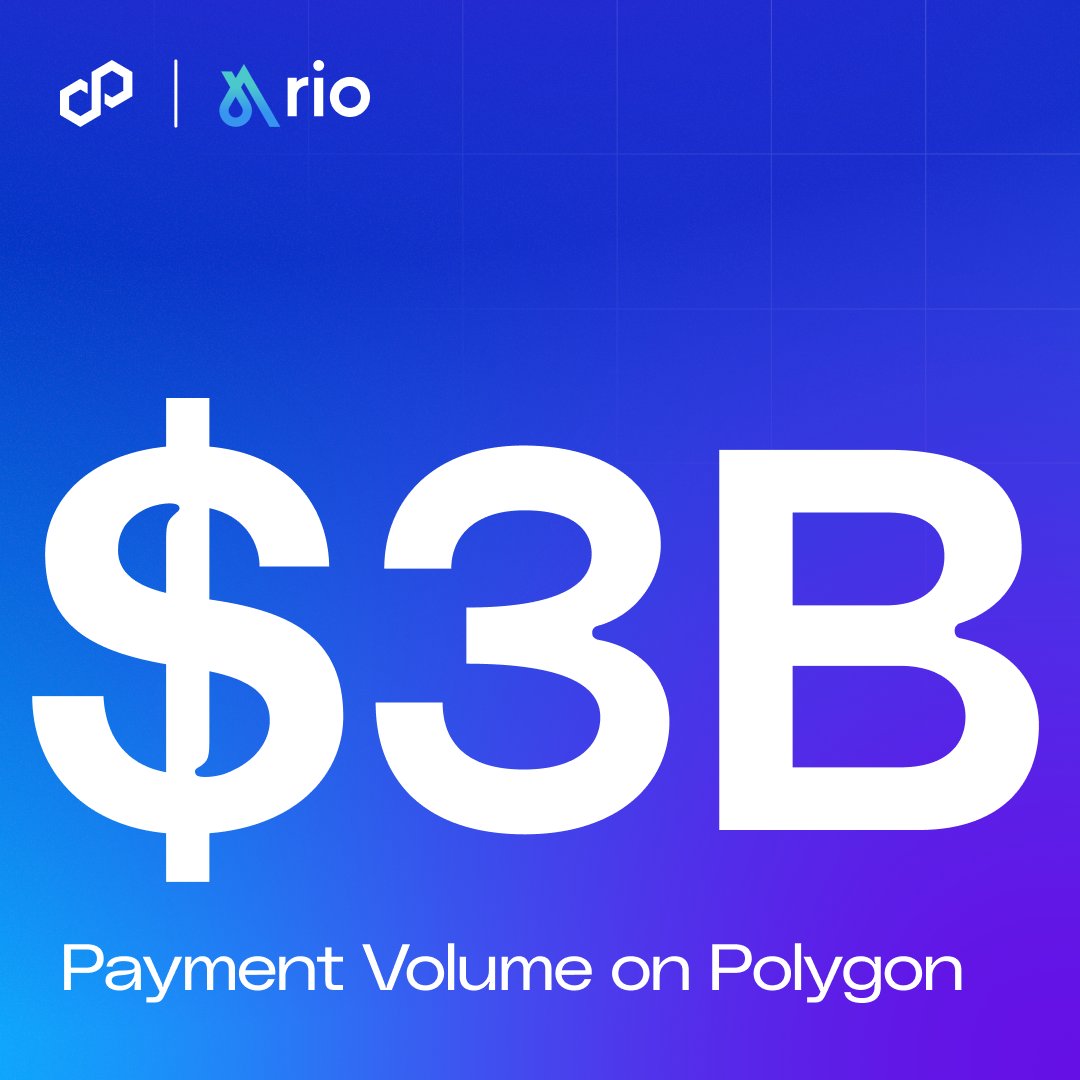
$3B in stablecoin FX on @0xPolygon this year.
The dollar leg is solved. We built the local currency leg.
None of it happens without the partnerships behind it.
3 BILLION dollars in stablecoin FX volume, HUGE from the @rio_latam team congrats guys!
And no wonder really. @0xPolygon has been sitting at close to half of LATAM active stablecoin wallets across every chain for months now. the region picked its rails a long time back 💪
Rio (@rio_latam) is one of the fastest-growing companies in payments, and not only within LATAM.
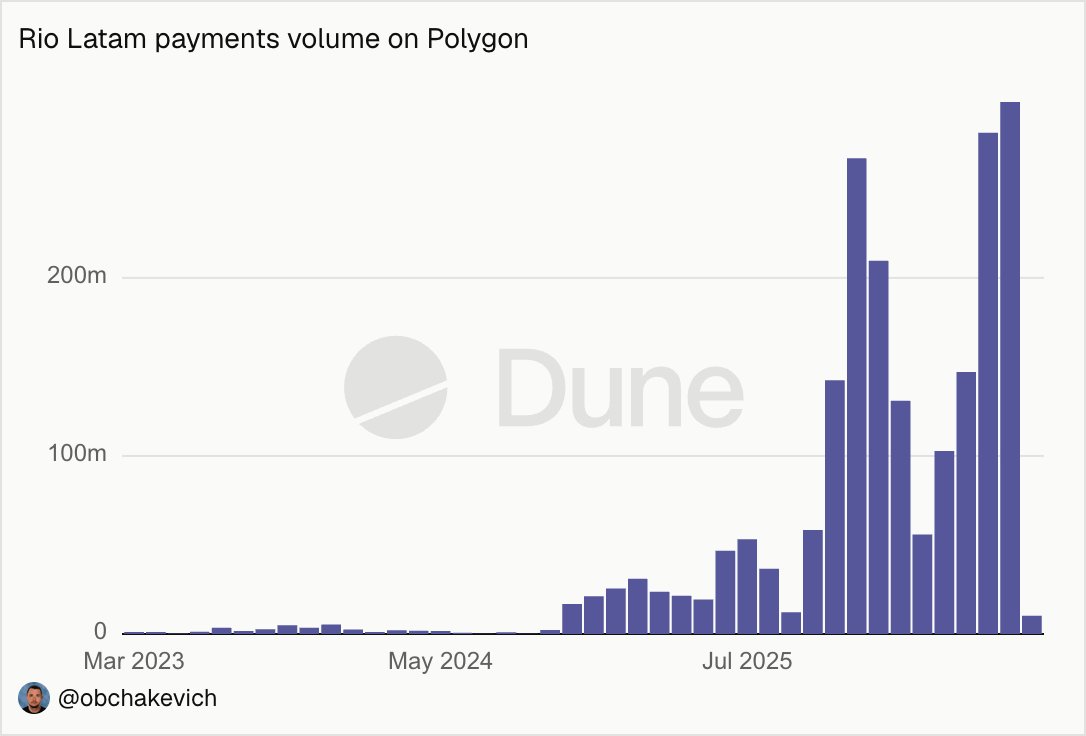
In July, Rio processed approximately $300M in payments on Polygon, bringing its three-month volume to $726M
Rio serves as the FX layer for fintechs, payment companies, and exchanges moving money in and out of LATAM.
The interesting part isn’t the $3B. It’s that most of it moved in minutes, in local currency, at a cost that only works because it settles on @0xPolygon.
Grateful to the Polygon team for our partnership.
Here’s to the next $10B 🚀🤝
Rio processed over $200M in volume on Polygon in January 2026.
@rio_latam is building a deep FX layer for stablecoins/fiat, providing liquidity and regulatory compliance. Founded in 2022 with support from @ycombinator. Focus on institutional solutions for the Latam region.
Rio is now available to track on the Polygon payments dashboard -https://t.co/vcpuQui4yn
The market is on average 1.5th order thinking. It oscillates between 1st order thinking (naive/simplistic cause and effect) and 2nd order thinking. Where we are on the spectrum depends on the composition of active trader base. Right now, we have a lot of active retail investors, so we are much closer to 1st order thinking.
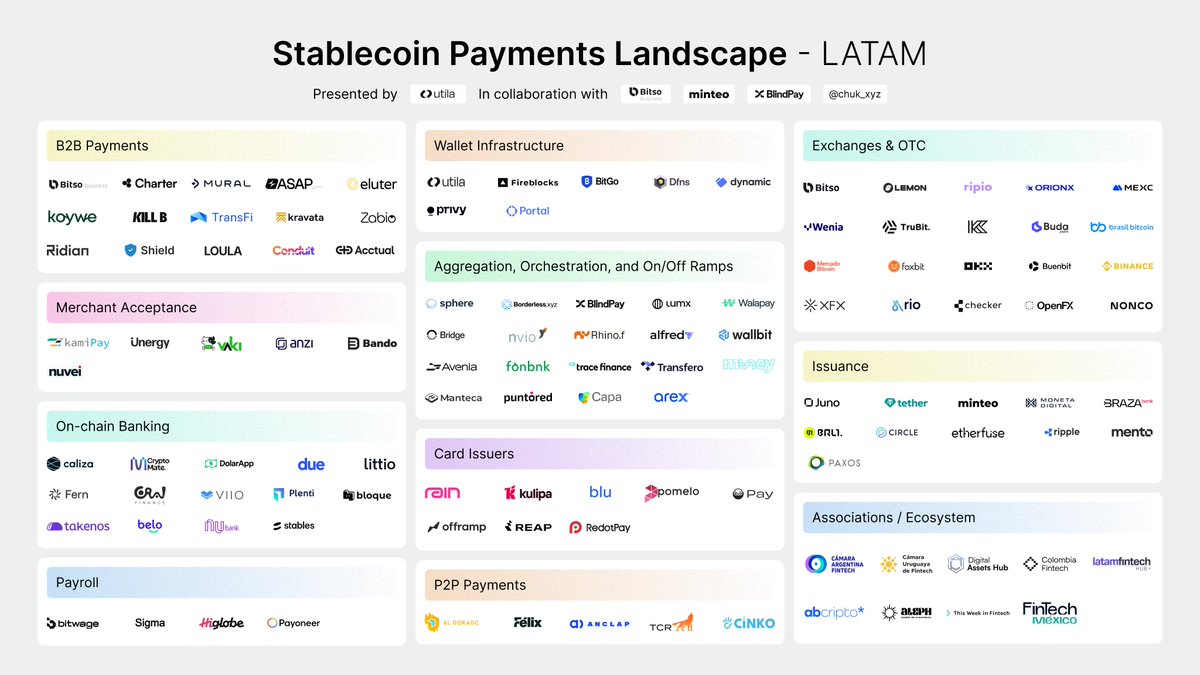
The LatAm Stablecoin Payments Landscape ⬇️
Here are the wallets, stablecoins, exchanges, on/off ramps, and infra players building across LATAM.
----
Latin America is emerging as a global leader in stablecoin adoption, with the highest % of stablecoin volume to GDP of any region worldwide (IMF 2025).
What began as a hedge against inflation has evolved into real financial infrastructure. Stablecoins now power everything from remittances and dollar accounts to remote worker payouts and B2B transactions.
To help make sense of this fast-evolving space, we mapped the wallets, stablecoins, exchanges, on/off ramps, and infra players building across LATAM.
Why?
Because behind every headline is a network of teams doing the hard work — and this map helps surface new partners, vendors, and opportunities.
This is just v1. A deeper country-by-country analysis and v2 of the map are on the way.
Want to learn more? Join us in Mexico City for Stablecoin Conference 2025, Latin America’s first major event dedicated to stablecoins — created by Bitso Business.
🗒️ If we missed a company, let us know in the comments.
You’ll also find a link to the full spreadsheet version there.
Special thanks to @jrossvazquez at @utila_io, who was instrumental in driving this initiative from day one, and the broader @utila_io team (@bentzzi, Josh, Ron, Surya), along with @Bitso (@reidbenj, Ingrid), @minteocom (@Will_Dre_Duran, Sarah), and @blindpay (@bebedaselva) for their support and collaboration.
You haven't heard from us in a while. That's because for the past three years, we've been heads-down, building.
We believe the future of finance in Latin America will be built on open, efficient, and accessible rails. For this future to become a reality, a fundamental piece of infrastructure is needed: a deep and reliable FX layer.
At Rio, our mission is to be that layer.
For three years, our team has been dedicated to building the premier institutional platform for stablecoin/fiat FX in the region. We are solving the hard problems—navigating complex regulations, building sophisticated trading technology, and providing deep liquidity pools—so our clients can innovate and grow without friction.
From our start in 2022 with backing from @ycombinator and @Soma_Capital, we've established a presence across key LATAM markets and are building the tools that will power the next generation of money movement.
This is more than just a platform; it's the foundation for a more connected financial future in LATAM. Join us on our mission 🌎
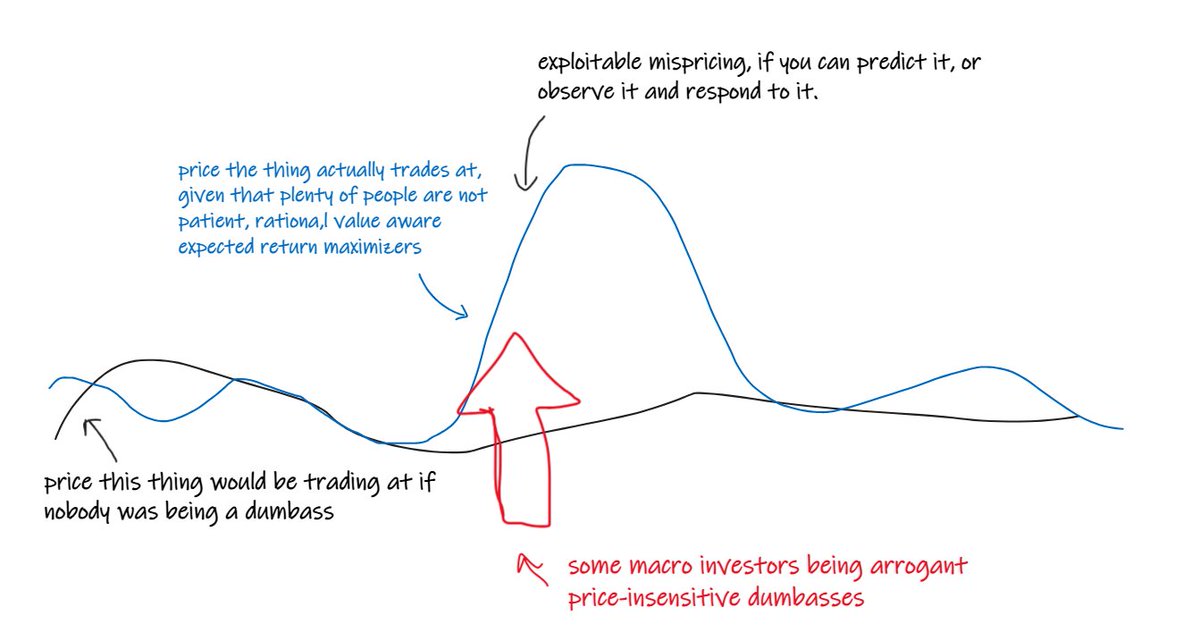
nearly everything that is a good repeatable trading idea looks like:
"under <some circumstances> this thing is likely to be too cheap/rich because <some people> are being forced or greedy or stupid... so the thing is more likely to go up/down in the future"
This is probably the best description I've seen of the negotiation dynamics between Trump and China.
The man speaking is the legendary George Yeo, former Foreign Minister of Singapore, and imho one of the wisest statesmen in Asia.
As Yeo describes it, Trump is the one who needs a deal with China - not the other way around. Otherwise inflation will rise, deficit reduction becomes impossible, and interest rates will be affected - all damaging Trump's pro-business agenda.
Meanwhile China is playing from a position of strength and have no pressure to accept something they don't like.
In fact, from his meetings with ordinary Chinese, Yeo describes the mood in China as "defiant" where "don't buckle, don't kneel" is the prevailing attitude. All the Chinese businesses in Yiwu (China's largest export marketplace) that Yeo met with weren't concerned about America as a key market, confident they can sell to other parts of the world.
Interestingly, Yeo thinks that Nvidia's Jensen Huang played the role of a backchannel messenger between Trump and Chinese leadership because it's right after his trip to Beijing that Bessent announced that tariffs were not sustainable and that Trump said they were talking to the Chinese.
Another key point Yeo notes, and which speaks volumes about US credibility in Asia nowadays, is that while a US-China agreement may emerge, everyone knows that it'll only be temporary - "good for another one, two, three years, and that's it" - until the US changes its mind again. Yeo says that's the key reason why there is no hope that the Americans can drive a wedge between Russia and China, because the US's word doesn't count for much.
@KobeissiLetter No tariffs on semiconductors, smartphones and computers is counterproductive. If the US wants to build the economy of the future, they’ll have to apply tariffs on those items sooner rather than later.
“America would be better off if more people worked in manufacturing.”
• 80% of Americans agree
• 20% disagree
“I would be better off if I worked in a factory.”
• 25% of Americans agree
• 73% disagree
• 2% currently work in a factory
👉🏻 https://t.co/fq1rItVKC2
@TKLSubscribers Also, couldn’t resist putting a small allocation in a call option on $QQQ at close.. in case there’s a positive development in trade negotiations 🙃
@KobeissiLetter Trade war is starting, tariff impact incoming, earnings will be subpar. S&P could will slide another 5-10% in the next couple of weeks. Do we get another bounce to short again? Or just hold current short. I've got a $SPY put @$550.. traded before tariffs were announced last week.
@bridge__harris@0xaddi such a deposit protection, access to financial markets, cards, loans, etc. If yield-bearing stablecoins offer better yield, it could pressure banks to increase yield. 2/2