Please help me ID this tree! A thread - please share widely!
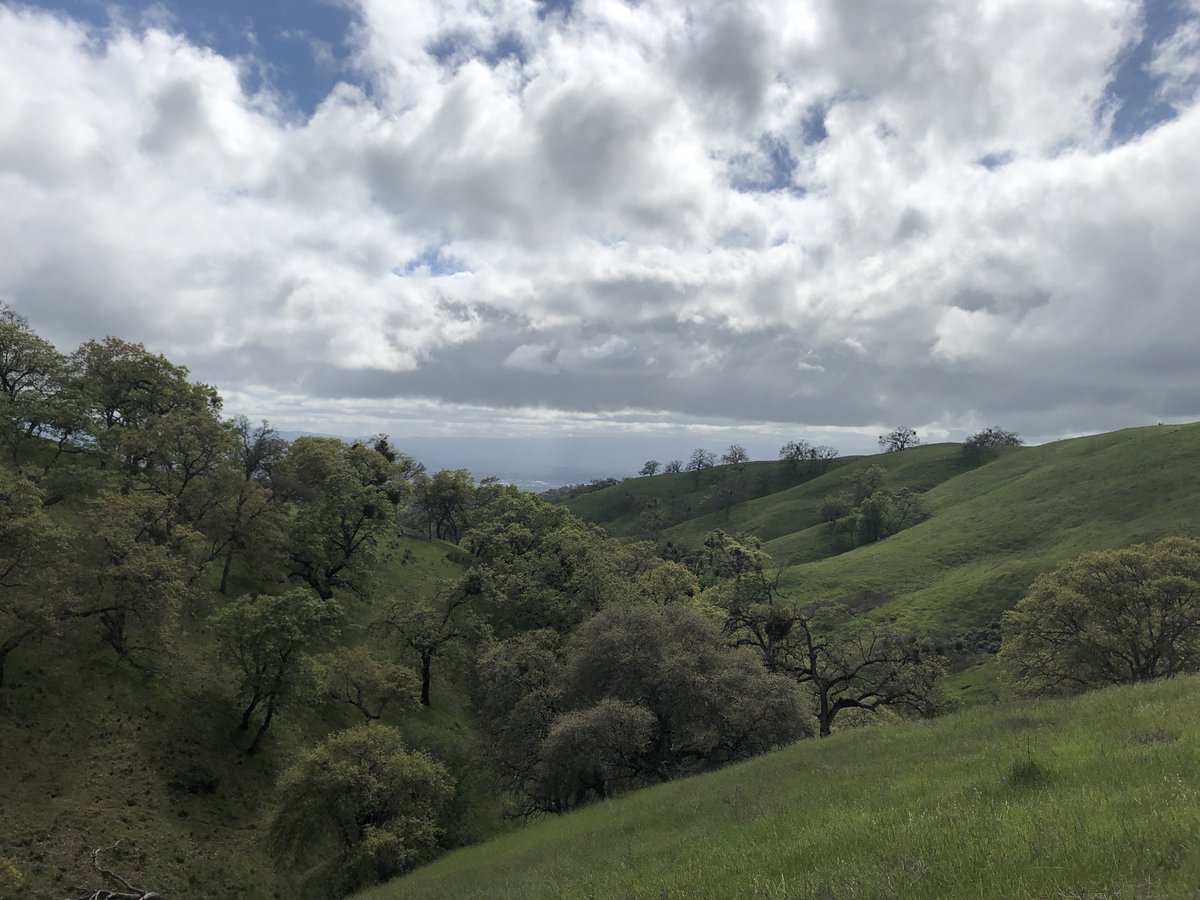
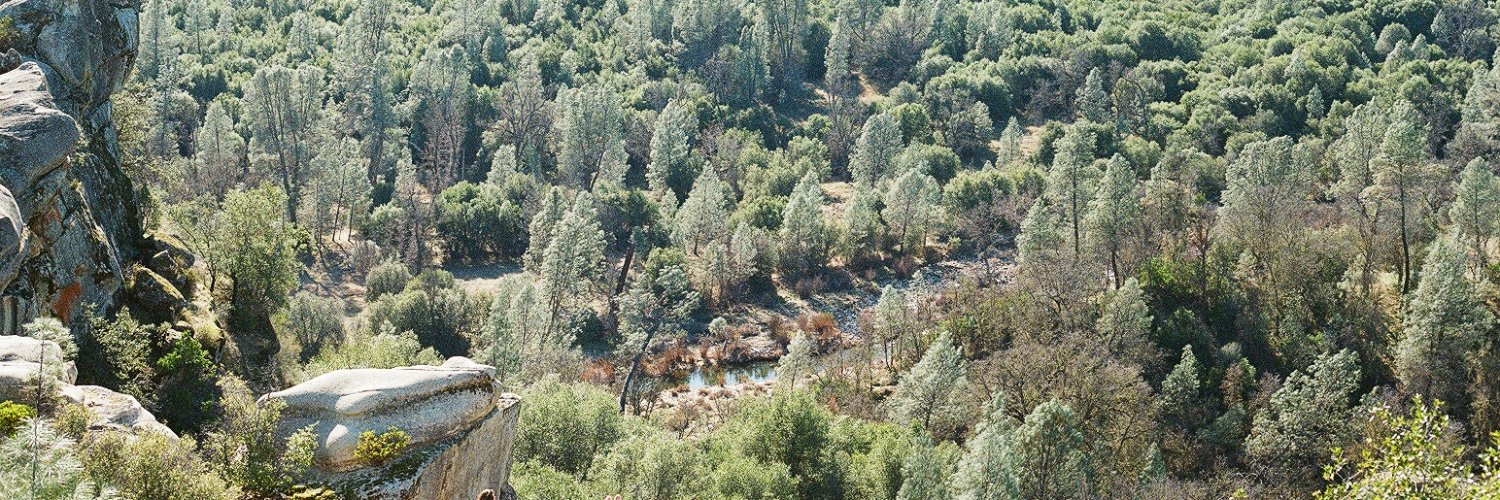
In central coast CA and the location is comprised of blue oaks (Q. douglasii) and black oak (Q. kelloggii). The first 2 comments will be a leaf and bark of known blue and black oaks. The 3rd is the oak in question!
NEW PAPER ALERT: https://t.co/Qez6vkRb2d
Are differences in vegetation and microclimate between aspects (north- versus south-facing) reflected in the physical structure (e.g. slope, soil, saprolite thickness)?
@paigeinabook94 @thats_me_del_p Hmm, maybe I'm just not following entirely. Wouldn't you'd be able to interpolate between points either way? I guess my question is that in the equation Q=a(h-c)^b, discharge is the dependent variable & h is the independent variable. But then we tend to plot it the opposite way?
Hydro question: Why are stage-discharge graphs often drawn with the Q on the x-axis and stage on the y-axis. But the standard power law equation is Q=a(h-c)^b, in the form of y = a(x-c)^b. So Q is where we'd expect y, and stage is where we'd expect x? (Ex: USGS site)
@BefusHydro@PilgrimsPlaces Thanks for thoughts! Yeah, this is what I assumed- height goes up and down. But it sure makes the math non-intuitive when you step back out to apply the relationship to a continuous stage record
@margaret_zimmer @burginam@ecseybold@FloodHydrology @ZipperSam @AmandaEcoHydro 🫠! Lots of small slow moving pools and too shallow or not at surface for sufficient reach. + flush of material during flashy peaks = rapid changes to channel cross-section. Hard to be prepped with right salt mass too- v easy to add too much and not return to background
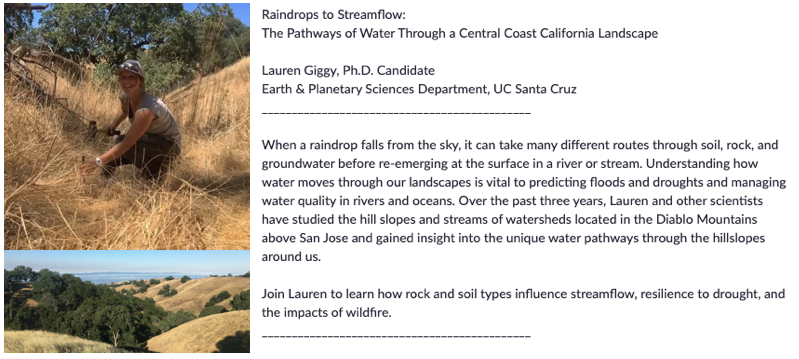
This is with the @SeymourCenter (thanks for the opp!) and is my 1st talk aimed at a non-ac, public audience. I will totally get into some specific research results but hopefully teens and adults with all backgrounds can join and learn! Thanks for the support @AmandaEcoHydro
My amazing lab mate @lgiggy is presenting her research that investigates the physical and hydroclimatic controls on streamflow generation! INFO: https://t.co/WSdCru6iLd
🚨 Publication alert 🚨 our latest work on the use of wavelet analysis and information theory to understand the subsurface hydrologic and biochemical processes of a #saltmarsh is now out in #hydrologicalprocesses https://t.co/6xaYwxPwsR
What drives surface water activation & persistence in central coastal CA? @margaret_zimmer: subsurface structure matters for how streamflow responds to precip - it’s not as straightforward as it seems!
More dry river talks in River Overlook E!
#JASM22#JASM2022
@DavidGLitwin I've seen some stream names on All Trails and Gaia GPS that I couldn't find elsewhere. Never looked into where they pull those layers files from but could be a place to start
@rmazor Can’t offer much advice but experience losing equip including STICs in wildfire. Maybe not applicable but I’m able to pull them during peak wildfire season, so I do now. In-steam risk likely varies with amount of water + near by fuel. Narrow dry stream was not safe for ours.
pls Share! With the semester approaching, I wanted to re-share my R programming for hydrology bookdown. How to use and topics below.
It's designed to be used as a self-learning tool OR a ready-to-go resource for teaching.
https://t.co/SgDZzsYqpk
#rstats#hydrology#teaching
Taking notes from this sample campaign. And by notes, I mean everyone's emails cause we will (hopefully) have lots of late-night stream sampling and filtering to do this winter.
Seriously though, what a great crew! Just 3 of many pictured here, so nice to have so many hands
@EcoEvoLab The only time that's felt like no outside resources is in emergency first aid. "I don't know" is not a great spot to be in. For interviews or meetings, I at least usually have a chance to refresh on the specific relevant concepts beforehand or can get back to them on it.
A bit ironic that I started off applying to grad schools with a wildfire hydrology project in mind 2ish yrs ago... Didn’t exactly outline it like this. Feeling confident we’ll make the best of it and grateful for a supportive community in Santa Cruz and collaborators out at BORR
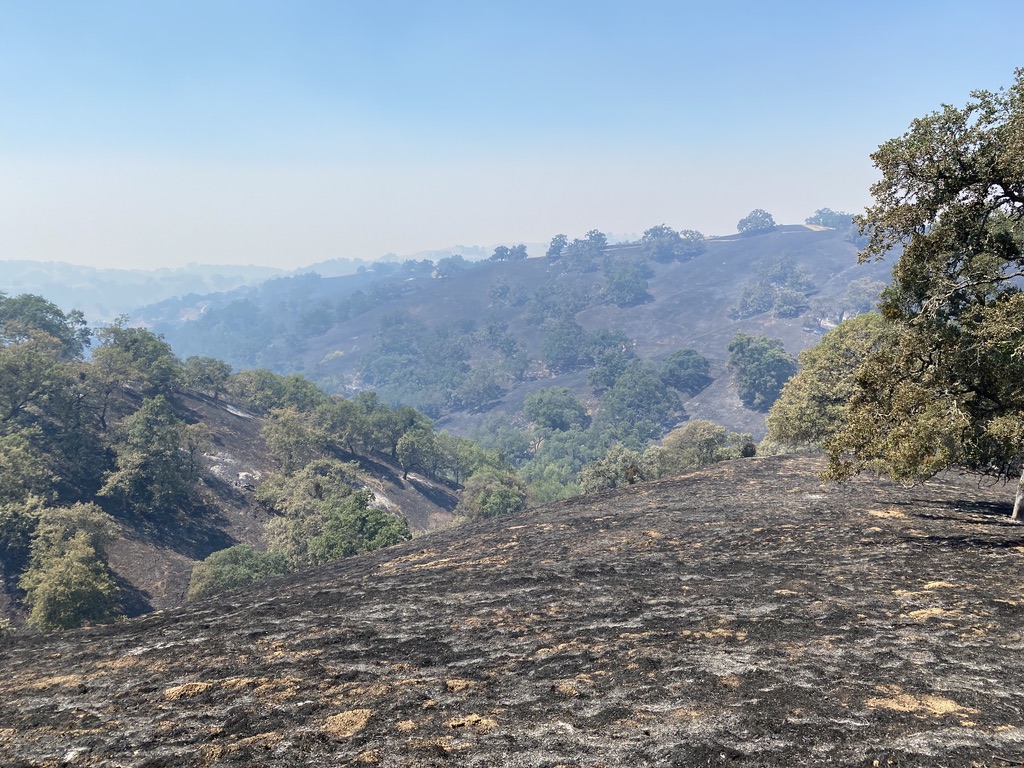
Blue Oak Ranch Reserve was partially burned by the SCU complex fire. Few words describe the deep connection myself and the Zimmer Watershed Lab have to this place.
Despite disturbance, the trees remain resilient and we will too.