Why a diplomatic normalization and a government agreement between Israel and Lebanon could mark the end of Christians’ political role in Lebanon ?
Over the past few weeks, many 🇱🇧✝️ accounts on X have been openly cheering the prospect of normalization between the Israeli and Lebanese governments. The potential (economic) upside is clear:
🔷A more stable domestic environment for investment
🔷The lifting of certain US sanctions
🔷Renewed inflows from the IMF, Gulf & donors.
If these outcomes will indeed benefit Christians, it remains hypothetical to assume that such benefits would disproportionately favor the Christian community, or that they would ultimately trigger a large-scale return of the diaspora. It is even more speculative to believe that, if Christians vocally position themselves as the main advocates of normalization, the US would reward them over the long term and guarantee their political backing (especially given that a new US administration will take office in 2 years).
By contrast, the risks for Christians are clear and mechanical. The military situation on the ground has shown that it is unrealistic to expect a complete military defeat of Hezbollah that would permanently erase its capacity to disrupt 🇮🇱 for decades to come.
🇮🇱’s interest is therefore either to encourage a new civil war, hoping that the Lebanese population turns against itself and weaken Hezb, or to increase pressure in order to secure an agreement with the Lebanese government.
In the latter scenario, Hezbollah would retain implicit leverage in the negotiations with the State: it would only ultimately renounce to its weapons (and give guarantees on it) in exchange for a stronger presence within State and a further increase in its political and institutional weight.
The concessions required by the negotiations (already hinted at by Tom Barrack, who allegedly suggested transferring one of the Maronite-held posts to the Shia community in exchange for disarmament, or by MFA Kushner during the France-backed 2007 negotiations) would likely imply a major step in the implementation of the Taif Agreement and higher Shia representativity:
🔷This could formally include at least a new electoral law with stronger Shia/Muslim representation, potentially the end of the 50/50 sectarian split in the National Assembly, and more hypothetically Shia claims over strategic positions (Army, BDL).
🔷Lebanon is too small to negotiate on its own. The US, have an interest in involving other regional powers, especially KSA. As KSA views Lebanon as one of its regional cards, it will inevitably seek to have a say in the negotiations. This is also why Berri has recently moved in that direction.
🔷KSA participation would also be considérée as key to secure wide Sunni adherence to the deal, given the Sunni community’s servility towards KSA.
🇸🇦 KSA will likely push for concrete implementation of Taif, as it has already recommended recently, while positioning itself as the guarantor of Sunni rights in any deal
As a result, while a G-to-G agreement may bring some economic benefits to Christians, its long-term implications would be a reduction in Christian institutional weight. This would come on top of their declining demographic weight, while Christians have few cards to play in the balance of power, being too divided and isolated. The presence of a few pseudi-Maronite figurants in the Trump administration will not change this cold reality.
Btw, our already visible alignment with the Israeli cause makes us appear politically acquired and therefore increasingly irrelevant in the equation.
@heraldgardner@tegnererik Pas du tout, ils ne le soutiennent pas tu ne représentes personne, et tout le monde au Liban se fout d'un journaliste 3/4 gay et servile de tous les lobbys puissants du pays
This law was tailored specifically for you because you turned 19 years old and started selling your feet and tits on the timeline in exchange for USBC chargers and vapes in your wishlist
God knows what you could be capable of, if you were able to give your citizenship, thot
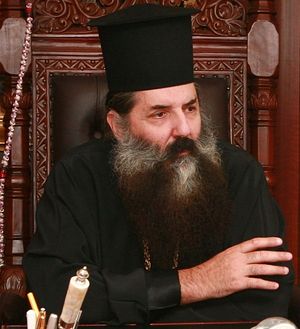
« Nous ressentons de la sympathie pour les Juifs comme pour toutes les autres personnes. Le peuple juif nous a donné les justes et les patriarches de l'Ancien Testament, les apôtres, les premiers chrétiens, la Theotokos et le Seigneur... Mais en tant qu'orthodoxes, nous sommes anti-sionistes. C'est-à-dire que nous sommes contre le sionisme international, qui a transformé la religion de l'Ancien Testament en culte de Satan... L'Église orthodoxe est contre le sionisme impérial, aspirant à la domination mondiale. »
Métropolite Seraphim du Pirée
https://t.co/lRWpiS3fki
Très caricatural il faut faire ses révisions: (i) les chrétiens ne sont pas une ethnie distincte au Liban, (ii ) ils n’ont jamais été nettement majoritaires donc ont tjrs du composer avec tout le monde, (iii) la lâcheté de l’occident a fait que les chrétiens n’ont pas gardé le pouvoir. Et oui les chrétiens ont participé au bradage de leur pays, c’est vrai
@fredbeltran604 Ta servilité ne nous amènera nul part autre que dans les poubelles de l’histoire, sache-le. Les israéliens te considèrent comme un sous homme et pourront au meilleur des cas t’utiliser comme pion dans leur jeu d’échec régional avant de te jeter à la poubelle.
@Maronidd@Tinderella1421 Btw, did you really think Trump was going to save us and somehow miraculously bring Christians back into power in Lebanon? You’re much smarter than the average Lebanese boomer or low IQ commentators
🤫J’ai infiltré une réunion d’électeurs Glucksmann : voici ce que j’ai vu

Le public de Glucksmann, c’est cette France qui se dit “proche du peuple” parce qu’elle a déjà pris un TER une fois entre deux week-ends à Lisbonne. C’est la France des centres-villes rénovés, des vélos à 2 000 euros et des débats passionnés sur la justice sociale autour d’un brunch à 28 euros.
On y parle beaucoup des ouvriers, mais surtout quand aucun ouvrier n’est dans la pièce pour contredire l’analyse. On célèbre la diversité sous toutes ses formes, à condition qu’elle vote pareil, lise les mêmes médias et partage les mêmes indignations du moment.
C’est une gauche qui connaît parfaitement les pronoms de chacun mais beaucoup moins le prix d’un plein d’essence ou les horaires d’une équipe de nuit. Le paradoxe est fascinant : plus on s’éloigne sociologiquement du peuple, plus on explique au peuple ce qu’il devrait penser pour son bien.
Chez Glucksmann, on adore les classes populaires. D’ailleurs, on en parle tellement qu’on finit presque par oublier d’en fréquenter.