Stephen Wolfram, founder of Wolfram Research, explains how LLMs are quietly dismantling our deepest assumptions about consciousness:
He argues that large language models have done something philosophy and neuroscience couldn't:
"In terms of consciousness, I have to say, the idea that there's sort of something magic that goes beyond physics that leads to sort of conscious behavior, I kind of think that LLMs kind of put the final nail in that coffin."
His reasoning is that LLMs keep doing things people assumed they couldn't:
"There were all these things where it's like, oh, maybe it can't do this, but actually it does. And it's just an artificial neural net."
Wolfram then challenges a core assumption about conscious experience: the feeling that we are a single, continuous self moving through time.
"I think our notion of consciousness is a lot related to the fact that we believe in the single thread of experience that we have. It's not obvious that we should have a persistent thread of experience."
He points out that physics doesn't actually support this intuition:
"In our models of physics, we're made of different atoms of space at every successive moment of time. So the fact that we have this belief that we are somehow persistent, we have this thread of experience that extends through time, is not obvious."
Then Wolfram offers a striking origin story for consciousness itself.
@stephen_wolfram suggests it traces back to a simple evolutionary pressure: the moment animals first needed to move.
"I kind of realized that probably when animals first existed in the history of life on Earth, that's when we started needing brains. If you're a thing that doesn't have to move around, the different parts of you can be doing different kinds of things. If you're an animal, then one thing you have to do is decide, are you going to go left or are you going to go right?"
That single binary choice, he argues, may be the seed of everything we now call awareness:
"I kind of think it's a little disappointing to feel that this whole wanted thing that ends up being what we think of as consciousness might have originated in just that very simple need to decide if you are an animal that can move. You have to take all that sensory input and you have to make a definitive decision about do you go this way or that way."
The takeaway is unsettling but clarifying.
If LLMs can produce complex behavior from simple rules, then consciousness may not be a mystical add-on to physics.
It may just be what happens when a layered enough system has to make a decision.
@bigfatsurprise The first part of this article is correct. It's not "deliciousness" that is to blame. The issue is whether a food misleads the body in some way - makes a false promise about what it contains.
@QS9sn Oh, that is lovely feedback. Thank you so much! 😊
I have started writing it, but it's taking ages! Hopefully I replied, adding you to the beta reader list?
If not, please email me again ([email protected]) Thank you! 😊
Fruit is fine because the issue is not the amount of sugar itself, but whether the body can accurately predict the amount of glucose entering the body. Fruit flavors reliably signal sugar is coming in.
Is fruit good or bad for glucose control?
A recent meta-analysis put together 19 RCTs looking at this question in diabetic or prediabetic patients
The findings surprised me
https://t.co/dvgzUK1lWr
I sat with my 95-year-old grandma before she died last year, and she said a line to me I keep thinking on, "It goes incredibly fast. Faster than you think. And no matter what I say, you probably won't understand, honey. Until you're in my chair.”
Bayes’ theorem is probably the single most important thing any rational person can learn.
So many of our debates and disagreements that we shout about are because we don’t understand Bayes’ theorem or how human rationality often works.
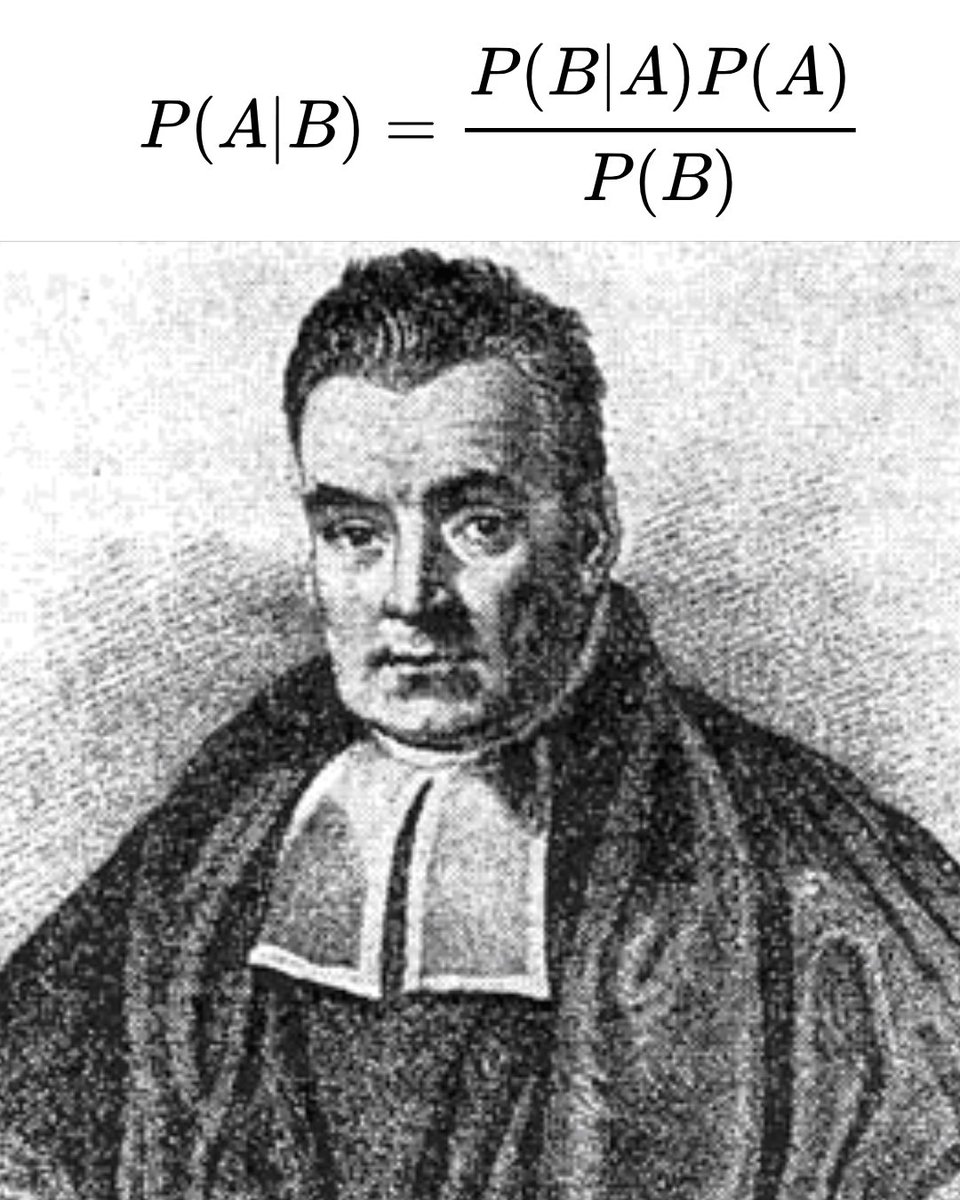
Bayes’ theorem is named after the 18th-century Thomas Bayes, and essentially it’s a formula that asks: when you are presented with all of the evidence for something, how much should you believe it?
Bayes’ theorem teaches us that our beliefs are not fixed; they are probabilities. Our beliefs change as we weigh new evidence against our assumptions, or our priors. In other words, we all carry certain ideas about how the world works, and new evidence can challenge them.
For example, somebody might believe that smoking is safe, that stress causes mouth ulcers, or that human activity is unrelated to climate change. These are their priors, their starting points. They can be formed by our culture, our biases, or even incomplete information.
Now imagine a new study comes along that challenges one of your priors. A single study might not carry enough weight to overturn your existing beliefs. But as studies accumulate, eventually the scales may tip. At some point, your prior will become less and less plausible.
Bayes’ theorem argues that being rational is not about black and white. It’s not even about true or false. It’s about what is most reasonable based on the best available evidence. But for this to work, we need to be presented with as much high-quality data as possible. Without evidence—without belief-forming data—we are left only with our priors and biases. And those aren’t all that rational.
The most complete comparison yet between cigarettes and UPFs. Both are engineered delivery systems designed to maximize reinforcement, habitual overuse, and profits—using sensory additives, and reward acceleration, while driving disease and health costs. https://t.co/fABKx6EXyJ
The barcode theory
What if overeating has nothing to do with willpower, emotions, or macros – and everything to do with a trick being played on your tongue?
It addresses genetics, emotional eating, boredom eating, why diets typically fail, how addiction actually works, and why the solution isn't more willpower.
Foods That Lie
I have written about these ideas in my book – with hundreds of scientific references, detailed explanations, and answers to every objection you're probably forming right now.
https://t.co/2gq5Rl0AZw
When the barcodes stop lying, the hunger and satiety system recalibrates. Food starts tasting better. Hunger quiets. Dietary-related obsession dissolves.
The solution:
Eat foods with flavour that tells the truth. Not restrictive – just honest. Roast potatoes with butter. Freshly squeezed orange juice. Steak with salt. Vegetables + fruit. All food groups. Nothing excluded, except those that pretend to be something they are not.
Intermittent reinforcement is the engine beneath every addiction. And it's exactly what happens when the human navigation system encounters barcodes that lie.
When flavour promises nutrition that only sometimes arrives, we become the pigeon.
Increased engagement. Resistance to stopping. Obsessive focus on diet-related stimuli.
Pigeons given a food pellet randomly after pressing a lever pressed frantically, obsessively, and took an extraordinarily long time to stop – even after rewards ceased entirely.