Oh my, my dunk of JerryRigs is going viral. Well, let's use this as a teaching moment.
First, realize when people say "data centers in space" they aren't talking about lofting up giant Costco sized buildings.
SpaceX and Starcloud are proposing satellites that each have the compute capacity of about one AI rack, or what the guy is pushing in the picture below.
These individual sats won't be connected together in space to run large training jobs, they'll only be used for inference - answering people's questions, running agentic tasks, etc.
So each satellite has relatively tractable power and cooling requirements. There will be a couple of largish solar panels attached to give it 24x7 cheap power (remember that you get like 5x more solar energy per panel in space than on Earth). And a smaller radiator that will radiate away waste heat into the vastness of space.
Both the power and cooling technologies are simple, well tested and cost nothing to operate, unlike power and cooling on earth.
In particular, cooling on earth requires extra power to run powerful water pumps to move fluid all over the place and then to dump the heat into a relatively hot atmosphere.
Yes, space based cooling can only reject heat via radiative cooling, but it is doing it in the vacuum of space at -454 °F (-270 °C, 3 K) versus about 77 °F (25 °C, 298 K) on Earth, so that helps a lot. Point being that cooling in space has only a single upfront cost of building a passive radiator.
But what about the overall cost, you ask? Well, think about all the things you don't need to build now. That rack the guy is pushing around weighs 1,400 pounds mostly because of all the metal required to support everything against Earth's gravity. Things can be built far more flimsy in space since they are in zero gravity.
Also that rack has a bunch of power electronics and fans, neither of which are needed in space. Indeed, that entire building those racks sit in doesn't need to be built. All that fiber cabling isn't needed (lasers in space take the place, no need for cables). Giant utility transformers and a small army of step down transformers and battery packs don't need to be built. The land doesn't need to be bought. The permits don't need to be acquired. The supposedly huge amount of water used doesn't need to be provisioned (it's a tiny amount, but the detractors love to bring it up).
There are in fact giant cost savings going into space.
What about launch costs? That is small as well. Starship is fully reusable. The majority of launch costs are natural gas and liquified oxygen extracted from the air. That's it. Cheap access to space, really cheap I mean, is a huge unlock.
I was initially shaking my head when I first heard about Elon's "crazy" idea of space based compute, but the more you look into it, it is far less crazy and more doable and practical. At least for SpaceX.
Terrific release from @nvidia and my former PhD student @rohansawhney1:
A GPU physics solver for fundamental problems like electrostatics and heat transfer, which handles extremely complex geometry without any mesh generation or basis approximation.
Based on Monte Carlo walk on spheres methods developed by our group and others. See this page for lots of background info/tutorials: https://t.co/1n3LROwC7w
@RocketArmor yep, navier-stokes equation applies to everyone and everywhere without discrimination
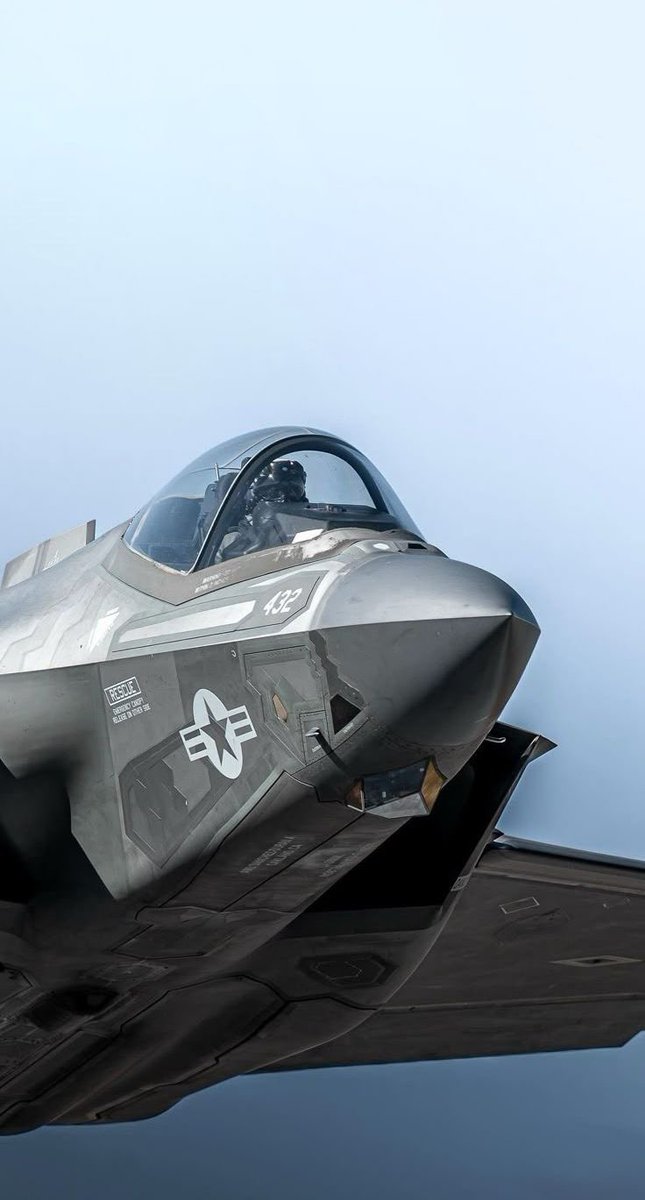
similarly, all trainer jets converged to same design
@WSJ "put a Starlink on the roof of her car"
plenty of people mount a @Starlink mini under the sunroof of their cars.
rather common among road trip enthusiasts
@jrzscodes@EsbenKC@jorgemanru "you'd get better performance by... rendering everything in the canvas"
This is EXACTLY how flutter web works.
Currently using Skia but moving to the newer more modern Impeller renderer.
@FallowWing@webprofusion@jorgemanru I really love the approach used by Flutter web. They realized it's a lost cause to try mapping flutter widgets to the HTML DOM, so they just opted to use html canvas and render whatever they want inside it.
Much better performance than anything using the DOM.
@youngScipio cuz jane street does mindbogglingly insanely ambitious things that are at the epitome of what's possible.
things that nobody else does (at least not publicly).
https://t.co/nTJyHTdtye
@samsheffer@PalmerLuckey probably monitoring dozens of off-the-books Russian and Chinese sats.
Especially the Russian sats that birth other micro sats (like Russian nesting doll) and maneuver to certain orbital planes, harassing US and European military sats.
@BenjDicken@chrismunns How do you decide which replica gets promoted in PlanetScale instances failover?
I remember Redis had sentinel nodes that "vote" for a new primary, just like Kafka ZooKeeper/Zab before replacing it with the KRaft consensus algorithm
SpaceX has just officially unveiled its AI1 satellite, the first generation of its AI satellite.
Overall Specs:
• 150 kW peak compute payload
• 120 kW average compute payload
• 70 kW per ton
• Compute provider interchangeable
Dimensions:
• Wingspan: 70 meters
• Deployed height: 20 meters
Thermal System:
• 110 m² deployable liquid radiator
• Redundant pumping loops
• Integrated micrometeoroid shielding
• Deployable liquid radiators
Solar Power System:
• 150 kW solar array
• 250 W/m²
• SpaceX-manufactured solar technology from Bastrop, Texas
Architecture:
• Centralized compute module
• Large deployable solar arrays
• Deployable liquid-radiator thermal management system
• AI-focused compute satellite design ("AI1 satellite")
Elon: "The AI satellite is much simpler than a Starlink satellite. The AI satellite is essentially a lot of solar cells, you still need some laser links, but you don't have all of the super complex antennas that you have on a Starlink satellite. The easier one to design for is the AI satellite. It's bigger. A lot of this is technology we've already made with the Starlink V3 satellites."
@JakeKAllDay@Polymarket 6 years of Falcon 9 launches is like 6 months of Starship launches.
Full rapid reusability beats partial (booster-only) reusability
@esterezw what are the vibes like on the streets?
future-looking, ambitious population? or woke decel, defeatist mentality?
is it secular? or are there religous/morality police detaining couples out on dates or policing dress codes?