Libyan Heritage House presents:
‘Omar Al Mukhtar - 'The Lion of the Desert'
Online Exhibit from 25 November to 31 December 2025
https://t.co/axD0q9AZ4p
It is with great sadness that we extend our sympathies to the people of the beautiful city of Derna and the surrounding areas. We stand in solidarity with Derna and ask for donations to the National Council for US Libya Relations��s disaster relief drive: https://t.co/jU1cLkQI5L
I am delighted to finally see the printed version in Arabic and English of the #Strategic Framework for the #Emergency Room to #Protect#Women During #ArmedConflicts in the #ArabRegion, which I prepared after being commissioned to do so last year by the Secretary-General of the League of Arab States under the supervision of the Assistant Secretary-General, Her Excellency Ambassador @DrAbuGhazaleh , whom I especially thank for her constant confidence and her leadership on #WomenPeaceAndSecurity.
I am grateful for this opportunity given to me again after developing the strategy and executive plan for the Arab Women Mediators Network, which was adopted by a ministerial decision in 2021 at the level of foreign ministers.
The Strategic Framework for the Emergency Room to Protect Women During Armed Conflicts in the Arab Region was also adopted at the ministerial level by the Women's Committees last February, making the Strategic Framework binding on all member states of the League of Arab States.
Over the past two days, I have led the first workshop of the Emergency Room to Protect Women During Armed Conflicts in the Arab Region to present the strategic framework and train members of the room (from 14 Arab countries) on it and discuss ways to activate the strategic framework by developing general institutional measures for the emergency room and specific measures to achieve the goals and objectives of the strategic framework.
Background of the Emergency Room to Protect Women During Armed Conflict:
Between 2012 and 2015, several conflicts erupted in a number of Arab countries, and invasions and repressive practices by Israeli occupation forces recurred. As was the case in the first wave, women bore the brunt of the repercussions of these conflicts and under the conditions of the Israeli occupation and in refugee situations, women and girls continued to be subjected to all forms of violence, whether physical or psychological, making them more vulnerable to marginalization, poverty and suffering. This violence violated women's comprehensive security, including human security, water and food security, health security, economic security and cultural security.
In 2015, the United Arab Emirates, as chair of the 35th session of the Arab Women's Committee, held on January 31 and February 1, 2015 at the headquarters of the General Secretariat of the League of Arab States, proposed the formation of an Emergency Committee to Protect Women in Armed Conflict. The proposal was discussed by the heads of the mechanisms concerned with women from the member states, and the committee issued Recommendation No. 8 on "Protecting Arab Women During and After Armed Conflicts".
In 2017, the Technical Secretariat of the Arab Women's Committee, pursuant to Memorandum No. 3752/5, circulated to member states and re-sent the proposed tasks of the committee, requesting them to confirm the nomination or nomination of whoever they deem appropriate to represent their esteemed countries for committee membership, and their comments and views on the proposed tasks so that they can be discussed during the first preparatory meeting to convene the committee in preparation for submission to the Council at its next session.
In 2019, the Emergency Committee for the Protection of Women During Armed Conflicts in the Arab Region was established under Ministerial Decision No. 8374 of the Council of the League at the ministerial level at its regular session (151) held in March 2019 regarding the approval of the tasks of the "Emergency Committee for the Protection of Women During Armed Conflicts" in the Arab region, in implementation of Recommendation No. (9) regarding the establishment of the committee issued at the meetings of the Women's Committee at its 38th session chaired by the People's Democratic Republic of Algeria. The committee was adopted under Resolution No. 8374 issued by the works of the 151st session of the Council of the League at the ministerial level.
In 2022 I was commissioned to develop the Strategic Framework for the Emergency Room to Protect Women During Armed Conflict.
The Emergency Committee is a temporary response mechanism whose engagement is limited to confronting violations against women from the outbreak of the conflict until the state has made progress in post-conflict reconstruction. With regard to crisis management in general, stakeholders establish temporary response mechanisms, i.e. mechanisms for special purposes, to implement a particular endeavor or program that contributes to reducing the impacts and damage of the crisis. Temporary response mechanisms include appointing a special envoy, holding a coordinating meeting for dedicated secretaries and forming a working group to implement a program to alleviate citizens' suffering. With regard to peacebuilding, in terms of jurisdiction, the role of the Emergency Committee is confined within the limits of confronting violence and violations against women and does not exceed that. In terms of the time frame, the Emergency Committee's engagement ceases after the end of the conflict is associated with adequate mechanisms to protect women from violence. The Emergency Committee's coordination with member states during stabilization phases is aimed at preparing to respond to violence against women in the event of a conflict outbreak.
The Strategic Framework consists of principles and general reference provisions that the Emergency Committee should adhere to in carrying out its mission. The purpose of this Strategic Framework is for the response to the risks of violence against women during armed conflicts to be a unified, systematic, integrated, organized, coordinated response based on a thorough investigation of the facts of the conflict, on a sound monitoring of the facts, on an accurate analysis of the data and integration of information, and also based on dealing well with the time factor.
The Strategic Framework consists of ten sections. In the introduction, we reviewed the context in which the decision to establish the Emergency Committee was born, and the nature of the Emergency Committee. The first section is devoted to presenting the organizational structure of the Emergency Committee. The second section is devoted to stating the tasks and powers. The third section explains how the Emergency Committee is considered one of the mechanisms of the League of Arab States. The fourth section contains a statement of the starting points. The fifth section refers to the challenges. The sixth section addresses the approaches. The strengths that can be utilized are included in the seventh section. The eighth section is devoted to stating the references. The ninth section is devoted to stating the time frame for the work of the Emergency Committee in confronting violence against women. The tenth section is devoted to stating the strategy.
Once again, I am grateful for this precious opportunity to work on this pioneering project in the Arab region, which we urgently need. My role ends here, but I hope that this project will not be hampered by lack of sufficient political will and leadership or neglected after all these steps we have taken, especially since our region is still suffering from wounds as we are closely following what is happening in Sudan.
Thrilled that the masterplan for the reconstruction of the Benghazi metropolis is coming into fruition! Congratulations to @MAFrancheUN for his leadership & @UNDPLibya support. #Benghazi and the Libyan people deserve a bright future ahead! 🇺🇳🇱🇾
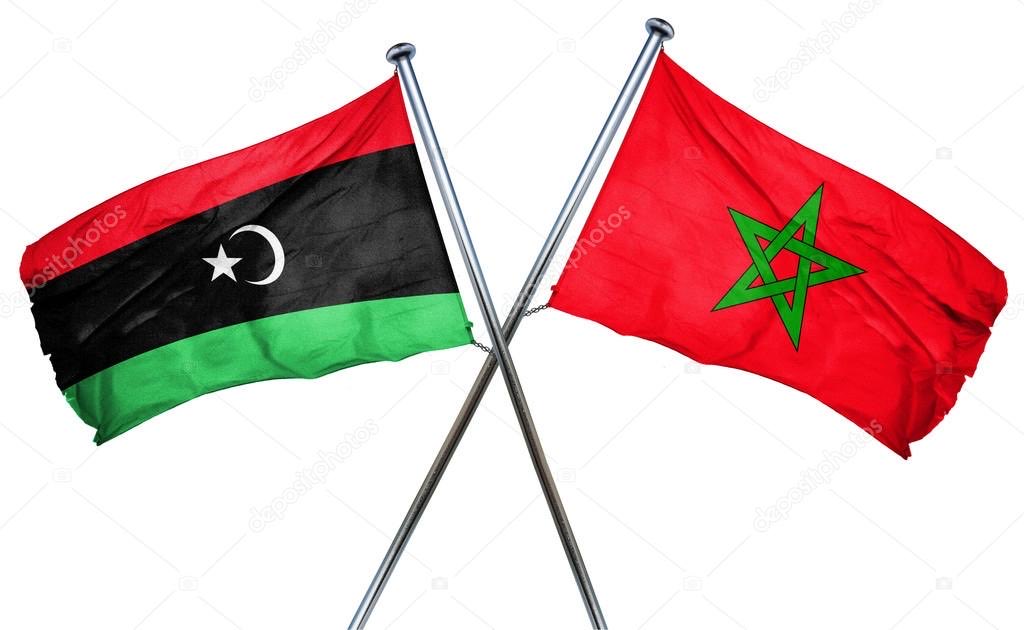
#Morocco announces reopening its consulates in the Libyan cities of #Tripoli and #Benghazi after nine years of closure.
The decision came as part of a raft of new diplomatic appointments, with 23 new consul generals selected for a number of cities around the world including the Libyan capital Tripoli and the eastern city of Benghazi, the Moroccan foreign ministry said in a statement.
The #Libya Update
🔴 My photo book, “A Portrait of Libya”, is finally available for free viewing and download—450 images taken over a decade. A glossy print edition will be available this year; photos will be exhibited in #Libya and a few European cities in 2023. 🔽
https://t.co/10qfWgmjPn
Our Story
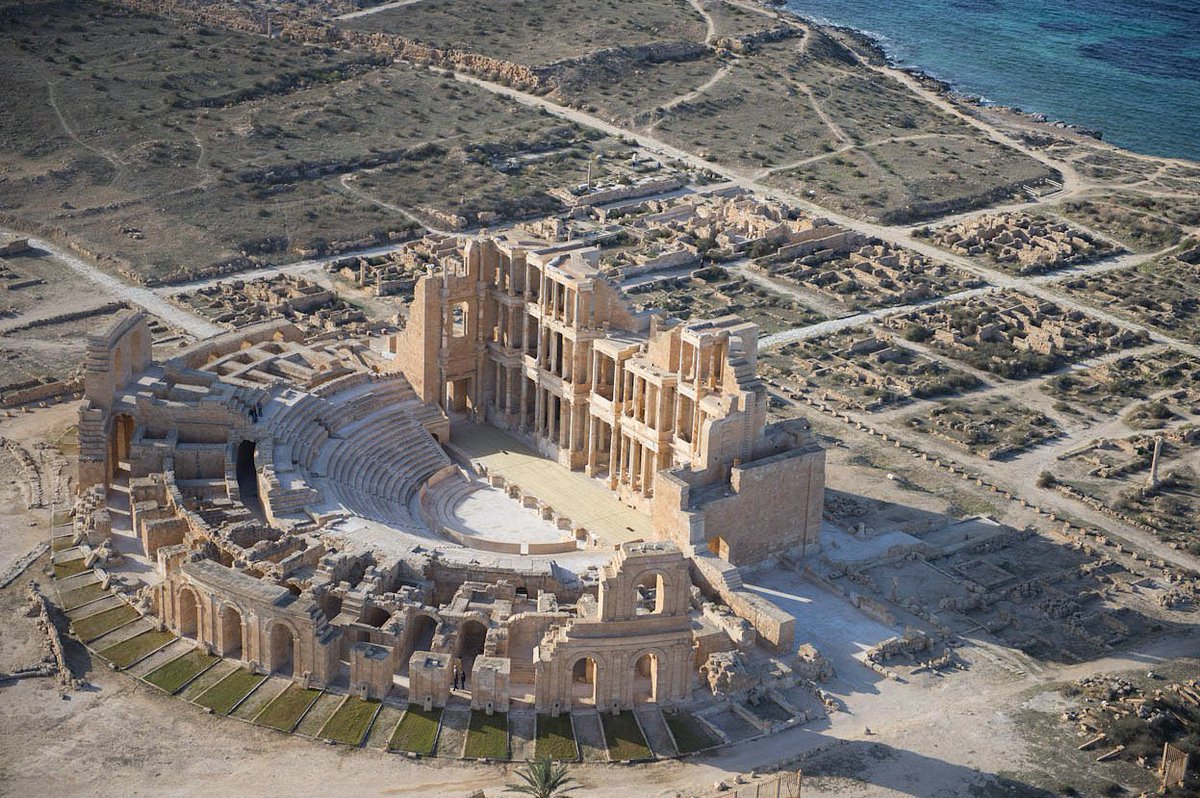
The Libyan Heritage House has worked tirelessly to create an engaging and reliable resource which brings the historical, geographical and cultural heritage of Libya to the wider, global, public.
For more information please visit us at https://t.co/hM1OCCKiN6