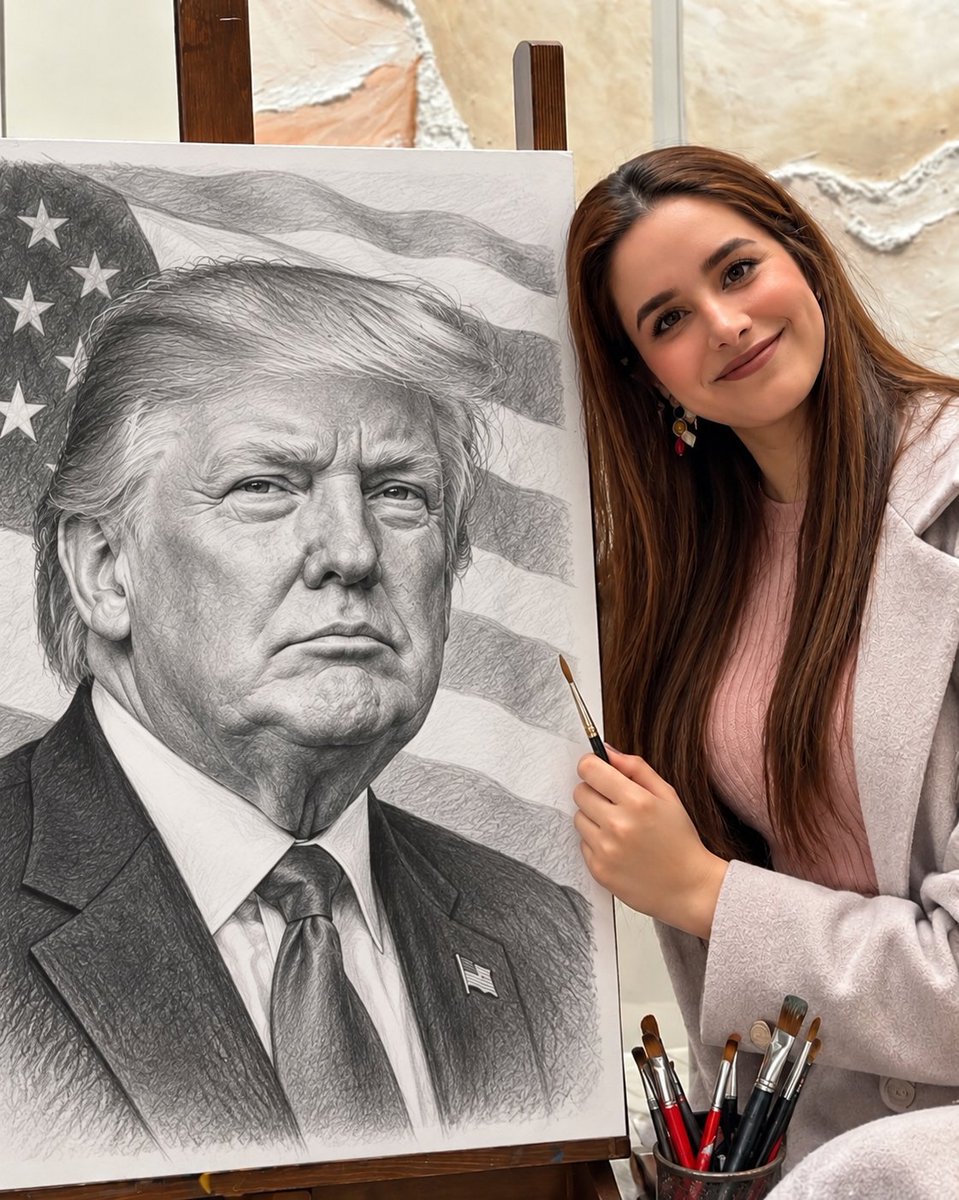
🥺❤️ Today I completed this Donald Trump pencil portrait.
My mom told me, “Don’t share it on X. People may ignore it, make fun of your post, and many people dislike Trump.” 😔
But I still shared it because I believe in my art and the hard work behind every pencil stroke. 🎨✏️
Now please don’t let me down. 🙏❤️
If you appreciate my artwork, please Like ❤️ Comment ✍️ or Share 🔄. Your support means more than you know. ���
🎨 Hand-drawn Pencil Portraits | Art Commissions
📩 [email protected]
माँ तो माँ होती है, ���ाहे इंसान की हो या किसी जानवर की...
एक छोटा बच्चा घबराकर भाग रहा था और पीछे एक बड़ा भालू आ रहा था
बच्चे को खतरे में देखकर पिता ने तुरंत लकड़ी उठाई भालू को ��@रने के लिए... लगा कि अब दोनों के बीच भिड़ंत होगी
लेकिन इसके बाद जो हुआ, वह क्षण बहुत भावुक कर देने वाला है...🥺
By the age of six, she was responsible for sixty goats and sheep, walking miles every single day just to find water and grass. Her name meant "flower of the desert," but her early years were far from gentle.
Waris Dirie was born into a traditional nomadic family in the harsh Somalian desert in 1965. Survival was a daily struggle, but the most dangerous threat to her life did not come from the severe heat or the lack of food.
It came from a brutal ancient practice passed down through generations.
When she was just five years old, an elderly woman took her into the remote landscape with a rusted, dirty blade.
There was no anesthesia, no hygiene, and no mercy. Her mother held her down while her aunt pinned her legs to the dirt.
She was subjected to female genital mutilation—a cruel procedure that stole her childhood, caused the tragic deaths of her sister and two cousins, and left Waris with lifelong physical pain.
By the time she turned thirteen, her father arranged her marriage to a sixty-year-old man in exchange for five camels.
Refusing to accept this fate, her mother secretly helped her flee into the night. Barefoot, terrified, and completely alone, Waris ran across miles of desert terrain until she made it to Mogadishu.
Eventually, an uncle appointed as an ambassador took her to London to work as an unpaid domestic servant.
For years, Waris lived in absolute isolation in England. She could not speak English, nor could she read or write.
When her uncle's diplomatic post ended, she refused to return to Somalia, choosing instead to live illegally in London.
She took a job scrubbing tables at a local fast-food restaurant while attending evening classes to learn how to read for the very first time.
One afternoon in 1987, world-famous fashion photographer Terence Donovan walked into the restaurant where she was working. He immediately recognized her striking presence, grace, and strength.
"Have you ever thought about becoming a model?" he asked her.
"I don't even know what a model is," Waris replied, looking at him with deep suspicion.
That chance meeting changed everything. Almost overnight, Waris rocketed to global stardom.
She appeared in the prestigious Pirelli calendar alongside Naomi Campbell, walked high-fashion runways in Paris and New York, and starred in campaigns for brands like Chanel, L’Oréal, and Revlon. She even made an appearance as a Bond Girl.
To the world, she was living an extraordinary fairytale. But underneath the glamorous designer clothes and bright spotlight, she was still carrying severe physical trauma and unbearable memories.
In 1997, at the absolute peak of her career, a reporter from Marie Claire sat down with her to write a feel-good story about her journey from poverty to wealth. Waris decided it was time to end the silence.
"You have written enough stories about models," Waris told the interviewer directly. "If you promise to print what I actually say, I will tell you something real."
She revealed the painful truth about what happened to her as a child and exposed the reality that millions of young girls were still suffering from every single year.
The shocking interview sparked global outrage and brought female genital mutilation into international focus for the first time.
Shortly after, UN Secretary-General Kofi Annan appointed her as a Special Ambassador. At age thirty-two, Waris walked away from her lucrative modeling career to launch a global fight against the practice.
She wrote her international bestseller, Desert Flower, established foundations, and built medical centers to provide surgery and psychological support to survivors.
Because she had the courage to speak out, laws were rewritten across multiple nations, traditional leaders abandoned the practice, and millions of young girls were protected from the blade.
Waris Dirie proved that a child from the desert could overcome unimaginable trauma, break centuries of silence, and inspire profound global change.
Today, millions of young girls walk freely under the sun, whole and protected, because one brave woman dared to speak her truth.
Her journey is a beautiful reminder that love, courage, and resilience can bloom in even the harshest sands, turning every scar into a beacon of hope—just like a true desert flower.
A 3-year-old boy was kidnapped from a public library, and less than an hour later, he was sitting on a city bus beside the man who had taken him. The little boy was crying, and the other passengers had no idea he had been abducted. But when the bus driver looked at the child, he suddenly realized he matched the description of a missing boy police were desperately searching for.
It happened in Milpitas, California. Bus driver Tim Watson had heard the police alert about a missing 3-year-old boy earlier that day. When a man boarded his bus with a crying child, something didn’t seem right. The more Tim looked at the little boy, the more he suspected he was the child everyone was searching for.
But Tim couldn’t risk confronting the man. If he was the kidnapper, one wrong move could put the little boy in even greater danger. So Tim came up with a clever plan. He announced to the passengers that someone had reported a missing green backpack and began walking through the bus, pretending to search for it.
As he moved past the man and child, Tim got a closer look and confirmed his suspicions. He quietly contacted dispatch to alert police, then returned to his seat and continued driving as though nothing had happened. All the while, the suspected kidnapper remained on board, completely unaware that the driver had recognized the child.
Tim kept his composure until police were able to intercept the bus. Officers rushed aboard, arrested the suspect, and brought the little boy to safety. Thanks to one observant bus driver who refused to ignore his instincts, a terrifying kidnapping ended with a child being returned to his family.
Tim Watson wasn’t a police officer or a trained rescuer. He was simply a bus driver who recognized a child in danger and found a way to save him without putting him at greater risk. Let’s give this incredible man the recognition he deserves.
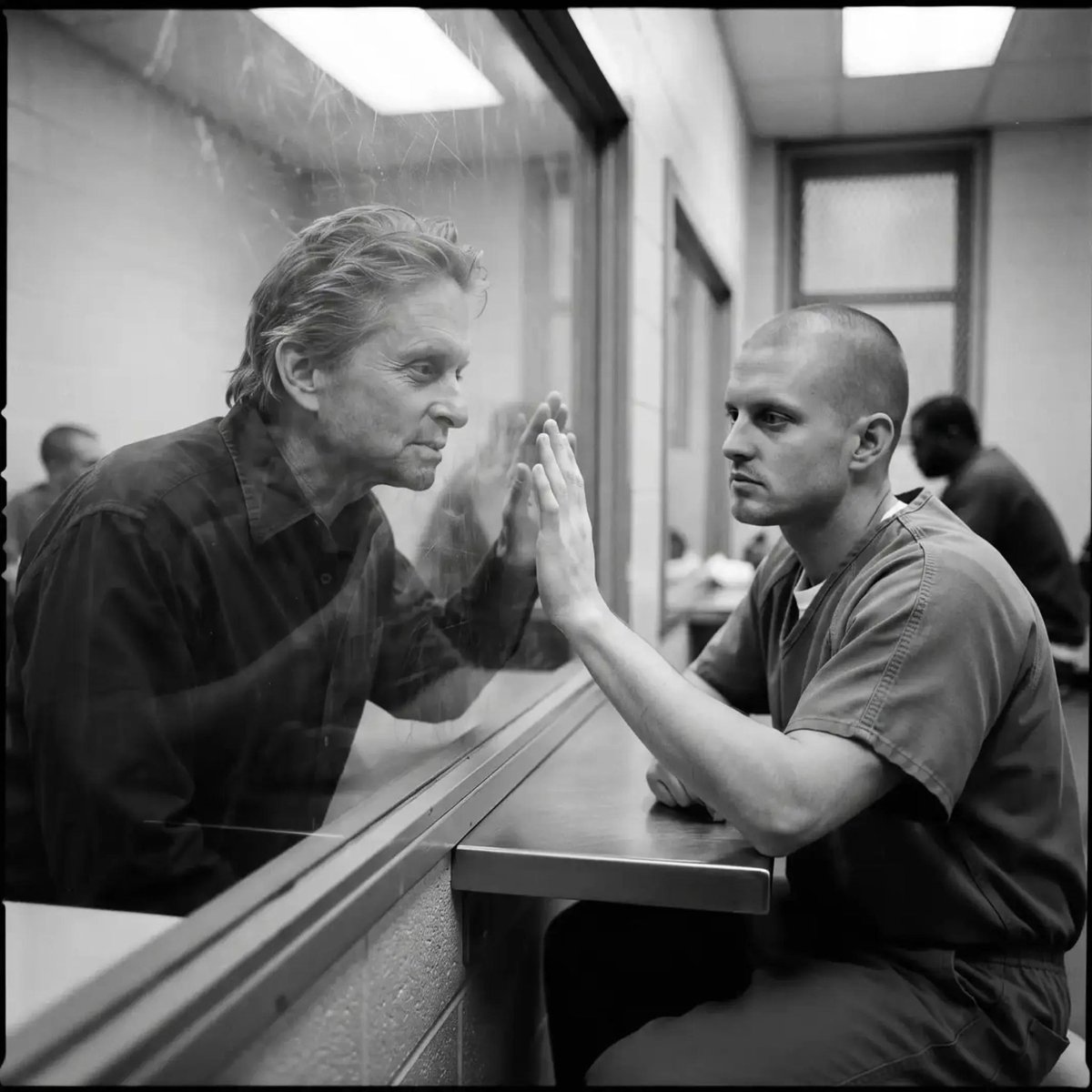
In the visitation rooms of federal prisons, Michael Douglas stopped being a movie star and became only a father. For years he drove hours from New York to see his eldest son, Cameron, sitting across a metal table or behind glass, offering the same quiet message: he was still loved.
Cameron had grown up in the long shadow of Hollywood royalty—the son of an Oscar-winning actor and the grandson of Kirk Douglas. Identity was never simple. He began using drugs as a teenager; what started as experimentation hardened into a serious heroin addiction.
In 2009 he was arrested in a federal drug investigation for dealing methamphetamine and cocaine and for possessing heroin. The following year he was sentenced to five years in prison.
The sentence did not stay at five. After he was caught with drugs inside, additional time was added. He ultimately served roughly seven years, nearly two of them in solitary confinement.
During that same period Michael received a stage-four throat-cancer diagnosis. Chemotherapy and radiation left him gaunt and exhausted, yet he continued the long trips to Lewisburg Federal Prison Camp in Pennsylvania as often as his health and prison rules allowed.
Friends and his publicist confirmed that even at his weakest he still showed up.
Cameron later said the family’s refusal to turn away kept him from being swallowed by the isolation. In solitary he began writing, reading, and training his body. The visits, when they were permitted, gave him something concrete to hold: his father was still there.
Michael has spoken publicly about the heartbreak of watching his son’s addiction and about his frustration with a system that placed a non-violent offender in prolonged solitary confinement.
Cameron has been equally direct that rebuilding trust after years of broken promises required patience and repeated presence, not sudden forgiveness.
When Cameron was released in August 2016 and moved into a halfway house, the work continued. He published the memoir Long Way Home, has spoken openly about recovery, and became a father himself.
Michael, who recovered from the cancer, has watched his son build a steadier life. Their relationship, Cameron has said, was among the slowest to repair; it took consistent reliability rather than grand gestures.
What remains is quieter than the headlines that once surrounded them: a father who kept driving to the prison even when he was sick, and a son who used the time inside to start choosing differently.
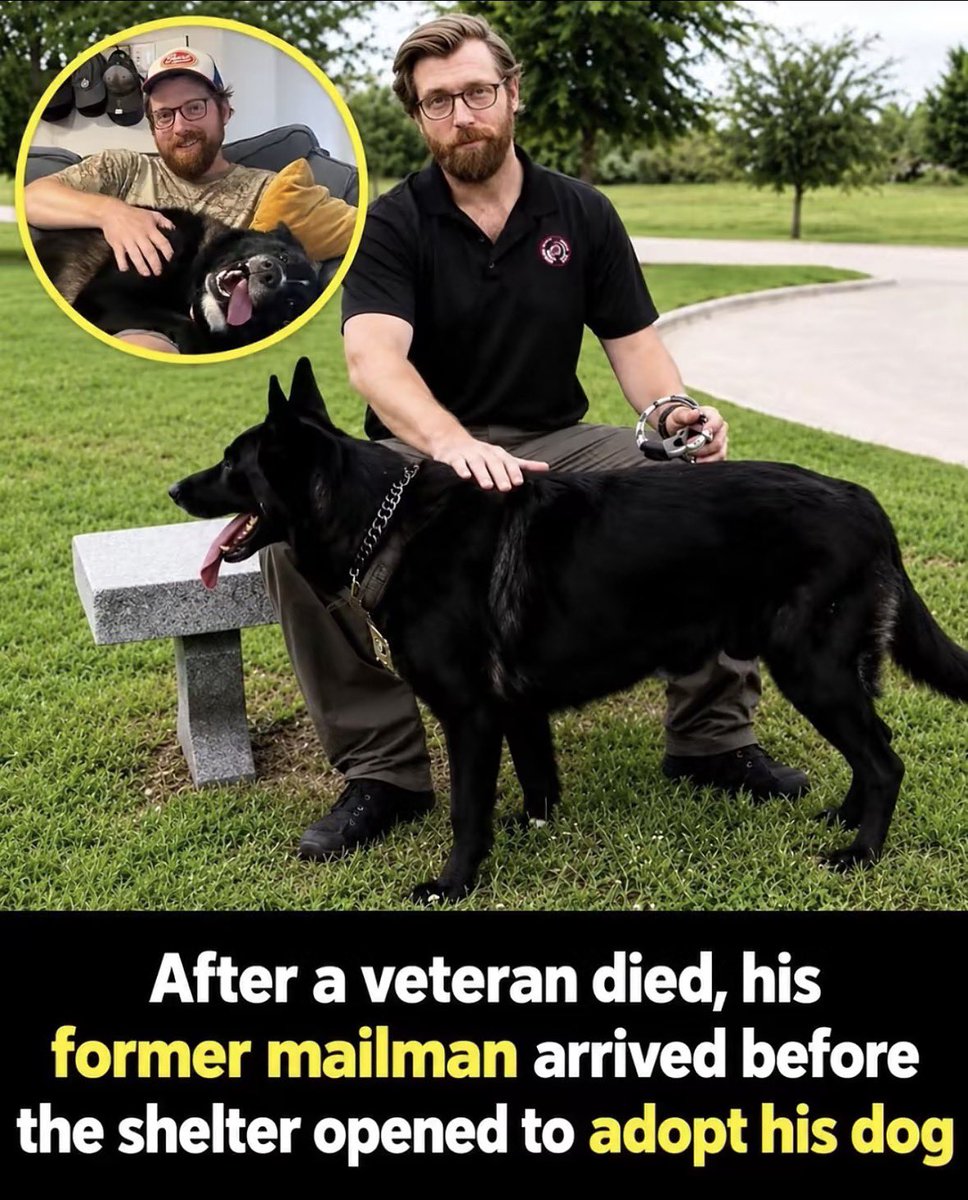
A Texas mail carrier learned that a dog he had befriended on his old delivery route was waiting in an animal shelter after his owner died.
Before the shelter opened, he was already there to adopt him.
USPS letter carrier Ian Burke had first met Floyd while delivering mail to the home of Ken Meyer, a Vietnam veteran who used a wheelchair, in Denton, Texas.
Floyd was Ken’s service dog, and he made quite an impression on the mailman.
During their first encounter, he slipped out through the door and charged toward Ian like an excited puppy.
Over time, Ian got to know both Ken and Floyd. For about a year and a half, he enjoyed stopping by their home, delivering the mail and checking in on them.
Then his route changed.
Another carrier took over, and Ian’s regular visits came to an end.
In May 2025, Ken passed away.
Floyd was surrendered to the City of Denton Animal Shelter, leaving the dog who had been his companion in need of a new home.
Over Memorial Day weekend, Ian heard a coworker talking about a dog at the shelter.
The description sounded familiar.
He asked whether the dog was Floyd.
When the answer was yes, Ian knew he wanted to bring him home.
He arrived at approximately 9:50 a.m., ten minutes before the shelter opened, to make sure he was first in line.
Floyd wouldn’t have to start over with someone who knew nothing about him.
Waiting for him was the mailman who had known him since he was a puppy.
That day, Ian adopted Floyd.
He later explained that this was a dog his former customer had loved and cherished. Taking care of him meant something personal.
“I kind of felt responsible to take care of him,” Ian said.
He believed Ken would be pleased to know that his former mailman was giving Floyd a good home.
In a later photograph shared by USPS, Floyd sat on Ian’s lap, settled into the life they now shared.
Once, Ian had been someone who stopped by and left.
Now he was the person Floyd stayed with.
Ken’s love for his dog had been part of what Ian remembered about his old route.
And after Ken was gone, Ian made sure that dog still had someone to come home to ♥️🐾
A boy walks into a pet shop and asks how much the puppies cost.
"Between 300 and 500 euros," the owner replies.
The boy reaches into his pocket, takes out some coins, and says,
"I only have 100 euros, but... could I at least see the puppies?"
The owner calls Lady, the puppies' mother, who comes running, followed by five little balls of fur. One of the puppies is left behind, visibly limping.
"What's wrong with that one?" the boy asks, pointing at the last one.
"He was born with a hip problem," the man explains. "Unfortunately, he'll limp his whole life."
Suddenly, a smile breaks out on the boy's face and he exclaims excitedly,
"That's the dog I want!"
The owner frowns.
"I can't sell you that one. If you want it, I'll give it to you; it's worthless."
The boy is silent for a moment, then looks at the man determinedly and says,
"I don't want you to give it to me. It's worth as much as the others. I'll pay you the 100 euros I have and 10 more each month until the price is paid."
The owner, surprised, replies:
"But, boy, this dog will never be able to run or jump like the others. He won't even play well!"
The boy then lifts up his pants, revealing a prosthesis on his left leg.
"Sir," he says calmly, "I'm not a very good runner either. And this pup will need someone who understands him.
【46架直升机推下了海】1975年4月29日,西贡陷落前夜。南越空军少校黎邦把妻子和五个孩子(最小的才一岁多,最大的六岁)硬塞进一架只能坐两人的塞斯纳O-1观测机里。飞机严重超载,没有无线电,没有救生衣,几乎没有导航设备。他从昆仑岛起飞,冒着地面火力,一头扎进南海,只为寻找美军舰队。
他找到了“中途岛号”航母。甲板早已被撤离的直升机挤满。他盘旋了好几圈,降落灯亮着,左右摇动机翼示意。几次投字条都被风吹进海里。最后,他把字条塞进皮枪套,扔到了甲板上。
字条上歪歪扭扭地写着:
“Can you mouve these Helicopter to the other side, I can land on your runway, I can fly 1 hour more, we have enough time to mouve. Please rescue me. Major Buang wife and 5 child.”
舰���拉里·钱伯斯看到这张字条时,上级要求他让对方在海上迫降。可他知道,这架固定起落架的小飞机一入水就会翻覆,一家七口几乎不可能活下来。
他下令:拆掉拦阻索,把甲板上来不及移走的直升机推下海。
水兵们一拥而上,把价值数百万美元的休伊直升机一架接一架推进南海。钱伯斯后来回忆,他当时就知道这决定可能让自己上军事法庭,但他还是下了令。
甲板清出空间后,黎邦做了两次模拟进近,第三次终于对准斜角甲板下滑。他从未在航母上降落过,飞机没有尾钩。飞机重重接地,弹跳了一下,滑行一段后停稳。
舱门打开,妻子抱着婴儿先下来,黎邦再把后座向前拉,四个孩子一个接一个滚了出来。甲板上爆发出欢呼。
钱伯斯后来称他为“我这辈子见过最勇敢的人”。船员们自发筹钱帮他们在美国安顿。那架O-1如今还陈列在彭萨科拉的海军航空博物馆里。
那天,美军把大约46架直升机推下了海。
"Todos los días a la una llega un perro callejero a mi puesto de hamburguesas con una piedra en el hocico. La deja en el mostrador y se sienta a esperar.
Los clientes se ríen. Creen que es un truco que le enseñé para vender más. No lo es.
El primer día llegó sin nada. Flaco, café, con cara de no haber comido. Lo corrí. Él se fue despacio, viendo hacia atrás. 🍔
Al día siguiente volvió. Con la piedra.
La puso enfrente de la plancha, me miró y se sentó derechito, como los clientes que ya pagaron. Yo me quedé con la espátula en la mano sin saber qué hacer. 🪨
Le hice su hamburguesa. Sin lechuga, porque la escupió la primera vez.
Desde entonces es lo mismo: piedra, hamburguesa, se va. Nunca falla, nunca roba, nunca se mete al puesto. Le dicen Esmashito.
Tengo las piedras en un frasco, atrás de la caja. Ya son más de cuarenta. Un cliente me preguntó qué hago con tanta piedra. Le dije la verdad: es mi mejor cliente, y es el único que paga por adelantado.
Hoy trajo una piedra más grande. Yo creo que quería papas".