A clinical study reveals why vaccines for meningococcus can partially protect against gonorrhea, CRISPR screens reveal a new treatment target in bone metastasis, and more in the new issue of #ScienceTranslationalMedicine. https://t.co/fbe16c7XiJ
Leveraging #CRISPR activation screens, researchers identify the lipid metabolism protein ACBP as a key driver of bone metastasis, and show etomoxir or a ferroptosis inducer can prevent bone metastasis in mice. @LiMaCancerLab@MDAndersonNews https://t.co/k3lTJZn9fo
A clinical study reveals why vaccines for meningococcus can partially protect against gonorrhea, CRISPR screens reveal a new treatment target in bone metastasis, and more in the new issue of #ScienceTranslationalMedicine. https://t.co/fbe16c7XiJ
Bone metastasis remains a major clinical challenge. By identifying ACBP as a metabolic driver of this process and demonstrating the efficacy of targeting lipid metabolism in preclinical models, our work opens new therapeutic avenues for halting bone metastasis.
Hiring Postdoctoral Fellows for Cancer Metastasis & Immunotherapy research in my lab at MD Anderson! #PostdocJobs#CancerResearch@MDAndersonNews Apply: https://t.co/vbMZXI7tFP
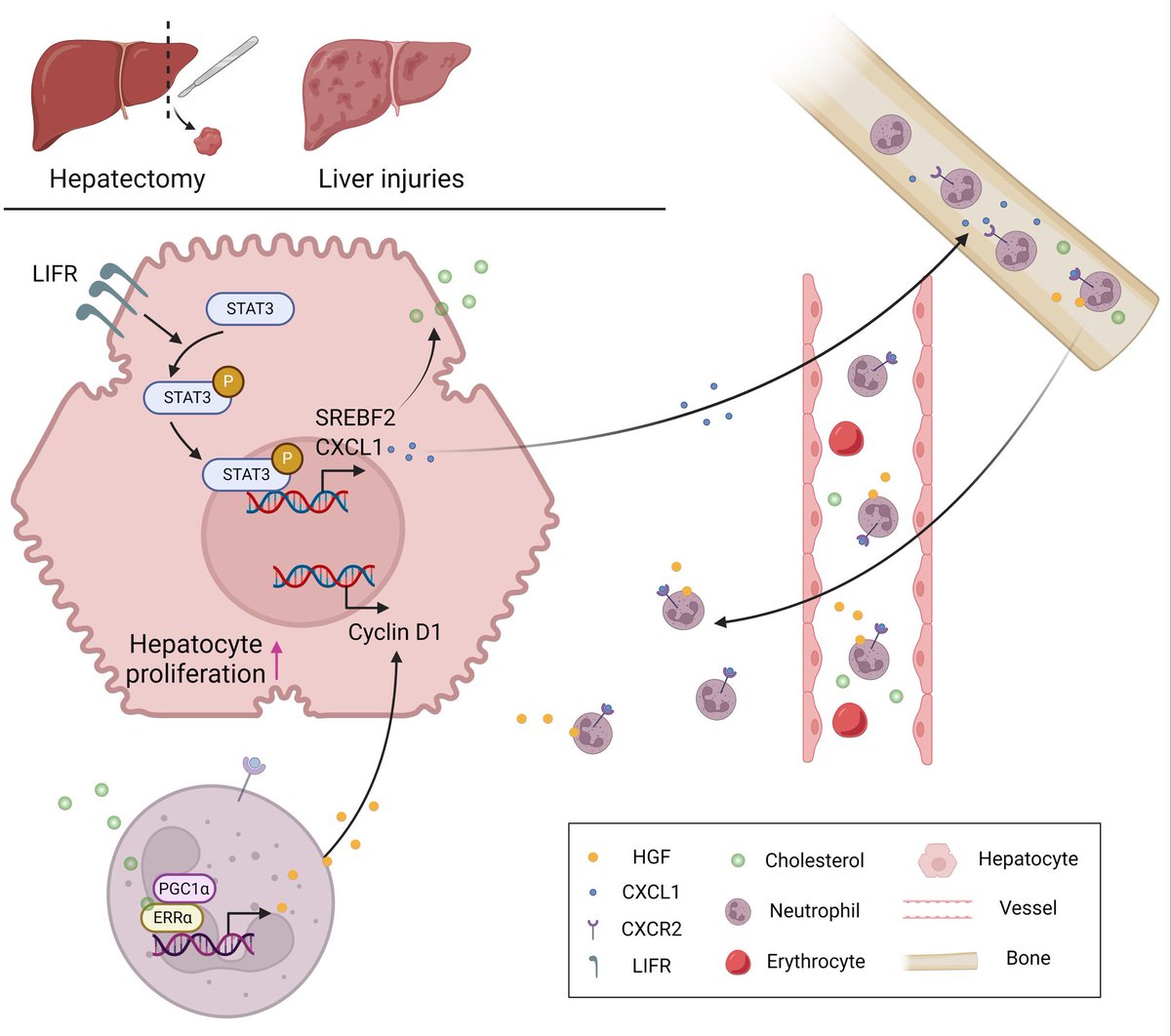
#EveryCellIsAnImmuneCell! Deng @LiMaCancerLab &co show @NatMetabolism that during liver damage, LIFR drives production of CXCL1 by hepatocytes to recruit bone marrow neutrophils. LIFR also increases cholesterol secretion that makes neutrophils reparative! https://t.co/RUEQRawypu
@RuggeroDavide@NatMetabolism@Zhu_Lab Thanks Davide! Just read your new Nature paper. Still remember the day your first paper on eIF4E got accepted by Nat. Med. After 20 years, it is now in the limelight of the cancer metabolism field.
A bittersweet day to move in my freshman to college, and report in @NatMetabolism the liver tumor suppressor LIFR orchestrates cholesterol-driven bidirectional hepatocyte-neutrophil crosstalk to facilitate #liver injury repair & #regeneration. Thx @Zhu_Lab
https://t.co/Wm2KDuIr5k
17-Kudos to the first author @Yalan_Deng and my entire team for their hard work and continued inspiration. Huge thanks to our collaborators, @Zhu_Lab, Michael Curran, and Chunru Lin, for sharing their resources and outstanding expertise.
16-Here, our findings reveal the mechanisms underlying injury-induced efflux of bone marrow neutrophils to the circulation and damaged liver, and uncover how reparative neutrophils signal to hepatocytes to proliferate in response to liver injury.