A @BiodivERsA3 / @Belmont_Forum research project on social-ecological scenarios for #freshwaterbiodiversity and transformative learning, from 2019 - 2022
Some facts about the #NatureCrisis via @ipbes and @UNEP
📌1 million species of plants & animals threatened w/ extinction
📌75% of land surface significantly altered by humans
📌66% of ocean area impacted by human activities
🔎Data from @ipbes
🗞️@UNEP
https://t.co/14NyEEBO33
Wetlands are being lost at alarming rates, with direct implications for biodiversity & carbon sequestration.
On #WorldWetlandsDay we talk to Erik Andersson about ALFAwetlands, a new project trying to make inclusive restoration a reality.
Full interview: https://t.co/zTrNemucwD
Today is #WorldWetlandsDay 🦩
For the 1st time, it is officially observed within the context of @UN 🇺🇳
The 🌎 is losing wetlands 3 times faster than forests...
Time to #ActForWetlands
Join the beautiful campaign by our key partner @RamsarConv
https://t.co/e2riSw1rje
Fish don't do geopolitical boundaries and new study says they're moving all over the place thanks to warming oceans & climate change. Science via @julianop_a et. al. https://t.co/L3t5OmTQd6
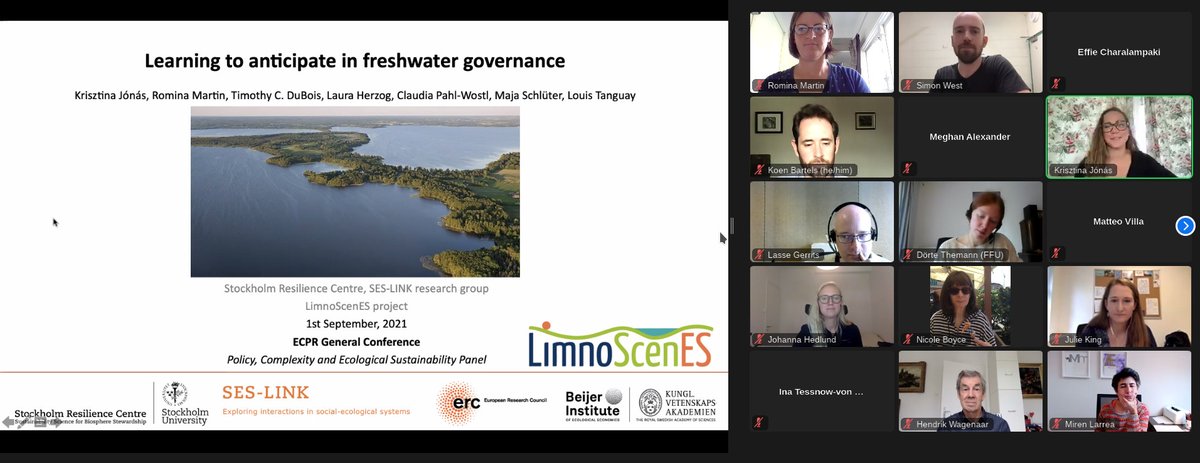
The #water council as a venue of #learning - thanks @krisztijonas for presenting your study and our case at #ecprgc2021, Julie King for her great reflections and @sim_patrickwest and Koen Bartel for facilitating the session https://t.co/3wjOEB3JUX !
Great & provokative paper. Water scholars "ignore the messy institutions, norms and processes that underlie our relationship ... with water". Lets take the challenge: @sthlmresilience@lan_wang @watersecurity @ferjaraHydro @micheleleemoore @jdhileman https://t.co/UjC6zClfFT
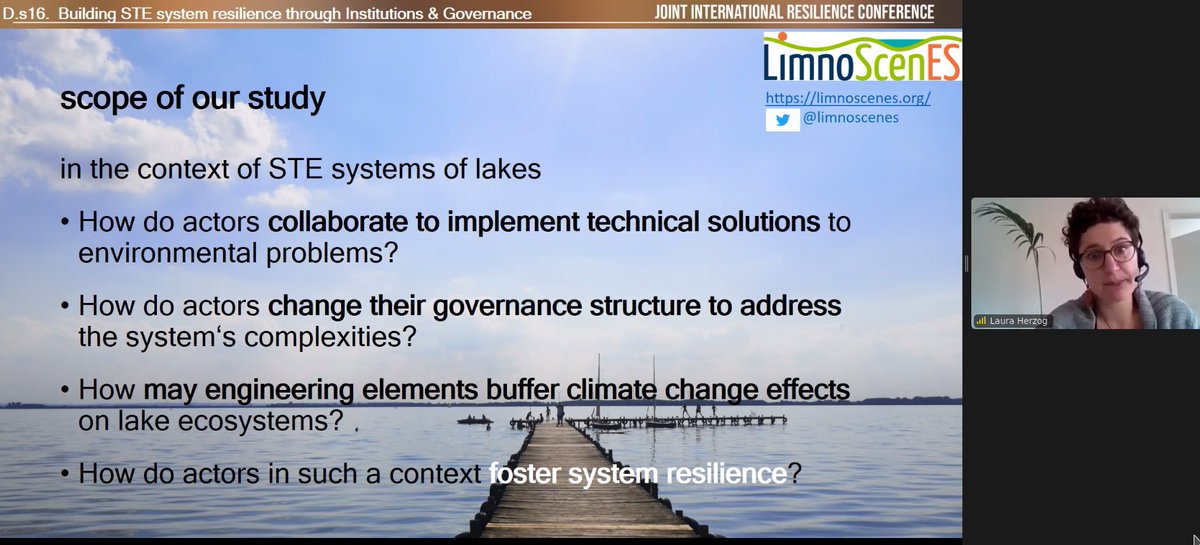
Social learning in managing lakes can be observed, will it be sufficient against climate change? To which degree can technological innovations fix environmental problems?
Thanks for the inspiring presentation, Laura! #JIRC20#casestudy#lakefutures
Follow our work today at Joint International Resilience Conference #JIRC20 at 11:00 CET in the session on institutions & governance: https://t.co/MsaUJX6X3A
We look forward to Laura Herzog's presentation on adaptive governance and preliminary results from our case studies!
Laura's update on the German case study at Lake Dümmer and how she managed to run stakeholder processes now all online is also here https://t.co/73zC4aT9sX #BiodivScen
📚A new #handbook by @BiodivERsA3 and @BelmontForum on the use of #biodiversity scenarios in support of decision-making
@IPBES#Scenarios and Models Assessment serves as a key resource on the use of biodiversity scenarios for policy- & decision-making
👉https://t.co/RBd78wMbHy
Yes! Most people can imagine a regenerative future that seems worth to live for socially and naturally, we were positively surprised during our stakeholder process to see that confirmed. Remaining question is: how do we translate it into action today?
In our Emergency Recovery Plan, published today in
@BioScienceAIBS, we propose 6 key actions to reverse the loss of freshwater biodiversity; all have been implemented in various places but need broader uptake to bend the curve globally. @david_tickner
https://t.co/I1NxS2qJcr
Some regime shifts can take quite some time, so do restoration efforts in lakes, and so do the publications on them #LimnoTip@AquaBiodiv - glad to see this finally out in #PNAS!
Crossing ecological tipping points are not (necessarily) the end of the world - learn more about social dynamics in restoring lakes @sthlmresilience https://t.co/emZOhZRRtR, new paper with Maja Schlüter, Thorsten Blenckner and me in https://t.co/M5KrkYMvtQ @PNASNews !🙂🐟
For our German listening followers: Rita Adrian @LeibnizIGB in a recent podcast from @_forschergeist_ on climate change effects in freshwater lakes and how big data helps to uncover long-term dynamics: https://t.co/SqaZHFiSWF