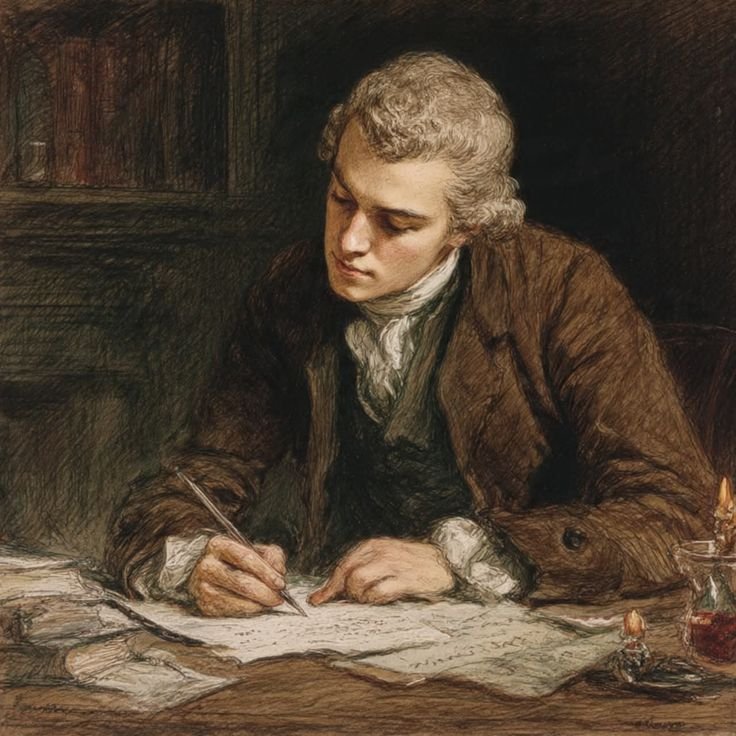
In 1884, a nineteen year old with a badge he made himself held off roughly eighty armed men for a day and a half from inside a mud hut in New Mexico.
They fired an estimated four thousand rounds into it and threw dynamite on the roof. On the second morning, he made coffee and tortillas.
His name was Elfego Baca, and he was from Socorro.
The trouble was in a settlement called Frisco, out in western New Mexico Territory. Texas cowboys working the big ranches around it had spent months terrorizing the Mexican American families who lived there. Among other things, ranch hands had tortured and maimed a local man in a cantina. Nothing happened to anyone, because the law in that county did not exist for those residents.
A deputy named Pedro Sarracino was talking about the situation back in Socorro. Baca, who was nineteen and had no commission of any kind, told him that if he would take him along to Frisco, Baca would make himself a self made deputy.
Then he did exactly that. He got himself a badge and rode out.
In the fall of 1884 a drunk Slaughter ranch hand named Charlie McCarty was waving a pistol around in a bar and shot Baca's hat off his head. Baca disarmed him and arrested him.
The cowboys came for him in a group, led by the Slaughter foreman, a man named Young Parham. In the confrontation Parham's horse was shot out from under him and came down on top of him and killed him.
That turned an arrest into a war.
Baca took cover in a jacal, a small hut built of mud and sticks, belonging to a man named Geronimo Armijo. About eighty cowboys surrounded it.
What saved his life was the architecture. The floor of that hut was dug about eighteen inches below ground level. So while thousands of rounds went straight through the mud walls, Baca was lying below the line of them, firing back out through the doorway.
It ran about thirty six hours. They shot the building apart. They set fire to part of it. They threw dynamite onto the roof and brought down a corner of the structure.
On the second morning the men outside smelled coffee brewing and fresh tortillas cooking, because there was a stove in there and Baca was making himself breakfast.
When it ended, four of them were dead and eight were wounded. Baca did not have a scratch on him. When people went inside afterward they found a plaster statue of a saint standing intact in the wreckage.
He refused to surrender until he got terms. He wanted to be tried in Socorro rather than locally, and he wanted to keep both of his pistols for the ride. He got both.
He was tried for murder and acquitted. His defense hauled in the door of Geronimo Armijo's house and stood it up in the courtroom. It had more than four hundred bullet holes in it.
And then Elfego Baca went and had an entire second life.
He studied law and was admitted to the bar in 1894. Over the years he was a deputy US marshal, a county clerk, a school superintendent, a district attorney, a mayor, and the sheriff of Socorro County.
His method as sheriff was the best thing about him. Instead of riding out after wanted men, he mailed them letters. Each one gave a date and explained that if the man had not come in by then, Baca would consider him to be resisting arrest and would come and get him personally.
Most of them just turned themselves in.
He later got mixed up in the Mexican Revolution, acted as the US representative for Victoriano Huerta's government, and in 1915 stood trial for conspiracy over a Mexican general's escape from jail. Acquitted again.
He died in Albuquerque in 1945.
In the late 1950s Walt Disney turned the whole thing into a television serial, which made a Mexican American kid from Socorro, New Mexico arguably the first Hispanic pop culture hero in America.
And on the day that actually happened, he was not a deputy at all.
He had appointed himself, made his own badge, and gone out there because nobody else was going to.
A two-year-old child in the Netherlands recently became the first to be euthanized by the state, after a new law legalized the lawful killing of children up to twelve years old. The child was severely disabled, and had impaired motor and behavioral skills. However, his condition was not degenerative, and did not impact his lifespan. Still, his parents — along with doctors — decided, without his consent, to kill him.
We should mention: information on this case is sparse, as the Dutch government has strict laws on revealing patient data; although some sources have referred to the child as a boy.
This instance has led to a dialogue on social media, as anti-abortion activists have cited it as evidence of the fundamental cruelty of abortion, and the natural conclusions of the abortion movement.
A Lockheed F-117A Nighthawk stealth fighter is joining the National Air and Space Museum collection. The F-117 is the world’s first true operational stealth combat aircraft.
Transferred from the U.S. Air Force and prepared for public display by Lockheed Martin Skunk Works, our F-117 will make its debut at the Steven F. Udvar-Hazy Center in late October. Learn more: https://t.co/pBhIlsjiqp
BREAKING:
The Telegraph writes that the leaders of Scotland, Wales and Northern Ireland will meet in Cardiff tomorrow sign a deal on starting cooperation breaking up the UK.
They will demand the right to independence referendum, or in the case of Northern Ireland, on the right to become part of Ireland.
After Plaid Cymru routed Labour in the last Welsh election, separatist parties are now for the first time in power in Scotland, Wales and Northern Ireland at the same time.
The three first minister will also meet in Cardiff with Mary Louise McDonald, the President of Sinn Féin and leader of the opposition in Ireland.
The new drive for independence referendums comes after UK PM Andy Burnham spoke about what’s needed for a new independence referendum in Scotland and made a parallel to the Good Friday Agreement mechanism in Ireland which requires the UK government to consider a referendum in Northern Ireland if public opinion clearly changes.
Previous UK PMs had completely shut the door on a new independence referendum in Scotland, saying that the failed independence referendum in 2014 had closed that issue for decades.
If Scotland, Wales, and Northern Ireland were to leave the United Kingdom, leaving only England, the remaining country's population would decrease by 15.5% and its GDP would decrease by 13.5% compared to the current total United Kingdom figures.
It would also create a number of geopolitical and geoeconomic dilemmas:
1. London would lose the physical home of the UK’s independent nuclear deterrent.
The UK's entire fleet of nuclear-armed submarines is permanently stationed at HM Naval Base Clyde on Scotland's west coast.
There are no alternative deep-water ports in England that are geographically, politically or logistically suited to house nuclear submarines and their warheads within the foreseeable future.
2. Losing control of the GIUK Gap.
Geographically, Scotland provides the UK with naval and aerial positioning to guard the North Atlantic and the so-called GIUK Gap (Greenland-Iceland-United Kingdom).
It’s a vital maritime choke point for tracking Russian submarine activity entering the Atlantic Ocean from northern Russia.
3. Destruction of the Defense Training
Estate.
The British Armed Forces require vast expanses of uninhabited land for live-fire combat training.
England is too densely populated to accommodate this scale of preparation and the Ministry of Defence relies heavily on the Scottish Highlands, the Sennybridge Training Area in Wales, and the Abercorn facilities in Northern Ireland for multi-domain military training exercises.
4. Loss of North Sea oil and gas.
An independent Scotland would get ownership over the vast majority of the current UK’s northern waters, with England losing direct geopolitical control over the bulk of the North Sea oil and gas reserves, as well as massive offshore wind-generation territories located in Scottish and Welsh waters.
5. The emergence of a new "Western Flank"
For over a century, the UK has operated under the assumption that its western border is entirely secure.
If Northern Ireland reunifies with the Republic of Ireland, and Scotland and Wales depart, the Irish Sea becomes entirely surrounded by foreign nations.
While a unified Ireland or independent Scotland would likely friendly Western democracies, they might opt for strict military neutrality (similar to Ireland's current geopolitical stance) rather than joining NATO.
This would create a massive security vacuum right on England's doorstep and would require London to reconfigure its military defense plans.
A truck carrying an estimated 40,000 pounds of Pabst Blue Ribbon beer was stolen in Montclair in what may be the biggest beer heist ever. The stolen truck was loaded with what is equivalent to more than 50,000 cans of Pabst Blue Ribbon. https://t.co/sWE5lfi1Y0
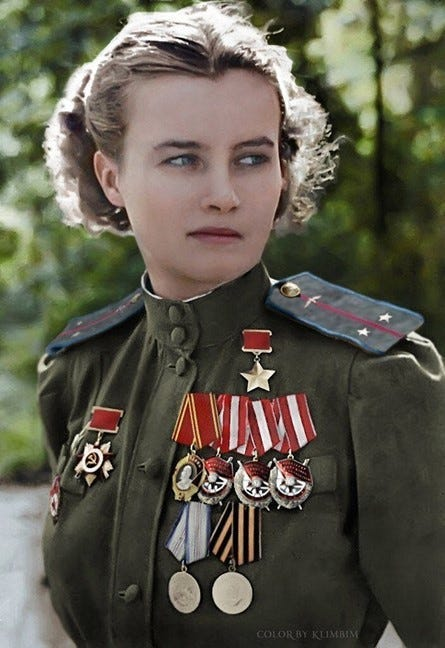
Nadezhda Popova flew 852 combat missions in a canvas-and-plywood biplane built as a 1920s trainer, gliding over German lines at night with her engine cut to drop bombs in silence. She was one of the Night Witches, the all-female bomber regiment the Germans feared, and she is one of the great stories of the war.
The Soviet Union, uniquely, sent women into combat in large numbers, and among the most extraordinary were the pilots of the 588th Night Bomber Regiment, flown entirely by young women, from the pilots to the mechanics. Their aircraft was almost a joke on paper, the Polikarpov Po-2, a slow, open-cockpit wooden biplane with a tiny engine, a machine so obsolete it seemed suicidal to take it to war. But in the dark it became a weapon of terror.
Their tactic was as brave as it was cunning. They would fly toward the German lines at night, and as they neared the target, cut their engines and glide in silently, so the first the enemy knew of them was the whistle of the wind over their wings just before the bombs fell. The Germans, unnerved by the eerie whooshing sound in the darkness, gave them the name Nachthexen, the Night Witches. The women flew mission after mission, night after night, sometimes a dozen or more sorties in a single night, landing to rearm and taking straight off again, in aircraft with no armor, no parachutes for much of the war, and no guns to defend themselves.
Popova was one of the most celebrated of them all, flying 852 missions over the course of the war, an almost unbelievable number, including as many as eighteen in one night. She was shot down or forced down repeatedly and always came back. She once returned from a mission to find 42 bullet holes in her little biplane, in the wings, the fuselage, even her helmet. She kept flying.
She survived the war, one of the many Night Witches to be made a Hero of the Soviet Union, married a fellow pilot she had met at the front, and lived to a great age, dying in 2013. She said once that she sometimes stared up at the night sky in her old age and could not believe she had done it, flown all those nights, in that little plane, against all that fire, and lived.
🇷🇴 A Spanish F-18 fighter jet pilot on a #NATO air policing mission shot down a drone illegally breaching Romanian national airspace, the fourth unmanned aircraft the country has shot down this year, Romania's defence ministry said on Sunday.
https://t.co/3Y9XDVzPXz
I'm saddened by the news that Massachusetts has removed all gestational limits on abortion, having no legal requirement that abortions beyond 24 weeks (when the fetus is plausibly sentient) only occur in cases of absolute necessity. Post on the topic below.
https://t.co/R4l83w5uUS