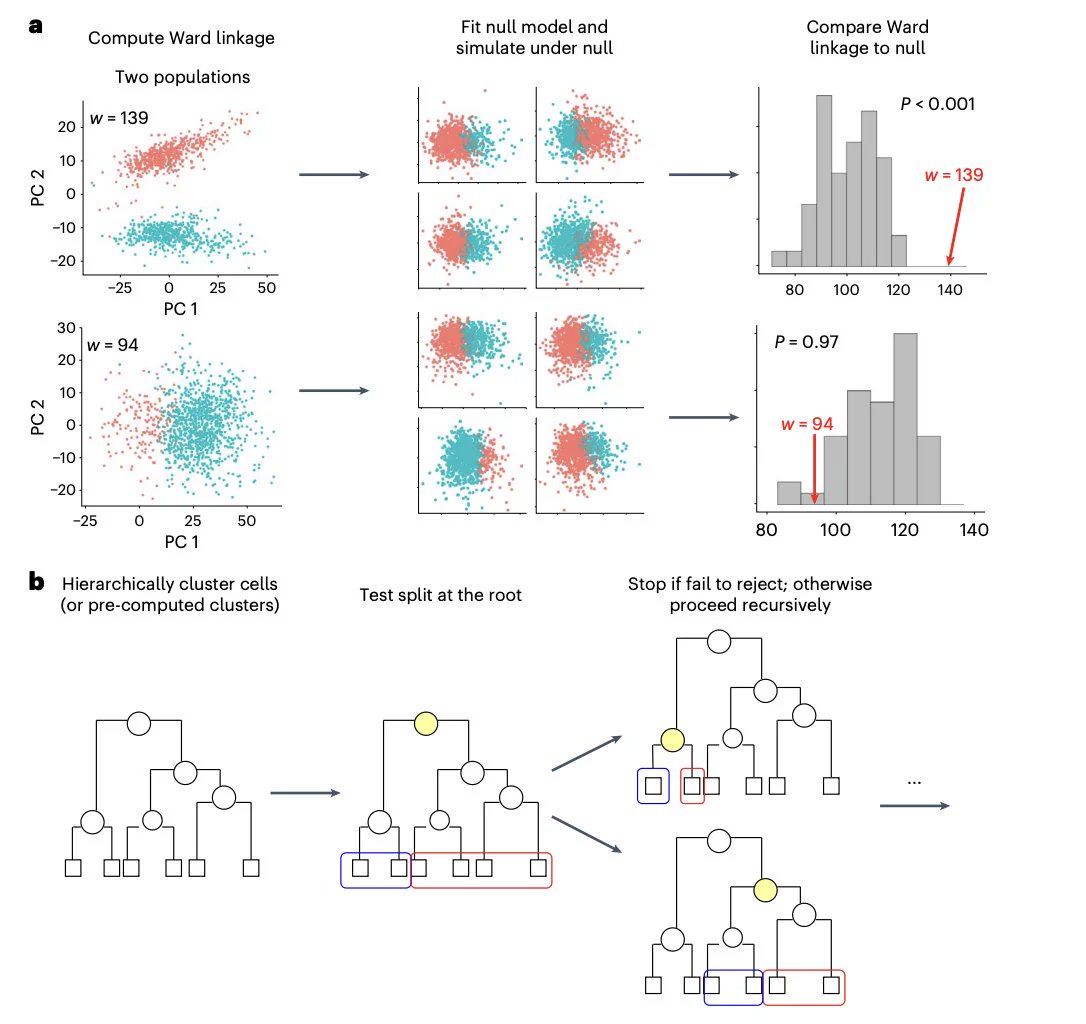
Clustering algorithms report clusters even when none exist. In single-cell RNA-Seq pipelines, novel cell types are often identified by clustering algorithms. Expanding on Kimes et al.'s work, we introduce significance analysis for single-cell RNA-Seq data: https://t.co/ut1kPjKVCM
Another deep learning breakthrough:
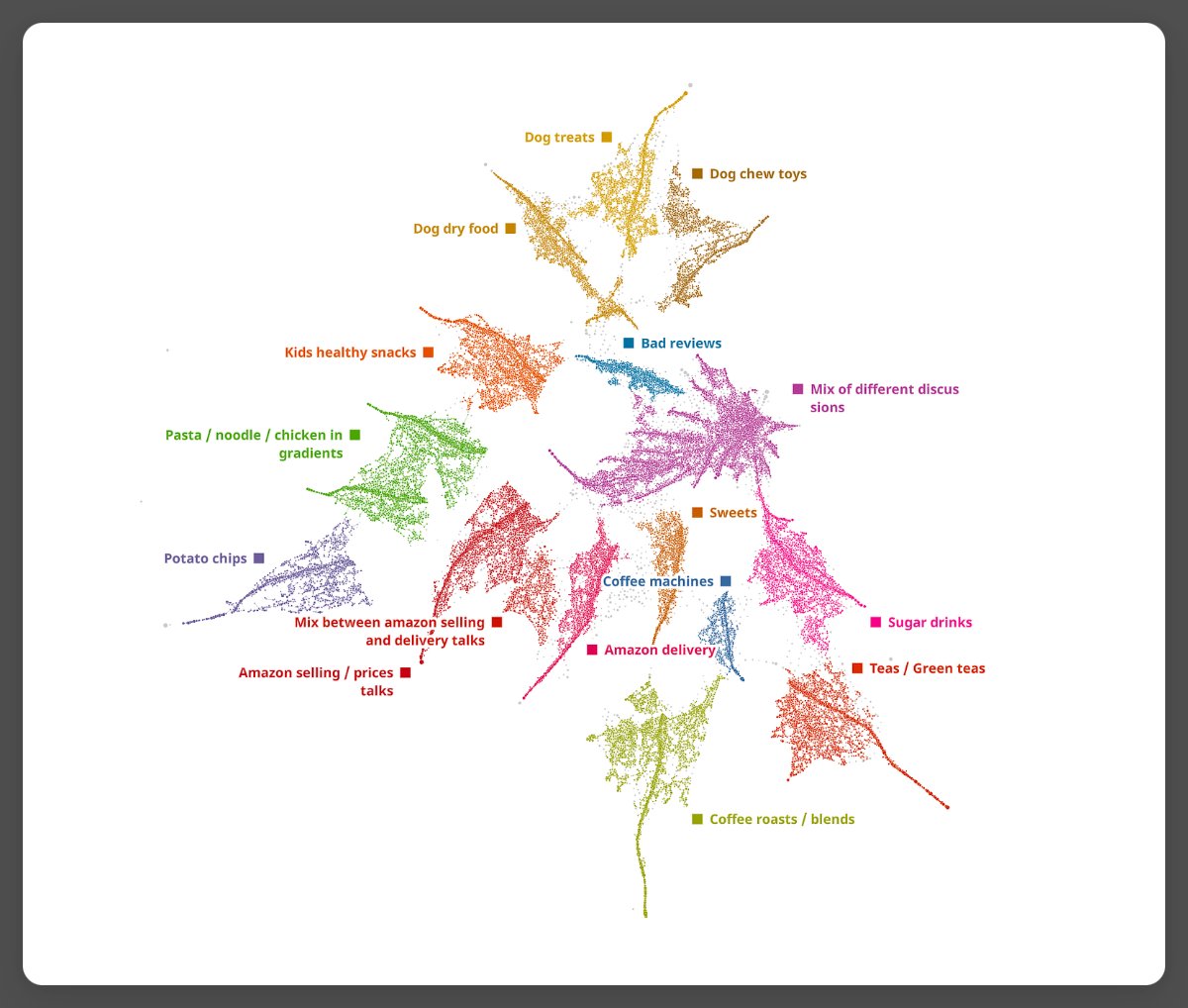
Deep TDA, a new algorithm using self-supervised learning, overcomes the limitations of traditional dimensionality reduction algorithms.
t-SNE and UMAP have long been the favorites. Deep TDA might change that forever.
Here are the details:
Do you want to get into scRNA-seq but are lost in the sea of never-ending papers?
No worries, I got you covered.
Here's a list of the best review that have help me understand the core concepts of the technique, analysis and interpretation:🧵
Aspirations for academics: a 🧵(1/4)
1. May your heart be bigger than your h-index
2. May you peer review others' work the way you wish to be peer reviewed (the Golden Rule/don't be Reviewer 2)
3. May you never forget what it's like to be a struggling grad student (or postdoc)
Using GLMMs and LMMs? If you haven't read this paper, you should! A great summary of major issues we face with model selection (though our choices are still deeply imperfect/we have a long way to go)!
Bottom line: hard thinking is always preferred.
https://t.co/ePrPp9a0kR
❓Did you know that some cell adhesion molecules can also function in the nucleus of the cell?
👀In our research paper, OUT TODAY, we explore nuclear adhesion protein networks and establish the concept of a nucleo-adhesome
👇Read it here
https://t.co/uPY0FYuzPA
🧵
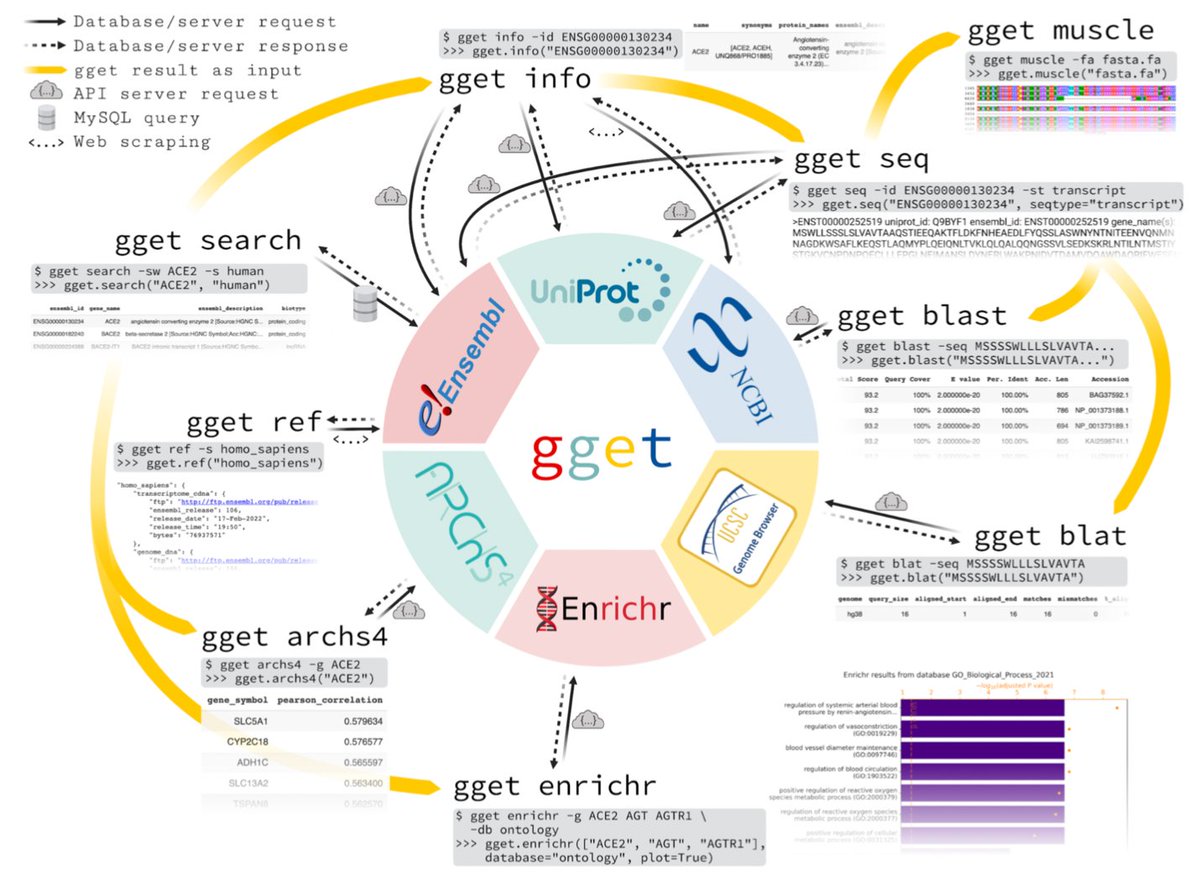
Analysis of #scRNAseq requires constant, tedious, interaction with genomics databases. To facilitate querying from @ensembl et al., @NeuroLuebbert developed gget:
https://t.co/xoaqK9scZo (code @ https://t.co/j5FLp7DyFx).
gget has many uses; a 🧵on the its amazing versatility: 1/
The analysis of single-cell RNA-seq data begins with "normalizing" counts. In a preprint with @sinabooeshaghi, @IngileifBryndis & @agalvezmerchan, we examine the assumptions and challenges of normalization, benchmark methods, and motivate solutions: https://t.co/yb7sdzWbPQ 🧵 1/
I would like everyone in science to read the painful, poignant description of what, exactly, Sabatini did to women under his mentorship. It should make you sick to your stomach. I don't think I could still be in science if I'd faced any of this. https://t.co/vJ5E7NWMEJ
For any #scRNAseq folks who might need to hear it: If you use imputation on your data, you can't use frequentist statistics. Your measures become directly dependent on each other, manually shrinking local variance relative to global (exactly what's quantified in some stats).
Incredibly excited to share our paper ‘Somatic mutation rates scale with lifespan across mammals’ now published @nature.
https://t.co/a68IkkTt33
An illustrated & updated tweetorial… [1/24]













![ATJCagan's tweet photo. Incredibly excited to share our paper ‘Somatic mutation rates scale with lifespan across mammals’ now published @nature.
https://t.co/a68IkkTt33
An illustrated & updated tweetorial… [1/24] https://t.co/o8BLsIXH7x](https://pbs.twimg.com/media/FQPMMCCWYAIybBt.jpg)


