Building on the work of Richard and Chris, here is our latest work showcasing the potential of the 100 keV #Tundra microscope with the Ceta F and Falcon C. We achieved high-resolution structures for a variety of protein complexes🧵.🔬#100keV#CryoEM. Movie by @lingboyu
@AdrianKoh8@thermosciEMSpec@LanderLab In preparation for tomorrow, if you have questions regarding Falcon C and Tundra, you can leave them in the comment below.
@klausenhauser @allostericstate There are two design options for Falcon C, (1) smaller physical pixel size and more number of pixels, but poor DQE (2) larger physical pixel size and less number of pixels, with good DQE. As our choice for the Falcon family, quality first, we went for option #2.
@klausenhauser @allostericstate There are two design options for Falcon C, (1) smaller physical pixel size and more number of pixels, but poor DQE (2) larger physical pixel size and less number of pixels, with good DQE. As our choice for the Falcon family, quality first, we went for option #2.
@LanderLab Agree to every single word, except the tabletop. I imagine the good detectors need to be under the table...
One step at a time. First thing first, how about matching color palettes to the higher voltage 😊
@CryoJB@GSharov_@IsraelF96135088 You are right, Tundra doesn't have a scripting interface in the configuration.
At LMB, a scripting interface is added under the beta agreement for testing 3rd party cameras.
Results from new detector for @thermofishersci Tundra #CryoEM .
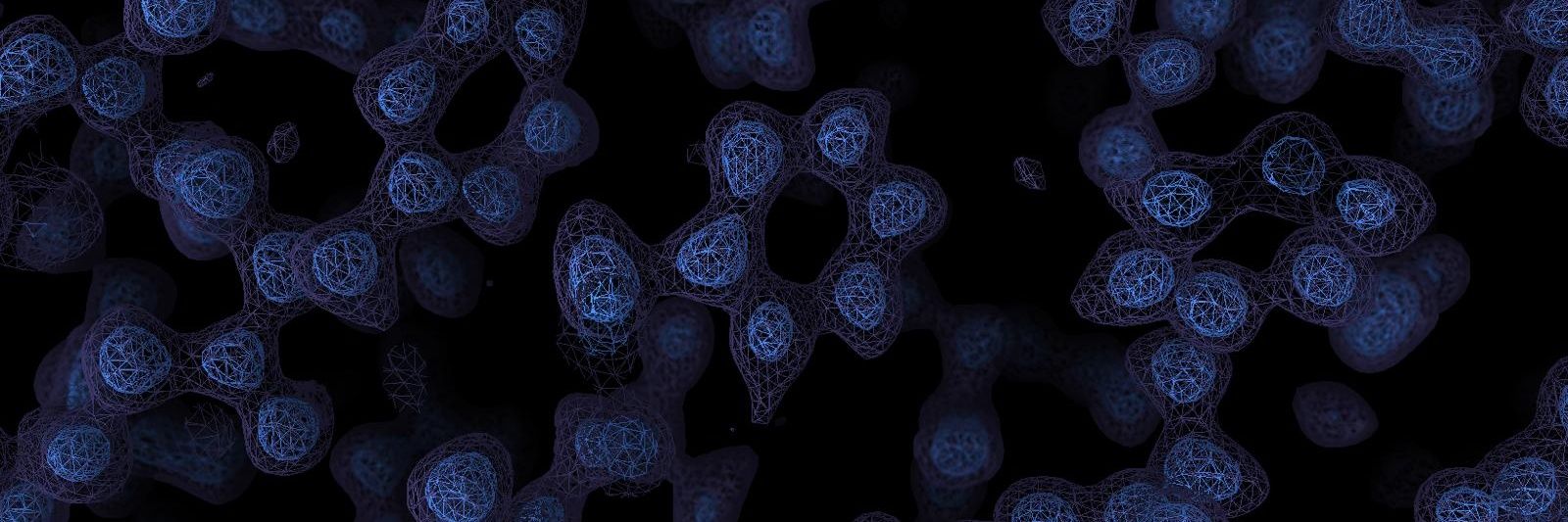
Do I see some donuts?
Join us on 7/13 at https://t.co/v4c3QfNbjw to hear more about how we did it.
Movie credit @lingboyu
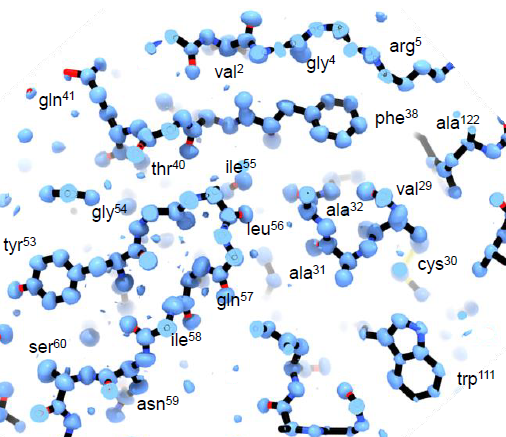
#cryoEM#MicroED with electron counting. Protein structure at 0.8A resolution. Ab initio phasing for two proteins facilitated by electron counting on a falcon 4 direct electron detector. A section of the map is shown below
https://t.co/ODsZ0Z1yF5
@biochem_fan@huwtjenkins I have not looked into the details. There are always outlier pixels that are problematic. But I haven't seen a prominent problem when I looked at the statistics of linearized dark images.
Linearization cannot be turned off by disabling gain. It is followed by bias correction.
@biochem_fan@huwtjenkins I think Leginon substract the minimum (the most negative) value in a data set. Ceta's dark noise, RMS of noise reduction mode: ~8 counts in 4k, 32 counts in 2k.
RMS of normal mode: ~13 counts in 4k, 52 counts in 2k. For normal distribution, there can be very negative values.
@biochem_fan@huwtjenkins I cannot explain why there are many hugely negative pixels. We do have a couple "bleeder" pixels that cannot be fixed by dark or gain correction. The image processing pipeline: A couple dark frames to average as a dark reference, unblank the beam
If the time slot on Nov 18th didn't work for you, the recording is now available on Tundra. https://t.co/wPPRrvTtmt
I had a lot of fun creating this video clip, learning on the job😊