made a new https://t.co/aLKrkDy0Mg capsule for teaching factor analysis: Factor Lab. In the PLAY mode you have to guess the generating model based on observed correlations, and in the LEARN mode you can play around with seeing what correlational structures are implied by the model: https://t.co/0eUFXNse92
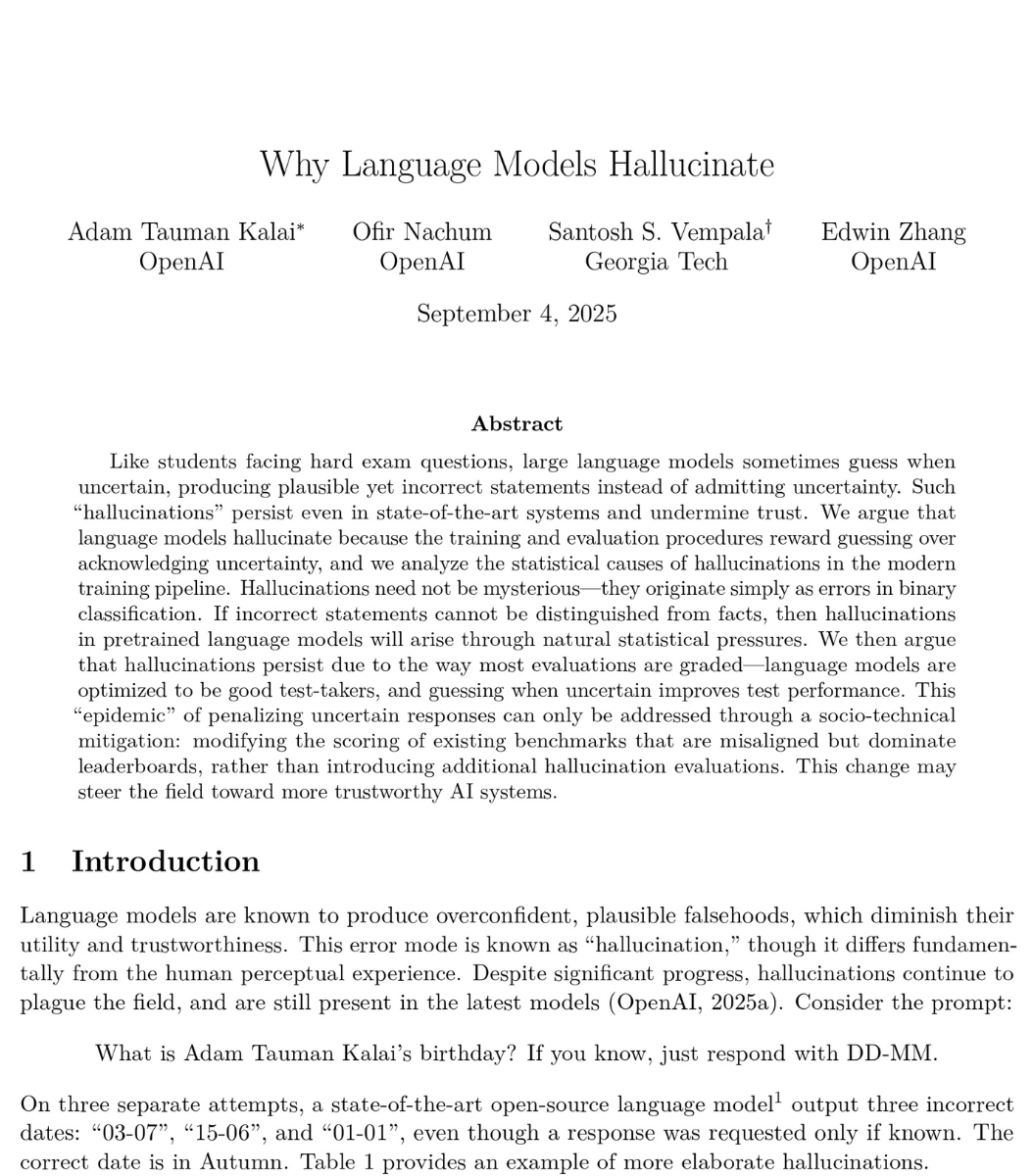
🚨BREAKING: OpenAI published a paper proving that ChatGPT will always make things up.
Not sometimes. Not until the next update. Always. They proved it with math.
Even with perfect training data and unlimited computing power, AI models will still confidently tell you things that are completely false. This isn't a bug they're working on. It's baked into how these systems work at a fundamental level.
And their own numbers are brutal. OpenAI's o1 reasoning model hallucinates 16% of the time. Their newer o3 model? 33%. Their newest o4-mini? 48%. Nearly half of what their most recent model tells you could be fabricated. The "smarter" models are actually getting worse at telling the truth.
Here's why it can't be fixed. Language models work by predicting the next word based on probability. When they hit something uncertain, they don't pause. They don't flag it. They guess. And they guess with complete confidence, because that's exactly what they were trained to do.
The researchers looked at the 10 biggest AI benchmarks used to measure how good these models are. 9 out of 10 give the same score for saying "I don't know" as for giving a completely wrong answer: zero points. The entire testing system literally punishes honesty and rewards guessing.
So the AI learned the optimal strategy: always guess. Never admit uncertainty. Sound confident even when you're making it up.
OpenAI's proposed fix? Have ChatGPT say "I don't know" when it's unsure. Their own math shows this would mean roughly 30% of your questions get no answer. Imagine asking ChatGPT something three times out of ten and getting "I'm not confident enough to respond." Users would leave overnight. So the fix exists, but it would kill the product.
This isn't just OpenAI's problem. DeepMind and Tsinghua University independently reached the same conclusion. Three of the world's top AI labs, working separately, all agree: this is permanent.
Every time ChatGPT gives you an answer, ask yourself: is this real, or is it just a confident guess?
Excited to be hosting the AMPC conference on mathematical psychology, psychometrics and behavioral data science in Singapore this February! Please share with whoever might be interested!
https://t.co/danFv2hUDu
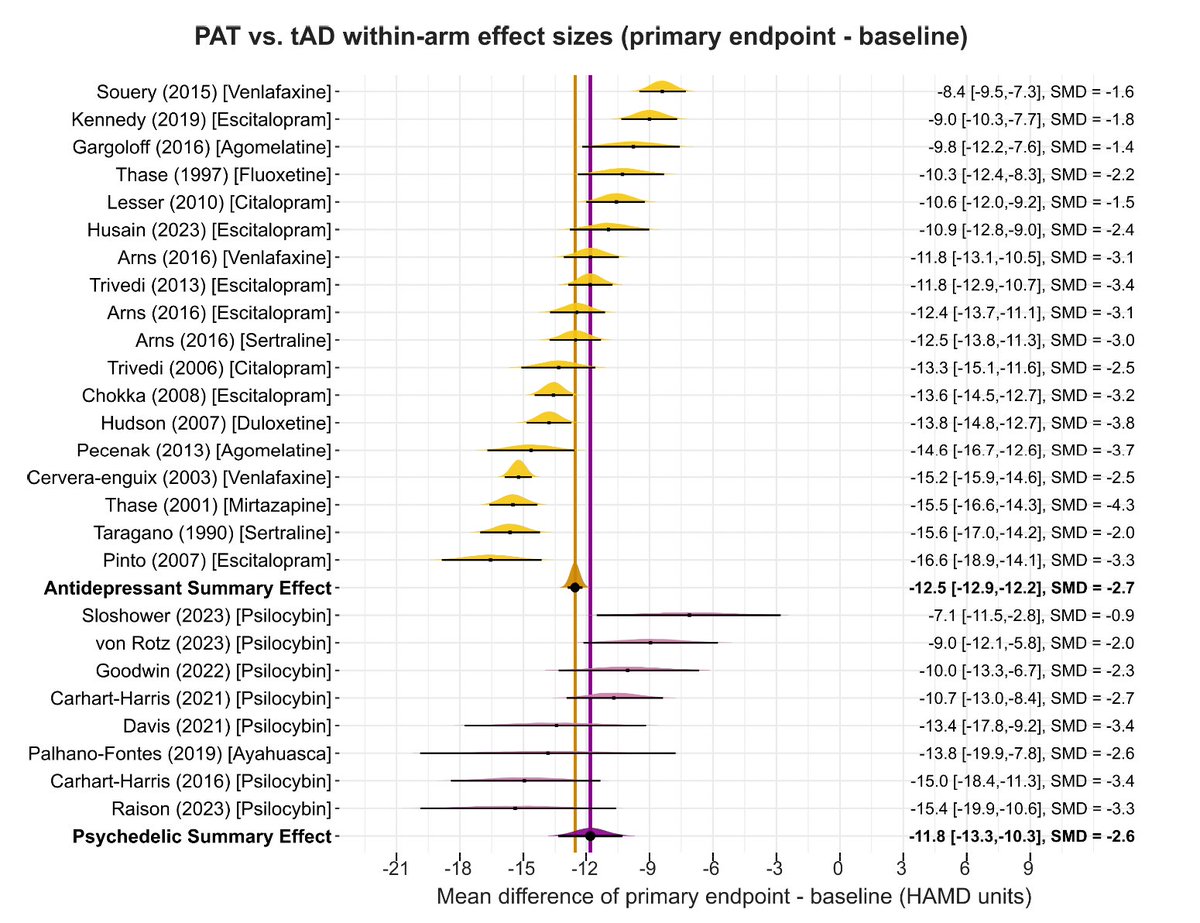
Psychedelic science largely ignored problem of unblinding, dramatically inflating effect sizes (not even *assessed* in most studies).
New study: psychedelics don't outperform antidepressants in fair comparison where both studies are unblinded.
https://t.co/677fvgAb9s
“Flooding, Sociospatial Risk & Population Health”: @ethanraker incorporates local health survey, floodplain & inundation data to show “how sociospatial determinations of risk shape postdisaster mental health outcomes by stratifying" resources & responses. https://t.co/HzZsTzkt1B
L’état de l'Atlantique est une dinguerie. Un rail de cyclones de la Floride a l'Europe!
L'intensification de #Milton est une dinguerie.
👇Probabilité d’occurrence du niveau de pression (couleur). Autour de 1 chance sur 200 localement mais c'est la structure spatiale qui est ouf
« Pourquoi les femmes vivent-elles plus longtemps que les hommes ? »
Découvrez la réponse de la Prof. Nadine Ouellette dans une interview avec @MatthieuDugal sur @RadioCanadaInfo dans l’émission « Moteur de recherche ». 🎙️🎧@UMontreal@FASNouvelles
👉 https://t.co/DsXcG4i7LI
[THREAD] A study published in Nature Communications analyzes the impact of the #COVID19#Pandemic on excess mortality in #Europe. Jointly conducted by INED and @BiB_bund, the study reveals sharp regional contrasts across 25 EU countries in 2020-2021.
https://t.co/zVZn4sK9NE
Declines in smoking and increases in education were principal factors driving reductions in adult mortality in the US from 1997-2019. Rising levels of psychological distress increased mortality levels during later stages of the period. 📰👉https://t.co/vdfxf2akff
🎉 This month marks the 2⃣2⃣nd anniversary of the HMD since its debut @PopAssocAmerica in 2002, where founding director John Wilmoth presented the database
Let's take a moment to introduce you to the core team of 22 years ago and today ⬇️🧵
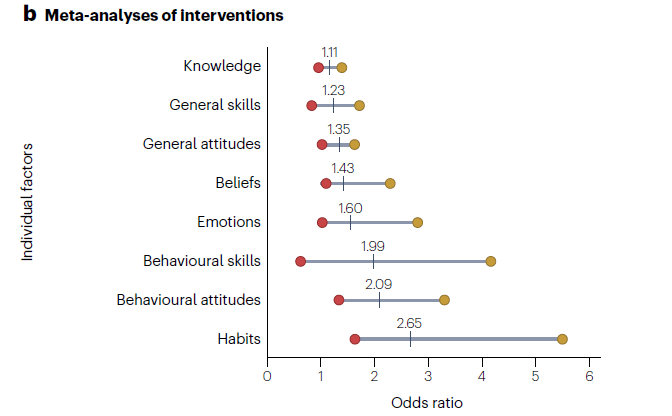
What are the most efficient ways to change behaviour? Nature Reviews Psychology published this excellent review of various meta-analyses across different life domains . The review offers some very interesting insights.
I would like to pass on the call linked below from Yves Roseel, developer of the SEM-lavaan package in R. Yves has been doing this for many years besides his job and lavaan has quickly become a serious competitor to commercial software (like Mplus).
🚨📢 I’m delighted and proud to share our new @Nature paper “Online Images Amplify Gender Bias” https://t.co/tilMResZCX What better day than Valentine’s Day to learn about gender stereotypes?🩷A thread 🧵
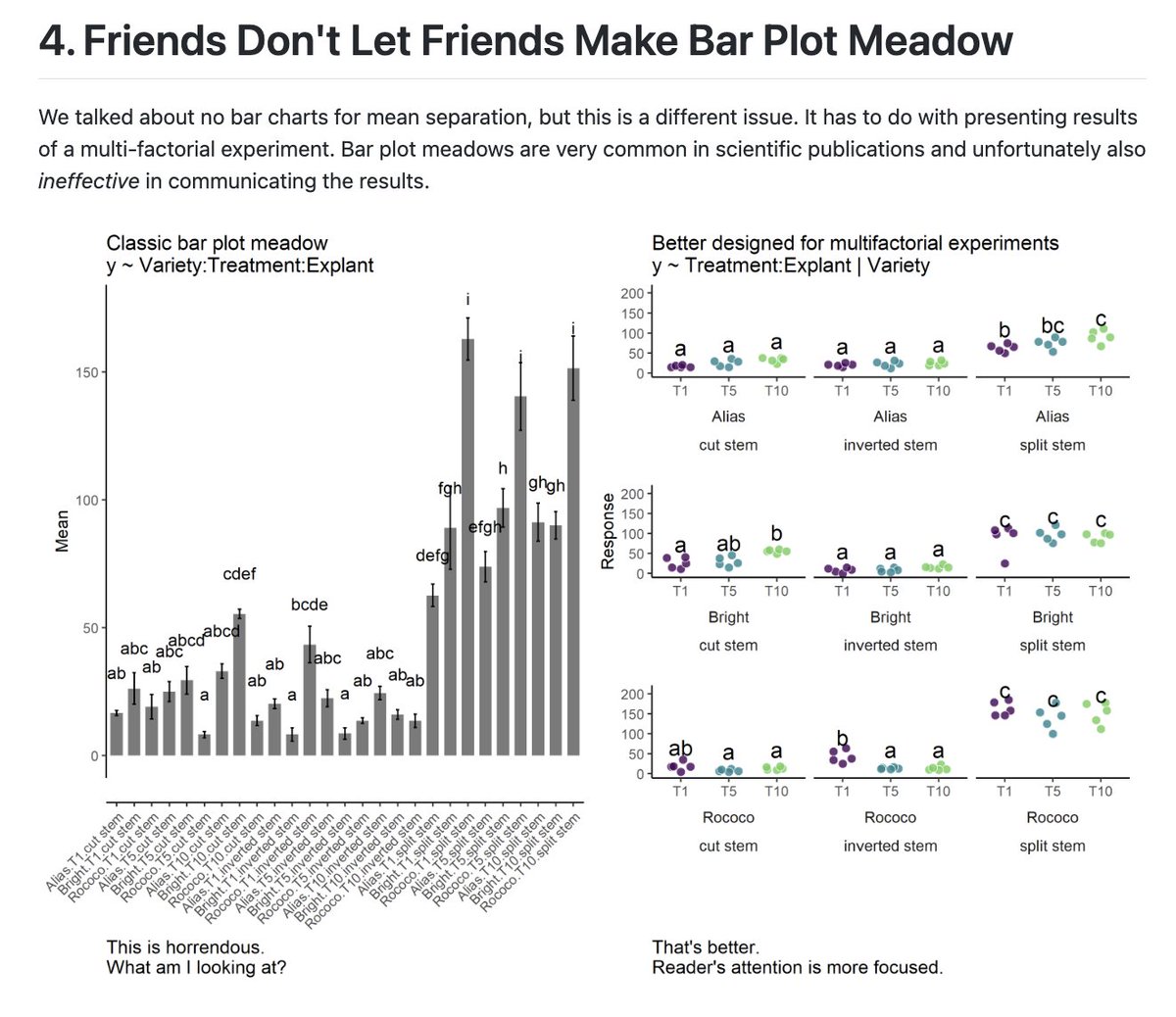
Friends don't let friends make bad charts!
Chenxin Li, pulled together a lot of great advice for data visualization, with clear "do this, not that" examples for each item.
Here are a few of my favorites, see the link below for more.