Netflix VP, hobbyist stock picker, Past: Rippling CPO, CIO@JPM CIB, EVP @lyft & Googler, I walk a lot. I live to eat, I restrict hours. Dabbling in calisthenics
It looks like my timing was off but now that we have a confirmed date for the IPO, maybe we get two day flush, most obvious catalyst will be NVDA earnings , 607 here would be -20% from the Oct 6th
ES just opened Sunday night at 7,023.00
that puts the S&P ~100 points ABOVE Friday's cash close
Monday's SPX straddle closed Friday at ~$184.. a 2.7 pct move priced for one session
so the futures have covered more than half of Monday's priced move before the cash market opens
SPX options reopen at 8:15pm ET.. MMs are as short gamma as we've seen them, and Monday's decay hedge is a SALE
more on that once the options open
@VolSignals That is the beauty of the work both of you are doing. It is valuable no matter what my macro view may be
Where should I optimally execute my macro view
Where should I be patient (right macro view, wrong time)
I use these tools just like I use moving averages
Discipline
That’s someone I pay attention to
7250 is +4.9% from Friday close
If you think it was a Bottom, seems like you will miss 5% if you want to be sure
That’s a lot, so I am skeptical
5/5 My takeaway:
Historical panic selling around monthly OpEx has often preceded powerful relief rallies as shown in the recent examples below.
Combined with this negative-gamma setup, the potential for a sharp 1–3 week rebound is compelling.
But confirmation matters: reclaim 7,250, see VIX retreat, and watch breadth improve.
A tradable rally doesn't have to mean the broader correction is over.
Let’s start with the obvious. This has been a terrible market. I’m a shareholder too. I feel it. But I think it is important to separate what has changed from what hasn’t.
The cost of capital has changed. Risk appetite has changed. Public market valuations have changed. What has not changed is the demand for compute, the scarcity of power to support it or how difficult it is to bring a large-scale data center online. In fact, I think this market is finally forcing people to look harder at the differences between projects and developers. That’s a good thing.
Here’s my weekly 10.
I was as skeptical about fibbonnaci retracements as the next person.
Till I realized the 666 low was a 61.8% retracement of the entire '82 to '07 bull market. So I try to pay attention when the levels are big and obvious.
My previous note appears to have been misconstrued, so let me add a brief clarification. As I always remind everyone, I am Forbes' "Worst Hedge Fund PM on Earth"—no need to take everything so seriously.
Too many ppl blaming this selloff on the wrong things. "Fed tightening" or "valuations"... are you out of your minds? My core point is that the underlying signs of market deterioration have been building steadily since June, just as Ace and Paulo have consistently highlighted.
Everyone is familiar with the meme of the Reaper knocking sequentially on the doors of rates, precious metals, equity L/S, and macro.
Many attribute this move to Fed tightening, yet comparing pre- and post-selloff levels shows no meaningful shift in US FCI or Fed rate pricing. Financial plumbing and front-end funding markets also remain orderly. Perhaps someone could clarify what tightening is actually taking place.
I understand the widespread desire for a Fed pivot. Certainly the Fed would have been better served heeding voices like Danny Dayan rather than remaining passive when hawkishness was warranted. Whether a December hike is appropriate remains unclear—it likely leans toward a policy mistake.
Even so, that does not justify the pivot the market is hoping for. While the appetite for a post-pivot equity rally is understandable, there is simply no catalyst to warrant it—certainly not an equity market that has barely slipped into negative territory YTD.
Liquidity remains adequate, bank reserves are not under stress, and the Treasury market is functioning without dislocation. Meanwhile inflation remains well above target; having heard assurances for two years that it will eventually subside, I prefer to treat that trajectory as uncertain.
With long end yields having only recently stabilized, an unjustified pivot risks reigniting instability at the back end of the curve. Consequently, the Fed requires a clear pretext.
Current conditions fall short of providing one. Something must break. For now, asset prices have corrected without systemic stress—so unless market participants break something, the Fed lacks its excuse.
I do agree numerous assets look undervalued, especially non-AI and non-semi names caught in the crossfire. For long term investors accustomed to holding core positions patiently over multi-year horizons, accumulating here makes complete sense.
From a trader or PM standpoint, however anchoring a thesis on an imminent Fed pivot or compressed multiples is fundamentally flawed.
A pivot may materialize, but only after something breaks—and valuations were stretched to begin with. Low-quality companies were already trading at 50x to 100x earnings and continued to rally regardless.
It was not valuation itself halted that advance, but a broader shift in market dynamics. Equities ultimately declined at the tail end of a sequential deleveraging across quant, hedge fund books (Equity L/S and Rates RV), macro (precious metals and oil), dispersion, and EM FX.
Accordingly from a trading perspective, I want to see stabilization in the forces that initiated this tape: moderating correlations, the completion of cross-asset liquidations, and genuine liquidity returning via high vol accumulation candles—especially after this week's severely impaired equity liquidity.
That is all. I have no interest in buying in anticipation of a Fed pivot; if something must break first, the logical approach is to wait for that break before stepping in.
Long term investors should disregard all of this and simply buy—specifically sound, real-world businesses outside the AI and semi baskets that merely suffered collateral damage from financial deleveraging.
Investors need not think like traders; simply scale in gradually and let the results play out over the coming years. Gonna start adding some common stocks—including a few miners—to my LT portfolio soon too.
Last, i know folks who got wiped out on levered AI/semi bets are now chasing even worse junk stocks for a quick bailout.
It's your money sure—but losing your savings is recoverable; you can still live a full life.
Revenge-trading to make it back can permanently ruin your life and leave you buried in crippling debt. Thanks. Pushback always welcome—just keep in mind I have an 80 IQ. Enjoy the rest of your weekend guys.
$spy $qqq
OPINION: Scott Wiener backers face a gantlet of social media homophobia and antisemitism, enabled by one of Silicon Valley’s most prominent platforms, Adam Brinklow writes. https://t.co/IZmTIvgZus
It was most likely written by an economist considering rent control is about as close to settled as economics gets.
Economists across the spectrum agree it shrinks housing supply over time. The best recent evidence comes from Stanford's 2019 study by Rebecca Diamond, who studied San Francisco and found that rent control helped existing tenants but led landlords to cut rental supply by 15%. That pushed citywide rents up about 5%. It protects insiders and makes things worse for everyone looking for a place to live.
https://t.co/hJRgN6uDUv
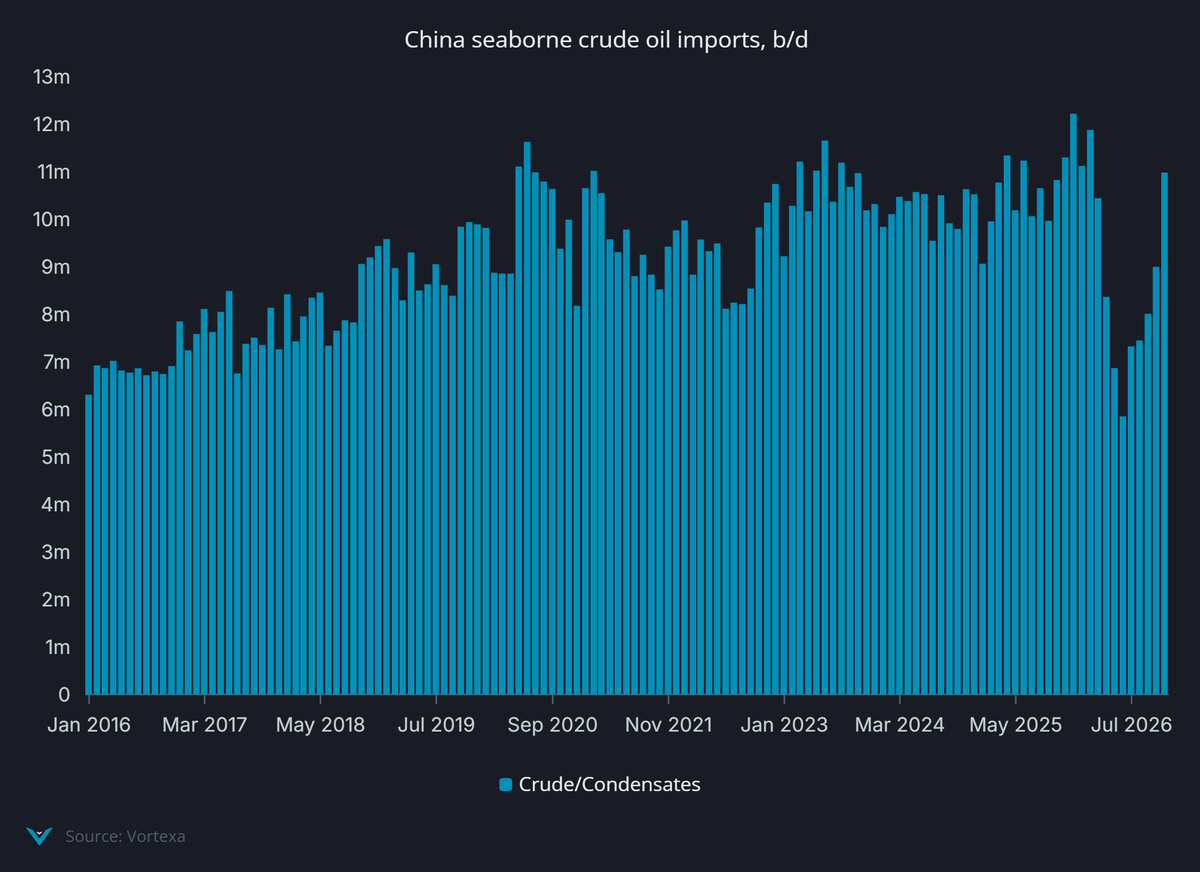
CHART OF THE DAY: Chinese seaborne crude oil imports have jumped to near pre-war levels (Nov 1-15 data via @Vortexa) of around 11m b/d. Beijing is taking advantage of high Persian Gulf flows to bring purchases to normal levels (despite it, oil prices have continued falling).
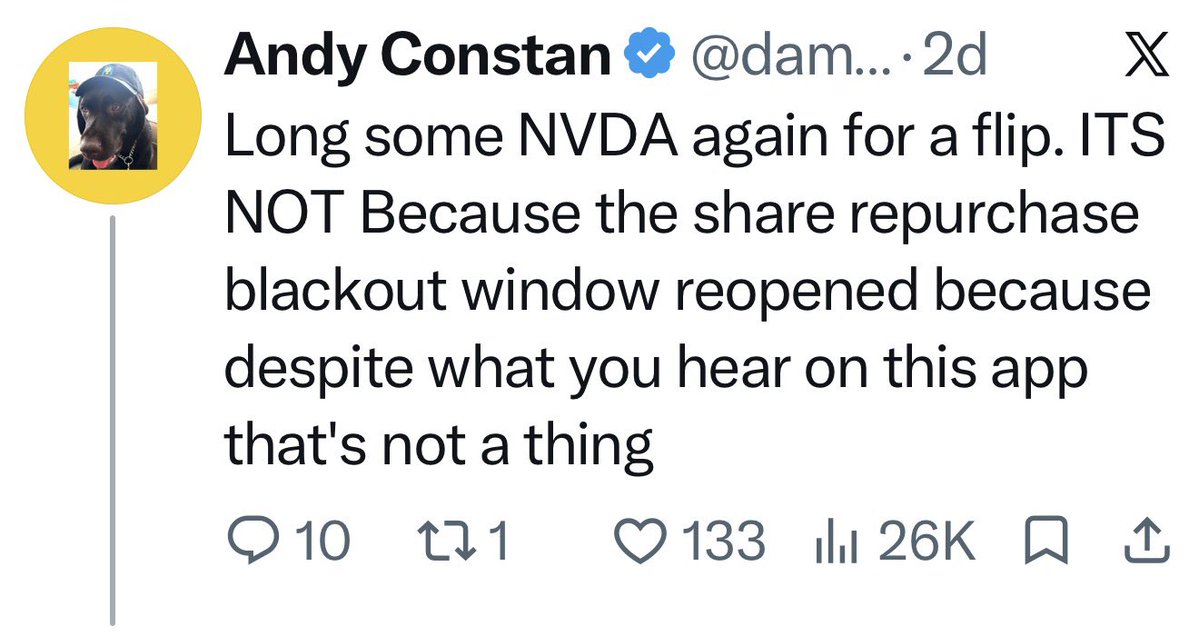
Thursday and Friday I was buying NVDA, Buying SPX delta selling NDX and SPX Put spreads and Selling VIX futures
Given the insane bullish twitter tone and mark up I regret all these trades.😂
If you look at inflation outside of food, energy and shelter, we are at 2%
That is also why I think it is almost a given that the Fed will pivot again if energy prices come down (as we currently see)
Fwiw I have some experience with 1987.
Friday October 16th was really bad. This was the chart I literally made for the Brady Commission.
A 5% decline. We all know what happened Monday. HOWEVER having seen the very specific positioning on that Friday at the specific client detail level and having sat through multiple discussion with participants at the time EVERYBODY knew Monday was going to be a disaster. Ignore those who say that everyone was surprised by Monday. No one was surprised it's just the door was too narrow to exit on Friday.
The point is that today is quite different than October 1987. One could argue it's much more complacent. Others could argue it's much more informed about crash risk. Certainly back then options were a tiny component of the market dynamics and active portfolio insurance was the way risk was managed and likely caused the crash. Today the options market heavily distributes that risk. The analog is fun and all but the reality is this is unlikely to be analogous.
[ICYMI] The diesel shortage has created a gasoline surplus.
US gasoline retail prices have fallen to an 8-month low. What's behind? Above, all, a deluge of gasoline supply as refiners boosted processing rates in response to a diesel shortfall.
https://t.co/EAfZjDPkCY