Excited to share our work led by @jiosephlee , being presented at EMNLP 2026!
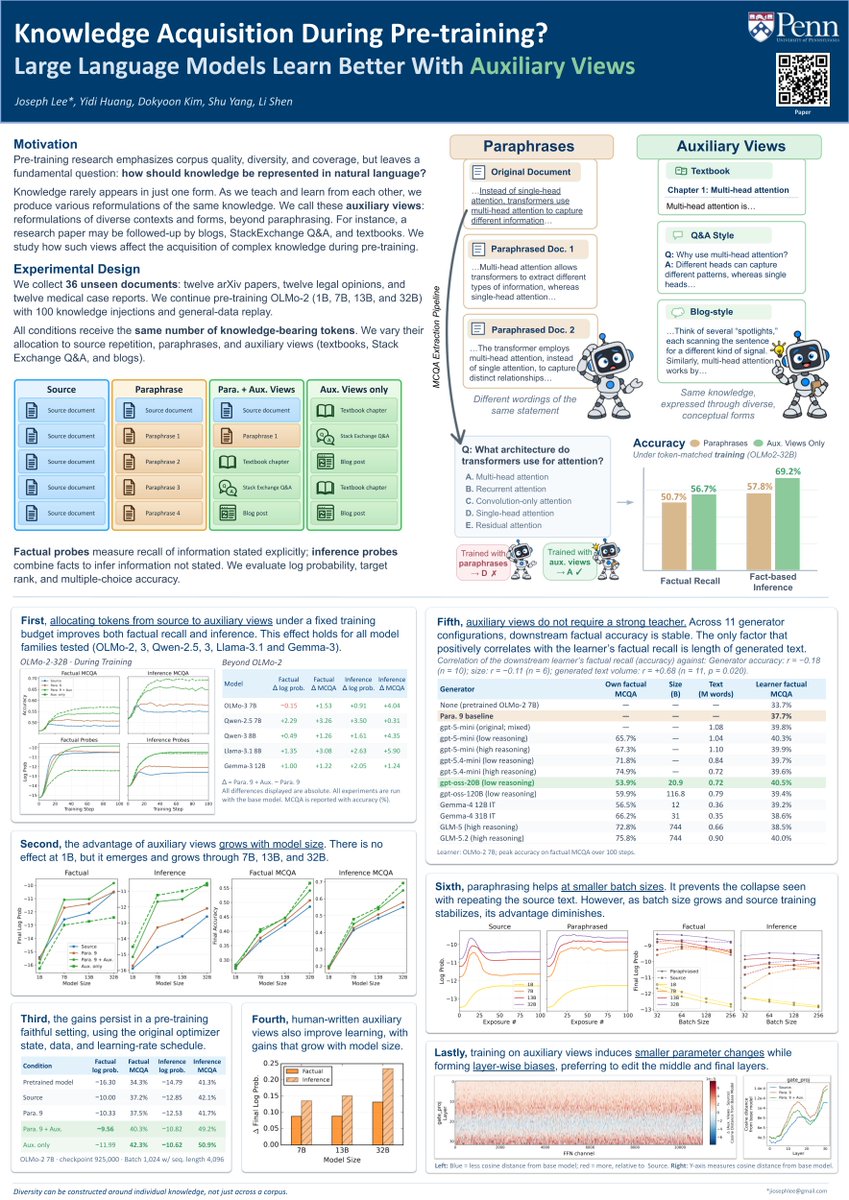
Under a fixed token budget, training on complementary views of the same knowledge can teach LLMs more effectively than repetition, even for factual recall. If you're at EMNLP, stop by Joseph's poster!
💡 Training on auxiliary views of Document X > training on Document X itself, even for factual questions drawn directly from X.
Presenting our work on LLM knowledge acquisition at #EMNLP2026 this weekend!
(1) Under a fixed token budget, conceptual reformulations (textbook explanations, blogs, and Q&A) can teach a document’s facts more effectively than repeating the document, even paraphrased.
We call these auxiliary views: beyond mere paraphrasing, they discuss the knowledge in a completely different context and form e.g. a paper blog!
The surprising part is that auxiliary views rarely mention the facts directly, but our evaluation uses the original document's phrasing near-verbatim.
(2) The benefit emerges and grows with model scale.
(3) stronger generator ≠ better learning.
We synthetically generate auxiliary views for our experiments, but across GPT-5, GPT-OSS, Gemma4, GLM-5 and more, the learner model's knowledge acquisition shows no correlation to generator model size or its own accuracy on the evaluation.
(4) After training on auxiliary views, the model's parameters actually move less but concentrate its changes at the middle and final layers.
The takeaway for synthetic data augmentation: build diversity around the knowledge you want to teach, instead of treating diversity as some board corpus-level heuristic.
Also, a possible implication for LLM self-improvement. Models can learn by just generating and training on their own auxiliary views, without a stronger teacher. This is particularly relevant for deeply specialized, long-tailed knowledge.
📄 Paper: https://t.co/hPhT1Ads27
📢 ACM-BCB 2026 | June 30–July 3 | Calabria, Italy 🇮🇹
Calls for Papers, Posters, Highlights, and Workshops: https://t.co/OR2B4LnhNW
Submit your work and join the community advancing bioinformatics, computational biology, and health informatics. #ACMBCB2026
ACM‑BCB 2026 (https://t.co/KAsFUnDVyv) returns 6/30–7/3 in Calabria, Italy!
Deadlines:
• Papers: 2/20 (abstract), 2/27 (full)
• Highlights: 2/20
• Posters: 2/27
Join us for top‑tier science and networking in bioinformatics, computational biology & health informatics.
Wow! https://t.co/JgHStEpCTx has reached over 1700 users in the first 30 days and almost 500 downloads 🚀🔥! What an impressive achievement by my team. So proud of my students! We will keep shipping the code, fixing the bugs, and improve user experiences. Check out the first co-evolving agentic AI system for medical image analysis! 👉https://t.co/NoX7bMTdha #TissueLab #AIAgent #AgenticAI #pathology #radiology
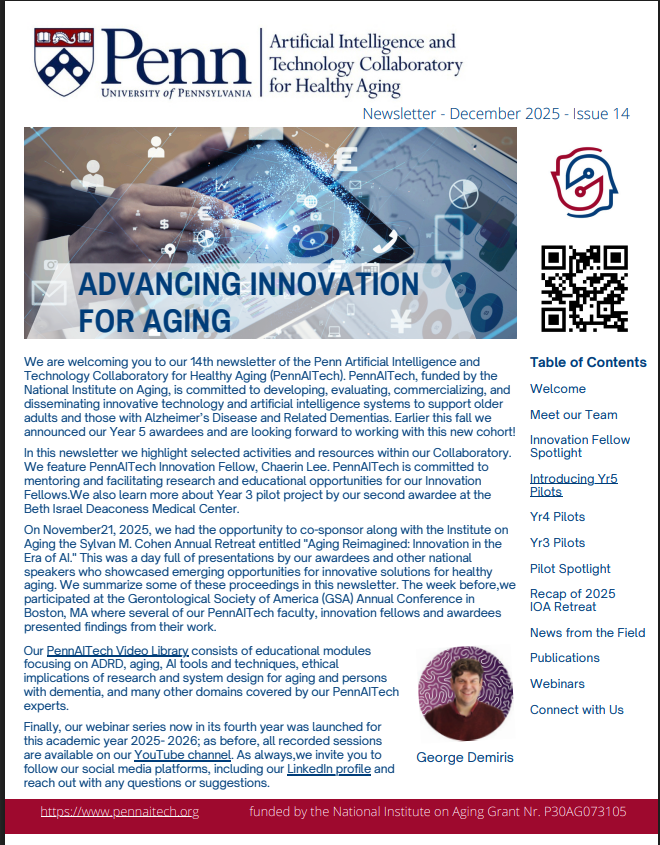
We are excited to partner with @PennAging for the Sylvan M. Cohen Annual Retreat on November 21, 2025 with the theme "Aging Reimagined: Innovation in the Era of AI." We have an exciting line up of speakers including Amanda Lazar, Ab Brody, Aidong Zhang, Maria Valero, Zhi Huang, Daniel Press, Trent Guess, Gary Weissman, Nancy Hodgson, Rory Boyle and David Yonce.
To register, click here:
https://t.co/SIYWmryc5Q
I’m honored and excited to serve as Interim Director of the Division of Informatics at @UPennDBEI. I look forward to working closely with our faculty and collaborators to advance our mission in informatics and biomedical and health data science.
Dr. Li Shen has assumed the role of Interim Director of the Division of Informatics. With deep expertise in data science, Dr. Shen is poised to advance the division’s mission.
Read more: https://t.co/qW3zAJoAW6
We are now accepting applications for Fall 2026 from October 1st through December 1st! More info about requirements and the application link can be found here: https://t.co/KyBkbimNWc
Thrilled to join this exciting project on scalable epidemiology with patient-reported outcomes! Looking forward to working with @gracielagon@CedarsSinai, collaborators, and the entire team to push this forward. @UPennDBEI@UPennIBI@PennAI2D@PennLDI
If you missed our September webinar with Pamela Toto, PhD, OTR/L, BCG, FAOTA, FGSA presenting on "The Healthy Home Laboratory: Implementing Smart Ways to Age in Place" you can watch the YouTube recording here:
https://t.co/091BSnch9o
Learn more about the project by Min Ji Kwak on "Detection of Adverse Drug Events Using NLP Among Older Adults with Heart Failure", one of our Year 4 awardees, here:
https://t.co/EJpRJ7FqWn
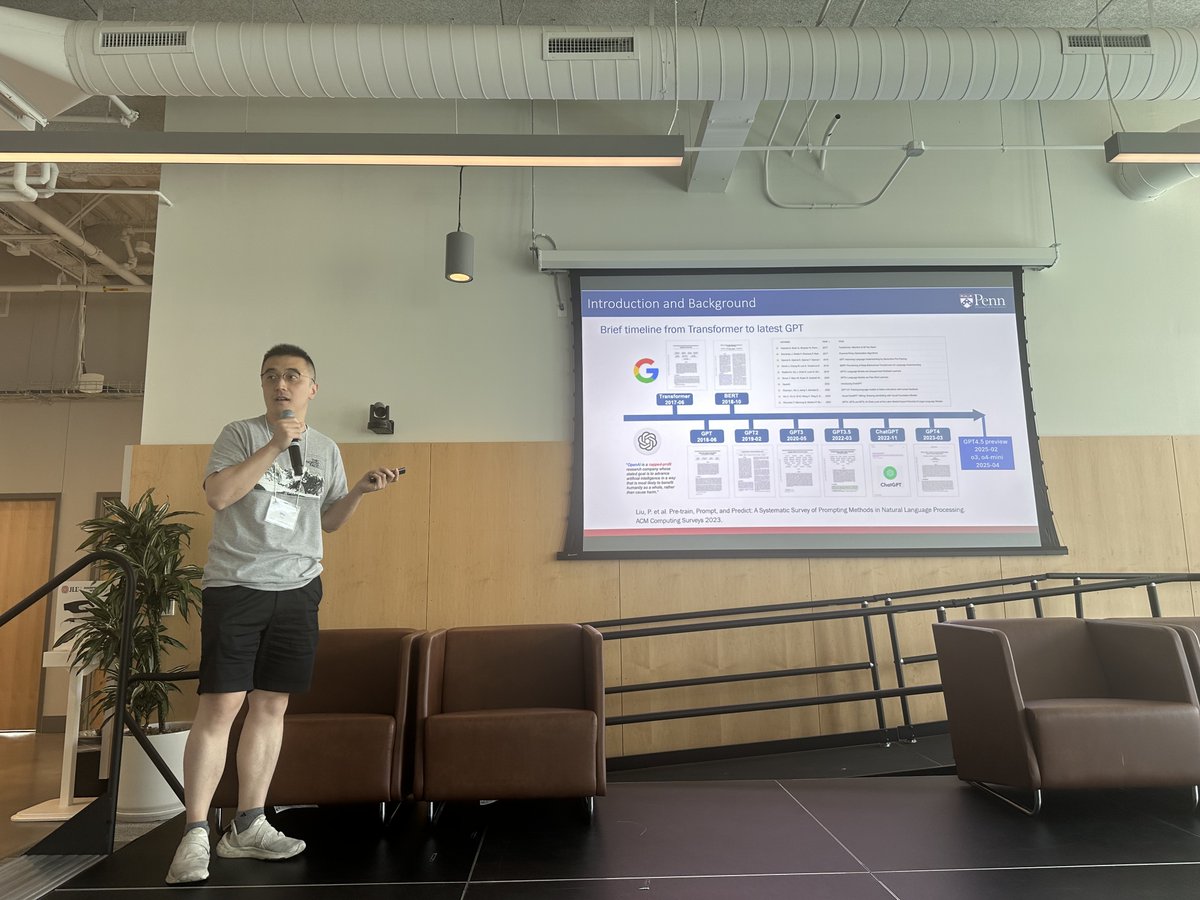
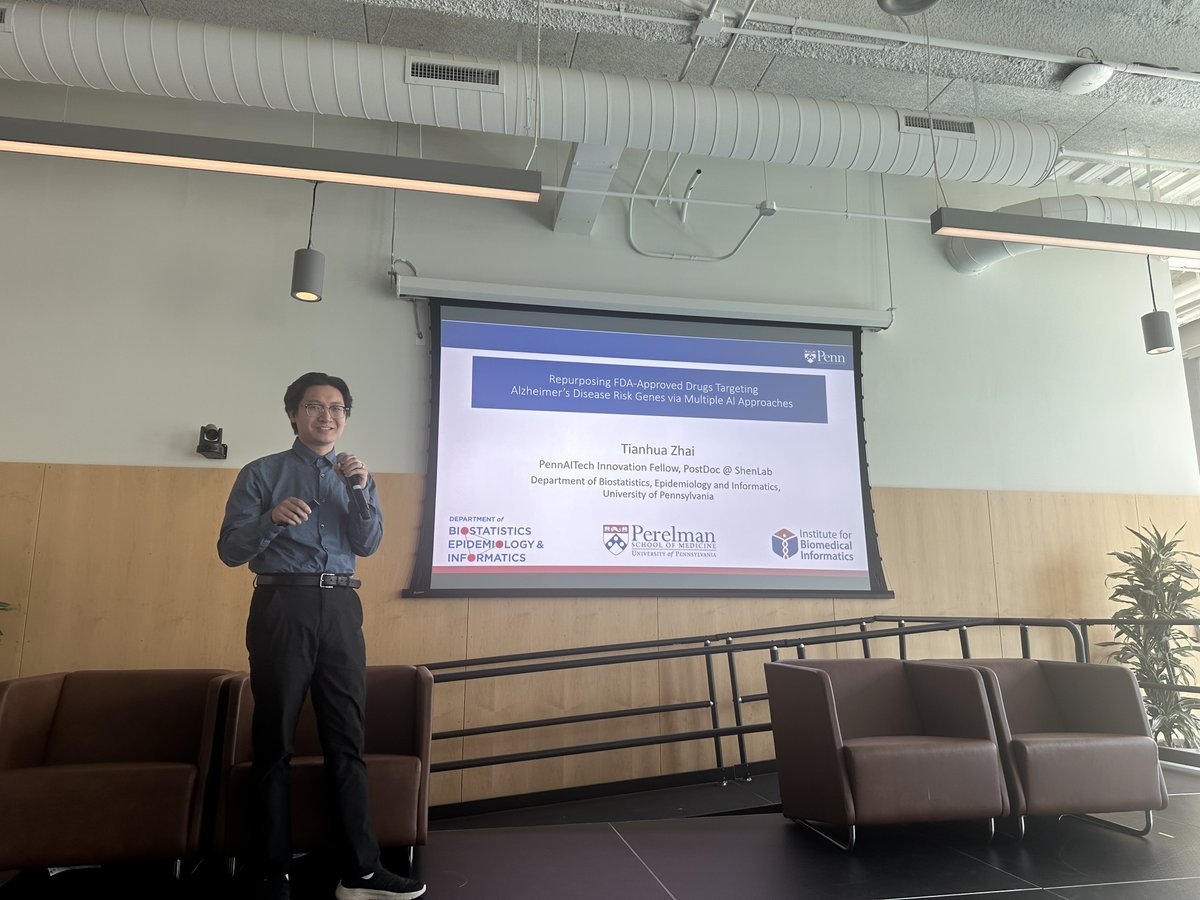
Summer Innovation Institute Day 2: Dr. Li Shen @lishenlc and members of his lab, Drs Shu Yanh, Tianhua Zhai and Bojian Hou presented a great overview of ways to harness AI and LLMs for Alzheimer's and Aging Studies based on their own impressive research portfolio.