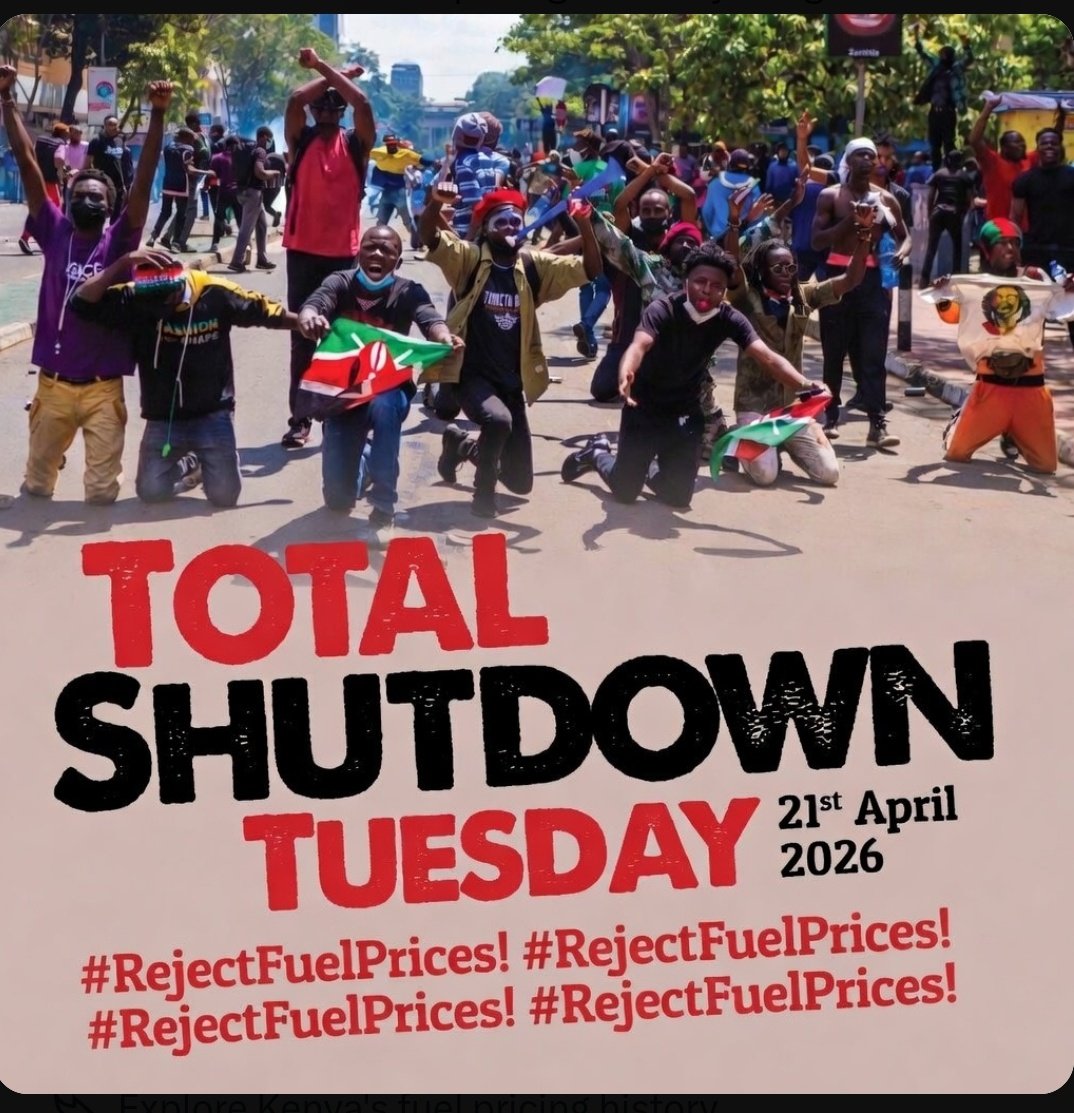
The current economic landscape isn't just a challenge; it’s a masterclass in gaslighting the Kenyan taxpayer. Yesterday, EPRA didn't just hike fuel prices they insulted our collective intelligence.
After weeks of motorists playing Russian Roulette with contaminated "fake fuel" and praying their engines wouldn’t knock, our reward for that anxiety is a higher bill at the pump. It is a cruel irony to be warned about bad fuel while being forced to pay a premium for the privilege of taking that risk. Whether you are behind the wheel, squeezed into a matatu, or sitting at home watching the price of basic commodities rise alongside transport costs, the message is clear, in this economy, the citizen is not meant to win.
We are no longer just fueling our cars, we are fueling a bloated, detached system where the math simply refuses to add up because the variables are hidden from the public eye. EPRA must immediately publish the full Cost of Service Study and explain the rationale behind these phased margin revisions that are being implemented in total darkness. If electricity tariffs require public participation and stakeholder input, then the lifeblood of our transport sector should not be managed behind closed doors. We are being asked to fund a system that has completely forgotten the person on the ground, leaving us to wonder how we are supposed to thrive when we are constantly undermined by the very institutions meant to regulate our markets.
Ultimately, we must stop pretending that administrative price setting protects the consumer. These "studies" are often informed by industry players with vested interests, creating a cycle of artificial inflation that stifles efficiency. Kenya would be better served by abandoning this opaque pretense and restoring genuine competition to the petroleum market. Competitive pricing, rather than centrally determined margins, is the only way to drive efficiency and protect the public from unjustified cost escalations.
The frustration has reached a boiling point, and the only way forward is to demand transparency over opacity and competition over administrative control.
The Man With the Bottomless Hole
And the old man spoke.
He told the people there was a man with a hole inside him, a hunger so deep that no matter what you poured into it, it would still cry for more.
He reached for taxes, and still it was not enough.
He reached for levies, and still it was not enough.
He cut the worker’s payslip through the housing levy, and still it was not enough.
He came for the people with the Finance Bill, demanding even more from a country already crushed by the cost of living, and Kenyans rose up and rejected it, but still the hunger remained.
Then the people asked him, did it get filled?
And the old man shook his head.
No, it did not.
Because that kind of hole never fills.
It grows on the sweat of workers whose money is sliced before it reaches home.
It grows on the pain of biashara people who are forced to survive under endless taxes, endless pressure and endless lies.
It grows on the backs of farmers, commuters and ordinary families who pay more for everything while those in power talk about sacrifice from the comfort of office.
And now he returns again through fuel, because fuel in Kenya is not just fuel. It is the matatu fare, the food on the shelf, the cost of farming, the price of moving goods, and the daily burden carried by every household. So when fuel goes up, it is not one sector being touched. It is the whole country being squeezed.
And once again the people asked, surely by now it must be enough?
And again the old man answered.
No.
That hole does not fill with taxes.
It does not fill with levies.
It does not fill with rejected bills.
It does not fill with the suffering of Kenyans.
The more you feed it, the wider it opens.
The more you endure, the more it demands.
That is why Kenyans must never normalize this punishment. Because this is not leadership meant to lift a nation. It is an appetite that keeps returning to the same tired people, asking for more blood, more sweat and more silence.
And the lesson of the old man remains the lesson for Kenya today.
You cannot fill a hole that was never meant to be filled.
You can only refuse to keep feeding it.
#RejectFuelPrices