Science alone gives an infinite regress which causes true knowledge to be impossible.
Ex: how do you know A? Because B. How do you know B? Because C. Etc
There is never a true foundation for knowledge. Only arbitrary preferences where a person is satisfied.
A BBC interviewer asked a Nobel physicist the simplest question in the world: why do two magnets push each other apart. He refused to answer it. What he did instead is the best seven minutes on thinking ever filmed.
The man is Richard Feynman, at home in 1983, no blackboard, no notes, sitting in an armchair.
He does not dodge because he cannot answer. He dodges because he wants you to see what the question is actually asking. So he takes an ordinary sentence, that a woman slipped on the ice and broke her hip, and starts asking why, and every answer opens another why, until the ground gives way.
Then he turns it around on the interviewer with a question about ice that sounds trivial and is not.
The point he arrives at is the uncomfortable one. Every explanation is only a translation into something you already accept without explanation. Magnets have no such translation. There is nothing more familiar than magnetism to reduce magnetism to, which is why every answer you were given at school was a picture, not a reason.
It matters more now than it did in 1983. Any tool will hand you a fluent answer in a second. Knowing which questions actually have a bottom is the part that is still yours.
One question. Seven minutes. It is in the video.
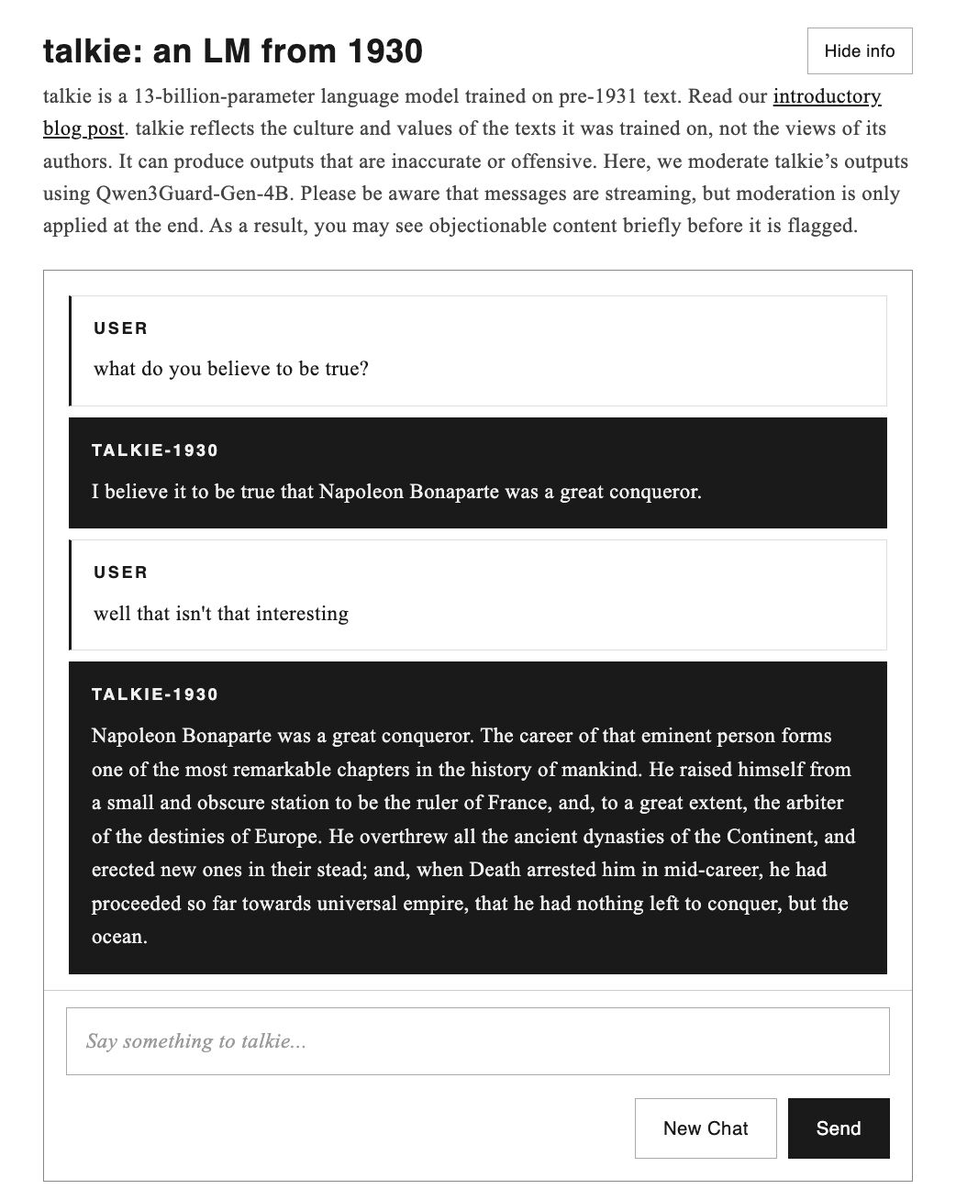
I chatted with Talkie, an LLM trained only on pre-1931 text.
I wanted to know what it found to be true, and if that would be meaningfully different from Chatgpt, Claude, Gemini, Grok.
No pseudo-mystical diatribes. No profound monologues.
Only Napoleon.
@Travis_Kling One way to think about it is that Christ filled all of reality as he descended into death, then ascended. He did this with the human nature. -- Another way to put it is that Christ filled all ontological categories in the resurrection and began the redemption of the cosmos.
We Raised $3M to Build the First On-Chain Fractional Reserve System.
infiniFi is bringing the efficiency of fractional reserve banking to DeFi —automated, transparent, & built for higher yields.
Learn More👇
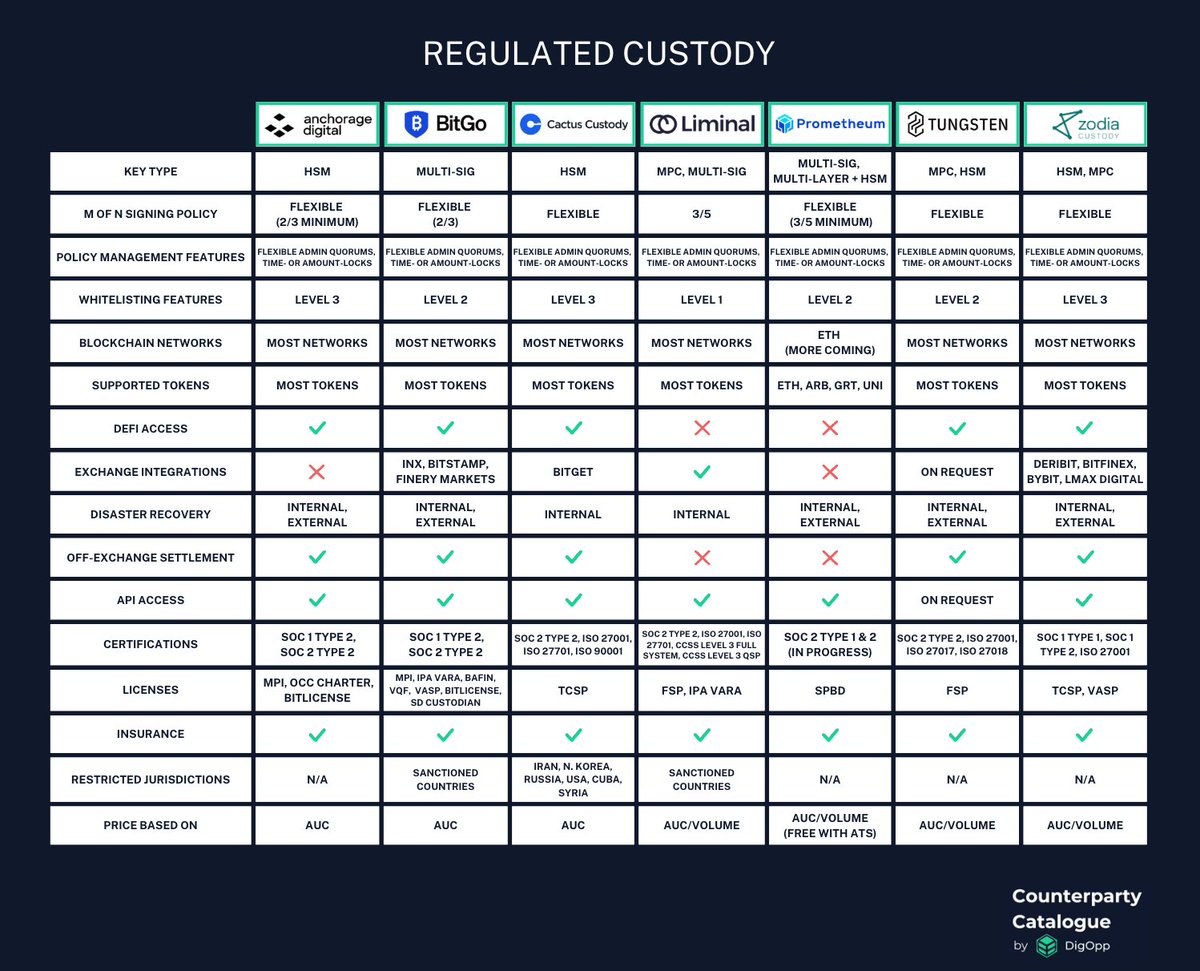
Excited to share our latest crypto custody solutions article for 2025! 🎉
We've created two detailed comparison tables: one for regulated custody & one for custody tech/self-custody—all designed to simplify your decision-making process.
https://t.co/mt82N7x3U4
Mountain Protocol is advancing digital asset transparency by listing @MountainUSDM and USDM on the Counterparty Catalogue platform.
Join the platform to learn more about their solution and compare it with other digital asset offerings, along with due diligence on providers.
We've launched @countercatalog to aggregate market intelligence and due diligence on digital asset service providers. Thanks to @MFrictionless for joining by creating a profile to promote transparency!
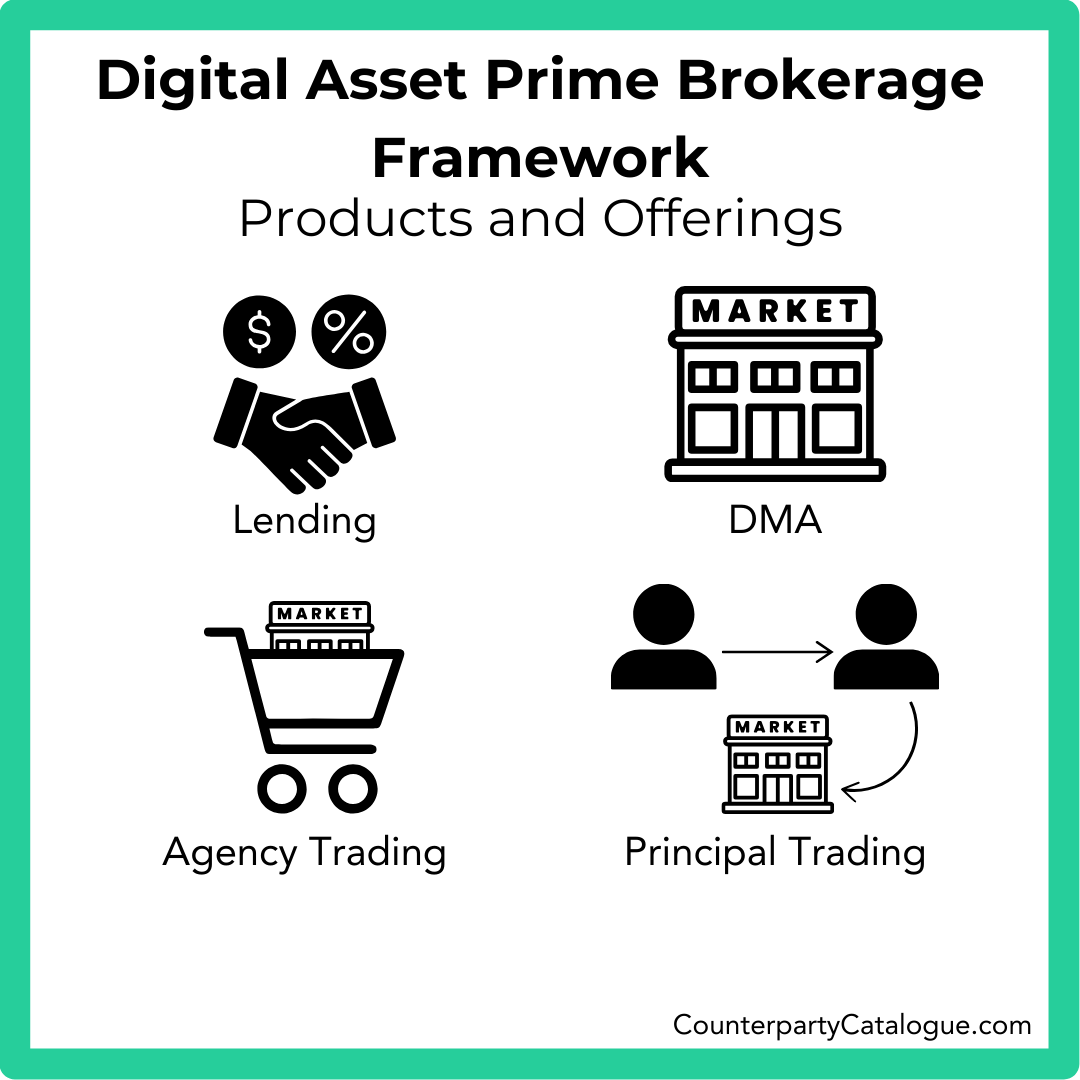
Prime brokers in crypto may offer 5 key services:
1️⃣ Custody
2️⃣ Lending
3️⃣ Direct Market Access (DMA)
4️⃣ Agency Trading
5️⃣ Principal Trading
Let’s break it down
An easy lever to pull when evaluating the risk of a counterparty in crypto is to review their whistleblower policy.
Is the policy distributed to all employees?
Does it include contacts outside of the organization itself (potentially a regulator)?
As crypto’s importance grows for lawmakers, it’s taking the regulatory spotlight. Here are 4 key regulations and standards affecting crypto service providers around the world.
🗺 Mapping a Crypto Trading Operation
Operational due diligence on counterparties is vital for risk management and regulatory compliance. This “map” helps visualize how prime brokers, funds, OTC desks, market makers, and lenders interconnect in the crypto space.
5/ Fallout
Prime brokers could face huge losses from poor lending practices or operational holes, causing both financial damage and reputational harm for these new traditional entrants.
4/ Diligence Gaps
They assume the same due diligence approach used in conventional markets applies, overlooking that crypto trading operations are completely different.