https://t.co/1TKfxo0zQq If you know how to use it, AI is always a terrific tool. No matter how people think about it from their own perspective, it is the tool for future, maybe just like people worrying about automobiles when they were invented.
🌱 Exciting new research on C4 photosynthesis! We explored Eleocharis baldwinii, a sedge with photosynthetic plasticity to reveal environmental triggers & cis-regulatory elements related with C4 evolution! 🚀🌿 #PlantGenomics#Photosynthesis@AdvPortfolio https://t.co/vplBcslK98
I'm thrilled to see my collaborator Rajeev, being elected as a fellow of the Australian Academy of Science—an honor truly well deserved! It has been a privilege to work with him on genomics for more than a decade, and I look forward to learning from him.
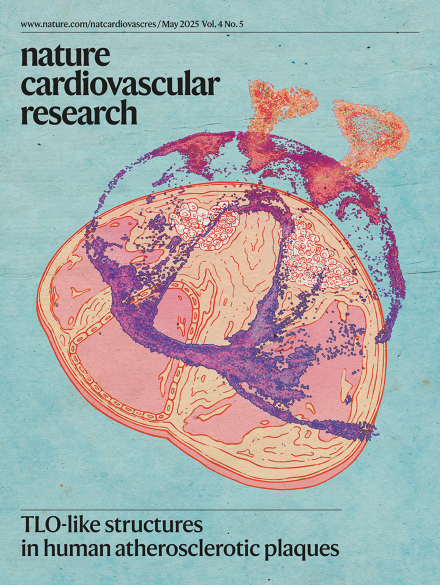
❤️Our May issue is out❤️Read our three articles focused on atherosclerosis, describing TLO-like structures within plaques, FDX1’s protective role, and how gut microbiota-derived bile acids suppress platelet activation, and more!
https://t.co/Ufgf3a09v5
The peer review process can be brutal. Our latest paper faced an overly harsh Reviewer #3, dragging out revisions for over a year and a half. While some feedback was useful, excessive rounds drained our energy. Long review cycles harm research.
https://t.co/heLzkk3lit
Research| Li et al. present a spatially resolved atlas of human atherosclerotic plaques, revealing cellular heterogeneity and identifying lymphoid structures within the plaques and their potential functions and implications.
https://t.co/MvY3RW6WgM
https://t.co/buhCmcm1l8
#PlantGenomics🚨 Our latest research paper has just been published in @NewPhyt 🌱📖 We used single-cell multiomics to uncover root hair-specific responses to salt stress in non-heading Chinese cabbage. 🌊🧬
https://t.co/O5DONgrNzJ and https://t.co/Dbzhq1fkh9
The article [https://t.co/aEBr4cgyke] marks our first publication in the field of human disease research, and the journey has been far from easy. Using this design to illustrate our findings, find more information on https://t.co/Dbzhq1fkh9 and https://t.co/sJvkreNH1r.
Utilizing Stereo-seq and single cell sequencing, we identified tertiary lymphoid organ-like structures in human atherosclerotic plaques, analyzed possible mechanisms underlying their formation, and revealed their association with higher stroke risks.
BGI‑Research and partners have created the first high‑resolution map of carotid-artery plaques, identifying immune structures (PTLOs) that triple stroke risk. This breakthrough offers new insights into preventing cardiovascular events.https://t.co/1nzxLG6ktF
BGI‑Research and partners have created the first high‑resolution map of carotid-artery plaques, identifying immune structures (PTLOs) that triple stroke risk. This breakthrough offers new insights into preventing cardiovascular events.https://t.co/1nzxLG6ktF
Delighted to share that CCFI Director @rajvarshney has once again been included in the @ClarivateAG Highly Cited Researchers list.
2024 marks the 11th consecutive time that Prof Varshney has been included in the prestigious list, which identifies the small fraction of global scientists who have demonstrated significant and broad influence in their field(s) of research.
In a statement, Prof Varshney said:
“It’s an honour to make the 2024 list and to be recognised by my peers. I would like to thank all my collaborators and the senior leadership team at Murdoch University for implementing a translational research environment that encourages innovation and inspires real-world change.”
Well done to Prof Varshney and all the other listed @Murdoch University academics for their recognition as researchers making an impact!
Read more here: https://t.co/5yKwent53T
#HighlyCited2024
Pleased to share that two CCFI researchers have been ranked among the world's most impactful scholars. Congratulations to Prof @rajvarshney and Adj. Prof Xu Xun from @TheBgiGroup.
CCFI is looking forward to continuing our efforts in advancing science and applying it via translational research towards farmer profitability and environmental sustainability in Australia, as well as food and nutrition security globally.
Read more here: https://t.co/5yKwent53T
#HighlyCited2024
Our recent paper published in Heliyon, reporting spatial transcriptome study on mouse lungs in the process of fibrosis and self-resolving induced by bleomycin-instillation. It can serve as an example for spatial transcriptome research on lungs, which are difficult to be studied.
Serbian Prime Minister Ana Brnabic acknowledged #BGI's achievements in building Serbian local R&D teams and facilitating the exchange of Serbian students and scholars with BGI during her visit to the Multi-Omics Joint Center co-ran by BGI-Research. https://t.co/D9R3MAyBif