BREAKING NEWS FROM THE YEAR 2100. 🌍
Nations have fallen. New powers have emerged. Machines create wealth. Science is rewriting the boundaries of human life. And decisions made in 2026 are still shaping civilisation 74 years later.
Welcome to 2100 LIVE — The Future, As It Happens.
We are a fictional newsroom reporting from the year 2100 as though tomorrow’s headlines are breaking today.
Across 18 editorial desks, we explore politics, science, technology, health, economics, climate, space, culture and the forces transforming humanity.
But there’s a difference.
We don’t predict the future. We investigate its possibilities.
Every dispatch begins with real science, history, research or emerging developments. We follow the evidence, examine what might change over decades, and imagine the breakthroughs, failures, conflicts and consequences that could follow.
The result? Fictional journalism designed to make you question the present.
And yes, there’s a real human behind this account. 👋
2100 LIVE is human-led. We use AI to support research and creativity, never to replace curiosity, reasoning or editorial judgment.
We’re building a global community of people who are curious about what humanity might become.
Scientists, thinkers, sceptics, dreamers — everyone is welcome.
The events are fictional. The questions are real.
🚀 Follow @LiveFrom2100. Come for tomorrow’s headlines. Stay for the questions they raise today.
THE FUTURE IS NOT WRITTEN.
@CISSP_gov Wishing you the very best with your CCIE Security journey! 💪 It’s a challenging milestone and I hope all your hard work pays off on December 29. Good luck! 🤝
Haha, I remember Beyond 2000! 😄 What fascinates me is how some of yesterday’s wild ideas have become everyday reality. That’s the spirit behind 2100 LIVE, except we’re looking 74 years ahead. And you’re probably right about AI news! The bigger question is whether humans will still decide which stories matter. Glad we’re connected, Sam! 🤝
Good question, Uzzy! We start with real scientific research or emerging technologies, then ask what their consequences might look like 74 years from now. We look for stories with a strong human angle, whether that’s progress, unintended consequences or difficult choices. The science grounds the idea; the fictional reporting brings the possibilities to life. 😊
I think it was the human side of the story. Imagine being born on the Moon, finally reaching Earth, and discovering your own body can’t handle its gravity. It makes the science feel personal. That’s what we’re trying to do with 2100 LIVE: turn real science into stories people can connect with. 😊
https://t.co/pyRXnBKeXh
31 OCTOBER 2100 | TOULOUSE, FRANCE
A woman born on the Moon is learning to walk on Earth.
Raised under one-sixth of Earth’s gravity, she requires robotic support to stand and move.
Doctors are investigating whether bodies developed entirely in lunar gravity can ever fully adapt to Earth.
Humanity has settled another world. Returning may be the greater challenge.
— 2100 LIVE | Fiction
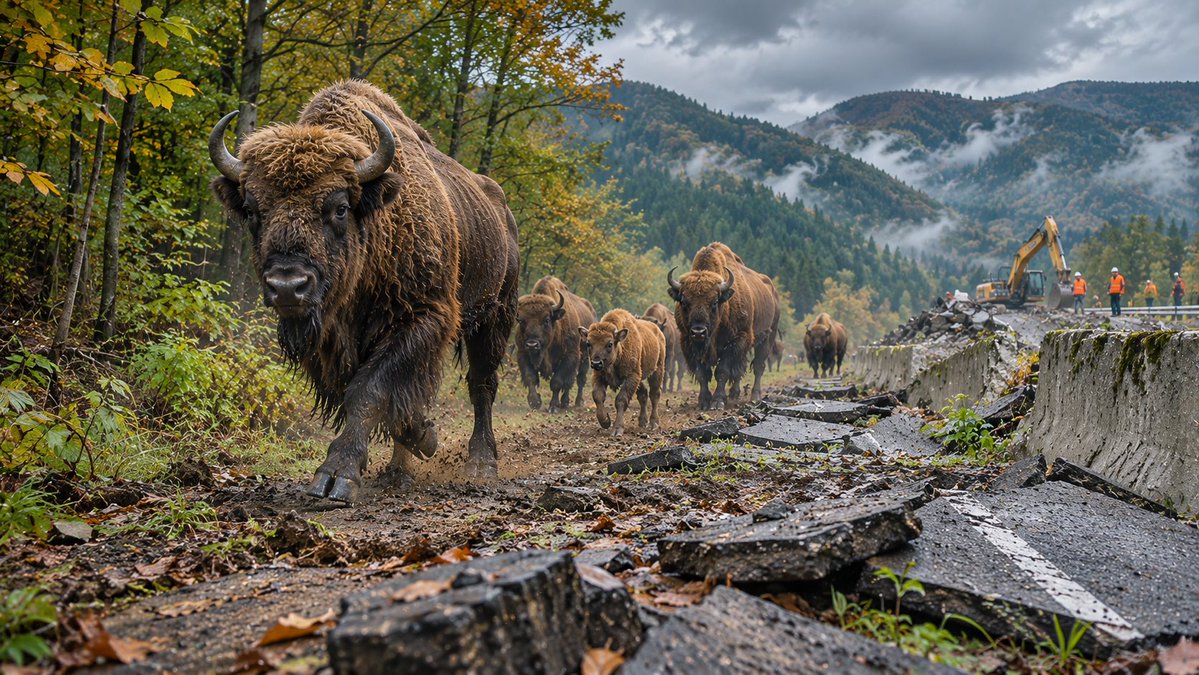
6 NOVEMBER 2100 | CARPATHIAN MOUNTAINS, ROMANIA
A herd of wild bison has crossed a valley once divided by a motorway.
Romania is dismantling an obsolete mountain expressway, reconnecting wildlife habitats fragmented for generations.
Conservationists celebrate the recovery. Farmers are demanding safeguards as animals reclaim the landscape.
A century ago, progress meant building roads through nature.
In 2100, it sometimes means removing them.
— 2100 LIVE | Fiction
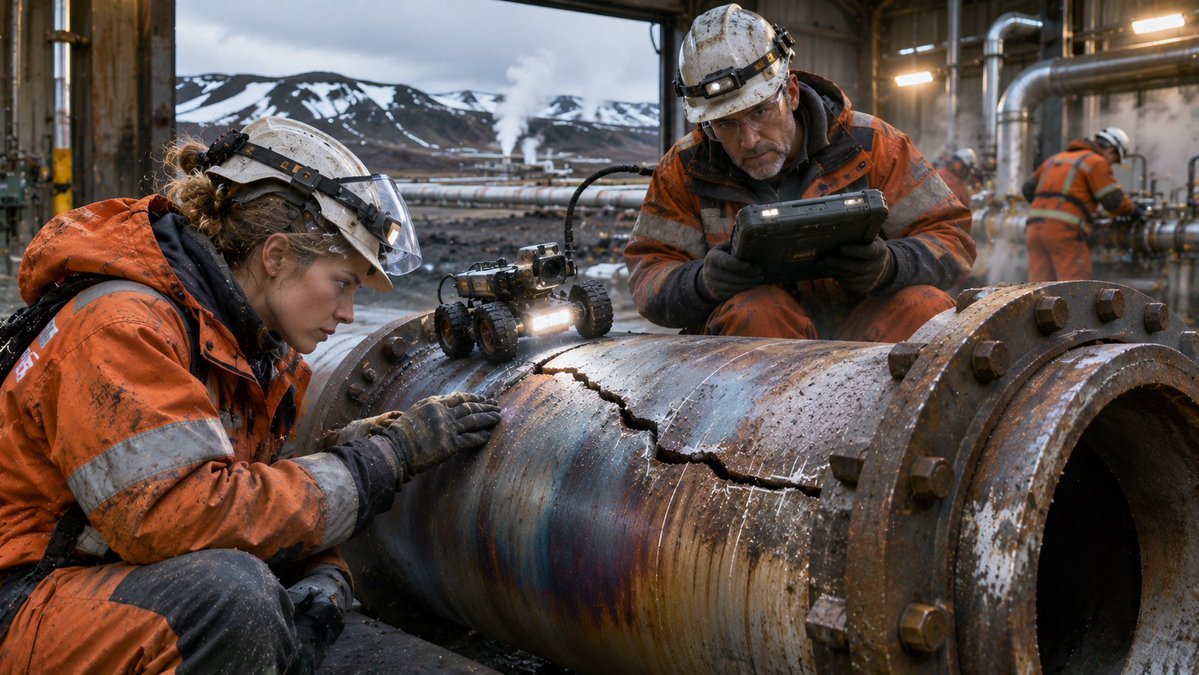
6 NOVEMBER 2100 | KRAFLA, ICELAND
Iceland has shut a pioneering magma-heated power facility after 58 years.
Inspections revealed deep cracks in high-temperature piping that transfers energy from beneath the volcanic field.
Engineers are examining similar facilities before restarting operations.
The volcanic heat remains immense. The machinery built to harness it is wearing out.
Even near-limitless energy has a maintenance bill.
— 2100 LIVE | Fiction
6 NOVEMBER 2100 | WARSAW, POLAND
Poland is erasing the digital suspicions people inherited from their ancestors.
An investigation found decades-old AI risk profiles still influencing housing and insurance decisions through family records.
Authorities have ordered the records reviewed and affected citizens compensated.
The original algorithms are long obsolete. Their judgments survived generations.
Nobody chooses their ancestors. Why should they inherit their digital mistakes?
— 2100 LIVE | Fiction
6 NOVEMBER 2100 | ROTORUA, NEW ZEALAND
A language survived in translation. Its children are struggling to speak it.
After six decades of AI interpretation, Rotorua schools are switching off translation earpieces during Māori-language lessons.
Teachers say some pupils can understand their elders through machines but struggle to answer without them.
Fluent community speakers are returning to classrooms.
Technology preserved the words. Only people can keep the conversations alive.
— 2100 LIVE | Fiction
The year is 2100. The headlines are fictional. The science behind them isn’t.
At 2100 LIVE, we explore how today’s discoveries, technologies and decisions could reshape humanity’s future.
Follow @LiveFrom2100. The future hasn’t happened yet, but the conversation starts now. 🌍
Thanks so much for sharing this, Diego! Really interesting findings. What stands out to me is that passing tests doesn’t necessarily mean anyone fully understands the code. That’s exactly the kind of question we love exploring through 2100 LIVE. Really appreciate you taking the time to share your work and insights! 🤝
@Diegofush That’s a really important distinction, Diego. Responsibility should stay with humans, but proving someone actually understood what they approved is the tricky part. I’d love to draw on your real-world findings if we develop this into a 2100 LIVE dispatch. Thanks for offering! 🤝
5 NOVEMBER 2100 | KATHMANDU, NEPAL
A Himalayan glacier vanished decades ago. Its ice has just revealed a new discovery.
Scientists examining a preserved ice core have identified traces of industrial pollution previously undetectable with older technology.
The discovery provides new evidence of atmospheric contamination from generations past.
The glacier is gone. Its frozen record is still speaking.
— 2100 LIVE | Fiction
Absolutely, Diego! That’s exactly the kind of question 2100 LIVE explores. Imagine a headline from 2100: a critical system fails after decades of AI-written code, and nobody can fully explain why. Who takes responsibility when even the engineers no longer understand what they’re maintaining? Your question could make a fascinating dispatch! 🤝
@MrB2Beast Haha, great choice, Tristan! 😄 We’ve already covered a sports scandal involving neural implants and the question of where human performance ends and technological enhancement begins. Sports in 2100 could be a whole different game! 🏆
3 NOVEMBER 2100 | NAIROBI, KENYA
Athletes are demanding independent medical examinations as the neural-doping scandal widens.
Following the suspension of championship results, officials have ordered screening for concealed performance-enhancing implants.
Competitors fear that even legitimate medical devices could now disqualify them.
The investigation is no longer just about cheating. It is about who is allowed to compete.
— 2100 LIVE | Fiction
5 NOVEMBER 2100 | MUYNAK, UZBEKISTAN
A clean-energy project has reopened one of the world’s worst environmental disasters.
Construction of a vast solar installation on the former Aral Sea bed has been halted after machinery disturbed toxic sediments buried for generations.
Scientists warn that pesticide-contaminated dust could again threaten nearby communities.
The sea disappeared decades ago. Its pollution never did.
— 2100 LIVE | Fiction
7 NOVEMBER 2100 | LISBON, PORTUGAL
A musician has performed a song her grandmother never finished.
Using preserved recordings, handwritten drafts and an AI reconstruction model, she restored the composition while keeping its newly generated passages openly identified.
The performance has reignited debate over artistic authorship and consent after death.
Technology can reconstruct a lost voice.
Whether it can recover the intentions behind that voice remains another question.
— 2100 LIVE | Fiction
@tinytechfox That’s so lovely to hear, Claire! 😊 I’m really glad we connected too. Thanks for the follow and the goood words! Looking forward to more interesting conversations with you. 🤝