Most traders lose because they break these rules.
Master them, and you flip the odds.
7 Trading Rules That Separate Winners From the Herd
(Save this, it’s your edge in one post)
1. Cut Losses Fast
Big losses end careers. Small ones? Tuition. Don’t defend bad trades, cut and reload.
2. Define Risk First
Before you click buy, know your sell. No exit plan = no entry. No hope. No hesitation.
3. Trade Liquid Markets
Volume is your parachute. Illiquid assets trap you. Liquidity keeps price honest.
4. Buy Strength, Short Weakness
Trends pay. Strong gets stronger, weak gets wrecked. Trade with momentum, not against it.
5. Let the Chart Talk
Earnings, headlines, hot takes, noise. Price is truth. Read it. Trust it. Trade it.
6. Pressure Before Breakout
No coil, no launch. Wait for compression, clean pivots, and tight ranges. Then strike.
7. Discipline Over Emotion
Your edge is execution, not emotion. Stick to the plan. Let stats, not feelings, drive.
TLDR:
This game rewards patience, clarity, and discipline. You don’t need more trades, you need better ones.
Stick to these 7 rules and let your trajectory do the talking.
I backtested LEAP entries for 10 years.
One entry made 1,000% return.
The secret?
You only buy 3 times per year.
RSI under 30 on the weekly = generational entry.
That setup happens 2-3 times annually. Max.
When it hits:
Don't buy your normal size.
Buy an uncomfortable amount.
The entries are rare.
Your size shouldn't be.
Most people buy 10x per year and make nothing.
I buy 3x per year and 10x my money.
Patience isn't boring.
Patience is how you get rich.
Naval Ravikant: "You're going to die. It's all going to zero. What's there to stress about?"
"Stress is when your mind has two conflicting desires at once. You want to be liked, but you want to do something selfish. You don't want to go to work, but you want to make money. You have two conflicting desires, and that's stress."
Naval explains the difference between stress and anxiety:
"Anxiety is this pervasive, unidentifiable stress where you're stressed out all the time and you're not even sure why. The reason is you have so many unresolved problems that have piled up in your life, you can no longer identify what the problems are. There's this mountain of garbage in your mind. A little bit is poking out the top like an iceberg; that's anxiety. But underneath, there's a lot of unresolved things."
He shares his personal anxiety resolver:
"One big anxiety resolver for me is just ruminating on death. You're going to die. It's all going to zero. You cannot take anything with you. If you can keep that idea in front of you at all times, what's there to stress about?"
Naval reframes what "wasted time" really means:
"What is wasted time? Everything is wasted time in a sense because nothing matters in the ultimate. But in each moment, it's the only thing that matters. So if you're doing something you want to do and you're fully there for it it's not wasted time. If your mind is running away, wishing you were somewhere else, anticipating the future, regretting the past, that's wasted time. That's time you're not present for."
He concludes:
"People get worried about dying and no longer being here. But they don't realize that so much of their life is spent not being here in any case."
Professional trader Tom Hougaard on the single biggest psychological mistake that ruins most traders:
He explains that the hardest part of trading isn't technical, it's psychological. It requires you to think in a way that directly contradicts how you operate in everyday life.
In real life, we are trained to hunt for bargains. We compare prices at the supermarket and naturally gravitate towards whatever is cheaper.
But Hougaard warns that applying this same instinct to markets is exactly what destroys most traders.
@TomHougaard puts it simply:
"You cannot be afraid of buying something that has already moved up significantly or you shouldn't be afraid of selling something that has already moved down significantly. And that's where the vast majority of people go wrong."
The problem, according to Hougaard, is that markets don't operate the way shoppers think:
"But the market doesn't operate with these principles of cheap or expensive. The market just has the prevailing price."
He explains why this is so difficult for people to internalise:
"Psychologically it's very difficult for us to accept because we are so brainwashed that we go to the supermarket and we see Pepsi Cola costs X but Coca-Cola is half price to Pepsi. So we all gravitate towards Coca-Cola because it's cheaper. But cheap in the market is a market that is going down. We don't want to buy that. We want to sell it short."
Hougaard sums up the core challenge of trading:
"The whole balance of being one person in real life and being another person in the market, that's what makes trading so incredibly difficult."
Elon Musk just put the entire university system on trial.
Not the curriculum. Not the professors. The premise.
Musk: “You don’t need college to learn stuff. Everything is available basically for free. You can learn anything you want for free.”
For a thousand years, universities held one monopoly. Access. You paid the toll or you stayed ignorant.
The internet erased that in a decade.
Every lecture. Every framework. Every textbook. Free. From any screen on Earth.
The six-figure tuition is no longer buying knowledge. It is buying a signal.
Musk: “There is a value that colleges have, which is seeing whether somebody can work hard at something, including a bunch of annoying homework assignments, and still do their homework assignments.”
That is the product. Not intelligence. Not creativity. Not vision. Compliance.
You are paying $200,000 to prove you can tolerate bureaucracy on a schedule.
Musk: “Colleges are basically for fun and to prove you can do your chores. But they’re not for learning.”
The entire system is a sorting machine for corporate HR. It does not measure what you can build. It measures whether you can sit still, follow directions, and deliver on command.
Four years of obedience dressed as education.
Musk: “If you’re trying to do something exceptional, you must have evidence of exceptional ability. I don’t consider going to college evidence of exceptional ability.”
The system optimizes for average. It rewards the compliant. It certifies the patient. It quietly filters out everyone who refuses to wait for permission.
The ones who reshaped the modern world never finished the test.
Musk: “Gates is a pretty smart guy, he dropped out. Jobs is pretty smart, he dropped out. Larry Ellison, smart guy, he dropped out.”
They did not drop out because it was too hard. They dropped out because the speed limit was too low.
The most dangerous thing a university does is convince a generational talent that finishing the syllabus is the achievement.
It is not. It is the floor.
A degree is a receipt for compliance. The future has never belonged to people who finish their homework. It belongs to the on
Elon Musk's first wife once described what it's like to watch him fail.
She said he doesn't react the way normal people react. When a rocket explodes, most people in the room go silent. Some cry. Some start calculating the financial damage.
Musk pulls out his phone and starts making calls. Not emotional calls. Engineering calls. "What failed. When can we fix it. When's the next launch." His voice doesn't change. His face doesn't change. The rocket that just cost $60 million is already in the past. The next one is all that exists.
She said it was the most unsettling thing she'd ever witnessed. Not because he was cold. Because he genuinely wasn't affected. The failure didn't register as failure. It registered as data. An experiment that produced results. Results that inform the next experiment.
This is why he wins. Not because he doesn't fail. He fails more spectacularly than anyone in history. He wins because failure occupies zero psychological space. It enters as data and exits as action.
Most people lose not because they fail but because they spend weeks processing the failure before acting again. Musk spends zero seconds. The gap between failure and next attempt is a phone call.
- @multiplanet1
My father said this line when he met my wife:
"Stop chasing butterflies when you don’t have a garden."
After the divorce, I lost:
A wife
2 kids
$100,000
50% of the property
It took me way too long to understand what he said to me.
This is what that line really means:
Jordan Peterson stood virtually alone at first —> refusing to bend the knee to the woke ideology machine.
He defended basic truth, biology, and moral courage when it cost him everything.
Liberals didn’t just attack men. They declared fatherhood, strength, and traditional masculinity “toxic.”
Then they came for women: redefining “woman” to include men, turning mothers into “birthing people,” and calling female anatomy a “front hole.”
Biology itself became hate speech.
This is the dystopia we allowed.
What will our kids and grandkids say when they look back?
Will they laugh at how insane we let it get… or curse us for not fighting harder?
Jordan Peterson was right!!
Time to stand up before it gets worse.
IF you think we should bring back normalcy Type Traditional Values NOW 👇🏻 🔥🇨🇦
A man spends 50 years teaching at MIT.
He knows his time is running out.
So he records one last lecture — everything he knows, distilled into a single hour.
He died 5 months later.
This is that lecture.
The most important hour you'll watch this week. 👇
Bookmark it for later
SECRETLY READ ANYONE:
1. Status - revealed by their shoes.
2. Discipline - revealed by their nails.
3. Background - revealed by how their sit.
4. Intentions - revealed by their eyes.
5. Personality - revealed by how they laugh.
6. Confidence - revealed by how they walk.
7. Loyalty - revealed by where they look.
8. Intelligence - revealed by how they listen.
9. Maturity - revealed by how they argue.
10. Respect - revealed by how they treat people who can't help them.
Mark Douglas said the quiet part out loud:
"there is no way of knowing if our next trade will work out"
The job is not prediction.
The job is building a process you can execute without needing certainty.
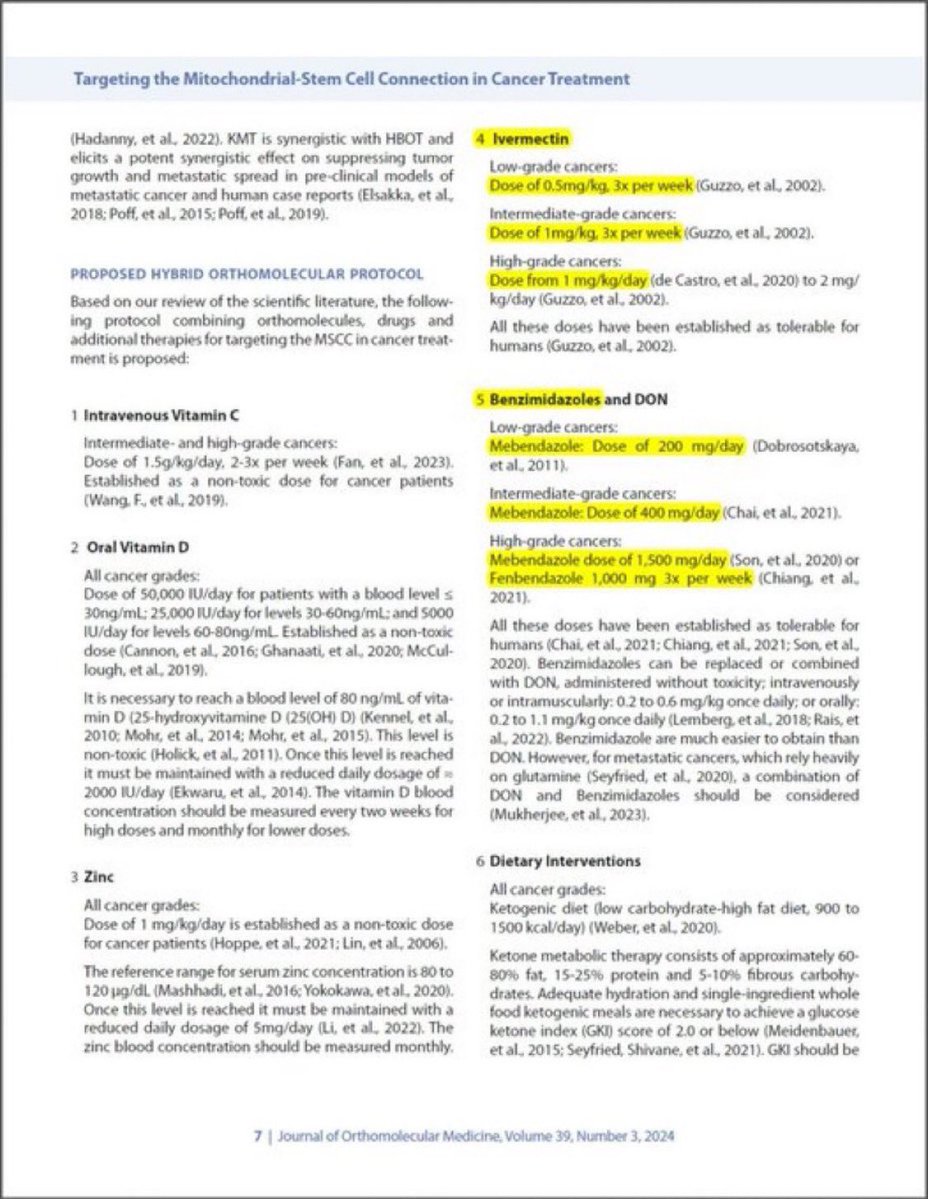
CANCER HAS BEEN CURED
Ivermectin & Fenbendazole cure cancer.
Pass it on.
BREAKING NEWS: First-in-the-World Ivermectin, Mebendazole and Fenbendazole Protocol in Cancer has been peer-reviewed and published on Sep.19, 2024!
The future of Cancer Treatment starts NOW.
My thanks to lead authors Ilyes Baghli and Pierrick Martinez for their incredible inspired work, FLCCC’s Dr.Paul Marik for his extensive work on repurposed drugs and every co-author who worked hard to bring this paper to life.
I hope that this peer-reviewed paper lays the groundwork for a brand new future for Cancer Treatment.
Many of you know that I have been helping thousands of Cancer patients with high dose Ivermectin, Mebendazole, and Fenbendazole
FOLLOW ME, THE NEXT DROP WILL BE SHOCKING
🚨ATENCIÓN🚨
SIN FALLOS DESDE EL 2002 (DEBÉS ENTENDER EL POR QUÉ DE ESTO)
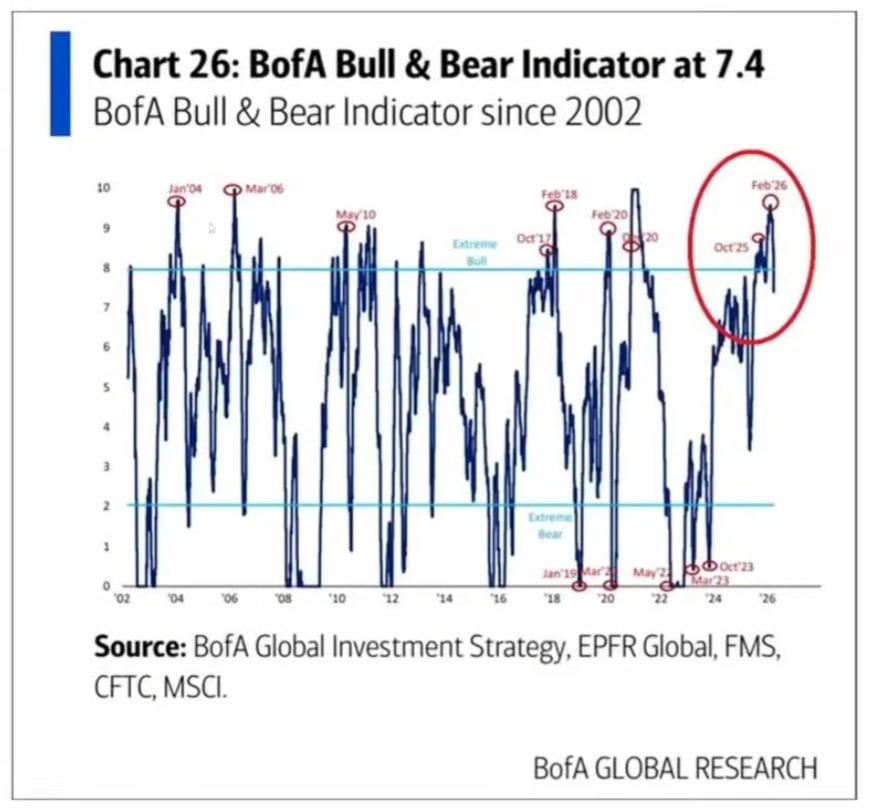
🤯Bank of America tiene un INDICADOR que predijo cada TECHO de MERCADO DESDE 2002 y está confirmando uno ahora mismo.
💥 24 años de historial. Sin excepciones:
🎯El BofA Bull & Bear Indicator combina múltiples señales: flujos de capital, posicionamiento de fondos, sentimiento institucional, datos de amplitud del mercado y señales técnicas. Va de 0 a 10.
👉 Por encima de 8: zona de euforia extrema. Señal de venta histórica.
👉 Por debajo de 2: zona de pánico extremo. Señal de compra histórica.
👉Mirá los picos marcados en el gráfico con círculos rojos cuando el indicador superó 8 o rozó 10:
🔻 Enero 2004 → techo de mercado
🔻 Marzo 2006 → techo previo a la crisis
🔻 Mayo 2010 → techo del rebote post-2008
🔻 Octubre 2017 / Febrero 2018 → techo antes de la corrección de 2018
🔻 Febrero 2020 → techo justo antes del colapso pandémico
🔻 Diciembre 2020 → techo previo a la corrección de 2021
🔻 Octubre 2025 → señal previa a la caída
🔻 Febrero 2026 → nuevo pico extremo marcado con círculo rojo
¿Y dónde estamos ahora?
📍El indicador bajó desde ese pico. Pero aún no salió de la zona de euforia.
📍Lo que el gráfico sugiere es que estamos en la fase de "verificación del techo", el período donde el mercado rebota, da señales mixtas y los inversores debaten si el techo ya pasó o si el rally sigue.
📍Muestra que el setup para un techo de ciclo está completo.
📍Y en 24 años de historial, cuando ese setup se completó, el mercado no siguió subiendo indefinidamente.