One of the modules in Motion Graphics in Houdini is entirely focused on curves.
In this project, we’ll build a complete T-shirt reveal commercial from scratch, using curves to drive a wide range of procedural effects and animation.
Curves are an essential part of motion graphics, so we'll explore different ways to manipulate and animate them: making them grow, adding randomness and curliness, clumping and splitting them, growing geometry along them, creating groups, and using attributes to control how everything behaves.
Most of these effects are driven procedurally, directly at the geometry level, without relying on simulations.
This is also where attributes become especially important. By learning how to create and manipulate attributes, you'll gain much more control over how your curves grow, move, deform, and interact.
By the end of the module, you'll have a set of curve-based workflows and attribute techniques that you can adapt and build upon in your own projects.
Coming August 26.
Vista4D: Video Reshooting with 4D Point Clouds (CVPR 2026 Highlight)
https://t.co/A2SCMMbpv6
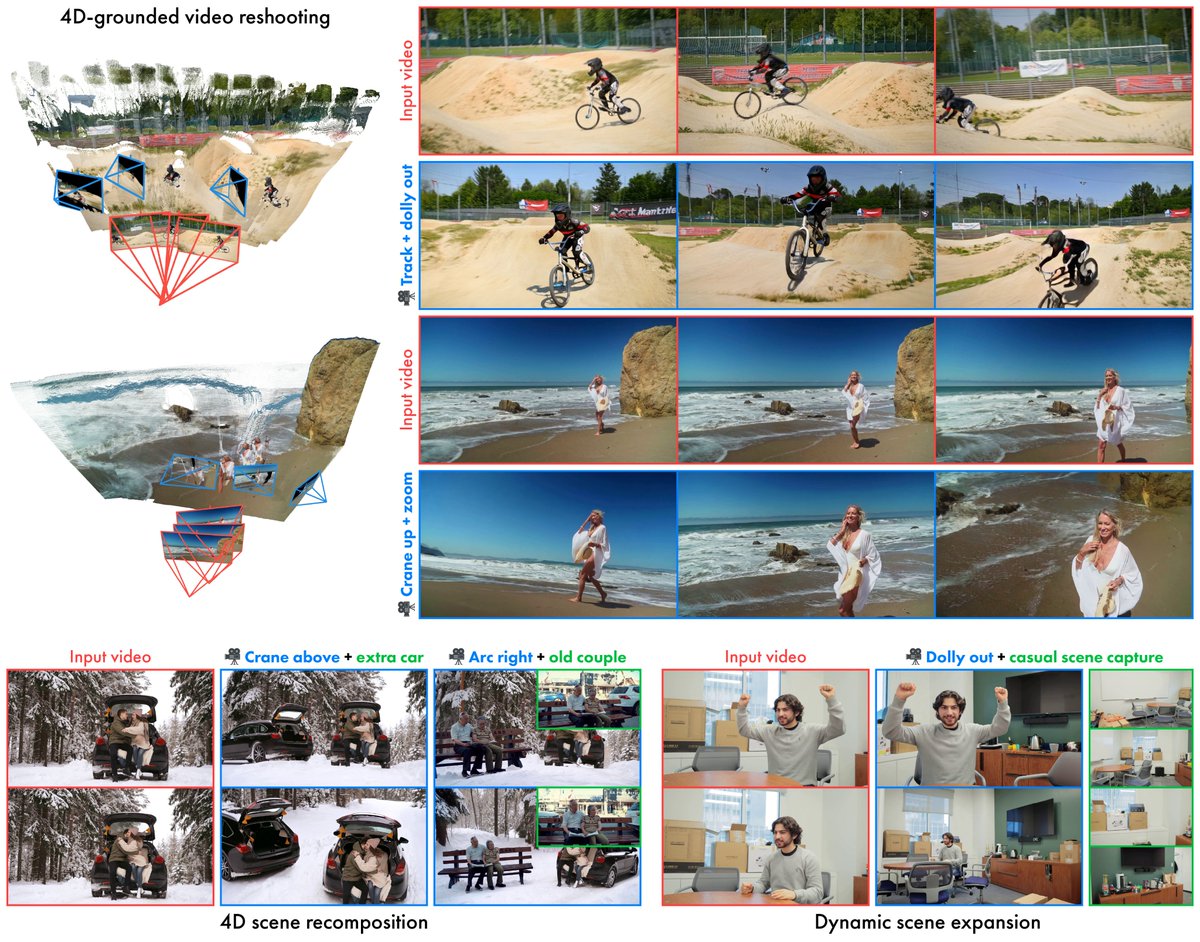
Vista4D is a video reshooting framework which synthesizes the dynamic scene represented by an input source video from novel camera trajectories and viewpoints. We bridge the distribution shift between training and inference for point-cloud-grounded video reshooting, as Vista4D is robust to point cloud artifacts from imprecise 4D reconstruction of real-world videos by training on noisy, reconstructed multiview videos. Our 4D point cloud with temporally-persistent static points also explicitly preserves scene content and improved camera control. Vista4D generalizes to real-world applications such as dynamic scene expansion (casual video capture of scene as background reference), 4D scene recomposition (point cloud editing), and long video inference with memory.
This repository contains the following:
GaussianWrapping
From Blobs to Spokes: High-Fidelity Surface Reconstruction via Oriented Gaussians
https://t.co/fXlmM6IDkp
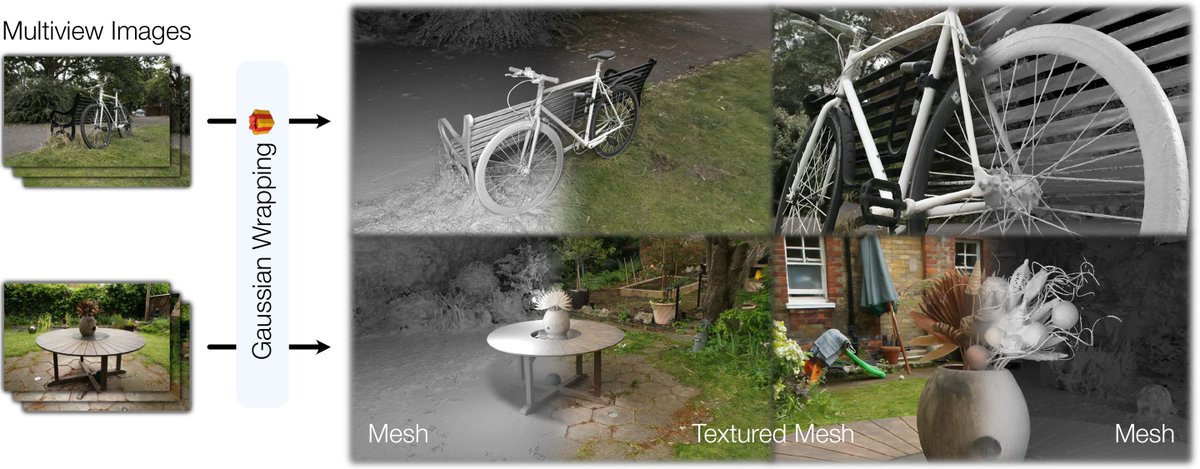
Gaussian Wrapping reconstructs watertight, textured surface meshes of full 3D scenes—including extremely thin structures such as bicycle spokes—at a fraction of the mesh size of concurrent works, by interpreting 3D Gaussians as stochastic oriented surface elements.
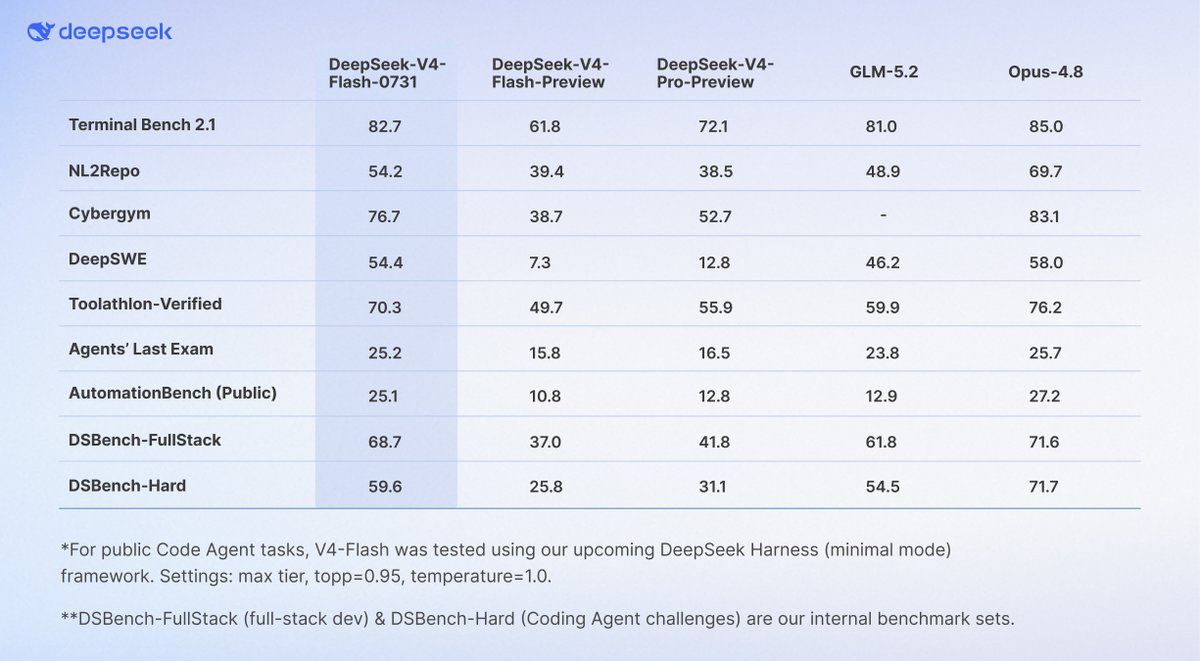
🚀 DeepSeek-V4-Flash Official API is now LIVE in public beta!
🔷 We’ve massively upgraded its Agent capabilities—benchmark scores are now far surpassing the V4-Pro-Preview. Check out the massive performance leap below! 👇
🔷 The official V4-Flash now natively supports the Responses API format and is fully adapted for Codex!
Check out the configuration details in our official API docs: https://t.co/smCwQZMeiq
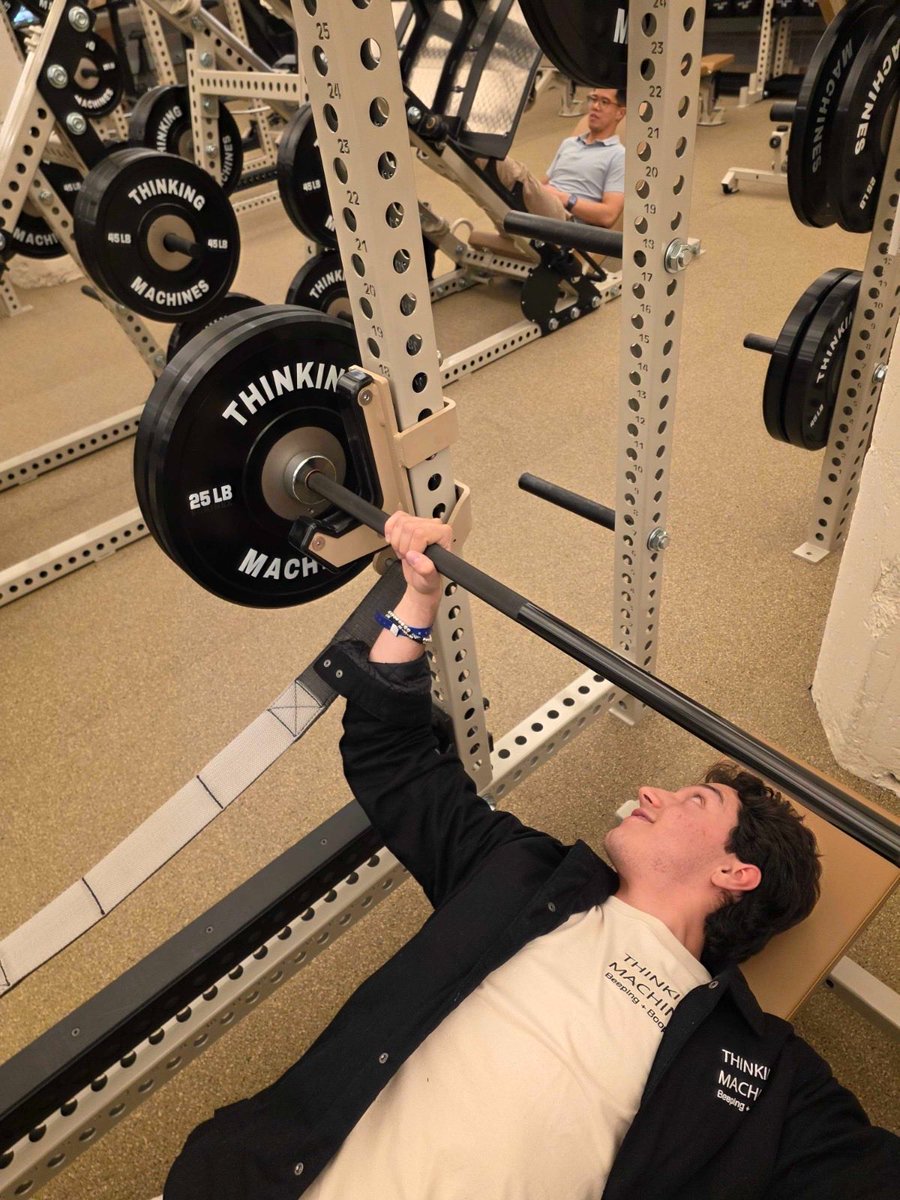
Inkling is out! Proud of what our team built, and even more excited about what we learned building it. The pretraining and infra foundations from this first release are already powering our next generation of models. Much more to come 🚀
Congrats @thinkymachines on the new open model 🙌
Inkling was trained on NVIDIA GB300 NVL72 and the NVFP4 checkpoint is available today on @huggingface: https://t.co/3qHvFCgnG3
Happy building!
.@thinkymachines' first open-weights model, Inkling, is now available on Databricks through Unity AI Gateway.
As a day zero launch partner, Databricks gives enterprise teams access to a model that excels at coding and agentic reasoning and supports multimodal inputs.
Teams can customize Inkling for their business, govern it with centralized security, permissions, cost controls, and observability, and connect it to coding agents including Cursor and OpenCode.
Start building with Inkling on Databricks → https://t.co/GsK69cFGyZ
Today, we are introducing Inkling.
Inkling reasons efficiently across text, image, and audio modalities. We are making the full weights available.
https://t.co/Ghebq5mG30
Available today for fine-tuning on Tinker. Play with it in the Inkling Playground. 🧵
The Helmholtz decomposition is one of the fundamental results of vector calculus.
It says any well-behaved vector field can be split into two parts, one capturing sources and sinks through divergence, and one capturing rotation through curl.
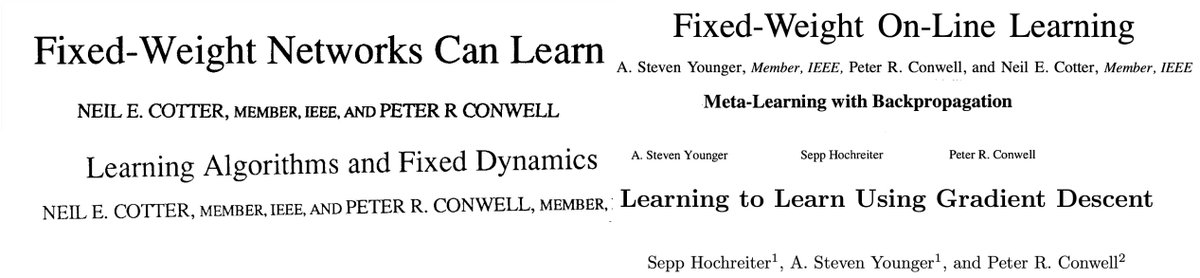
Am I the only one who thinks Cotter & Conwell's "Fixed-weight networks can learn" (1990) is so underappreciated in light of in-context learning (and beyond)? with follow-ups including @HochreiterSepp's masterpiece (2001).
Cited 62 times (of which 10% are me). Seems too few.
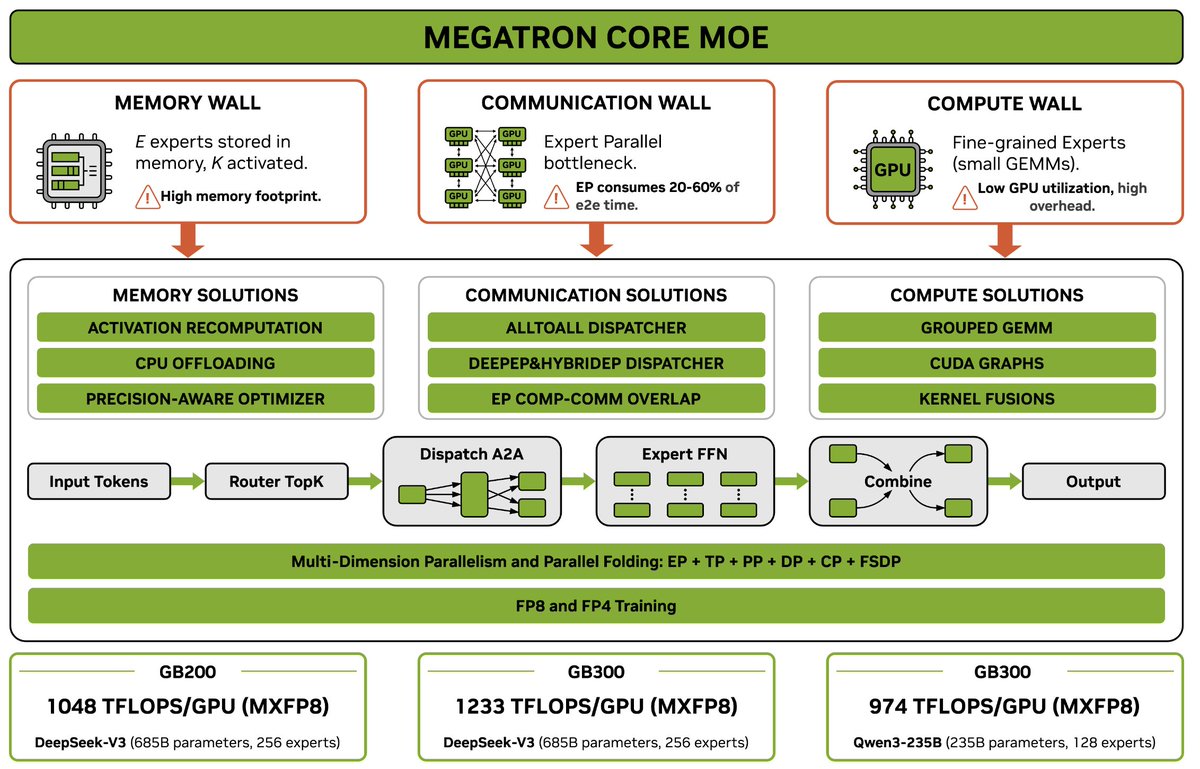
My last open-source project before joining xAI is just out today. Megatron Core MoE is probably the best open framework out there to seriously train mixture of experts at scale. It achieves 1233 TFLOPS/GPU for DeepSeek-V3-685B. https://t.co/QA1KRGu2Nc
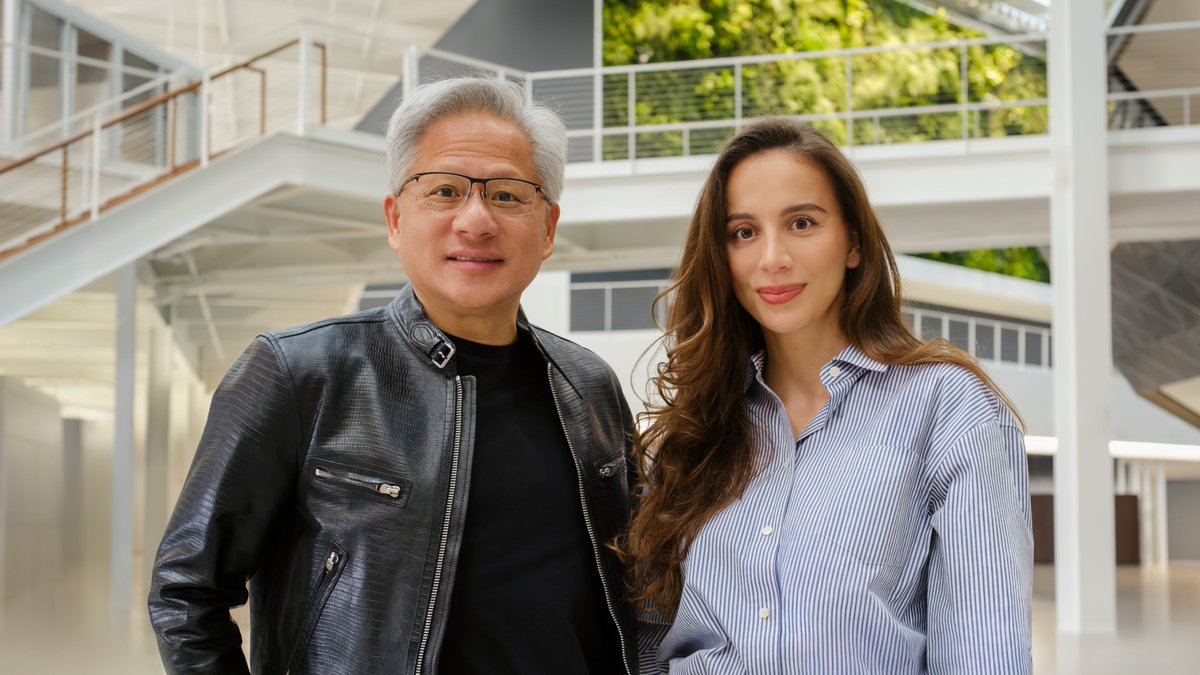
Excited to partner with NVIDIA.
bringing up 1GW or more of compute starting with Vera Rubin, co-designing systems and architectures together, and more.
NVIDIA has also made a significant investment in @thinkymachines