1/ Dominion Dynamics is out of Ottawa, Ontario. Founded June 6, 2025, it just closed 139 million Canadian dollars in Series A funding, the largest defence tech round in Canadian history for a company that did not exist fourteen months ago.
General Valerii Zaluzhnyi, former Commander-in-Chief of the Ukrainian Armed Forces and current Ambassador to the UK:
Due to scientific and technological progress, it has become impossible, regardless of what others may claim, to carry out operational-level tasks. 1/12
If this means actually building reactors, accelerating approvals, and exporting Canadian nuclear leadership, really great.
If it’s another strategy PDF with a 2026 deadline, we’re still in maintenance mode pretending it’s ambition.
This actually looks pretty good. I am hopeful here.
@W4LLGames That’s a great analogy, especially for older people who don’t understand “how you can watch someone play a game instead of playing it yourself?!”. Community is what matters and lasting friendships made in multiplayer games.
Twitch’s CMO said in a recent interview on brand building 🎙️, "[Streaming] is kind of like going to the pub. Can you watch a game at home by yourself? Of course you can...But you know what's really fun? Watching it with friends...With other people who share that same passion and enthusiasm".
Make sure you understand that your channel is a brand, and brands work best when creators speak their voice 🗣️.
Authenticity is your ROI. No authentic campaign = no trust 🙅.
Create your brand about what excites you. Share that excitement with not only your channel, but the entire Twitch community.
You will reap immense benefits both personally, and professionally.
Full interview in the comments below - well worth the 3 minutes.
Check out one of our beta testers @DeltaTVLive showing up live in the W4LL extension!
Bro is earning extra rewards for doing what he loves.
Seems good 😎.
Shoutout to the some of the newest legends joining the W4LL fam these past couple weeks 🔥!
Y’all aren’t just streaming - you’re building something real...
Community 🫂. Energy ⚡️. Growth 📈.
Give them a follow if you haven't 👇
@sareecantgamee - A truly fun streamer to watch with great taste in horrors. It was a pleasure to watch you run from Mr. X in RE2!
@GBro9001 - Working primarily on his Youtube videos, this guys a champ at gaming and memes. We just gotta get him to go live more!
@_PixiePhantom - This vet has been honing in her stream settings to offer her viewers the best streams possible. Playing games like DayZ and Minecraft, what's not to love?
@PatchPapiTTV - Always thirsty for feet, Patchos came as one of our first referrals from @meekXprey666. She's getting back into her x and streaming groove, so let's hype her up!
@nightpowered - Focused on solutions not negativity, this streamer loves his League of Legends, and he is always looking to network and work together.
Community isn’t just a word - it’s the mission 😎.
FYI, Zelensky’s semi-military official attire represents a very, very important aspect of life in Ukraine right now—tactical clothing and various gear that is worn by everyone who has any connection to the war and combat operations.
Over the years of war, an entire subculture of tactical clothing has developed in Ukraine, along with popular domestic brands such as M-Tac or Talan, and at times, we have as many military surplus stores as shawarma stands (often owned and run by veterans).
Pants, T-shirts with Velcro patches for insignia, jackets with multiple pockets, tactical backpacks, caps, knives, boots—demi-season, summer, winter—ballistic glasses, gloves, multitools, all kinds of accessories for body armor, weapons, and gear. Black, gray, olive, navy, coyote, every possible camouflage pattern, and everything else.
You could go on forever.
The culture of military patches, both official and unofficial, where there’s space for the wildest imagination and exercises in wit, is a whole separate topic, worthy of thick books.
Many soldiers are constantly buying extra gear to supplement or replace the standard-issue military clothing and equipment provided by the state. Many newly mobilized recruits rush to military stores and buy everything they see, even if they are drafted as accountants, only to later realize they have no idea what to do with piles of tactical gloves and night vision devices.
Tactical clothing is also worn by journalists, demobilized veterans, instructors, volunteers—many people involved in the war, supporting the army, and working in the combat zone.
Yours truly, for example, has not parted for years—from the days of the "ATO" in Donbas to the battle for Bakhmut—with my black "police-style" jacket worn under body armor, as well as black tactical pants, a backpack, and M-Tac coyote boots. They were with me even in the rainy equatorial forests of East Africa.
It’s not just incredibly practical, it’s also a statement—I'm not a soldier, but I am part of the common cause of defending the country from the aggressor, of saving our nation and our way of life, and I am making my contribution.
Here’s an example: at the start of the battle for Kyiv, when Russian troops were already storming the outskirts of the capital, many who remained in the city were preparing for bloody urban combat. And many were stocking up on tactical clothing and gear (just because you're in a battle doesn't mean you shouldn't look fabulous and well-equipped, right?).
I was among them—and when I arrived at one of the major tactical stores still operating in the city, I was taken aback because I found a line stretching half a kilometer long.
This is an important aspect of life in Ukraine, visible every day in cities across the country. It’s also important to buy from Ukrainian brands, supporting veteran-owned businesses, as well as to wear national symbols—such as the Tryzub of Prince Volodymyr the Great.
One crucial rule—civilians (unless they are demobilized veterans) have no moral right to buy and wear camouflage clothing, whether it’s Multicam or our Ukrainian military patterns like the army’s "pixel." In this community, it is considered immoral and unacceptable. Camouflage is a mark of honor for a soldier. Want to wear it? Take the oath and join the military.
But if, for example, a civilian involved in the war effort wears tactical clothing in black, gray, dark blue, olive, or beige—there’s no issue. It’s practical, and it fits the times.
This is exactly what Zelensky does when he meets world leaders in front of the cameras in semi-military tactical attire. He represents a fighting Ukraine, where millions of people are not just serving in the armed forces but also contributing to the country’s defense for the sake of a common future in their homeland.
And Zelensky does it the right way—he deliberately avoids wearing an official military uniform or camouflage, which other politicians have shamelessly and absurdly used for self-promotion.
Yes, he is the Commander-in-Chief, but he is not a soldier, and even he does not have the moral right to wear camouflage, which is sacred, because it is in that uniform that Ukrainian soldiers shed their blood for our country and heroically fight against one of the largest and most ruthless armies in history.
All of this is far beyond and far greater than those petty, sneering giggles "Do you even have a suit?"
The Sovereign Child, Chapter One: Eating What They Want
Eating may be the most personal human experience. Its closest rival, breathing, lacks the richness and variety of all the many foods and ways to eat, enjoy, and experience them. Eating is a primal exercise of sovereignty—to control your own eating entails governing both your body and what goes into it—but also a vulnerability, since things that go inside you pose an incredible risk. It is constrained by and intertwined with the laws of chemistry and biology but is also profoundly subjective and nuanced. Tastes and eating preferences don’t just mechanically develop the way a child’s body does—they are cultivated and refined, they are bound up with almost every other aspect of life.
For children, eating is like walking and talking—kids will figure it out on their own without any “help” from the outside. To be sure, parents are obligated to provide food for kids, since they’re incapable of acquiring it on their own. But the duty to provide food does not imply the right, let alone the injunction, to control food. Consider: We provide food for houseguests, but we don’t try to control them with it. In fact, we do the opposite—we ask them what their preferences are and try to satisfy those, while also offering some new options that might intrigue them. And, as always, our guests are free to decline.
Controlling children’s access to food is the norm today. “A good parent does not let their kid eat whatever they want.” There are various rationales, but the general argument is that eating is only about nutrition and desire, and since kids don’t understand anything about nutrition and the dangers of their own desires, parents need to manage it for them.
Parents don’t just control their children’s food, they control them with food. Since sweets are generally restricted, they become a default reward for any desired behavior, and their restriction a punishment for any undesired behavior.
Taking children seriously means not mediating their relationship with food. A parent simply cannot know how a child should eat, because they cannot know their hunger patterns and cravings or how different foods taste and feel to them.
Should parents really just let their kids eat whatever they want? The short answer is yes. Kids should have a wide range of foods to explore and learn about with no restrictions, limited only by what their parents are capable of providing. Outside well-known poisons or even borderline substances like alcohol, anything that adults eat should be on offer for kids. The reason kids should have free rein with regard to food is that they are building an understanding of how to eat in the same way that they are building an understanding of everything else in life: by exploration, discovery, and trial and error.
As adults, we have reasons for how and why we eat. Breakfast can be carefully orchestrated to support a workout, or scarfed down in the car so we don’t get hungry at work. We can show off our favorite brunch spot, or casually order in from home. Eating accentuates an endless variety of contexts—holidays, pot lucks, birthday parties, cookouts, school lunch, movie theater snacks, Halloween candy, religious observances. To reduce food to simplistic binaries—healthy or unhealthy, natural or unnatural, good or bad—is to misunderstand how the boundless experiences with food color one’s life.
Given the central role food plays in daily life, rules around eating can be particularly damaging. It is common, perhaps even the norm, for otherwise well-adjusted adults, having been raised with food rules, to have guilt, shame, and insecurity about eating. It is hard to imagine something more damaging to a life well-lived than anxiety around eating.
The best argument I’ve heard for controlling food comes from the fear of kids becoming overweight. Eating may be deeply embedded in biology, but modern food is different. It is carefully designed to be inexpensive and taste good, with lots of sugar and additives that provide quick bursts of calories in place of slower burning, heartier foods that were present in the ancestral environment that our bodies evolved in and for. So, without a parents’ watchful eye, kids will eat junk food all day and get fat all too easily.
This concern is understandable. But it’s not a good reason to enforce rules around food.
First, like every other understandable concern, identifying the problem is not the same as identifying the solution. Food rules often backfire: Rules might produce the exact eating compulsions and disorders that they are intended to prevent. As with rules around drugs and other dangerous substances, no strategy around food can guarantee that a kid won’t become overweight. On the contrary, some strategies—in particular, those that entail rule enforcement—are guaranteed to cause suffering, confusion, and/or psychological damage.
Second, since weight gain is an unavoidable risk of modern life, the safest approach is for the child to develop a robust understanding of all aspects of food (cultural, biological, and personal) by engaging directly with the problem-situation. An experience that is mediated by someone else prevents such discovery. Consider: Not being overweight because your parents forbid you from overeating is worlds apart from understanding your own desires and cravings and tailoring them to suit your other preferences for how to live your life, including body size and appearance.
A crucial guard against risk is to have a trusted and knowledgeable person available for questions. This lifeline can only work if this person has the child’s best interests at heart, and only if the child believes this. Ideally, there is no judgment, expectations, or moralizing. If a kid finds themselves struggling with food issues, a parent should be there to help by offering knowledge, guidance, and any other kind of support they might need. Fear of punishment, shame, or even more rules only push the kid to find potentially dangerous workarounds, like eating disorders, or cope with their issues via psychological torment, like hiding food.
Third, a robust understanding is not only critical to safety but also to living well. With respect to food, this means eating in a way that supports other interests and preferences, including one’s own conception of health, relationships, ambitions, and avocations. I know foodies who will travel internationally just to eat exotic dishes, and I know people who consume mostly meal replacement drinks in a bottle so they can minimize the time spent preparing and consuming food. Each of these suits their particular lifestyles, which they’ve developed over years of exploring the world—and that exploration begins in childhood. None of them would be well-served by someone forcefully intervening and telling them the “right” way to eat, whether now or back when they were children.
The would-be intervener might, might be able to guess what a child’s tastes and preferences are in the moment, but they definitely can’t know how those tastes and preferences will evolve. If a parent forces his own preferences into the process, this will clash in some way with the child’s developing desires, cravings, needs, and interests.
There is nothing wrong with exposing a child to your preferences. Quite the opposite. The key is allowing them to reject your preferences. If they aren’t allowed to opt out, then your preference necessarily disrupts their understanding of the world. If vegetables are unwanted, then being forced to eat them would cause resentment toward the person doing the forcing. Vegetables wouldn’t only be about their taste and texture and how they make the kid feel, but they’d also be about the person who forced it and guesses about that person’s expectations and anxieties. Forcing always introduces confusion, extra layers of problems to solve, or both. Hardly a recipe for learning about food or anything else.
What would I do about my kid’s weight? First of all, I’d wait until it appears as a problem before addressing it. Eating a second ice cream cone won’t immediately make a kid overweight. Neither will a third or even a fourth. In fact, it might make the kid sick to their stomach and teach them about satiety far better than a parent’s speech could. Put differently, overeating might provide its own signal for why not to overeat. By waiting for obesity to present itself, related discoveries about overeating are made available that would otherwise be blocked off by food rules.
The truth is that there is a lot of time to wait and see if a pattern of eating is causing a problem. My five-year-old son has been eating ice cream almost exclusively for the past few months, and, if anything, he’s on the thin side. Before ice cream, his staple was Oreo cookies, but he seems to have grown tired of them. He eats ice cream as a meal, and he goes many hours between servings, not because we limit him, but presumably because he only likes to eat a limited amount at a time. Over the course of a day, he consumes a typical amount of calories. Contrary to popular opinion, free rein simply does not guarantee excessive eating of sweets or any other kind of food.
By giving him free rein, he has learned how to feed himself—he gets the ice cream out of the freezer that sits below our fridge and spoons out his own serving. Everything about the food that he eats is mediated by him, uncomplicated by judgment, expectations, or rules.
If my kid did start to become overweight, I’m not sure I would do anything about it out of fear that he would think I disapprove of how he eats. Tension with meals and snacks adds up over time, and there’s no guarantee that it would be worthwhile. I’ve seen parents nag their overweight kids to no discernible effect except misery and humiliation. Instead of doing something, I’d wait until my kid himself expressed dissatisfaction with his weight. Once my kid identified that he had a problem, by his lights, and made it clear that my support was welcome, only then would I help him problem-solve by exploring the problem-situation and guessing possible solutions. Every step of the way, I would take extra care to make it clear that I’m only here to help him manage his weight and eating issues the way he wants.
What about bad eating habits? What about addictions to foods designed to hook us to their sugary and fatty ingredients that evolution did not equip us to handle?
There are several reasons why this is not a good argument for restricting food. First, as I said before, there is the usual risk of backfire: Forbidden foods become extra tempting.
Second, rules confuse kids about how foods work. For instance, eating unlimited lollipops can teach you that doing so is kinda gross. It makes your tongue raw, your mouth sore, and your stomach upset. My kids have access to practically infinite lollipops, and they rarely finish even one. They are ages three to six, and they basically see lollipops the way I do: tasty at first, but not worth it after ten or twenty licks. But if I limited their lollipop consumption, they could never discover any of this.
Building on this, the third reason is that avoiding or overcoming bad habits requires understanding, not mandatory avoidance. For example, to avoid overeating cookies, you have to understand that cookies can be delightful with tea after dinner but don't satisfy hunger enough to substitute for a real meal. To discover this about cookies, you need to try them out.
Moreover, because I am not a gatekeeper or adversary with my kids, they are open to my suggestions about food. They don’t think I’m trying to manipulate them when I tell them that I don't find cookies to be filling. My kids often take my insights seriously and change their eating choices accordingly. For instance, they tend to trust my suggestions that they eat more in preparation for a long car ride or finish a serving of yogurt that would otherwise spoil. Since these requests are tethered to the reality of food and not some arbitrary set of rules, and since they always have the option to refuse, they build up my kids’ understanding rather than block it.
Lastly, it is inevitable that kids will encounter cheap processed food. Is it really better to shelter them from it, allowing just a few indulgences, merely to delay the inevitable? Is a sudden exposure to the full range of junk food in their late teens a good way to teach restraint?
What about Making Sure Your Kids Are Healthy?
Is it possible to let a kid eat whatever they want and have them grow up perfectly healthy, with frictionless relationships with food and with themselves, all the while making no sacrifices in terms of your relationship with your kid? Yes, if you can be the helpful problem solver rather than the adversarial gatekeeper, if you can patch over rough spots by, say, supplementing nutritional deficiencies with multivitamin gummies or figuring out at a few “healthy” dishes that are made genuinely appealing. I’d rather try that than badger my kid about what they eat at every meal and snack opportunity, knowing full well that badgering might not even work.
Hunger
A common objection is that parents must manage their kids’ hunger, otherwise life will be difficult for everyone. If kids just eat junk food, then they never get satiated and are always hungry and irritable. This perspective often hails the virtues of eating “real food,” which is vaguely defined as any food that is heartier, more traditional, more filling, and more nutritious than the admittedly tastier artificial foods on offer.
A major problem with this approach is that controlling a kid’s food can cause irritability. It can produce anxiety and moodiness, even for kids who “eat well.” A key observation that drove me away from enforcing food rules was witnessing all of the strife generated by making kids “eat right.” It struck me as a losing strategy to battle with a toddler until they’ve eaten sufficient amounts of approved foods in a bid to avoid battles with irritable kids later on. Why not let them eat what they like and see if battles arise at all? If not, it’s a glorious win-win. Why not have sufficient amounts of junk food always on hand so that kids can eat whenever they’re hungry? If you’re concerned with nutrition, why not search extra hard for natural foods that they like, or processed foods that are somewhat hearty? One solution we’ve found is chocolate bars and Nutella, both of which are appealing, travel well, are easy for kids to manage themselves, and have enough fat to be relatively filling, especially when combined with other foods. We decided early on that we wouldn’t fight with our kids about food in order to forestall fights with our kids about hunger. Instead, we’d deal with hunger and the corresponding possible irritability when it arises.
I suspect that hunger is used as a rationalization for why kids are irritable and moody, when really they are chafing at rule enforcement in general. Any time a kid gets defensive, it’s easy to blame a lack of “real food” or a lack of sleep or too much screen time. Food rules become a useful tool for control in terms of other rules. In general, parental force causes its own problems whose proposed solution is even more force.
Food Culture in a House with No Rules
My basic approach to food with my kids is to treat them like I would houseguests who didn’t choose to visit. I prepare for them the food that my wife and I eat but also ask if there are different foods that they prefer. If so, I’m sure to stock the house with those foods. After all, when vegetarians visit, we make vegetarian food. On the other hand, I wouldn’t consider myself a slave to whatever they demand. I make an effort to prepare meals that they like, including wasting a bit of food and remaking meals that are rejected, but only to a point. Eventually, I’d throw in the towel and tell a picky eater that they’re on their own—though I make sure to keep a store of foods that they tend to prefer.
All of the kid food in our house is stored at knee height in open cabinets and in the easy-to-open freezer so the kids can always see what’s available. This includes cookies and ice cream as well as more wholesome foods like noodles and fruit. There is no secret location for candy and no embargo on juice.
If my kids want to skip a meal, I don’t lecture them about eating now so they don’t get hungry later. Instead, if we are taking a trip, we bring plenty of snacks in case they get hungry. I’ll often put breakfast in front of my kids and ask them to eat it in preparation for a trip, but if they refuse, I take care not to give the impression that I’m displeased.
We don’t make our kids come to the table for family dinner. That’s not to say we don’t care about shared meals—we certainly value this bonding experience. In fact, we value it so much that we don’t want our kids to develop resentment about it. We want them to participate in shared meals for the same reasons we want to do it, and those take time for a small child to discover. We encourage them to join us, we try to make things like setting the table and preparing the food fun and special, and we let them bring their tablets or toys to the table. My two daughters almost always join in, but my son rarely does. He doesn’t like a fuss and prefers to eat at his own kid table at a time of his choosing. I am confident that he enjoys our company and will eventually join in the family meal, and I’d much rather wait until he comes to this conclusion on his own.
One of the best consequences of giving kids free rein with food is that it eliminates a source of conflict among siblings. Our kids don’t guard their treats from each other, nor do they taunt or tease each other when one of them has a treat that the other doesn’t. If they want more, they can always have more. There is never a complaint that something isn’t fair because no one has limitations. Instead, my kids take joy in each other’s delights and preferences. Any time I’m in the store with just my oldest, she loves to pick out the snacks that her brother and sister like. Another happy consequence is that I can eat whatever I want in front of them. I always feel bad eating sweets in front of kids who are restricted, so it’s a relief not to have to hide my consumption in order to appear that I’m following the rules.
All that said, I think there’s something else going on here. Even if parents weren’t concerned about health, or diet, or getting enough energy, many would still seek to control food. There is a sense among parents that kids should have limits set on things they want, because they want it and regardless of what that thing is. I call this sense that it is wrong for a child to satisfy their wants the Greedy Child Fallacy. This idea is not usually spelled out so explicitly by parents, but it has evolved over centuries and manifests so frequently that we take it for granted.
Controlling the knobs on a kid’s access to the thing they want can be used to control the child without resorting to more stigmatized methods such as physical and verbal abuse. Food is something that basically everyone wants, and so parents feel justified by the Greedy Child Fallacy to control their kids’ relationship with food. But it’s no more wrong for a kid to want to control his own food choices than it is for any other person.
The idea that children are inherently and destructively greedy is used to justify all manner of control. The parent isn’t just right to deny access to things the child wants, but they have a duty to keep the child within some limitation or boundary, regardless of where that boundary is. After all, so the argument goes, children need to learn that you can’t always get what you want. This “lesson” is often delivered with “tough love,” despite the fact that it is irrational and not at all loving. An unsatisfied desire is a problem, and all problems have solutions. We adults spend our days seeking solutions to all of our problems, and we very often succeed. Imagine consigning ourselves to this or that shortcoming, because “we can’t always get what we want.” Outsiders will typically chalk such a defeatist mindset up to lack of confidence, unfounded pessimism, or failure of imagination—in other words, to false ideas that one can overcome.
Why can we not get this particular thing that we want? Why must this particular shortcoming be accepted? Is it bad to want the thing in question? If so, why? To be sure, desires can be either good or bad. The reason behind the desire plays a huge role in determining a desire’s moral character, not the mere fact that you can’t always get what you want. The truth is we should always try to get what we want. When our desires are damaging, it’s crucial to understand why they are damaging so that we can change course and pursue new and better desires, not apologize for being desirous in the first place. If we block this process by needless fiat, we are stuck with a desire that grinds away in the background as we force ourselves to try to ignore its allure.
Conclusion
Fortunately, everything seems to be going well in our household. Our kids are all within normal weight. Our daughters have palates at least as broad as that of a typical kid, and they genuinely enjoy all of the foods they eat. Since their palates are authentic, they are progressively refining their tastes, rather than forming preferences based on their parents’ expectations. I have not detected anything like a sugar high after they eat sweets, and I’m convinced this is one of many tropes that have evolved to exert control. They do seem to get grumpy when they’re hungry, but so do kids who are restricted by conventional food rules. And again, since they manage their eating without our input, they can make the connection between mood and food themselves. When someone is angry and irritable, they don’t want to hear about how they should eat better or sleep more, and when they are pressured to fix the problem by eating or sleeping, this can trigger defensiveness that obscures rather than reveals the connection. As with adults, so with kids.
I will say it simply. @realDonaldTrump and @JDVance have the opportunity to change everything. Everything depends on @realDonaldTrump’s use of this historic opportunity.
This could restore America. Or tank it.
To say it my way, this is the highest *variance* presidency of my lifetime. As bad as Kamala was (and you know my position) she was probably lower variance. Lower variance and much lower mean.
This is potentially amazing because the sky is the limit. Given the chance, I will help anyone to use this mandate to make it the best presidency it can possibly be.
But you can’t ask me to close my eyes to the risks. I’m just not that guy. Never was and never will be. This is incredibly dangerous as we are seated at the high stakes table now.
I don’t understand Americans who want Trump to fail. I think he is a brilliant man which I have always said. But he is also incredibly divisive. I think he truly loves his country and wants the best for it. He is also very dangerous and unpredictable. And he NEEDS that unpredictability to survive. He is very strong. And perhaps he needs to be dangerous. I could be persuaded that this is necessary.
He learned last time that you need an sea of people to govern. He won’t make that mistake again.
Am I optimistic? Yes. Very. Am I deeply deeply worried? Absolutely. Very.
Again in my language: stop focusing on the mean. If I absolutely had to say what I am feeling, with a gun to my head I might say this is high mean, high variance, negative skew, high kurtosis.
As a weather report: this is a low confidence forecast of an amazing spring day with a bit more than a slight chance of apocalypse.
I know “But Bruh, Are you MAGA?”
No. This is why we have more than one moment of a distribution and not a simple binary. MAGA is a broad coalition that seats some people who I view as “unworkable”. I can’t personally endorse a movement that tolerates that element in order to win. But I get along with plenty of MAGA People. And generally they get me. Most of them like me, understand me from podcasting, and don’t need me wearing a hat.
Lastly, you have no idea how desperately I want this to work. And it could be amazing. I think that is likely but with very weak conviction. As above.
Here to help, This is more or less what I predicted. Nothing has changed.
And word to the wise: mind the time *before* the inauguration. Don’t take your eye off the ball prematurely.
Happy Wednesday, Goons 📆!
We've fully distributed all prizes from the latest Zealy collab campaign, putting Goon Wars packs in about 50 new user hands 💰!
If you missed out on the free packs from our sold-out collection, today we'll be running our free weekly GOB Poker event with users from the web3 community, including the @ONBEAMCAT fam 🫂!
Just download the ClubGG App and use club id #571536 to sign up. Event registration starts at 4pm EST ⏱️.
GM + Happy Friday, Goons!
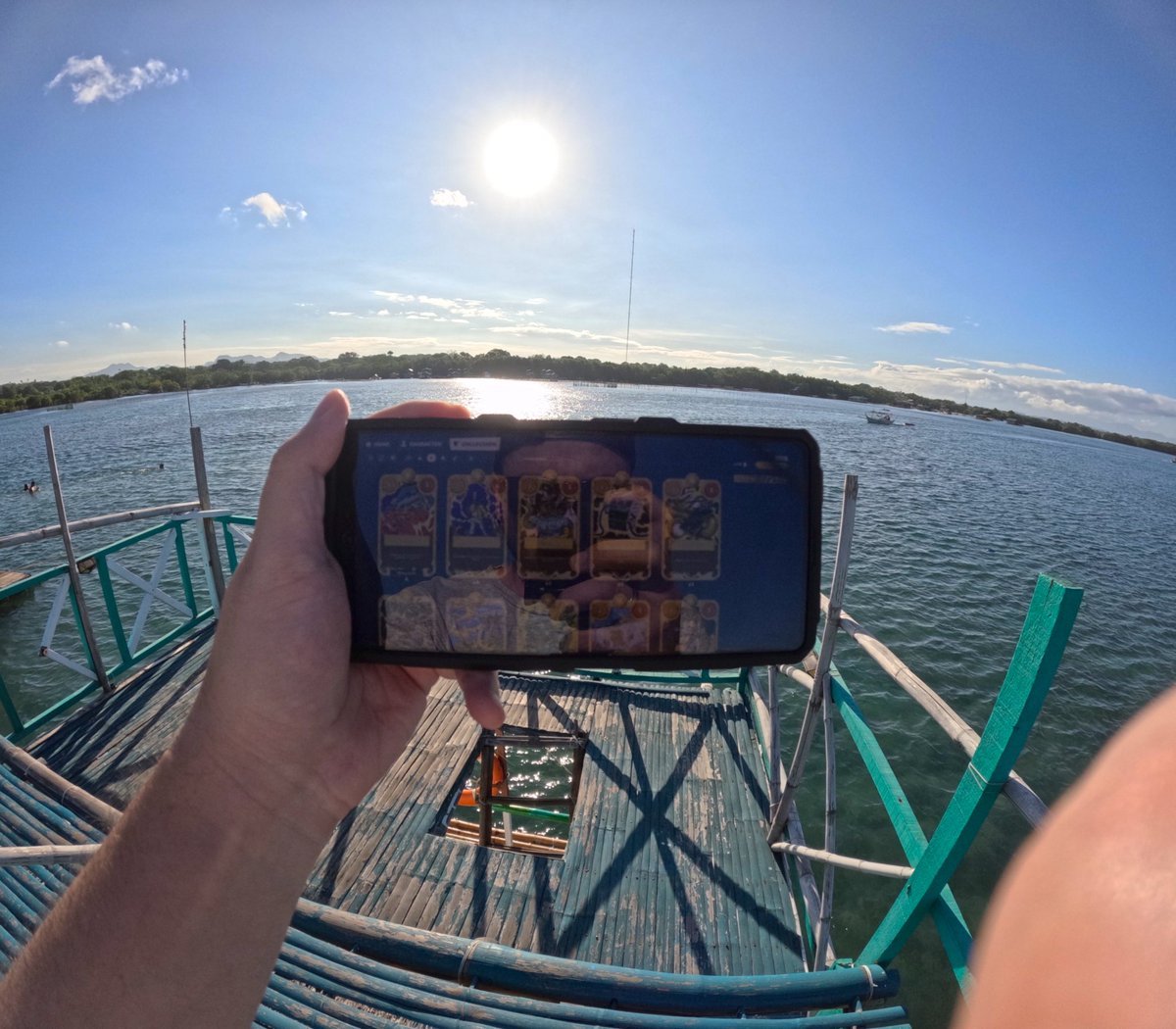
Find your happy place this weekend, but whether you rock Android or iOS, make sure to take some @PlayGoonWars with you on the go ☀️ 🌊.
Is an opponent's creature wrecking your day with a powerful ability?
Pull out your Karen and ask to speak to the manager.
Karenwrath's Censor ability will fix you right up.
When you get the itch to play Goon Wars, you can find us across multiple platforms like @KAPGamesGG, on the @BuildOnBeam Hub, and directly through our website on https://t.co/IyMlNzf8Yt.
Don't be afraid to open the door. Balatroon is waiting just a few steps away.