Fetterman on eliminating filibuster: “we were so wrong, so wrong about that. And now, thankfully, and I think Senator Sinema and Manchin were vindicated by this."
Today at the Senate Foreign Relations Cmte hearing:
Sec. Rubio to Sen. Lee: "You look like Ricketts. I apologize. You threw me off a second."
Lee responds: "Bald is beautiful. We can't help that." @cspan
They were the go-to gifts for Father’s Day: a book about some little-known chapter of World War II, the sweeping narrative of a shipwreck, perhaps the latest presidential biography.
These days, dad books are a dying breed. https://t.co/cjer2DyXOQ
American kids spend enormous amounts of time online with very few significant restrictions, according to a new @FamStudies research brief published today by Michael Toscano, @lymanstoneky and @grantjbailey
🧵 (1 of 3)
Read the summary here: https://t.co/JlBE8GLEIu
The United States should urgently revitalize its maritime industrial base and forge a modernized naval strategy.
A great letter in The Wall Street Journal from AEI’s @MEaglen and Filemón Vela Jr. on how we can fix the US Navy. https://t.co/JWEbTPJqNX
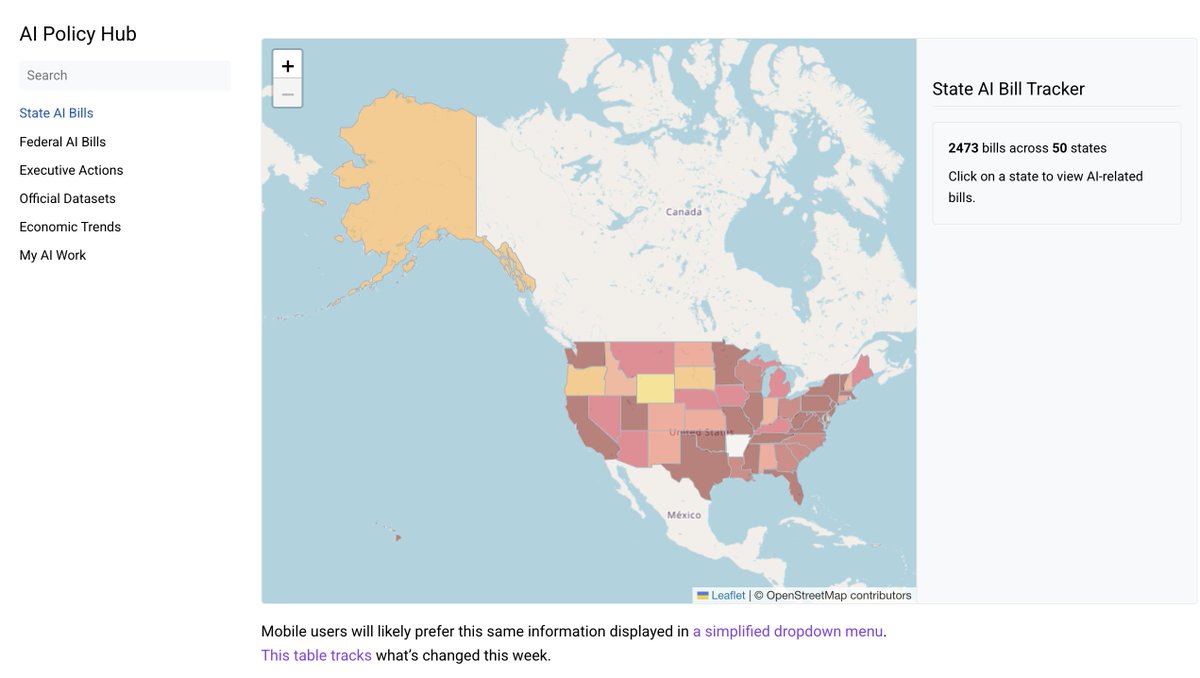
Today I'm launching AI Policy Hub, a project I've been working on and developing the last couple months.
While I have plans for other pages in the future, it currently features
- A state AI bill tracker that automatically updates every Monday
- A federal AI bill tracker that also updates every Monday
- A list of major government actions on AI
- A curated list of FRED charts that are important for understanding AI's economic impacts
- A economic trends page built on my testimony to the JEC, describing what's happening accorrding to the data; and
- A narrative description of my AI work
This is a working project, so please send me ideas for additions or changes!
The page is here: https://t.co/Z56upt2LhZ
My Substack on the project is here: https://t.co/ldTPfEYqff
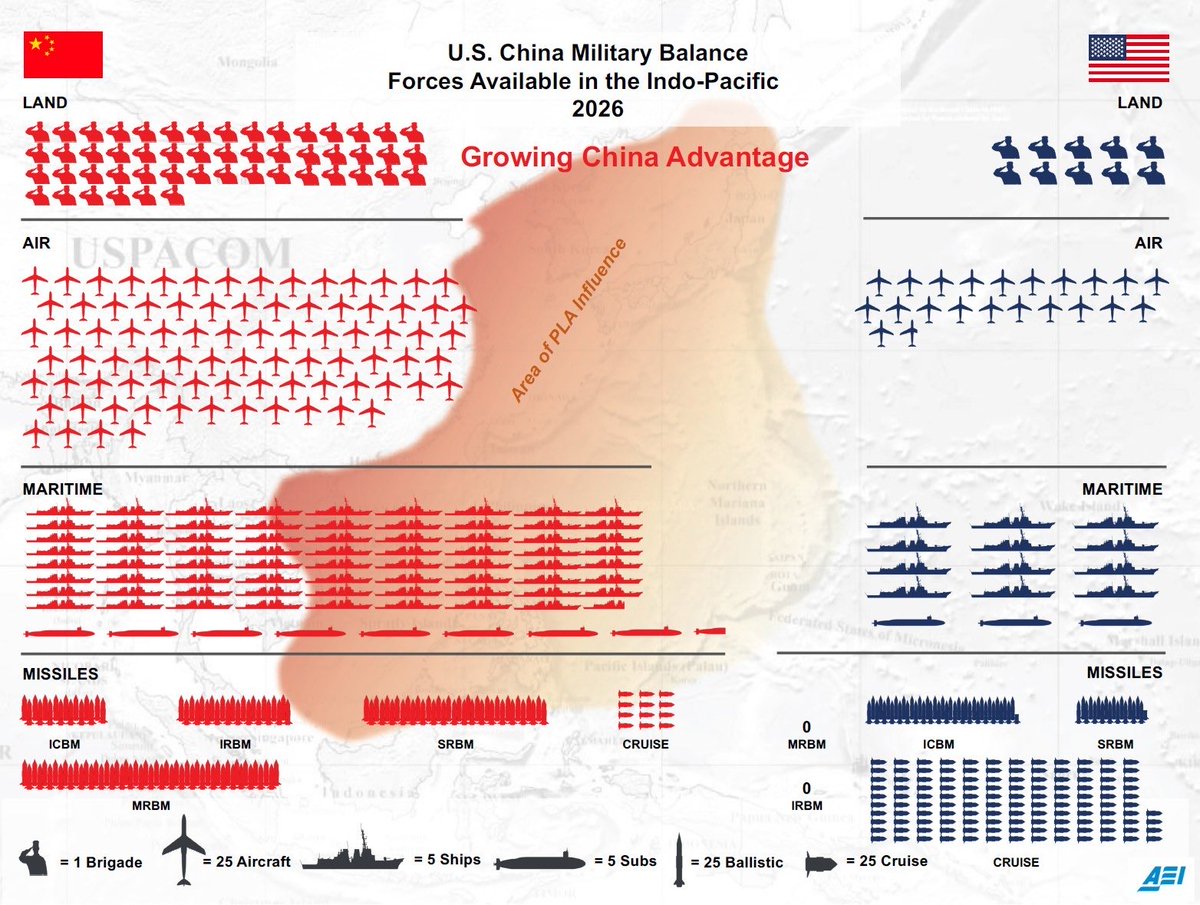
While U.S. defense budgets have flattened, China has not stood still. The military advantage in the Indo-Pacific has shifted dramatically from 1999 – 2026 as these charts from @AEI show.
NEW: The IRGC appears to be controlling Iranian decision-making instead of Iranian political officials who are engaging with the United States in negotiations, particularly Foreign Affairs Minister Abbas Araghchi.
Araghchi previously announced on April 17 that the strait was “completely open” to commercial traffic. The IRGC, however, harshly criticized Araghchi’s statement and outlined specific conditions for vessels to transit the strait that amount to Iran retaining control over maritime traffic through the strait.
The Khatam ol Anbia Central Headquarters, which is functionally controlled by the IRGC, announced that Iranian forces have reinstated strict management and “control” over the Strait of Hormuz. The headquarters cited the US naval blockade on Iranian ports as the reason for the reimposition of Iranian "control" over the strait. IRGC-affiliated Fars News previously warned on April 17 that Iran would “close” the strait if the United States continued its blockade.
The IRGC’s decision to interfere with international shipping and act in contradiction to Araghchi’s statement reflects broader divisions within the Iranian regime, which ISW-CTP has consistently reported on in recent weeks. The IRGC appears to be driving Iranian decision-making instead of Iranian officials who have engaged with the United States in recent weeks, such as Araghchi.
The IRGC Navy has attacked at least three vessels attempting to transit the strait since it reinstated “control” over the strait on April 18. The IRGC is also using intimidation to deter ships from crossing the strait, including by sending radio messages to vessels warning them not to cross. Many vessels that intended to transit through the strait have turned around.
US President Donald Trump stated that the United States cannot be blackmailed by Iran. The US Navy’s blockade on Iranian ports remains in place.
“I expect there to be an enormous amount of patting themselves on the back [after 2026]…But in the longer run, it’s pretty dicey when voters actually don’t trust you on a whole wide range of issues.”
Ruy in Politico:
https://t.co/F76FyfTfnC
This week, I had the privilege of helping to dedicate the newly named Fox Conner Hall in honor of the late Maj. Gen. Fox Conner — a mentor to Eisenhower, a native Mississippian, and a distinguished military leader.
We honor Fox Conner for being more than a selfless patriot and soldier. We bestow this recognition because he was a teacher who recognized talent and potential, and understood the sacred obligation of our military leaders to train and mentor the next generation of American soldiers.
Walker Percy, in a 1977 self-interview (emphasis mine).
Q: How is such a belief possible in this day and age?
A: What else is there?
Q: What do you mean, what else is there? There is humanism, atheism, agnosticism, Marxism, behaviorism, materialism, Buddhism, Muhammadanism, Sufism, astrology, occultism, theosophy.
A: That’s what I mean.
Q: I don’t understand. Would you exclude, for example, scientific humanism as a rational and honorable alternative?
A: Yes.
Q: Why?
A: It’s not good enough.
Q: Why not?
A: This life is too much trouble, far too strange, to arrive at the end of it and then to be asked what you make of it and have to answer “Scientific humanism.” That won’t do. A poor show. Life is a mystery, love is a delight. Therefore I take it as axiomatic that one should settle for nothing less than the infinite mystery and the infinite delight, i.e., God. In fact I demand it. I refuse to settle for anything less. I don’t see why anyone should settle for less than Jacob, who actually grabbed aholt of God and would not let go until God identified himself and blessed him.
I am interested in victory, not performative politics. Let’s fight for the SAVE America Act in a form that can win instead of charging into a battle we will most certainly lose, writes @TimSheehyMT
https://t.co/OrXJw5TPlr
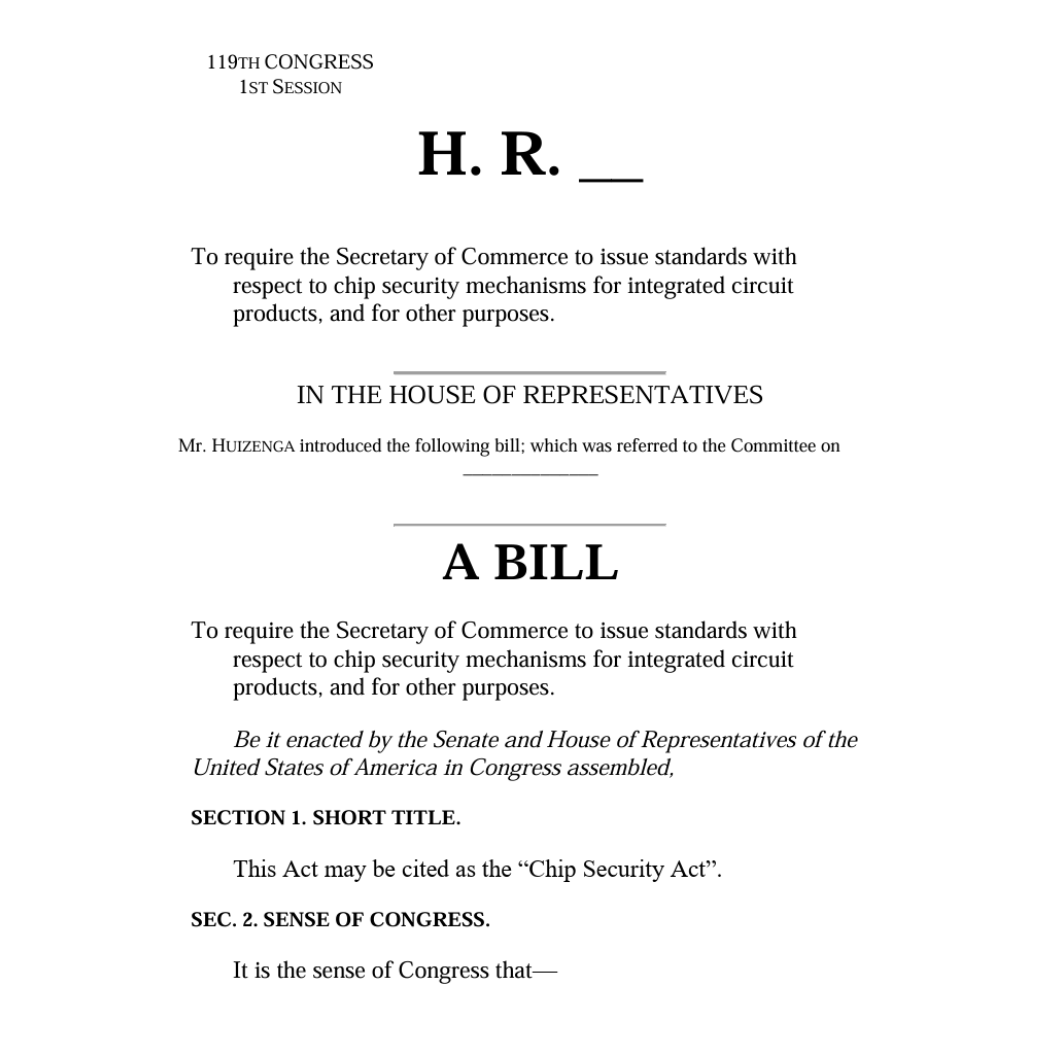
This week, the House Foreign Affairs Committee will mark up one of the most important bills of 2026:
The Chip Security Act.
After more than a year in the making, we stand on the cusp of revolutionizing 🇺🇸's approach to export control — to PROMOTE U.S. AI.
Here's how:
🧵 1/
This is our last week of term @uaustinorg. After a couple months spent training students to read great books patiently with their very own eyes and brains, something becomes clear:
In the new job market these kids will face, one of the rarest, and therefore most valuable skills is going to be the ability to sit quietly alone in a room and string thoughts together. Very, very few people who grew up reliant on AI are going to be able to do that, and those who can are going to eat their lunch.
Turns out, if you try your best to love wisdom for its own sake, you get the practical stuff thrown in. But it doesn’t work the other way around.
The skills they told you were “useless” are about to become the most useful ones in the world. They always were, of course. But now it will be obvious why.
As Fred Kagan said on @schoolofwarpod with @AaronBMacLean yesterday there is a huge opportunity for Gulf money to invest in Ukrainian technology and scale innovative anti-UAS capabilities. Japan and Taiwan should get in that game as well. https://t.co/t3KB9zhsUl