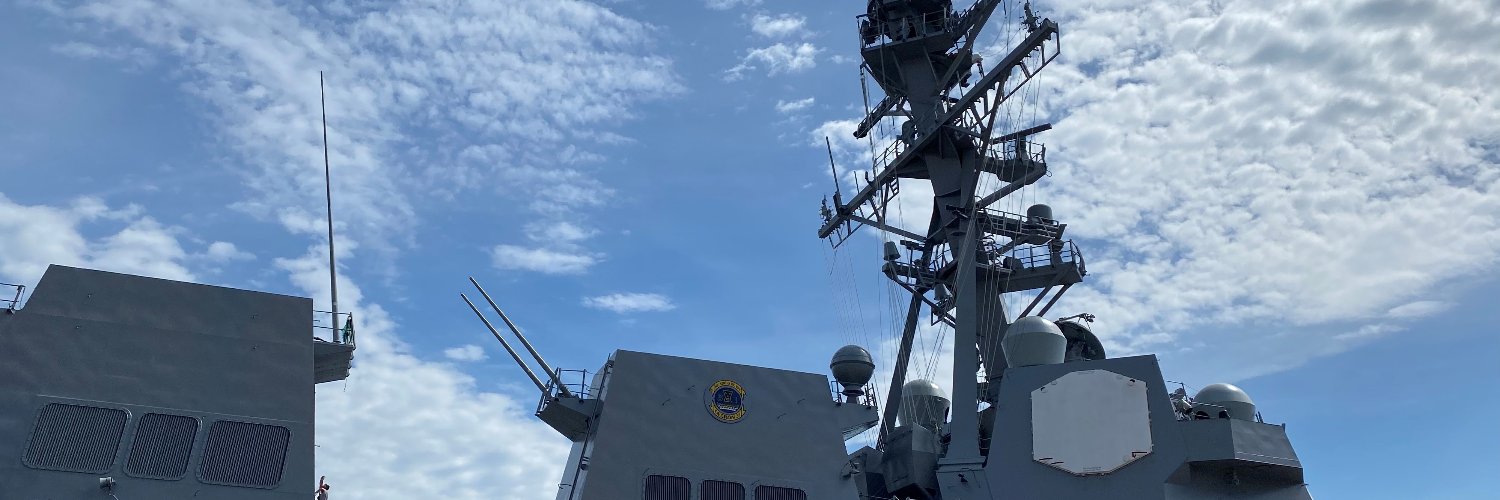
While the U.S. has fielded a variety of UUVs and launched new innovative programs for more, our military is arguably behind given the challenges of this technology, its onboard communications, and still-growing industrial base, said AEI’s @MEaglen
https://t.co/hFOAerTnLc
@LegasovAnalytic Please, no. This is almost a decade’s worth of damage to USN priorities due to 4+ missions at once, for so long; one alone of which CNO said would break the Navy (my words)….
Thank you to @SECNAV and @MEaglen for joining us this afternoon in Fort Wayne at the Northeast Indiana Defense Summit for the panel discussion: “Can America Still Build a Navy?” 🇺🇸
Loved VCNO Admiral Kilby’s discussion about better explaining the risk to policy and decision-makers about the costs to future readiness when high optempo demands repeated aircraft carrier deployment extensions
The NCFN is examining @USNavy & @USMC readiness, force structure, resources, & the industrial base to inform recommendations for the Navy’s future. Recent testimony highlights many challenges & opportunities.
🔗 https://t.co/QRWpkeSDrZ
Hear from the Vice Chief of Naval Operations & Assistant Commandant of the Marine Corps at the Navy commission hearing on Capitol Hill today at 1 pm and live on C-SPAN ⚓️🎥
https://t.co/wDvPHJJJnO
TODAY: The NCFN hears from senior leaders from the offices of the @USNavyCNO & @CMC_MarineCorps on what is needed to strengthen America’s maritime sea power. Don’t miss this important discussion on the @USNavy & @USMC future.
🕐 1 p.m. EDT
🎥 https://t.co/WklUWNsVsT
#FutureNavy
The Washington Post editorial board banger on the fundamental responsibility of government and the “Terrible ‘20’s” (h/t @cdrsalamander) confronting the U.S. military
https://t.co/Wh1GQ4w6Vt
The United States Navy is vital to protecting the global commons in support of economic stability — particularly sea lines of communication and the internet plumbing underneath the world’s oceans. Washington must ⬆️ investments in the Navy, Marine Corps, Coast Guard & Merchant Marines.
https://t.co/EJB2K8vvAe
The Chief of Naval Operations testified to Congress this past spring that providing escort services though a contested strait “exceeds the capacity” of the United States Navy
https://t.co/RA8Ck1UaHH
Read more about the new public shipyard here —>
https://t.co/C46B4kKW4A
⚓️
And watch US Navy officials make news about what that new yard could look like here:
https://t.co/NYi7muVYwc
The Navy’s air boss spoke last year about the "glory of the Ford" and provided helpful data.
With over 1,000 passes under his belt, a recent one using the new tech was the “best pass” the air boss had “ever seen.”
After coming around the corner, Admiral Cheever landed on point.
“Literally, the ball didn’t move, and I landed exactly where I wanted to land. Incredible capability.”
With the island now shifted, it reduces wind on deck and makes stability a feature. The command center for flight-deck operations, the island’s real estate change has also created future margin growth to cope with evolving threats and challenges and the ability to quickly absorb new tech onto the carrier.
Moving the island rearward further increases parking availability and makes it “quick and easy” for pilots.
The Ford’s EMALS generates 25% more daily sorties than the Nimitz-class. With this dramatic increase in flights per day, the Ford has improved the “most important metric of carrier lethality.”
Operating on the Ford flight deck is also safer. After landing, pilots quickly get into their parking spot under the new weapons elevators.
Almost immediately, the aircraft take on more ordnance, and then execute mission.
Jumping from just 3 elevators on the Nimitz carriers to the dozen electromagnetic weapons elevators aboard the Ford today means faster rearming and relaunching of aircraft.
And by rearranging the process to favor moving munitions to strike fighters instead of the other way around, alongside other improvements in automation and technology, time has been freed up for military commanders to use for more productive purposes.
This means more tails in the air rather than maneuvering around the deck-plates.
Calling the Ford a “huge leap” in capability, the Admiral closed by noting the “entirety of the Ford class carrier is air conditioned.”
Air conditioning makes for more productive crews and less heat and humidity wear on platforms. This is important as the air wing morphs into a more blended manned-unmanned mix with greater variety of aircraft and weapons.
The U.S. Navy’s Ford-class air wing can accommodate fourth-, fifth- and eventually sixth-generation fighters, support aircraft along with new unmanned systems like the MQ25 and the Collaborative Combat Aircraft. It can operate them more smoothly with more efficient processes and more productive crews.
While demonstrating an impressive surge in combat power currently in the Middle East, the U.S. Navy is too small to maintain a wartime footing for this long without serious ramifications for men & materiel, both now and in the near future.
The not-fully-open-yet-not-quite-closed Strait of Hormuz is showcasing systemic problems that have long plagued the Navy.
Chief of Naval Operations Admiral Daryl Caudle recently told Congress that “providing escort services through a contested strait will…exceed the capacity of the Navy to do that effectively.”
The CNO’s candor is welcome as the sea service seems to make it all work, all the time so it can mask (at least temporarily) deep structural weaknesses.
America’s Navy is too important to national security and national economic interests to let it atrophy so deeply, so quickly.
TODAY 10 am 💡
Tune in as the National Commission on the Future of the U.S. Navy hears testimony from @DeptofWar & @USNavy leaders on strengthening America's maritime power and the future of our naval forces
Watch live: https://t.co/HRwkE8aOzO
Tomorrow @ 10 am (Wed., July 22), the National Commission on the Future of the U.S. Navy will hold a public hearing to learn from Pentagon leaders.
⚓️ Witnesses include ⚓️
- Mr. Austin Dahmer, Performing the Duties of Deputy Under Secretary of War for Policy
- Mr. William Mahan, Performing the Duties of Assistant Secretary of the Navy for Research, Development, and Acquisition
- Mr. Neil W. T. Hogg, Deputy Under Secretary of the Navy for Management
** Open to the public & members of the press.
Rayburn House Office Building, Room 2118 **
The National Commission on the Future of the @USNavy will hold its second hearing with testimony from members of the @DeptofWar and the @NavyDepartment to better understand department actions to improve America's maritime sea power. #FutureNavy
https://t.co/XwHHDuZf47
A public (US-government owned) Navy shipyard paid $60,000 in taxpayer money for a tariff on an essential crane part for lifting operations of nuclear vessels that itself cost $269K. This shell game should not happen with public funds.
Last year’s FY26 #NDAA had a provision reinforcing the tariff exemption for defense materials, but it was ultimately dropped. @SASCGOP@SASCDems
https://t.co/zbM2ALgfuz