Dealing with difficult people may be hazardous to your health.
Data: Each additional "hassler" in your network predicts 1.5% faster biological aging—and worse health a year later. Non-spouse family hasslers are the most problematic.
Some ties aren't worth the toll they take.
🚨 DFW AIRPORT, TEXAS 🚨
American Uber driver reports seeing large groups of Muslims and other foreign groups FLOODING airport parking lots. Drivers are reporting MASSIVE rideshare FRAUD.
Why is this happening in TEXAS?
@Carlos__Turcios
State of Sociology
This article is being lauded by the usual suspects. IMO it is a failure because it fails to recognize that sociology is producing much great research. Here are four examples of great books by sociologists published in 2025/2026 that rival those of any social scientists.
For inequality, here are two books which I rank among the most important I have read in the last several years. Neither, IMO could have been written by an economist. The natural kinds undergirding their logic, the ways that evidence is evaluated, are essential complements to the ways that economists, including me, normally think.
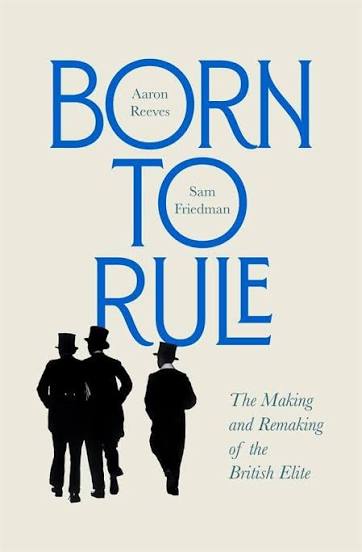
1. Aaron Reeves @aaronsreeves and Sam Friedman @SamFriedmanSoc , Born to Rule: The Making and Remaking of the British Elite
is a tour de force in analyzing the ways that British elites have reproduced themselves since the 1890s, finding relatively little changes in the rates of elite reproduction during this period. The book characterizes the ways that elites have evolved in the ways that they conceptualize themselves and present themselves to others. As such, Reeves and Friedman provide deep insights into the nature of intergenerational mobility and of meritocracy for Great Britain, past and present. All of this is done using an amazing array of qualitative and quantitative information that the authors constructed.
2. Michelle Jackson @mivich, The Division of Rationalized Labor
is a remarkable analysis of the nature of modern jobs. The book argues that contrary to the classical idea that increasing division of labor would leads to job simplification, the modern economy has produced jobs of increasing complexity as a given position involves more complex and heterogeneous objectives. Teachers are one example that is discussed in detail. Michelle argues that rationalization of the economy facilitated by increased capacity to understand and measure how productivity of individuals and organizations is determined, underlies this evolution. This vision contains deep implications for labor market and intergenerational inequality.
Methodology. These two books stand on par with the best econometrics texts.
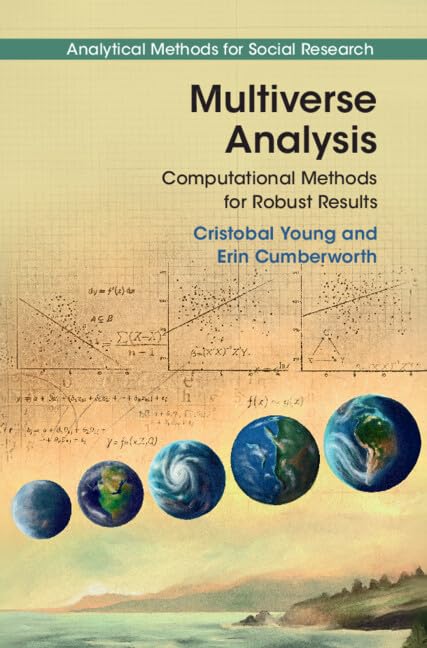
3. Cristobal Young and Erin Cumberworth, Multiverse Analysis: Computational Methods for Robust Results
defines an important frontier in the analysis of the effects of model assumptions on empirical claims, by constructing ways to communicate information about objects of interest across model spaces, which define different portfolios of assumptions. This vision of empirics is the next generation after model averaging, which has been important in the economic growth literature.
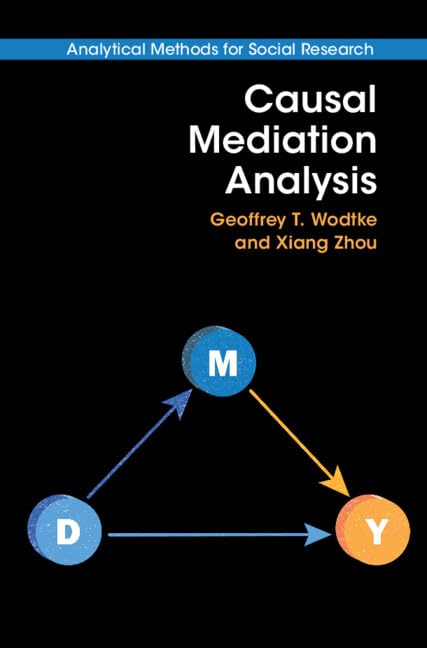
4. Geoffrey Wodtke and Xiang Zhou, Causal Mediation Analysis
is a masterful synthesis and will become a standard citation and the essential reference for students and researchers.
To be clear, my objection to the WSJ article and the way it is being is fully consistent with my endorsement of the Vanderbilt-Washington report. The fact that I know world class sociologists who have dropped their memberships in the American Sociological Association over its politicization (while many others have expressed misgivings to me) speaks volumes. But the idea that the field is a systematic failure is nonsense.
Hundreds of #SanFrancisco Marina residents turned out this evening for townhall on controversial @Safeway housing plan, which would place what for many is an uncomfortably tall, 22 & 18 story project at the low-slung neighborhood’s waterfront.
@sfchronicle
HFT Market-Making Systems
I spent the first 13 years of my career designing algorithmic trading systems for large HFTs in options, futures, and ETFs (intl/US equities, commodities, fixed income, volatility). Here’s a summary of each component, note the role AI/ML actually plays.
Market data. A market-making system requires realtime orderbook deltas and trades, not just for the symbol that’s being quoted but also for every related instrument used in computing the theoretical fair value of the instrument. Every exchange has a different protocol specification and format, from JSON over websocket (slowest) to FIX (common) to fixed-width binary (fastest). The lowest latency systems will ingest market data on a different thread or process to avoid interfering with the core trading logic of the system.
Fair Value. Successful market making depends on a precise understanding of the theoretic fair value of an instrument, which is the indifference point between buying and selling the instrument modulo fees and other costs. The complexity spans from a several-parameter model based on one or two instruments to highly multivariate calculations across a basket of different symbols. This component is usually the firm’s most guarded intellectual property.
Order placement. Accurately predicting the price of an instrument is only half of the core logic of a trading system; deciding where and how to place orders is equally determinative of P&L. Maintaining balanced two-sided quotes, optimizing for queue position, minimizing traffic to comply with order rate limits, canceling to avoid adverse selection, and order sizing are all intricately determined by the strategy designer.
Exchange connectivity. Similar to the market data component, all trading systems must send orders and cancels using each exchange’s unique messaging protocol. JSON, FIX, and binary formats are all used, with the last most common among traditional exchanges where latency and throughput are optimized. The connectivity layer can be embedded within the order placement process or segregated as its own gateway process.
Offline training. Training is not part of realtime transformation of ticks to trades, but it is one of most important differentiators between trading firms. All parameters that define fair value calculation and order placement are set via offline compute tasks that are often guided by machine learning. A significant amount of the GPUs that large HFTs buy or rent are directed to model discovery and parameter optimization.
A handful of HFTs already use specialized GPUs for the linear algebra behind valuation, but the practice remains rare, confined to strategies where predictive power matters more than shaving the last nanoseconds off latency. As purpose-built inference silicon such as Google’s TPU and OpenAI’s Jalapeño becomes widely available, more HFTs will fold online ML and inference into their systems’ trading loops.
The CIA released a "Reading Improvement Course" that had been hidden from the public since 1955.
I read all 117 pages so you don't have to.
Here are the 10 most interesting quotes from it:
1) "Good reading is not necessarily rapid reading. The rate must be adjusted to comprehension requirements."
2) "To read well you must concentrate. No activity except perhaps writing or thinking makes more rigorous demands upon the whole mind than reading."
3) "Suggestions to develop your ability to concentrate: Be interested. There is no spur to concentration like honest interest."
4) "Some readers have found certain devices useful in keeping their minds on the subject. One device is to jot down key thoughts as one reads. These words act as a fence to confine our wandering thoughts. The practice of underlining key ideas and making notes at the end of each section serves the same purpose.
5) "Concentration is a habit and must be formed. Habits require, at first, a conscious effort of the will. Force yourself to let nothing come between your mind and the matter on the page before you."
6) "When our attention wanders, words slip by us and leave no trace of meaning. Under such conditions we cannot expect a harvest of logical thought. We go through the motions of study or reading, but do not get results. We waste time that could be used far more pleasantly and profitably."
7) "Drawing conclusions is the final step of the reading process and should be based on sound judgment of the author's qualifications, facts presented, methods of presentation, validity of arguments, or style of presentation."
8) There are 3 types of reading:
Intensive reading: when the purpose is to master new subject material, the skills required are translation, integration, analysis and evaluation. The best procedure is (a) rapid preliminary survey of the material, (b) formulation of questions prior to the reading, (c) careful reading, and (d) review and recitation of important points.
Extensive reading: with the purpose of acquiring a broader frame of reference and widening the range of knowledge. The skills required are integration, analysis, and evaluation. The best procedure is rapid and thorough reading of the material. The extensive reading rate should be as fast as the thinking process permits.
Scanning: for (a) the main idea, (b) specific information and (c) a preview of the material. To read effectively the reader must first review the material and the specific purpose for the reading.
9) The SQAR3 Reading Strategy:
"Scan: Quickly scan the introductory paragraph, subtitles, key sentences, key words, summary. Decide on the author's plan.
Question: Turn the title or key sentences into questions.
Anticipate: Before reading, try to answer these questions mentally.
Read: Read the entire selection and look for the author's ideas to answer your questions.
Recite: Close the book or magazine. Tell yourself in your own words what you have learned. Write notes on material that must be remembered.
Review: Later, to make your knowledge stick, review the gist of the article or chapter, again in your own words."
10) How to read with purpose:
-"Have definite questions which you wish answered through reading a given selection.
-While reading, make a mental note of the main points in the paragraph or article.
-From time to time stop to think over the material just read in preceding section.
-Notice the illustrations and examples that are used.
-Develop the habit of criticizing what you read."
My favorite quote from the report:
"Reading is a pleasure, a source of information, and the basis for most decisions that are made today. It deserves the liveliest interest and the best techniques we can master."
My new strategy is going to be Geomaxing. The United States is far too brutal of a dating market to compete in, so im going to geomax to countries with poor economies to mog people.