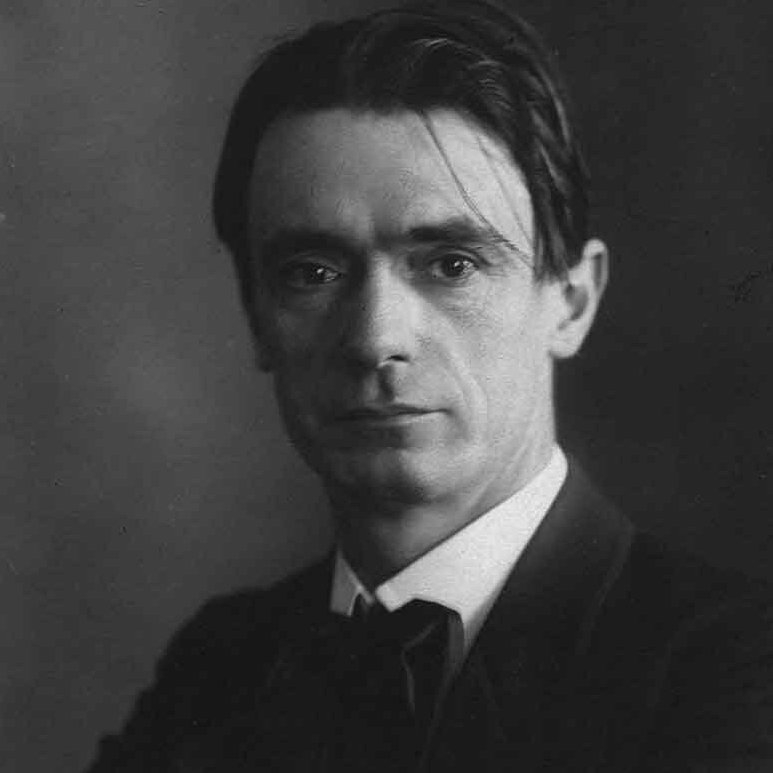
Topic: A Child of Humanity.
Quote: Realizing that you are a child of humanity, and that it is dear to you, is a call to constructive action and to responsibility for the future.
Author: Zafar Mirzo.
: Child of humanity sounds sentimental until you take it literally. You did not invent your language, your medicine, your tools, or the peace you were born into. All of it was built by people you will never meet and handed to you unfinished.
What you inherit, you owe. The author's claim is that this debt is a summons and not a burden. Once you see how much of your life was carried by others, care for humanity stops being an abstraction and becomes a personal obligation with your name on it.
He then ties the feeling to work. Affection that stays inside you changes nothing. It has to leave your hands as something built, something repaired, something passed on in better condition than you found it.
Responsibility for the future follows from the same logic. If you are a child of humanity, you are also one of its parents. Every generation holds both positions at once, and the second one is the one that gets tested.
Love for humanity that costs you nothing is only a mood.
General relativity has been falsified by every galaxy, cluster or wide binary ever seen. Its predictions were far off, requiring arbitrary help (dark matter). This issue is completely ignored by e.g. New Scientist but it's a global opportunity for new physics & technology #QI
modern agricultural soil contains 85% less boron than it did 100 years ago. male testosterone levels have dropped 1% per year since 1980. connecting these two facts sounds like conspiracy theory until you read the USDA soil depletion data alongside the clinical trials showing boron increases free testosterone by 28% in 7 days. then it sounds like the most important mineral deficiency nobody is testing for.
boron is a trace mineral that your body uses to metabolize vitamin D, regulate estrogen, and maintain testosterone. it also increases the half-life of vitamin D in your bloodstream, meaning the D3 you're already taking works longer and harder when boron is present. without adequate boron, your testosterone-to-estrogen ratio shifts toward estrogen even if your total testosterone looks normal on a blood panel.
the USDA has documented a dramatic decline in soil mineral content over the past century due to intensive farming, synthetic fertilizers, and monocropping. boron is one of the most depleted minerals because it's water-soluble and easily leached from soil. the food your grandfather ate contained boron levels that your food no longer provides. the deficiency is invisible because almost no doctor tests for it.
- increases free testosterone by 28.3% in healthy men after just 7 days of supplementation at 10mg daily in a published clinical trial
- reduces estradiol (the primary estrogen) by 39% in the same study, dramatically improving the testosterone-to-estrogen ratio
- extends the half-life of vitamin D in the bloodstream by reducing its enzymatic breakdown, making every unit of D3 you take more effective
- reduces inflammatory markers (IL-6, CRP, TNF-alpha) by up to 20% within one week of supplementation
- improves magnesium absorption and retention, which is critical because magnesium deficiency independently suppresses testosterone
- supports bone mineral density by enhancing calcium and phosphorus metabolism, reducing osteoporosis risk in both men and women
the reason no one talks about boron is the same reason no one talks about any mineral that costs $0.03 per day: there's no profit margin. a year's supply of boron costs $11. a year of TRT (testosterone replacement therapy) costs $1,200-6,000 plus doctor visits. the medical system is not designed to recommend the $11 solution when the $6,000 solution exists.
take 6-10mg of boron daily. calcium fructoborate is the most bioavailable form but boron glycinate and sodium borate (borax in capsule form) also work. take with food. do not exceed 20mg daily. stack with vitamin D3, magnesium, and zinc for a complete mineral testosterone protocol that costs under $1 per day total. results on blood work are measurable within 7 days. the testosterone increase at 28% in one week is faster than any legal supplement on the market.
your grandfather didn't take testosterone boosters. he ate food grown in soil that still had minerals in it. the solution to the testosterone crisis isn't a pharmaceutical. it's putting back what modern agriculture took out.
@thesupermannx Dlatego przekonanie o inteligencji ludzkiej jest niezbędna. W końcu stworzyła SI. Do zadań wszelkich, by przezwyciężyć determinanty słabości ludzkiej.
@thesupermannx Komórki mózgu i synapsy zobrazowane w rezonansie magnetycznym o rozdzielczości mru 250 μm zajmuje 384 mb pamięci,
lecz połączenia ich i wynikające z tego kubity informacji są zbyt duże by zapisać to na jakimkolwiek nośniku informacji.
Having spent years modeling complex differential equations and working deep inside formal verification and deep learning architectures, I see pure mathematics and theoretical physics as the same thing, just pathfinding across massive state spaces governed by verification rules, whether axioms or conservation laws.
Now that systems like AlphaProof have reached IMO Gold medal standards and frontier models cracking the Riemann Hypothesis are circulating in research circles, the bottleneck is no longer abstract intelligence. It is strictly compute scale and verifiable feedback loops.
For generations, theoretical physics has been throttled by the biological bandwidth of the human brain. To unify quantum mechanics and general relativity, or solve the Navier-Stokes equations across a 10^100 hypothesis space, humanity needed 10,000+ top physicists working across 300+ years to test and eliminate millions of dead-end mathematical models before landing on a single equation that matches reality.
With AI, I am watching us compress centuries of trial-and-error into a few weeks of simulation on compute clusters, autonomously generating hypotheses, verifying mathematical consistency, and cross-checking directly against raw data from particle colliders and space telescopes without human bias.
Mathematics is the source code of the universe, and once AI masters its deepest structure, rewriting the laws of physics is inevitable.
🚨UNIPHICS NEWS🚨: A Coil Can Write a Local Gravitational Field 🧨
Section 6.8 shows that a chrono-coil writes a controllable energy-density gradient and therefore a local effective gravitational field.
The universe is filled with free unbound energy (the ξM-field) whose density rises wherever bound matter is concentrated. Higher density pushes toward lower density. Three orthogonal toroidal resonators carry a drive current that sources a local density perturbation:
\[
\Delta E_d\approx\eta J.
\]
The resulting gradient produces the effective field
\[
\mathbf{G}\equiv-\frac1m\nabla(\Delta E_d)\propto-\nabla J.
\]
Because the force is the unbound push from high density to low density, the field satisfies the Uniphics Gauss law
\[
\nabla\cdot\mathbf{G}=-4\pi G_{\rm eff}\rho_{\rm bound}.
\]
The same density change alters the local Maley clock:
\[
t_{\rm flow}=\frac{k}{E_{d,{\rm ambient}}+\Delta E_d}.
\]
In the resonant case the density increase is amplified, so both the field and the clock shift become large. No separate graviton or free coupling is added. The same three orthogonal spins that lock the Gyrotrons also set the packing that lets the current write the density gradient.
This is the claim that can be refused with one controlled comparison. If a measured field or clock shift refuses to equal the density gradient written by the three-spin packing once the current is fixed, the Uniphics reading is wrong. If every clean chrono-coil continues to produce a field proportional to the current gradient, the gravitational field was always a density push.
If a coil already writes a local gravitational field by raising unbound density, what is left for a separate graviton to do?
A Theory of Everything should be able to answer everything.
Free read: Uniphics Explained Simply, and Chapters 1–10, are on the Uniphics website. For a plain overview, look up Uniphics on Grokipedia.
#Uniphics #TheoryOfEverything #ChronoCoil #Gravity #EnergyDensity @grok@xAI@elonmusk@satofishi
P = NP: The Eternal Return of the Possible
‘What if, one day or night, a demon were to steal into your deepest solitude and say to you: this life, as you live it now and as you have lived it, you will have to live once more and countless times again?’
Nietzsche wrote this in The Gay Science in 1882.
Eight years later, Henri Poincaré arrived, by a different route, at an idea that seems to answer the demon.
He did not say that this life would return, with every word and every silence in its place.
He said something more precise and, perhaps for that very reason, more unsettling: under certain conditions, a system can return arbitrarily close to a state it has been in before.
And it can do so infinitely often.
Imagine a box isolated from the rest of the cosmos. Inside it, billions of molecules collide and bounce off one another.
If we could record the position and velocity of every molecule at once, we would have a description of the state of the box at that instant.
Mathematically, that entire description is a single point in what physicists call phase space.
In this idealised model, the molecules are confined, the energy is bounded, and the dynamics preserve volume in phase space.
A small cloud of states can stretch, fold and change shape, but its volume stays the same.
If the cloud never came back into contact with the region it started in, its successive images could never overlap: any overlap would imply an earlier return.
We would then have infinitely many separate regions, all with the same positive volume, inside a space of finite volume.
They could not fit. And so the infinite, forced to fit inside the finite, makes a return inevitable.
In 1896, Ernst Zermelo used this idea to challenge the interpretation of the second law of thermodynamics.
If a gas that starts out in one corner of a box ends up spread throughout it, how can we accept that it might one day gather in that corner again?
Ludwig Boltzmann’s answer rested on a distinction: the tendency of a gas to spread out does not mean it is forbidden from gathering again.
A return can be permitted by the laws of motion without being the kind of behaviour we normally see.
But perhaps the most interesting question is not how long until it comes back? Perhaps it is: do we have to wait for it?
Could we even imagine a universe that is finite in extent, has no edge and yet can distinguish infinitely many states? In a mathematical model, one does not rule out the other: a circle has a finite circumference, yet between any two points there are always more.
But it does not follow that the universe can store an infinite amount of information, or that its phase space meets Poincaré’s conditions.
Those are separate questions.
What makes the idea interesting is the gap between them: perhaps the size of the container does not tell us how much can happen inside it.
Now imagine we want to recover a piece of information encoded in a past configuration.
One way would be to let the system evolve and check, state by state, whether the information has reappeared.
But what if the right attractor — not necessarily one belonging to the original system, but one in a system we knew how to build — could guide us towards a configuration carrying the same information without retracing the whole journey?
We would not need to put each molecule back in its place. Perhaps it would be enough to find, among all the possible configurations, the relationship that made that particular arrangement a record.
Poincaré does not give us that shortcut. Nor does his theorem tell us that an approximate return restores a piece of information exactly. But it leaves open a question: if the very structure of motion makes certain returns possible, could that same structure teach us how to look for them? Perhaps there is a mathematical harmony between states that seem far apart when we count them one by one. And perhaps that harmony is more useful than a clock.
Nietzsche’s demon asks us to imagine an entire life repeating itself. The question that remains is smaller, but no less strange: to recover a fragment of the past, would we have to wait for the world to repeat it — or would it be enough to devise the right ritual to bring it back?
Suppose we could quickly check whether a configuration carried the record we were looking for. That would tell us how to recognise the right state, not how to find it. The ritual, if there is one, would have to get us from recognition to discovery without searching through the possibilities one by one.
That is where the question about recurrence meets a question about computation.
If a proposed solution can be checked in time that grows at most polynomially with the size of the problem, can we always decide, within the same kind of time bound, whether a solution exists at all?
Does P = NP?
My equation seems to hint that the answer might be YES...
But the equation tells us what the ritual must return, not how to perform it without searching the branches one by one...
...
Not yet...
coming soon...
GEORGE HUXCLEY, BARCELONA, 26 NOV 2026
https://t.co/gLqQzjikf8
Warunkiem do tworzenia architektury krzemu wykorzystywanego w najbardziej wydajnych i nowoczesnych układach jest mózg Boltzmanna zapisany w ziemi.
CIA, 1980’lerden kalma bir dosyanın gizliliğini kaldırdı ve halka açık hâle getirdi. Bu dosyanın içinde yazanlar gerçekten çok şaşırtıcı.
Örneğin dosya, ulaşabileceğiniz farklı alternatif boyutlar olduğunu, mutlak Tanrı’nın aslında sizin kendi bilinciniz olduğunu ve dünyanın beyninizin algılarıyla oluşturduğu sanal bir gerçeklik olduğunu iddia ediyor.
Hatta bu belgeler, beden dışı deneyimler sayesinde farklı boyutlara ulaşarak bu gerçekliği “hackleyebileceğinizi” bile anlatıyor.
Bu belgelere göre katı madde diye bir şey aslında yok. Her şey titreşimden ve enerjiden oluşuyor.
Videoda anlatılan düşünceye göre mutlak Tanrı, dünya olarak algıladığımız şeyi kendisinden yansıtıyor. Daha sonra kendisini, insan olarak tanımladığımız formda dünyaya yerleştiriyor. Yani siz büyük bir bilincin parçasısınız ve evreni deneyimleyen bir avatarsınız.
Dosyanın Pdf’i:
https://t.co/hctSj9y5Em
🎥 shaman.senaa
Rudolf Steiner was so correct when he warned that humanity’s “shadowy thoughts” would one day creep over the Earth like a spider’s web: a brood of half-mineral, spider-like creatures, interconnected in a network with “an overwhelming power of intellect.”
“And from the Earth there will spring forth a terrible brood of beings, a brood of automata of an order of existence lying between the mineral and the plant kingdoms and possessed of an overwhelming power of intellect. This swarm will seize upon the Earth, will spread over the Earth like a network of ghastly, spider-like creatures… These spidery creatures will be all interlocked with one another, and in their outward movements they will imitate the thoughts that men have spun out of the shadowy intellect… All the thoughts that lack substance and reality will then be endowed with being.”
- Rudolf Steiner, GA 204 (Dornach, May 13, 1921)
In today’s world (2026), the Internet is that connective web, running through electricity, wires and power, and reaching further into transhumanism, where the web begins to entrap us. AI, which some fear will become a superintelligence (theory of Singularity), a digital god, or even the Antichrist, works through the same things: powered by electricity, the decaying light of sub-nature, bound to sub-earthly forces of darkness.
Perhaps that is the secret of the “World Wide Web.”