🎉Celebrating a lifetime of impact in mycorrhizal science
We are proud and thrilled to announce Nancy Collins Johnson (Northern Arizona University) as the IMS Eminent Research Award 2026 recipient
https://t.co/xZpSWYSSzU
👏 Join us in celebrating her at @ICOM2026
🎁SORTEOS🎁
¿Quieres participar? Pues👇
Síguenos en https://t.co/fKeHiYeZPq y regístrate en https://t.co/aMS4u5d9IM si aún no lo haces.
Atentos a nuestra transmisión en vivo hoy a las 5:00pm 👀
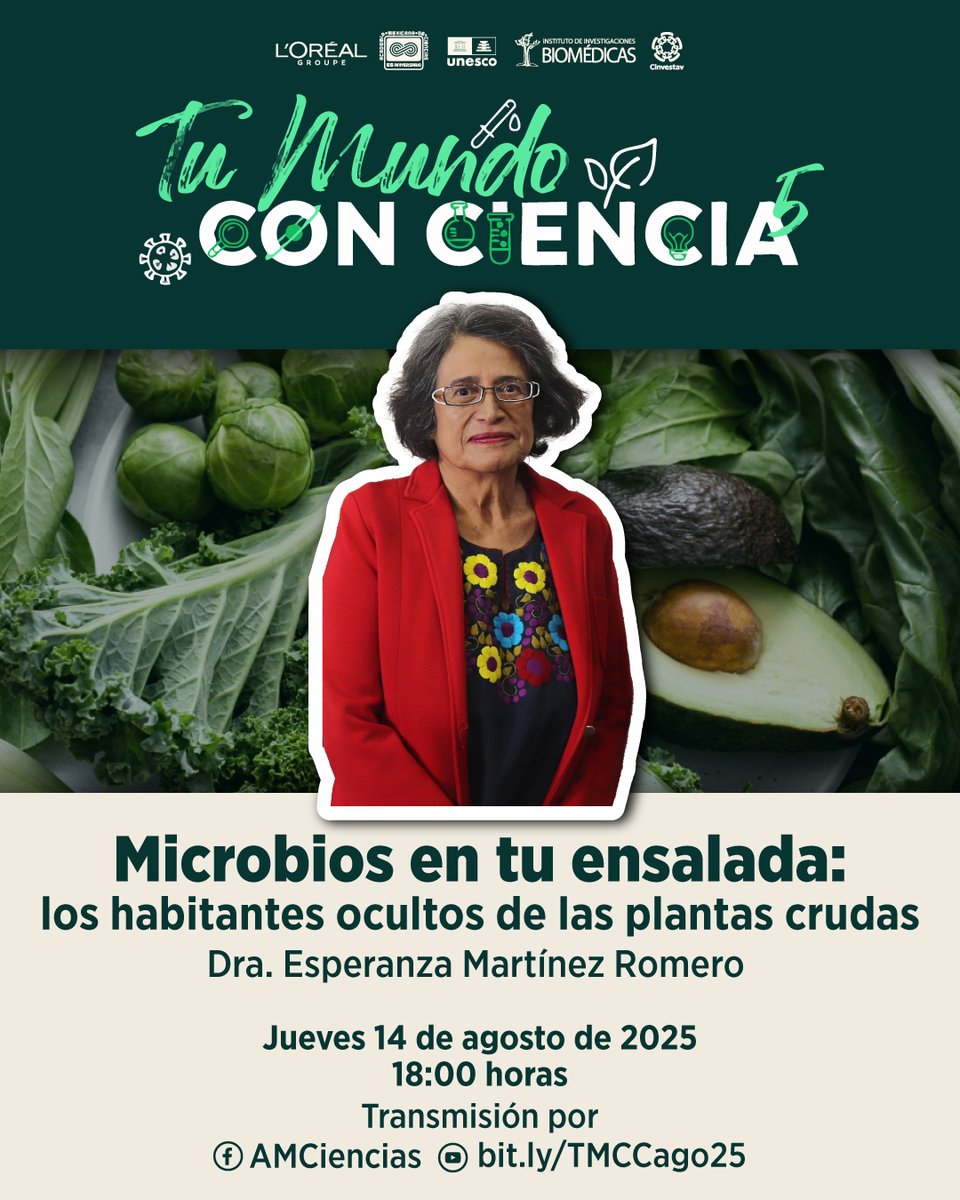
🦠 ¡Estrenamos temporada! Acompáñanos a descubrir a los microbios que viven en las plantas crudas en #TuMundoConCiencia con la doctora Esperanza Martínez del @ccg_unam.
🗓️ Jueves, 14 agosto
⏰ 18 h
⭕️Transmisión por FB y YT: https://t.co/b42ielyOIY
@lorealmexico@UNESCOMexico
🚨🗣 Afectados por inundaciones acusan abandono de autoridades tras inundación en Valle Real, señalan que ni #Xalapa ni #EmilianoZapata han atendido el problema. 🚧🤔
🔴 #VanguardiaNoticias#Veracruz
Más información 👇
https://t.co/Lc5ouabByJ
Polygamy in trees?
New paper shows that dual associations with ecto- and arbuscular mycorrhizal fungi improve the host range and environmental niche of trees.
Ecology Letters: Rog et al.: https://t.co/JthB3IWI5t
When trees and soil fungi form close associations with each other, both partners benefit. Many tree species have further enhanced this cooperation by forming a concurrent symbiosis with two different groups of mycorrhizal fungi. Those trees cope better with water and nutrient scarcity, which is an important trait for forestry in the face of climate warming.
Despite having enormous root systems, trees often are unable to take up enough water and nutrients from soil to grow in a healthy manner. That’s why most terrestrial plants have formed symbiotic associations with fungi over the course of evolution. These mycorrhizal fungi, which either wrap themselves around roots or penetrate the cells of root systems, receive part of the sugar produced by plant photosynthesis from trees as a source of energy. In exchange, trees receive nutrients like phosphate and nitrate as well as water from the fungi in an unromantic marriage of convenience of sorts.
Using more than 400 different tree species spread around the world as a basis, researchers at the University of Zurich (UZH) and Agroscope have shown that many of them have further improved this cooperation system. Although most tree species form an association only with certain single members of different groups of mycorrhizal fungi, “some woody plants form an alliance with two fungus varieties simultaneously,” says Ido Rog from the Department of Plant and Microbial Biology at UZH. The researchers now show that “bigamy” of this kind improves tree fitness, making trees less sensitive to drought and rendering them better able to cope with nutrient scarcity. “They thus are able to colonize a much larger territory than tree species that form a symbiosis with only one fungus type can,” lead author Rog says. The broader geographical range and the expanded environmental niche space occupied by those trees are independent of their phylogenetic architecture and evolutionary history.
In forestry, this knowledge could be helpful in the future for selecting tree species specialized in dual fungal associations because they are likely to be better at coping with ongoing global warming and could be used to colonize dry climate zones,” UZH professor Marcel van der Heijden explains.
Literature: Ido Rog, David Lerner, S. Franz Bender, Marcel G.A. van der Heijden. The increased environmental niche of dual‐mycorrhizal woody species. Ecology Letters. 15 May 2025. DOI: https://t.co/KpiOFwb7MT
Contact: Dr. Ido Rog
Department of Plant and Microbial Biology
University of Zurich
[email protected]
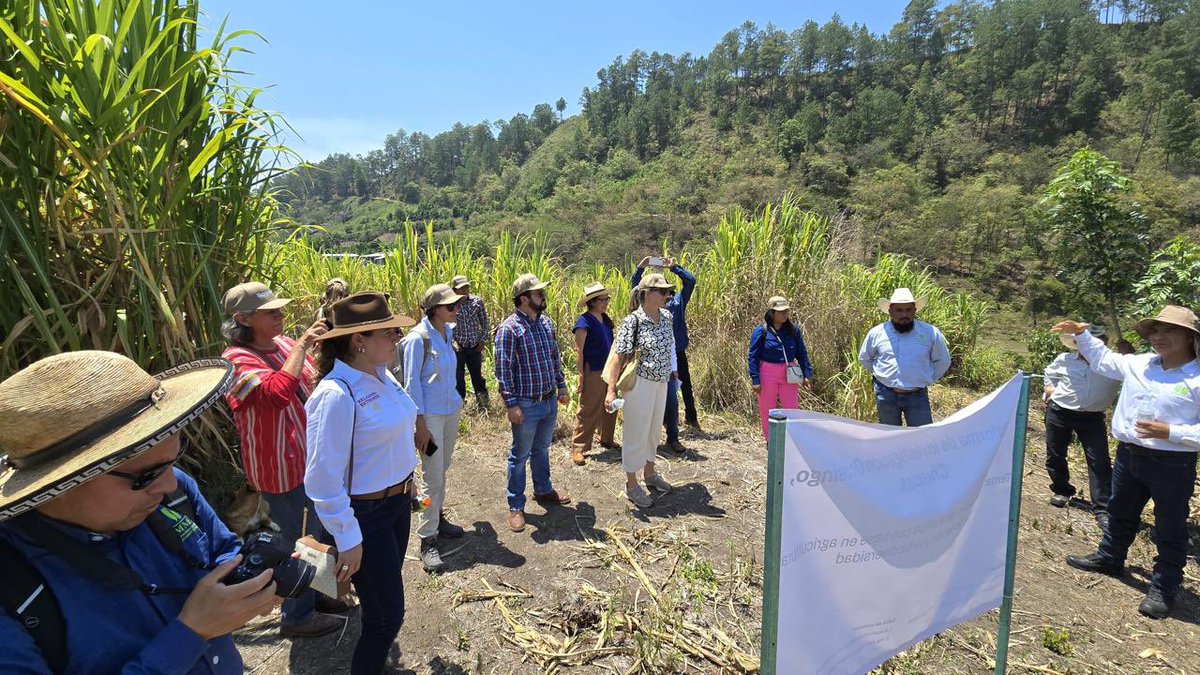
🌎🤝 La cooperación entre México 🇲🇽 y Noruega 🇳🇴 sigue transformando el campo mexicano. Desde Chiapas, conocimos prácticas innovadoras del sistema milpa y agricultura baja en carbono,🌱♻️ junto a @CIMMYT, @YaraMexico y autoridades locales.
💡Ciencia, innovación y 🤝alianzas que impulsan una #AgriculturaSostenible.
#CooperaciónQueTransforma