Never did I realize when I was co-organizing a Plantae webinar on "AI in plant biological science" last year and invited @mary_kuzmenko as panelist, would she ask me to appear on @agfluencers ..grateful to her for this opportunity :)
https://t.co/Vkfz6IygYy
Thankful to Botany One, a weblog produced by The Annals of Botany Company (Oxford University Press) for mentioning the importance of our research. Chocolate/cacao plant disease resistance research deserves a lot more attention in current scenario.
https://t.co/dWD9gMGEZE
Would you want to know how secondary cell walls play a important role in seed dispersal in Arabidopsis relative C.hirsuta... read on..great work done by Angela Hay and team from MPIMZ, Cologne, Germany.
https://t.co/NK9bPPJr8v
#Plantae#AmericanSocietyofPlantBiologists
For decades, biology textbooks have enshrined a simple rule: DNA is made by copying a template. After one enzyme unzips a DNA double helix into separate strands, another called a polymerase builds a complementary sequence, base by base, for each strand. Presto: two copies of the original DNA.
But new research into how bacteria defend themselves from viruses now shows this synthesis rule isn’t absolute.
Now, a team describes a bacterial enzyme that synthesizes DNA without a nucleic acid template, using its own structure as a guide.
Learn more: https://t.co/TeUWvyO0OD @NewsfromScience
Plant Science Research Weekly -- Unveiling https://t.co/QIAYczHzWR: A niche LLM to power your plant science research (Molecular Plant) (Summary by Shakunthala Natarajan)
https://t.co/9hzD2f9uyz
#PlantaePSRW
#JustIn on Plantae: Dealing With Loneliness in Academia. In this new piece, ASPB Plantae Fellows Fatai A. A., Deborah I., Katarina K., and Alessandra L. explore how the academic environment creates separation and feelings of loneliness. https://t.co/FkSNyDbqZV
Here is my summary on recent Science Advances article on Macro Plant Projection Imaging (MAPPI): An open, scalable platform for whole-plant fluorescence real-time imaging https://t.co/8Jr12TtdR3
#JustIn on Plantae: Promoting Scientific Visibility of Plant Sciences. In this new piece, ASPB Plantae Fellows Priyanka Babuta and Kavita Joshi explore how to promote scientific visibility in plant sciences by addressing Plant Awareness Disparity (PAD). https://t.co/kdgEq50msJ
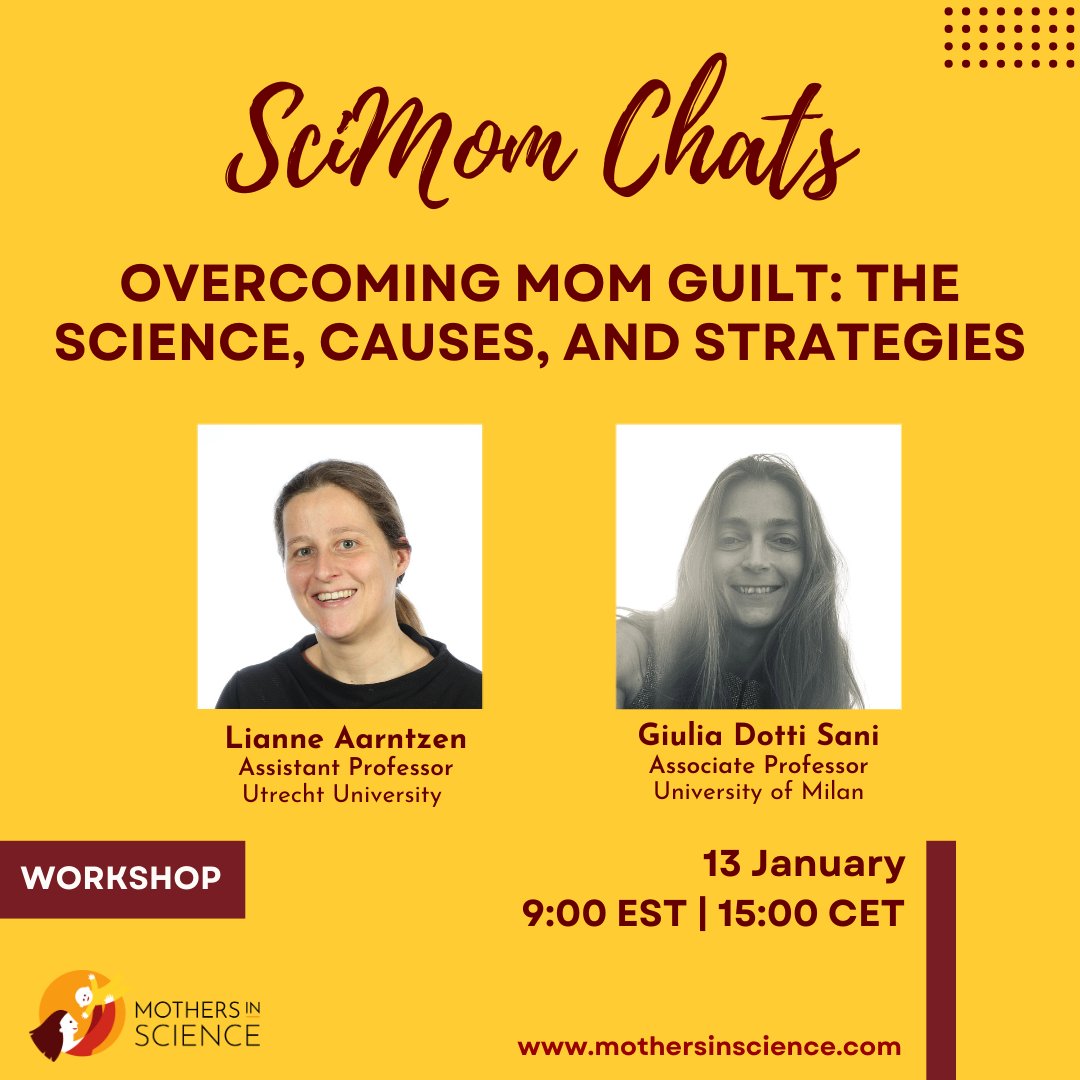
Join us on January 13th to learn about the research on parental guilt from leading experts AND learn practical tools to overcome these challenges & thrive in your STEMM career! Register 👇 https://t.co/Q011tosbFS #SciMomChats
📅 Date: Jan 13, 2026
⏰ Time: 3 PM CET / 9 AM ET
"As a woman in science I especially want to acknowledge those role models who gave me the courage and incentive to persevere; my hope is that I in turn can be that role model for my own daughters, who are just now launching out into the world, as well as for other young women who are excited about science."
During her Nobel Prize banquet speech, medicine laureate Mary Brunkow took time to acknowledge the importance of role models.
Read the full speech: https://t.co/FXK1sknhP6
“I wouldn't be standing here today if it weren't for a couple of really important mentors in my life who showed me what a life in research would look like.”
During her Nobel Prize lecture, medicine laureate Mary Brunkow spoke about the people that helped her during her scientific journey.
Watch her full lecture: https://t.co/Hgujvo2Ybv
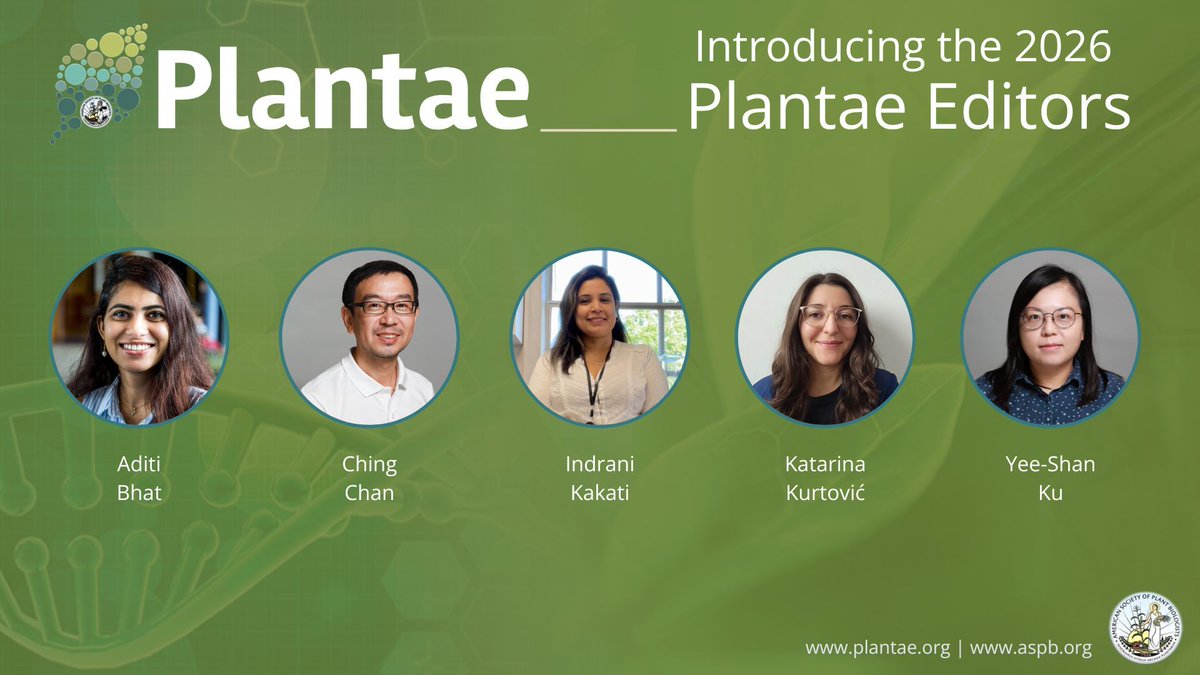
📣Introducing the 2026 Plantae Editors! Returning in 2026, ASPB has appointed its new group of Plantae Editors to further support Plantae's growth and goal to serve as a community resource for plant biologists, by plant biologists.🌱
Read more: https://t.co/UZvGRZTo8m
When asked to draw a scientist, school-age kids in the United States are increasingly sketching women, according to a study from 2018.
Read more on #STEMSTEAMDay: https://t.co/1TZ0pwBtMJ @NewsfromScience
Something exciting is coming for our members! A new way to connect, support one another, and advance our mission to make STEMM more inclusive for mothers & caregivers. Stay tuned ! Not a member yet? Join today 👉 https://t.co/O4COIjBkxM
Grateful to be a part of this work featuring effector evolution in Phytophthora theobromicola, a new sps. identified in the recent years in Brazil affecting cacao which will pave the way for future effectorome studies similar emerging pathogens.
https://t.co/NotYUimDiv
Omar Yaghi remembers growing up in the dry city of Amman, Jordan, where he was responsible for collecting his family's fresh drinking water. "Sometimes, there wasn't enough," he said. "So I learned that water is precious."
Those experiences laid the foundation for his work developing metal-organic frameworks that have revolutionized chemistry, allowed for water to be pulled from dry desert air, and earned him this year's Nobel Prize in Chemistry.
Are fabricated ecosystems the new dawn towards studying plant microbiomes?
Let's find out in my summary of this impressive multi-locational/institutional work!
Plant Science Research Weekly -- Amping up reproducibility of microbiome studies through standardized protocols and fabricated ecosystems (PLOSBio) (Summary by Indrani Kakati) https://t.co/kxShPIfho4
#PlantaePSRW