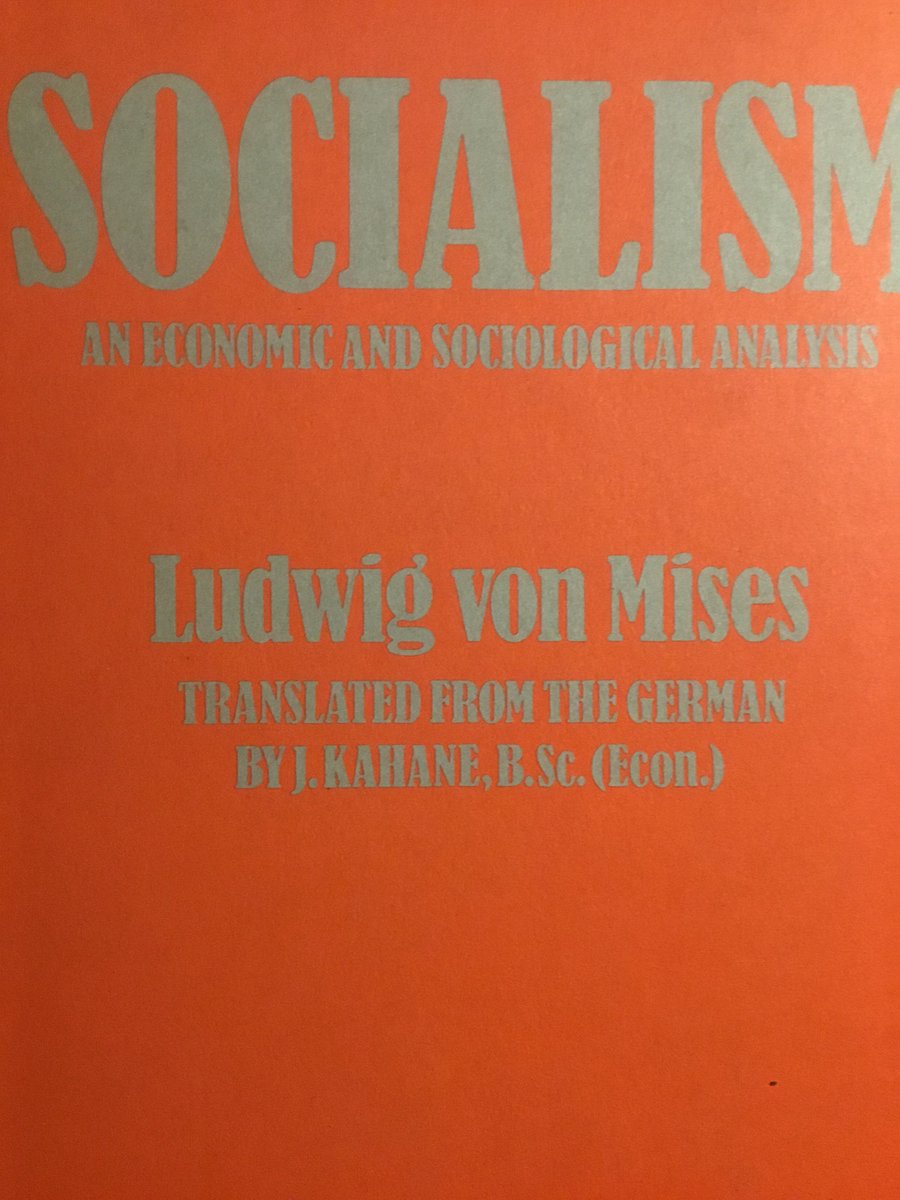
While Western intellectuals spent the 1970s and 80s gushing over Soviet "achievements," Ludwig von Mises had already written the empire's obituary decades earlier. In 1920, he published his devastating critique of socialist calculation, proving that rational economic planning becomes impossible without market prices. The academic establishment ignored him. The Soviets dismissed him as a capitalist propagandist.
You cannot allocate resources efficiently when you have destroyed the price mechanism. When the state owns all means of production, it eliminates the very market signals that coordinate human action. No central planner, regardless of intelligence or computing power, can substitute for the decentralized knowledge that emerges from voluntary exchange.
The proof arrived exactly as Mises predicted. By the 1980s, Soviet grocery stores sat empty while millions of bureaucrats shuffled paper in Moscow offices. Factory managers produced worthless goods because they responded to arbitrary quotas rather than consumer demand. The entire system collapsed under the weight of its own contradictions in 1991, stunning the same Western economists who had spent decades praising Soviet growth statistics.
Meanwhile, Paul Samuelson was still teaching students in 1989 that the Soviet economy might overtake America's. The New York Times continued publishing editorials about the resilience of socialist planning.
Mises got it right because he understood human action and the impossibility of calculation without private property. The establishment economists got it wrong because they confused mathematical models with economic reality. They treated human beings as equations instead of purposeful actors making choices under uncertainty.
This is fundamentally flawed logic that unfortunately many on the left continue to embrace: "Economic sanctions punish ordinary people who did not ask for this war." Interestingly enough, in their minds, the same logic somehow doesn't apply to Israel.
However, it presumes that most Russian citizens are victims of the regime, not its enablers. Obviously, there are a brave few who actually try to do something and have paid a price for doing so, but they are rather the exception. The vast majority either actively supports the war or simply does not care enough to oppose it because it hasn't significantly disrupted their daily lives. Yet.
Many in the U.S. are not aware that Russia's war machine is not primarily fueled by conscripts dragged unwillingly to the front. It relies heavily on volunteers who knowingly sign contracts and travel to Ukraine to kill people for money. They don't have a moral problem with it and see it as just another risky job.
Those who are not in the military manufacture drones, sew uniforms, maintain military logistics, and keep defense factories running around the clock. They produce propaganda on TV, print books that justify aggression, adopt stolen Ukrainian kids, create "patriotic" art, spread pro-war messages on social media, and pay taxes that finance the war - or simply do nothing and accept the invasion of Ukraine because "what can we do?"
Sanctions are not designed to be pleasant. Their purpose is precisely to increase the economic and political cost of aggression both for the regime and its enablers. If Russian society can continue living largely normal lives while missiles rain down on Ukrainian cities every single night, there is little incentive for anyone inside Russia to question the war.
If you demand that others improve your life while condemning them for profiting from doing so, you're not advocating service. You're advocating obligation.
And when obligation is enforced, you're no longer talking about trade. You're talking about slavery.
What's remarkable is that the people promoting this idea will often accuse others of being exploitative.
Apparently voluntary exchange for mutual benefit is exploitation, but demanding the benefits of someone else's labor while denying them the right to profit from it is compassion and justice.
4. Local officials increasingly behave like venture capitalists — partly because high GDP growth helps their promotion prospects, and partly because they desperately need new sources of revenue to sustain local economies. The latter has become especially important after the housing-market collapse and the sharp decline in land-sale revenues.
As a result, many local governments are aggressively chasing the “next big thing,” sometimes willing to throw millions at little more than a hastily assembled PowerPoint deck. This dynamic is illustrated by the looming collapse of Dreame Technology (追觅科技), which built much of its commercial empire through hundreds of linked entities whose main business model was to pit ambitious local governments against one another in competition for venture capital funding.
https://t.co/3a5jT9Ht69