A French engineer who lives quietly in Paris has spent 30 years writing software that the entire internet now runs on without knowing his name.
He wrote the code that streams every YouTube video, every Netflix show, every TikTok clip. He wrote the code that runs the virtual servers underneath AWS, Google Cloud, and Microsoft Azure. He calculated more digits of pi than anyone in history. He has no Twitter. He has no marketing. He just keeps shipping.
His name is Fabrice Bellard.
Here is the story, because almost nobody outside the systems programming world knows what one man has built.
Fabrice was born in 1972 in Grenoble, France. He studied at École Polytechnique, the top French engineering school. He never went to Silicon Valley. He never built a startup empire. He just wrote code.
In 2000 he started a project called FFmpeg, an open-source multimedia framework for encoding, decoding, and streaming video. He was 28. The project did one thing nobody else had done well. It handled every video and audio format that existed, in one library, on every operating system. He led it himself for years.
Today FFmpeg is the invisible engine of the internet. YouTube uses it. Netflix uses it. VLC uses it. Chrome and Firefox use parts of it. Every Android phone, every iPhone, every smart TV, every video editing tool you have ever touched runs FFmpeg somewhere underneath. If you have watched a video on a screen in the last 20 years, Fabrice's code processed it.
He was not done.
In 2003 he started QEMU, a machine emulator and virtualizer. He wrote it solo until version 0.7.1 in 2005. QEMU lets you run any operating system on any other operating system. It became the foundation of modern virtualization. KVM, the Linux kernel hypervisor, runs on top of QEMU. Every major cloud provider, AWS, Google Cloud, Microsoft Azure, IBM Cloud, runs virtual machines on infrastructure built around it. The Quick Emulator is the most cited piece of cloud infrastructure code on Earth.
He kept going.
In 2001 he won the International Obfuscated C Code Contest with a small C compiler that grew into TCC, the Tiny C Compiler. TCC can compile and boot a Linux kernel from source in under 15 seconds. In 2004 he calculated the most digits of pi ever computed at the time, using a personal desktop computer and an algorithm he derived himself called Bellard's formula. In 2011 he wrote a complete PC emulator in pure JavaScript that runs Linux in your browser, a project called JSLinux that engineers still cannot believe is real.
In 2019 he released QuickJS, a small but complete JavaScript engine that fits where V8 cannot. In 2021 he released NNCP, a neural network based lossless data compressor that immediately took the lead on the Large Text Compression Benchmark.
Then he turned his attention to large language models. He built TextSynth Server, a web server with a REST API for running LLMs locally. He released ts_zip and ts_sms, compression utilities that use language models to compress text and short messages at ratios traditional algorithms cannot reach. He released TSAC, a very low bitrate audio compression system. In December 2025 he released Micro QuickJS, a new JavaScript engine for microcontrollers, separate from QuickJS, designed for environments with almost no memory.
Fabrice co-founded a telecom company called Amarisoft in 2012, where he serves as CTO. Amarisoft builds 4G and 5G base station software used by carriers and labs around the world. He has been running it for over a decade while continuing to ship personal projects from his own home page at bellard dot org
He has no Twitter. He has no Instagram. He gives almost no interviews. His personal website is a flat list of projects with no styling, no fonts, no marketing copy. Just titles and links.
A quiet French engineer who never moved to Silicon Valley wrote the code that quietly runs the internet.
He is still shipping.
Très heureux d’avoir participé au documentaire d’Envoyé Spécial sur France 2 consacré à la « Chine, le grand bond dans le futur » 👀
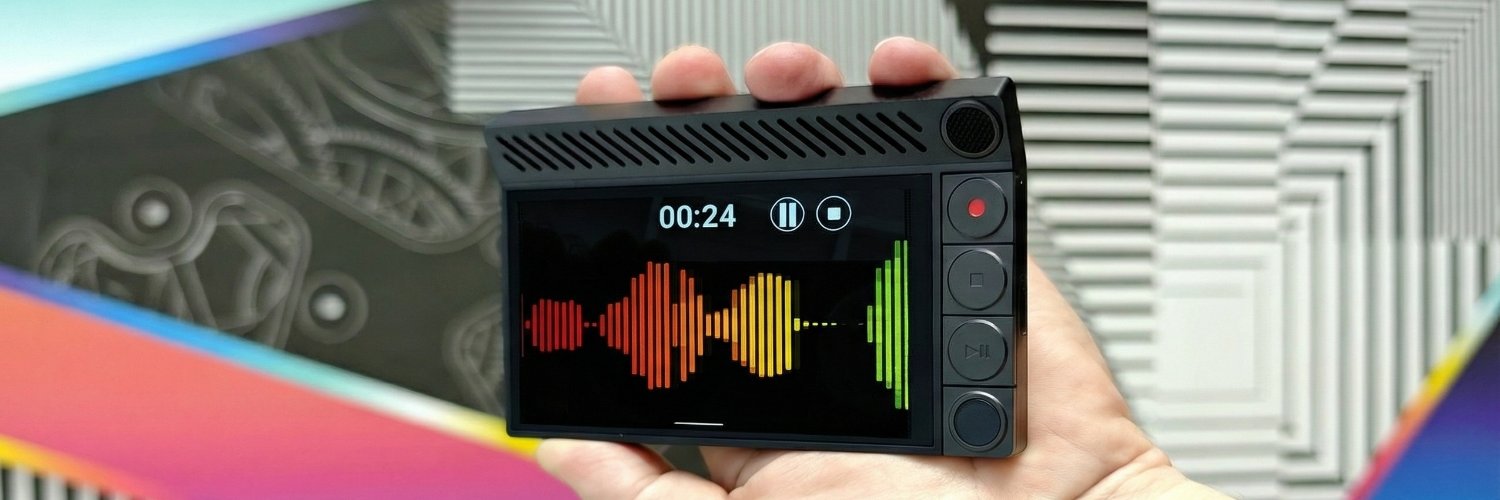
J’y ai eu le plaisir de présenter @OxtakGlobal, notre plateforme d’IA audio et notre hardware propriétaire que nous lançons ce mois-ci au Japon et en Q4 en Europe / US.
Ravi aussi d’avoir pu présenter aux journalistes, mes amis et partenaires @Robo_Tuo et Peter Mok. Toujours sympa de partager cette aventure made in Shenzhen avec un grand public français surtout que j’ai des souvenirs d’enfance liés aux reportages d’Envoyé Spécial. Voici donc un extrait de mes 3 minutes de fame 😃 et ici le lien du documentaire dans son intégralité : https://t.co/2b7W9HZ8t7
L’avenir de l’innovation hardware + IA se joue en grande partie en Chine, et particulièrement à Shenzhen.
Merci à tous ceux qui suivent cette belle aventure !
SpaceX has released a new 30 minute interview with Elon Musk to talk about AI satellites, manufacturing and more.
It was filmed at SpaceX Starlink terminal factory in Bastrop, Texas.
UBTECH’s new headquarters is literally just one block away from our @OxtakGlobal office in Shenzhen’s Robot Valley (Nanshan District, Xili sub-district).
It’s incredible to think about what humanoid robots will be capable of and what they’ll look like just 10 years from now. 🤯
Chinese company UBTECH Robotics has unveiled teasers of its U1 series humanoid robots, designed for the mass market
The lineup includes two bionic humanoid models: one 183 cm tall and weighing 42 kg, and a smaller version at 168 cm and 35.2 kg.
They feature 88 degrees of freedom, Wi-Fi support, and built-in AI for learning and interaction with the environment. Battery life is up to 4 hours.
The full presentation is scheduled for June 30, but pre-orders are already open. According to the company, 1,943 units have been reserved.
🤫 "The Tesla AI Satellite 🛰️ that will power billions of robots. It’s truly incredible to be a contemporary of Elon Musk. I feel privileged to witness to this extraordinary era of bold innovation and relentless human progress that he continues to shape.
Jensen Huang, CEO of Nvidia:
"Every engineer is going to have and manage hundreds of agents."
The most valuable engineering skill of 2026 is not taught in any university.
No CS program teaches harness engineering.
No bootcamp teaches agent memory architecture.
No degree prepares you to build systems that survive production.
One builder mapped the entire thing out — free, step by step, no degree required.
This is the roadmap ↓
Bookmark this for the weekend.
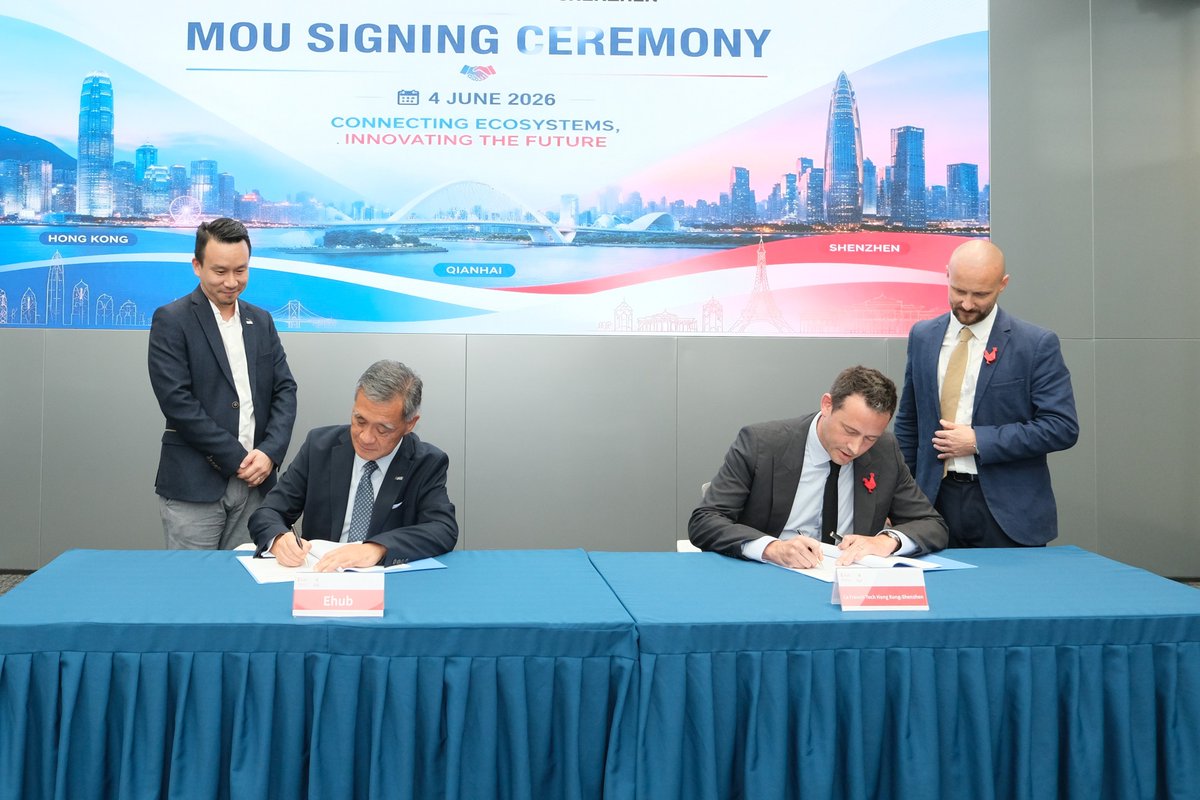
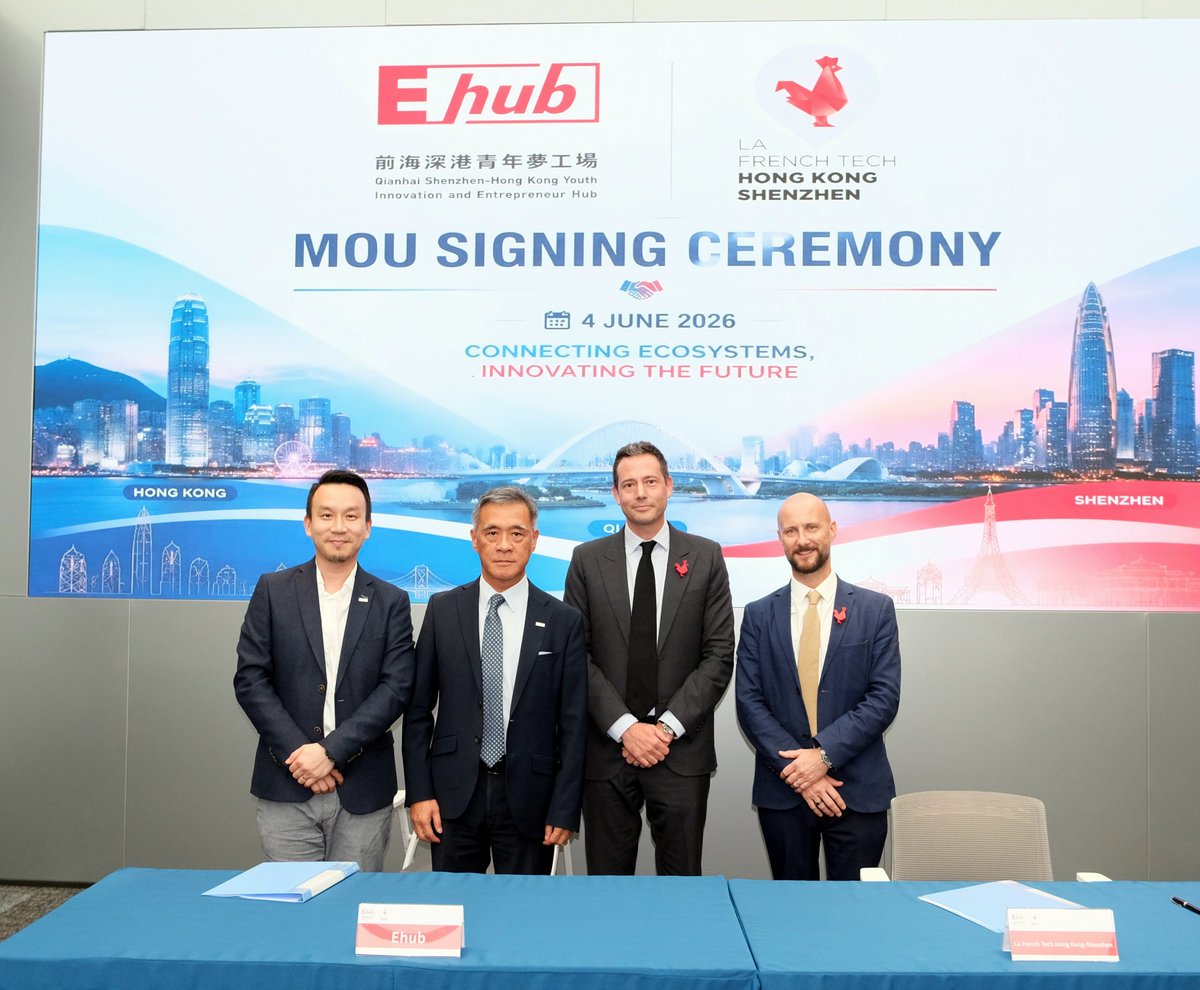
What a week for the La French Tech Hong Kong Shenzhen community! It began with the inspiring Innovation Nexus evening and networking in Causeway Bay at HKSTP, and concluded with the MoU signing ceremony with Ehub in Shenzhen Qianhai. Next step 🔜 @VivaTech
Thank you for attending the MoU signing ceremony between Ehub and La French Tech Hong Kong Shenzhen.
Your presence and active participation made the event a great success and truly showcased the power of cross-border collaboration.
It always picks up! Meet the Oxtak Elite that runs your full AI team.
Name them. Give them a role. They get to work.
It gives you the same experience as OpenClaw without the hurdle — named agents, real tasks, real results — without the pain. [COMING SOON]
Each year, I select one external side project to develop, taking it from design to engineering and production. Last year, we built the SP-01 hardware of Sidephone, and this year we're developing @OxtakGlobal. Thrilled to show both of them at BEYOND Expo and attend as both an Ambassador and Speaker.
From insightful conversations to meaningful new connections with incredible minds across tech, innovation and business, BEYOND is my favorite tech exhibition in the region and beyond ;)
Grateful to Gang Lu and Jason Ho for the opportunity to contribute and connect. Excited for what’s next!
Beyond Expo Opening Ceremony Highlights 🔥
Pudu Robotics made it clear: they're doubling down on B2B enterprise robotics and deliberately avoiding the crowded consumer space.
Xreal dropped a great line on branding: When you truly build a global brand, no one adds the country prefix anymore. Think Sony — not "Sony Japan." Origins become irrelevant.
Nvidia emphasized that the real hard problem in Physical AI right now is nailing humanoid robots.
Strong start to the expo.
Anthropic just showed a 27-minute workshop on how to actually do prompts for Claude.
Taught by the people who built it.
Free. No registration. No paywall.
I've seen $300 courses that don't cover what they teach in the first 8 minutes.
Watch it and bookmark it now.
My 9-year-old daughter asked me at bedtime: “How many people die and how many babies are born every day on Earth?”
Mind-blowing answer:
🌍 ~174,000 people die every day
👶 ~367,000 babies are born every day
That means we still grow by about 200K people daily thus the population of France every year! The world is full of new life ❤️
2 death vs 4 births every second
Join us for Ehub’s exclusive MoU signing and networking evening event with La French Tech Hong Kong Shenzhen, gathering French innovative enterprises, industry practitioners, investment institutions and GBA local tech and business representatives.
https://t.co/HLgnhRCMtc
From France to Shenzhen, an entrepreneur is turning his robot dream into reality.
At the China (Shenzhen) International Cultural Industries Fair, French entrepreneur Laurent is building strong connections with companies in Shenzhen and believes that one day, he will bring his own robot to life. 🤖✨
Laurent Explores ICIF Ep2
@AmbassadeChine@zhu_jingyang@ShangguanJiewen@ChineseEmbinUS@CNYouthDaily@llepen@ShenzhenFan




![OxtakGlobal's tweet photo. It always picks up! Meet the Oxtak Elite that runs your full AI team.
Name them. Give them a role. They get to work.
It gives you the same experience as OpenClaw without the hurdle — named agents, real tasks, real results — without the pain. [COMING SOON] https://t.co/mvDAUVhzRv](https://pbs.twimg.com/media/HJyaOqQaoAAlXzB.jpg)






![OxtakGlobal's tweet photo. It always picks up! Meet the Oxtak Elite that runs your full AI team.
Name them. Give them a role. They get to work.
It gives you the same experience as OpenClaw without the hurdle — named agents, real tasks, real results — without the pain. [COMING SOON] https://t.co/mvDAUVhzRv](https://pbs.twimg.com/media/HJyaOqkbkAAXB68.jpg)





