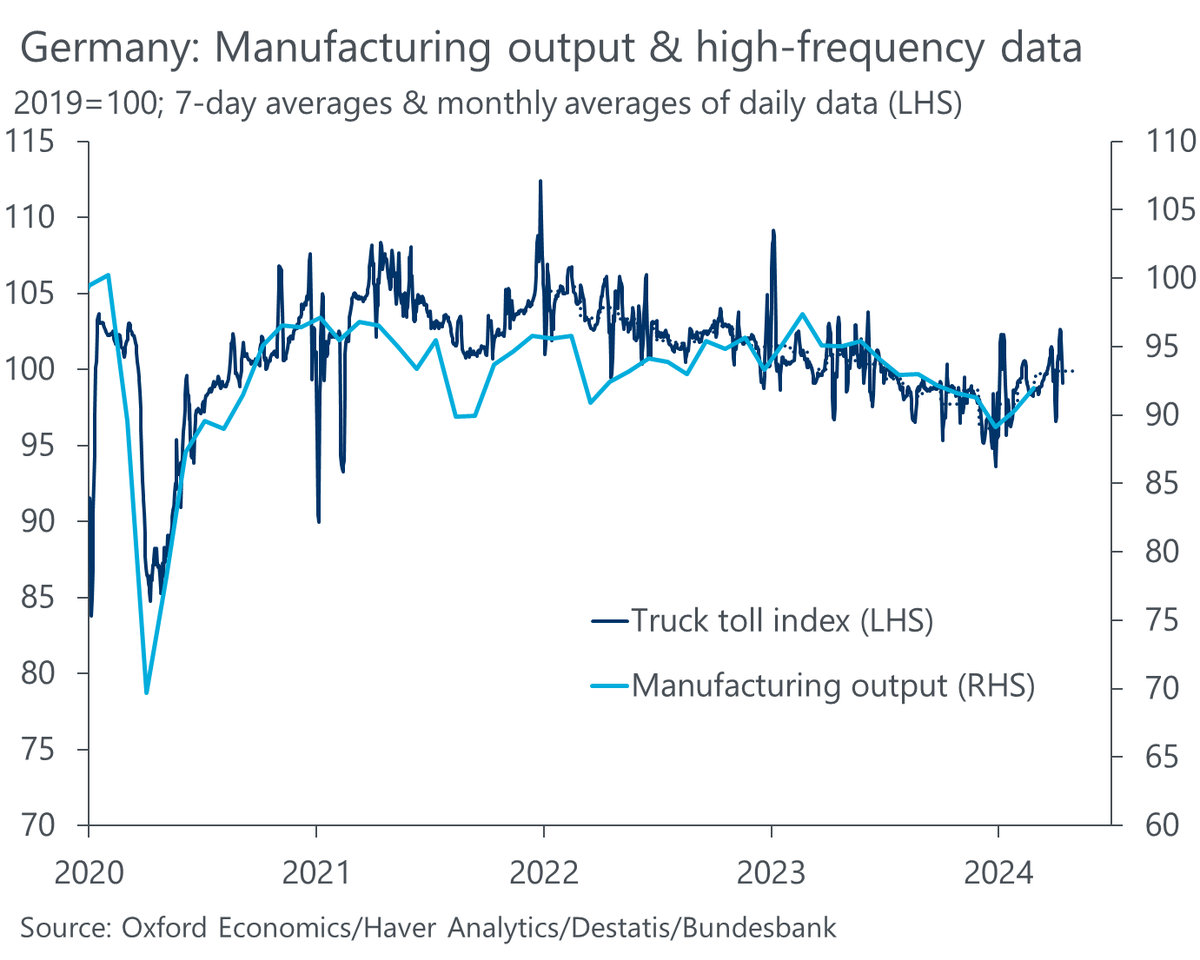
VDA's car production figures for April suggest that German industry sustained upward momentum at the start of Q2 corroborating the latest trucking data. Production is up some 15% over the past 3M.
Our work, done by my colleague @CamargoFelipe1 suggest that the ECB stance is excessively hawkish given economic conditions in Europe, increasing the chances of a policy mistake.
When should you expect the first interest rate cut of 2024?
@Jefferies Chief Market Strategist @jefmacrostrat takes us through two key factors he's watching: nominal GDP and Fed Chair Jerome Powell's approach to the central bank's balance sheet.
Why Microsoft's AI Copilot Is a "Game Changer"
@anurag_rana4 joins @tomkeene and @ptsweeney on Bloomberg Surveillance.
Get more on the Bloomberg Surveillance Podcast:
Apple: https://t.co/mdIxigTrDM
Spotify: https://t.co/1Ts9mZ3Phz
Anywhere: https://t.co/vQbs5jBVaC
German trucking data remained volatile last week, but remains consistent with stable IP in March, which would cap a pretty solid Q1, if that materialises.
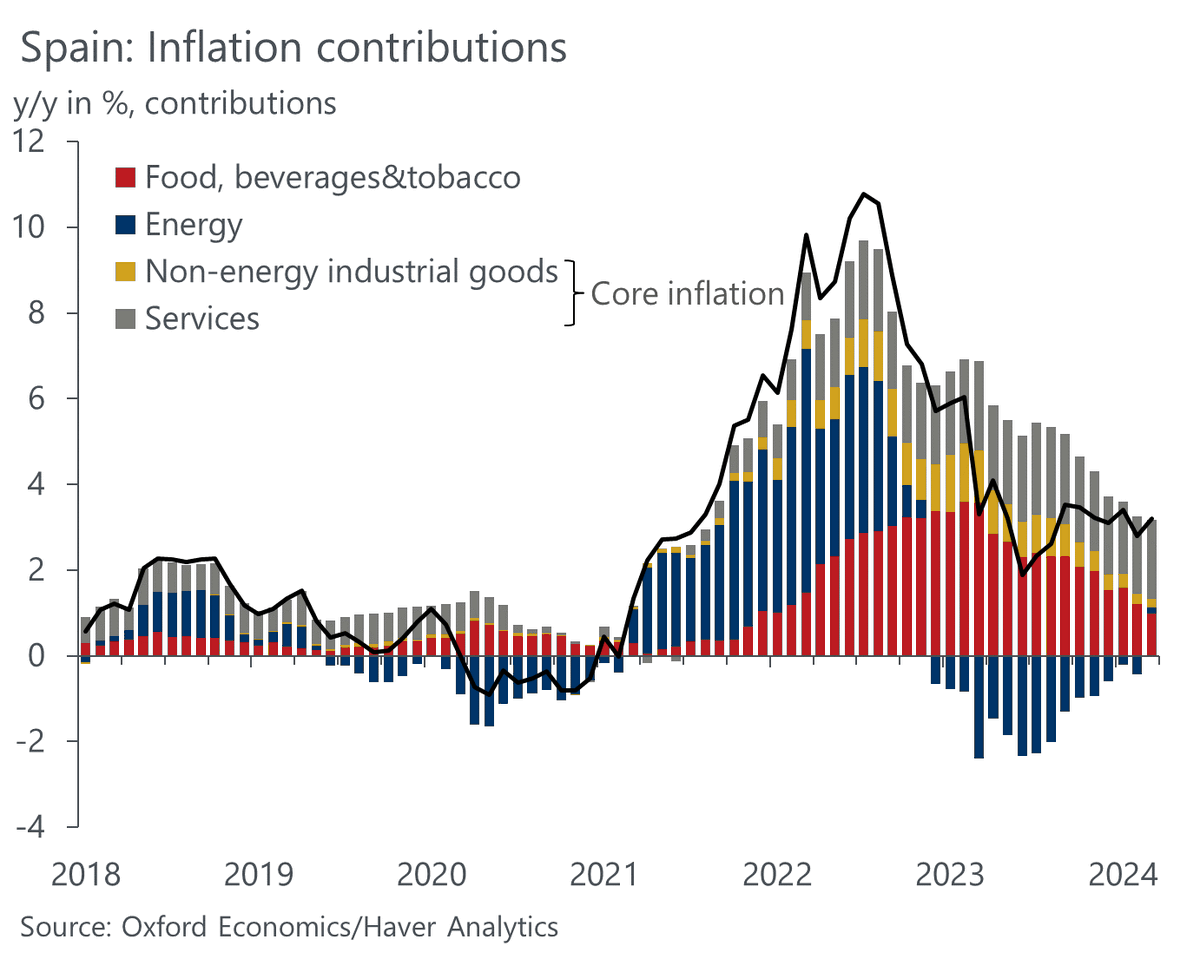
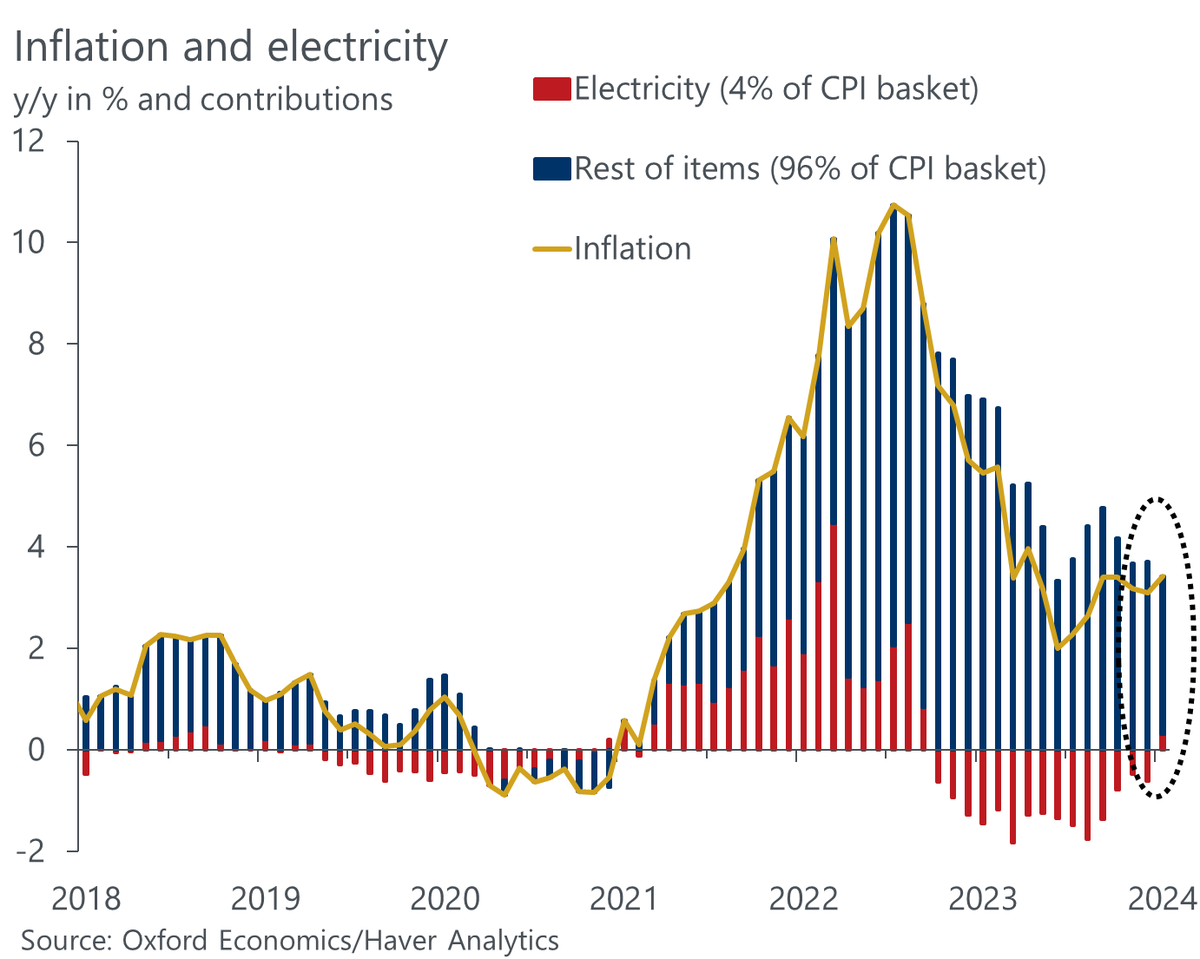
🧵Inflación sube al 3,2% en marzo como adelantaba el indicador preliminar. La buena noticia es que toda la subida viene por el lado de la energía por la subida de impuestos, algo que ya sabíamos iba a pasar.
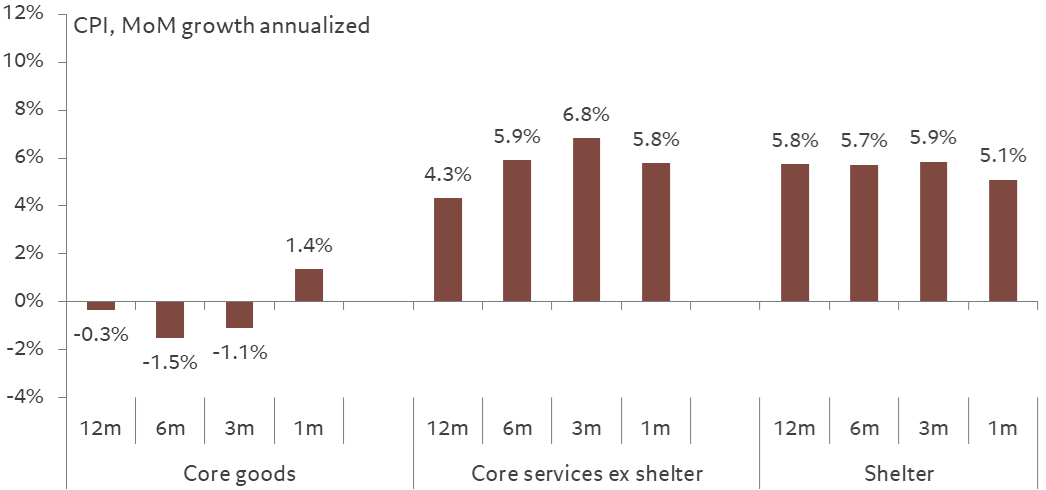
PSA: US CPI is different from European HICP in several ways, the biggest one being that US CPI includes owner-occupied housing, which is conceptually the correct approach to consumption prices.
On an HICP basis, US inflation was 2.2% Headline, 1.9% Core in February YY.
⚠️ Spain monthly core CPI for Mar in line with historical median/mode for the month (0.5%) and a touch below average (0.6%). Key is that this looks more like a 'normal' inflation print relative to the last 24 months. Opens the door to sharper ECB cuts once they get going $EUR
Neil Dutta of Renaissance Macro says corporate earnings calls don't reflect higher household inflation costs. "The inflation upside surprises that we've seen in the realized data will be fleeting"
https://t.co/aPjSq5GAg4
Good Morning from #Germany where the worst seems behind the economy. This is indicated by the Ifo Business Climate Index, which has jumped to 87.8 in March, highest level since June 2023 vs 86.0 expected. Current conditions rose to 88.1 in March from 86.9 in Feb, Ifo business confidence to 87.8 from 85.7 in Feb. Suggests that we could see a recovery as households begin to spend their real income gains. Employment is robust and nominal wage growth comfortably exceeds inflation again. There could be some green shoots in the export sector, and even the deep slump in construction may have bottomed out.
“The big story to me was the balance sheet...I think that was a little surprise to the market and we’re going to be taking this balance sheet down at a much slower pace and that can happen as early as the next meeting.” -David Zervos @jefmacrostrat#Fed@MorganLBrennan
German trucking activity last week continued to point to a modest pick-up in industrial output. And the signal is significantly more positive than that from today's PMIs. I think the former is the better guide at the moment.
Powell: The Fed will cut rates when it has confidence that inflation is on track to hit 2%
"When we do get that confidence--and we’re not far from it--it will be appropriate to dial back that level of restriction."
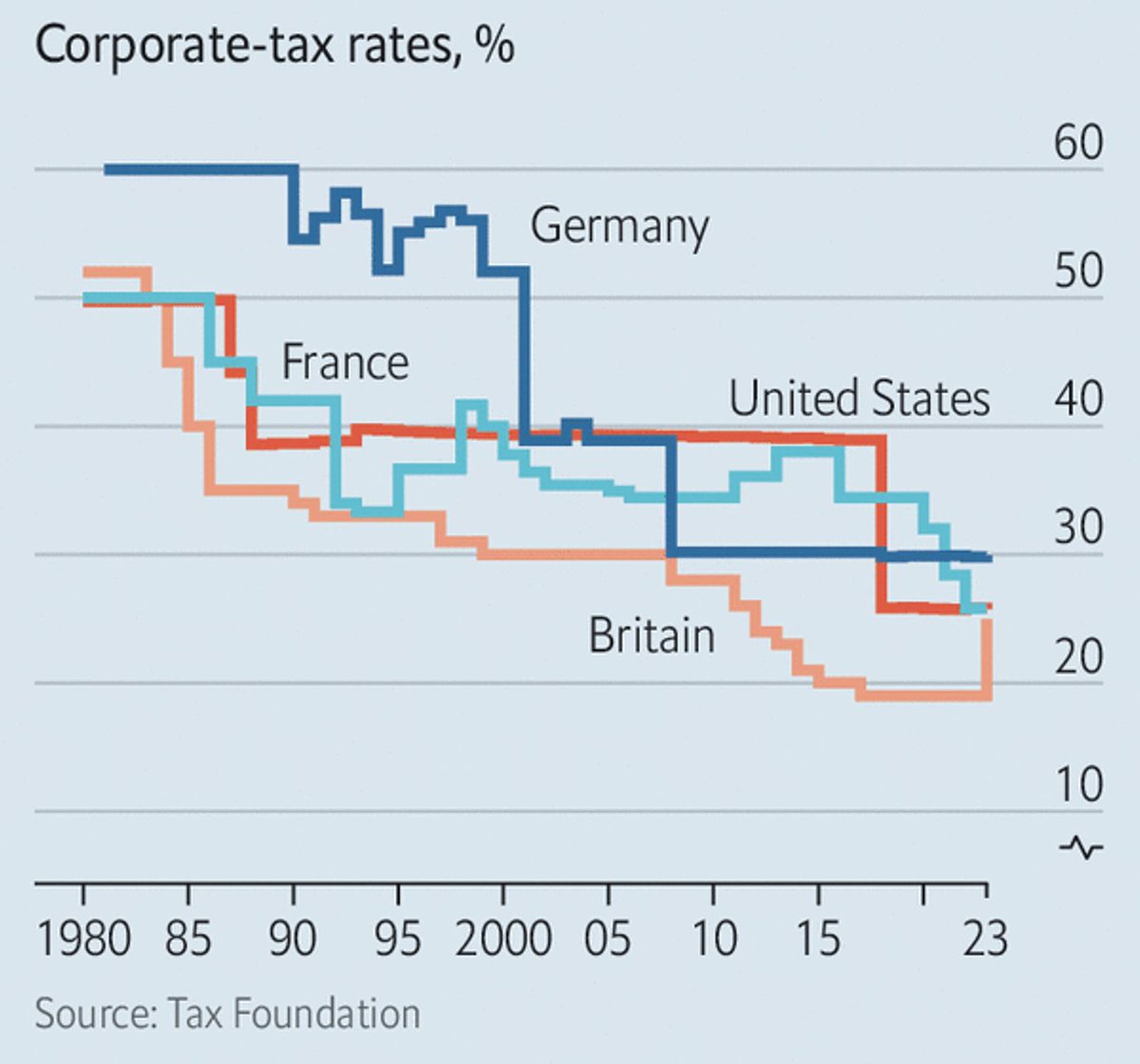
Good Morning from #Germany where the ruling traffic light coalition preparing €7bn tax package to prop up ailing economy. Germany has the highest corporate taxes among the major nations. After all, an analysis of 142 countries by The Economist finds that in 2022 and 2023 the median statutory corporate-tax rate rose for 1st time in decades. For instance, in 2023 Britain increased its main rate of corporation tax from 19% to 25%. Govts have also established a global minimum effective corporate-tax rate of 15% on large multinational enterprises. This may make Germany much more competitive again because others are raising taxes. https://t.co/mfAlqI8j6t
La electricidad pasa de caer un 17% anual en diciembre a subir un 10% en enero, una subida que añade 9 décimas a la inflación de enero y básicamente explica casi toda la subida.
"Wall Street debe poner el dinero cada día en algún sitio, estamos en la parte final del ciclo y los inversores están poniendo el capital en las tecnológicas, percibidas ahora como más seguras. Otra opción es ir a las pequeñas que ya han descontado una recesión o a la renta fija"
As we continue reacting to January's inflation data, @NM_Financial Wealth Management CIO @brent_schutte thinks we're not out of the woods when it comes to a recession and says it's time to start finding value in small-caps and bonds.