We just watched a tiny school turn a video game into a 12 million dollar recruiting weapon.
Delaware was a 1-star program in College Football 26.
So they baited the internet into playing with them, winning with them, and posting proof.
The result? 👇🧵
Your smart TV is taking screenshots of your screen every 15 seconds.
Not a guess. Not a theory.
A peer-reviewed study by researchers at UC Davis, UCL, and UC3M tested it.
Samsung TVs: every minute.
LG TVs: every 15 seconds.
Even when you're just using it as a monitor.
Here's how to turn it off for every brand:
BREAKING: While a new War for Oil erupts in the Middle East
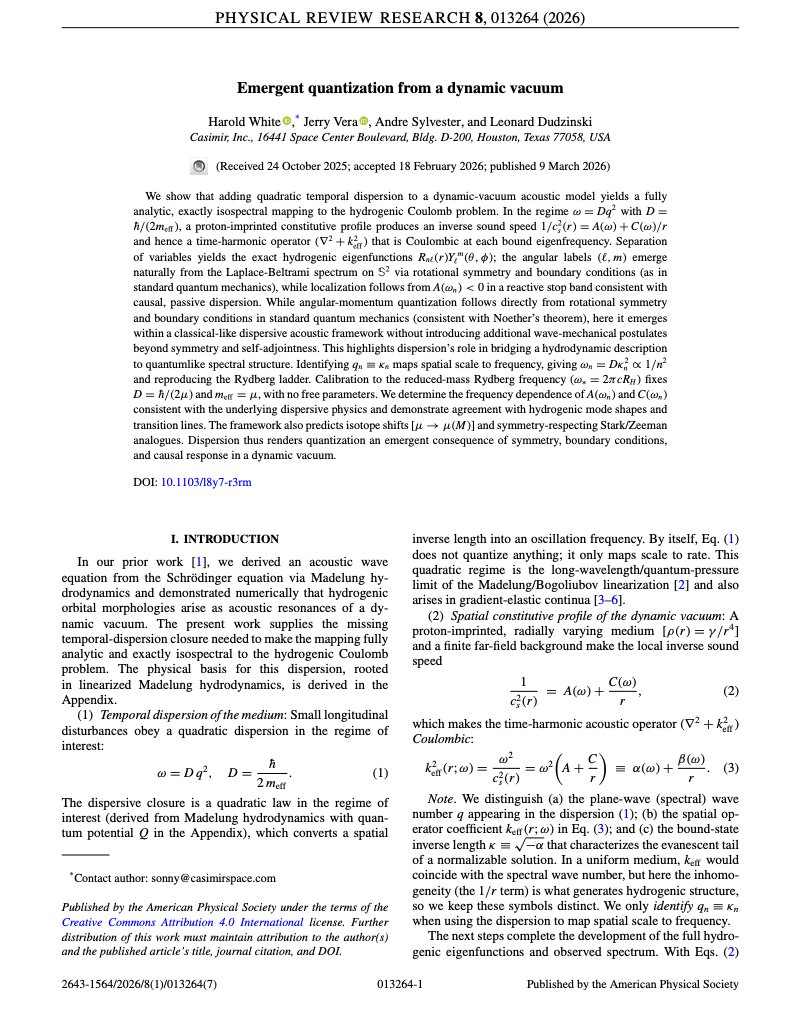
A Physics Paper just quietly dropped TODAY that will eventually make Oil, and the entire current Energy Industry, irrelevant.
Ushering in the era of Zero-Point Energy
@EagleworksSonny
Here is the breakthrough🧵
The Hollow Men
American capitalism is rotting from the head down. We have replaced the "Owner-Operator"—the risk-taker-with a new, parasitic class of corporate bureaucrat: The Risk-Free Insider.
By "Insider," I am not referring to a specific title. I am referring to the entire administrative state that has captured the modern corporation. This includes the Directors who exist solely to collect fees, the Executives who exist solely to collect bonuses, and the Managers who exist solely to hire consultants.
These are the hollow men of the boardroom. They are masters of PowerPoint. They wear the right suits. They say the right buzzwords about "governance" and "ESG." But they are mercenaries fighting a war with someone else’s ammunition.
In a functioning economy, authority is tied to liability. If you make a bad decision, you lose your own money. That fear of loss is the only thing that keeps a business honest. It forces you to cut waste, obsess over the customer, and stay late to fix what is broken.
Today, we have severed that link.
We have rigged the game so that heads, the Insider wins; tails, the shareholder loses.
If the stock goes up, the Insider collects a massive performance bonus. If the stock crashes due to their own incompetence, they are fired with a "Golden Parachute" worth tens of millions. They are gambling with the house’s money, and they never leave the table poorer than they arrived.
This looting starts in the boardroom.
We have normalized a "Country Club" culture where directors are selected based on social profiling rather than their ability to build a business. The modern board member is often a professional tourist—paid an average of $350,000 a year.
Let’s be brutally honest about what that number represents. The average director is paid nearly five times the GDP per capita of the United States. They earn more for attending four quarterly lunches than the vast majority of Americans earn in five years of hard labor.
And for what?
Most of these directors are "over-boarded," sitting on three or four boards simultaneously. They treat directorships as a gig economy for the elite. They fly in, rubber-stamp a compensation package they didn't read, and fly out. They collect checks from companies they do not understand, do not use, and certainly do not love.
They are not there to ask hard questions. They are there to be collegial. They are there to protect the other Insiders.
And what happens when these boards hire executives who also have no personal capital at risk?
We get the Delegation Economy.
When a Risk-Free Insider faces a crisis—bloated expenses, a broken supply chain, or a stale product—they do not roll up their sleeves. They hire a consultant. They pay a strategy firm millions of shareholder dollars to produce a 100-page deck telling them what they already know.
This is not management. It is intellectual money laundering.
They use shareholder capital to buy an insurance policy for their own careers. If the plan fails, they can blame the consultants. They delegate the work because they are terrified of the responsibility. They would rather preside over a slow, comfortable decline than risk a bold mistake.
While American Insiders are busy optimizing their severance packages, our global competitors are optimizing their products. They are not slowed down by bureaucracy. They are not waiting for a slide deck. They are outworking us.
If we continue to fill our C-suites with administrators instead of operators, we will lose our edge. We will see iconic American franchises hollowed out by fees, managed for the benefit of the Insiders, while the true owners—the shareholders—are left holding the bag.
The time for polite governance is over.
If we want to save the American economy from mediocrity, we must demand a return to the "Owner’s Mentality." We need leaders who treat shareholder capital with the same reverence they treat their own savings. The era of the Risk-Free Insider must end.
In 2022, McKinsey was paid $55M to advise Warner Brothers to combine with Discovery.
From 2022-2025, McKinsey charged Warner Brothers Discovery $37M by advising the company to change HBO to HBO Max, then to Max, then back to HBO Max.
In 2025, McKinsey billed Warner Brothers Discovery an additional $63M to determine that Warner Brothers and Discovery should be separate brands again.
I am not sure the crypto industry understands how much they owe to @coinbase.
This is a firm that has been tirelessly fighting to stop the SEC's rogue behavior and to expose Operation Chokepoint 2.0 (first reported on by @nic_carter, among others), despite the fact that @coinbase is probably the second biggest beneficiary of OCP 2.0 (behind, hilariously, only @tether).
Why do I say this?
Given that the usual bank custodians were banned from the space, who is the big winner of the ETF custody game for the largest ETF launch in history (the BTC ETFs)? Oh, that's right, @CoinbaseInsto.
Given that new stablecoin launches were largely crippled outside of New York, who became the default exchange distributing stablecoins and earning all the interest from @circle in the United States? Ah, yes, that's right, @coinbase.
Given that smaller players could not get bank accounts, who retained access due to scale and political pressure and was able to keep running an actual exchange in the United States even as some competitors were debanked and others were kept out? Again, @coinbase.
A "normal" company here would go to the government and immediately begin lobbying to deepen that moat and have regulators discriminate against smaller less "professional" outfits. To ban the small fries entirely, take over for themselves, and entrench their position while stifling innovation and the crypto space. You want to see how this works? Look at what Dodd-Frank did for the big banks.
Instead, @brian_armstrong and @iampaulgrewal have lead a full frontal assault to expose the misdeeds of some of the regulatory agencies that are harming startups and thus potential competitors the most, and may help the bank custodians get into the game. It may help us find actual regulatory clarity and force the SEC to obey the law. There are folks at Coinbase like @faryarshirzad and team who have been fighting this battle (thanklessly, to most of the crypto space) in DC, in trench warfare amongst staffers and policy people to make sure what happened is known.
So I just want to take a moment to remind everyone, especially those who complain about Coinbase as "too centralized" or "not crypto" (despite having perhaps done more for mainstream crypto adoption in the US than anyone else so far), that these guys went to bat for the industry overall and the long-term vision of the space instead of falling into the trap of their own short-term profits.
This is rare. And it should be recognized. I'm raising it today because of the absolute treasury trove of information that just became public thanks to their efforts via FOIA against the FDIC. So, thanks.
"Infrastructure-and-appcoins" that show a floor in the next bear due to fundamentals, will start to compound value over cycles, aided by TradFi which is starting to "get it," and will work to value cryptoassets based on traditional approaches.
NEW DEPT. OF ENERGY NUCLEAR REPORT RELEASED
Just out a few minutes ago.
Some of the absolute sharpest minds in nuclear put in months of work on this report and it shows.
Key highlights for me, below...
BREAKING: The FTC just banned non-compete agreements, per MorePerfectUnion.
The Federal Trade Commission has issued a final rule making it illegal for bosses to make workers sign noncompetes in any scenario, and voiding nearly all existing noncompetes.
The reality is we could've easily mastered energy, food, and material abundance with 1970s era Technology.
Instead, we loaded up on virtue signaling, stakeholder engagement, and regulatory capture.
I call this general phenomenon "The Blight"