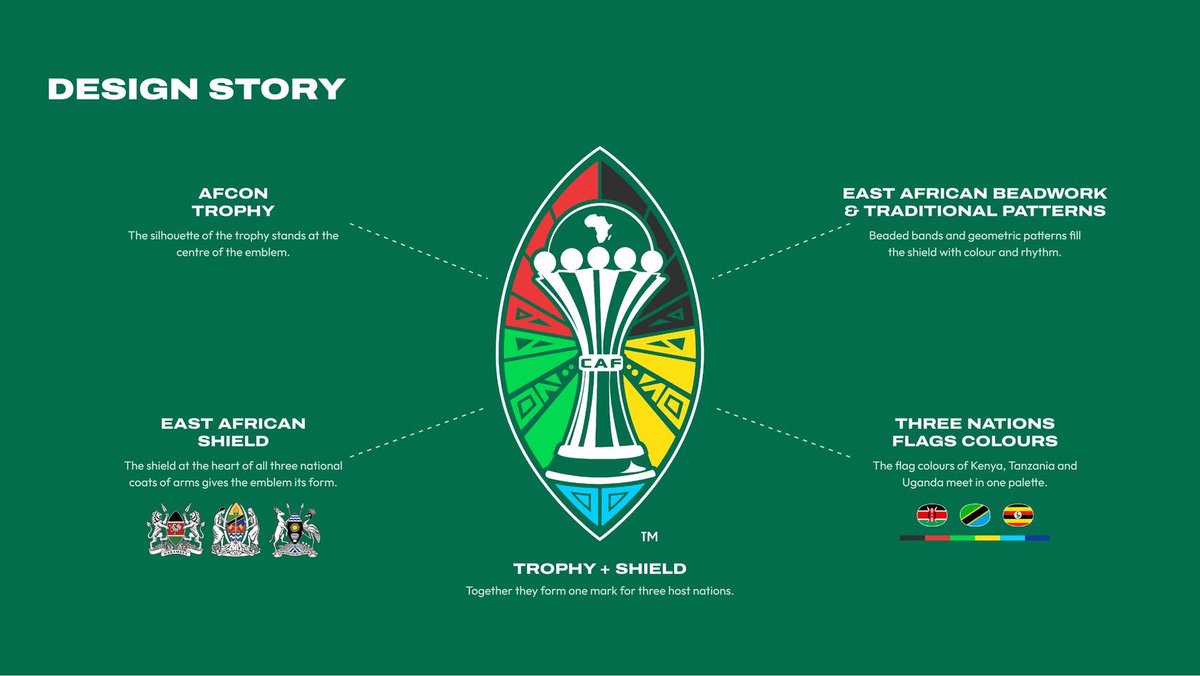
CAF and the three co-hosts, Kenya, Tanzania and Uganda, have unveiled the official logo for the TotalEnergies CAF AFCON PAMOJA 2027. 🇰🇪🇹🇿🇺🇬🏆
Inspired by the traditional East African shield, the design celebrates African heritage, culture, unity and strength, bringing together the colours and identities of all three host nations.
𝐏𝐀𝐌𝐎𝐉𝐀 means “𝐓𝐨𝐠𝐞𝐭𝐡𝐞𝐫” in Swahili, reflecting the shared vision of the three countries.
The tournament kicks off on 19 June 2027, with 212 days to go.
Three nations, one vision. One Africa.
#AFCON2027 #AFCONwithMicky #AfricanFootball
Video hii imeniachia mafunzo makubwa matatu. Kwanza, namna nguruwe walivyodanganyika kwa kujikuta wameingia wenyewe, kwa hiyari yao wenyewe, kwenye ‘mfumo.’ Mwanzoni nguruwe waliingia wenyewe kwenye mtego wakila chakula kile kile na kuondoka bila wasiwasi—maana hapakuwa na madhara ya moja kwa moja. Kwa hivyo ilionekana kama mle ndani ya mtego palikuwa na fursa na kwa vile mazingira hayakuwa yanabadilika wala kutisha, nguruwe wakahisi ‘wamejipata’ na ikawa rahisi kwao kujenga mazoea.
Jambo la pili, ni namna mtegaji alivyokuwa hana haraka na matokeo. Unaweza kuona hakutumia nguvu wala mabavu mwanzoni na alilenga zaidi faida ya muda mrefu. Nguruwe, kwa upande wao, walifaidi chakula walichokihitaji, wakala wakashiba, halafu wakaondoka zao bila madhara yoyote. Akili za hawa nguruwe ziliamini mazingira yale ya hatari yalikuwa salama kwa vile hawakupoteza uwezo wa kuingia na kutoka. Fursa inayopatikana kwa muda mfupi na papo kwa papo iliwafumba macho wasikumbuke hatari kubwa iliyojificha.
Kinachoumiza zaidi hapa ni namna akili za nguruwe zilivyorudi ghafla lakini kwa kuchelewa na tayari wakawa hawana cha kufanya tena. Kufumba na kufumbua uhuru wa kuingia na kutoka ulipotea na hapo ndipo nguruwe walipogundua kumbe hawapo salama tena. Ule mlango ulipofungwa kuwazuia kutoka chakula kilibaki pale pale, lakini kilichowastua na kuanza kuleta taharuki ni kupoteza uwezo wa kuondoka. Nguruwe hawakuona tena thamani ya chakula kilichokuwepo mule ndani bali tukio la kupoteza uhuru wao ndio lililowasanua.
Tuna mengi ya kujifunza hapa kuhusu binadamu. Kitu gani hasa huwa kinatuingiza kwenye mapenzi, kwa mfano, na chanzo kikubwa cha migogoro ya mahusiano? Mfumo wa biashara nyingi zinazoendeshwa katika enzi hizi za ubepari na namna gani walaji tunageuzwa kuwa ‘fursa’ zinazokuja kutunasa kwenye uraibu? Umewaza siasa? Umewaza dini? Unafanywa ujisikie salama kwanza ili upoteze uwezo wako wa kuondoka.
Uraibu, mara nyingi, ni mapambano ya nafsi kushughulikia upweke wa ndani kwa ndani—kutokueleweka, kutokuonekana, kutokusikika, kutokuaminika na kutokuthaminika.
Unapoishi kwenye mazingira ambayo huna wa kufanya naye mazungumzo ya kina, kwa mfano, rahisi sana kuwa mraibu wa mitandao inayokukutanisha na watu wasiokufahamu lakini wanakufanya uamini unaonekana, unasikika na unaeleweka.
Uraibu, aghalabu, ni njia ya mkato ya mtu kuitafuta ‘maana.’ Maisha yakishakosa matumaini, ubongo hukusaidia kujaza ombwe kwa chochote kinachokupa ‘raha’ na ‘matumaini’ hewa.
Wengi wanaoshinda vilabuni, mathalani, huwa wamegundua pombe inawasaidia kusahau uchungu wa ombwe la ‘maana.’ Unamwita ‘cha pombe’ lakini mwenzako anajua pombe ndiyo inayompa ujasiri wa kukabiliana na maumivu asiyoweza kuyashughulikia asipolewa.
🌍🦠 COVID-19: THE GLOBAL DEATH TOLL — TOP 25 COUNTRIES (2019–2025) 💔📉
😱 Which countries suffered the greatest losses during the pandemic?
Millions of lives were lost as COVID-19 spread across the globe. But which nations recorded the highest death tolls, and how did their rankings change over time? 🌎
🎬 Watch this animated bar chart race reveal how the world’s hardest-hit countries climbed and fell in the rankings, month by month!
🏆 TOP 25 countries worldwide
💔 Cumulative reported COVID-19 deaths
📊 Monthly rankings that change over time
📅 December 2019 – December 2025
🌍 A powerful look at the pandemic’s global impact
⚠️ Important: Figures represent officially reported COVID-19 deaths, not estimated excess mortality. Reporting methods and data revisions vary between countries.
📚 Source: Our World in Data (OWID) / World Health Organization (WHO)
👇 NOW IT’S YOUR TURN! 💬
🤯 Which country’s position surprised you the most?
🇺🇸🇧🇷🇮🇳🇮🇹🇬🇧 Did your country make the Top 25?
💬 Drop your country’s flag and share your thoughts below!
À seulement 2 ans, cette petite fille a sauvé son père diabétique après qu’il a fait une crise d’hypoglycémie.
Ses parents lui avaient appris les gestes à adopter, sans imaginer qu’elle s’en souviendrait à un si jeune âge. ❤️
The massive solid bronze doors of the Pantheon in Rome, Italy, which stand roughly 7.5m tall....
Roman architecture was designed to project power, divine presence, and imperial authority. Towering entryways made visitors feel small and humbled before the gods or the emperor. The scale of the doors matched the colossal interior space and high ceilings of monumental public buildings like temples and basilicas. Large public spaces needed to accommodate large crowds, processions, and ceremonial entries.
. . . .
The historical bronze doors of the Pantheon in Rome, one of the best-preserved buildings from the ancient world. Each door stands roughly 23ft tall, dwarfing the woman standing in front of them.
The Pantheon was built under Emperor Hadrian around 125 AD as a temple to the Roman gods. In the 600s, it was converted into a Christian church, which is a big reason it survived nearly 1,900 years.
Doors this size weren’t about function. They were about power. Massive entrances made visitors feel small, and they announced the wealth and importance of whoever built them. They also let in light and air to the huge interior.
The doors have long been described as the originals, which would make them among the oldest working doors in the world. Some historians believe they were heavily restored or recast in later centuries.
The Pantheon’s dome is still the largest unreinforced concrete dome in the world, nearly 2,000 years after it was built. At its center is the oculus, a 27-foot-wide opening to the sky that’s never been covered.
#archaeohistories