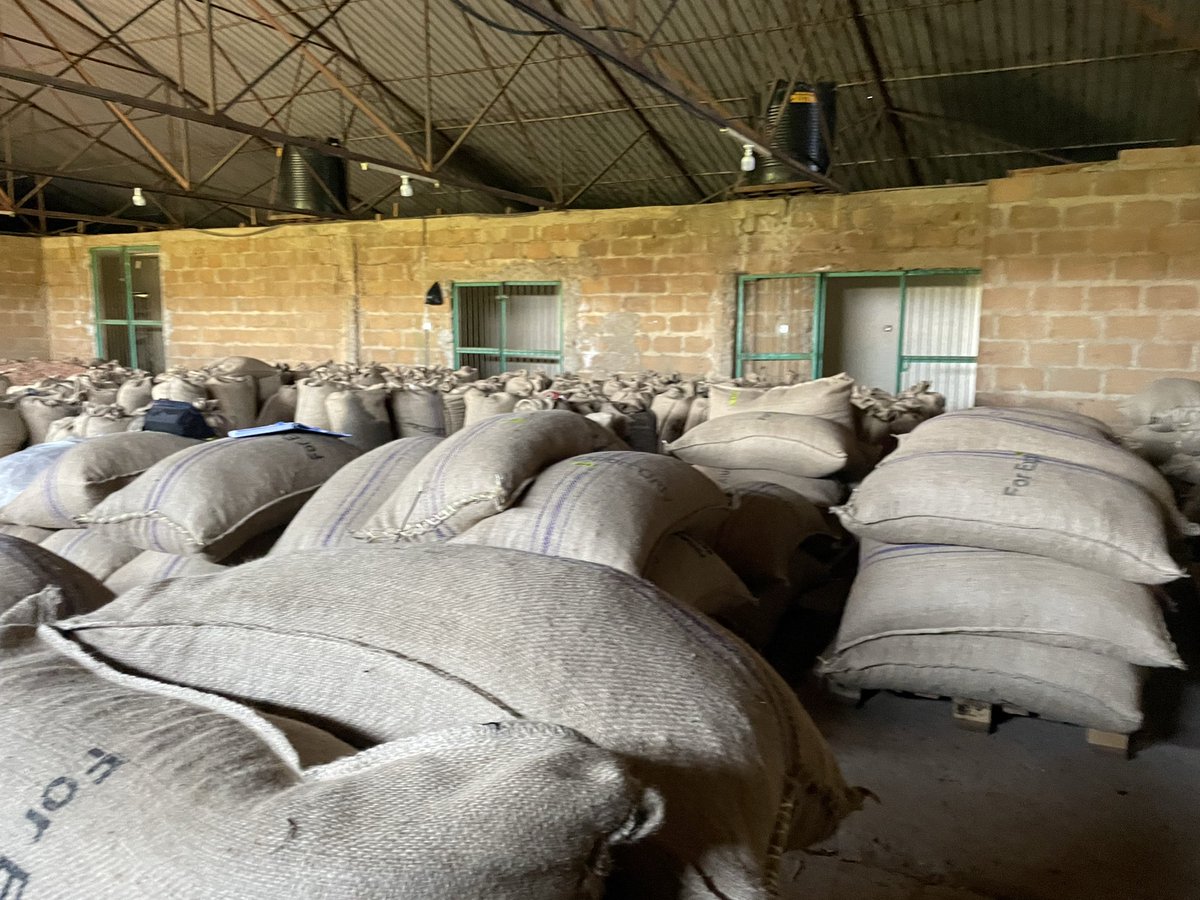
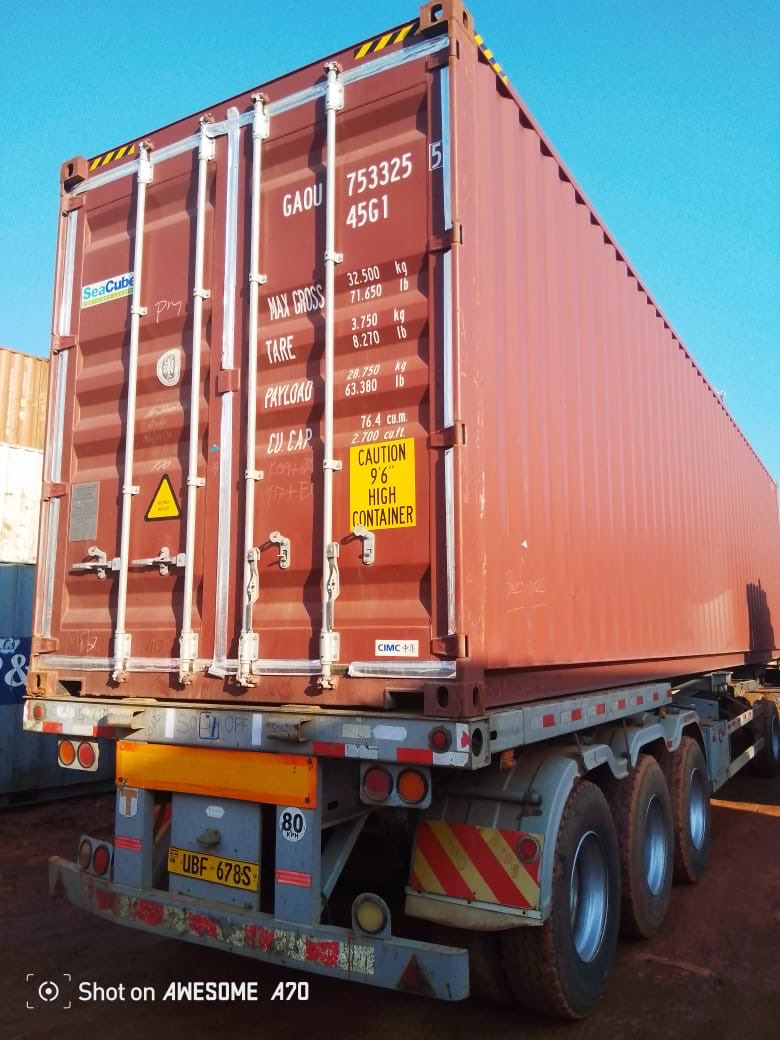
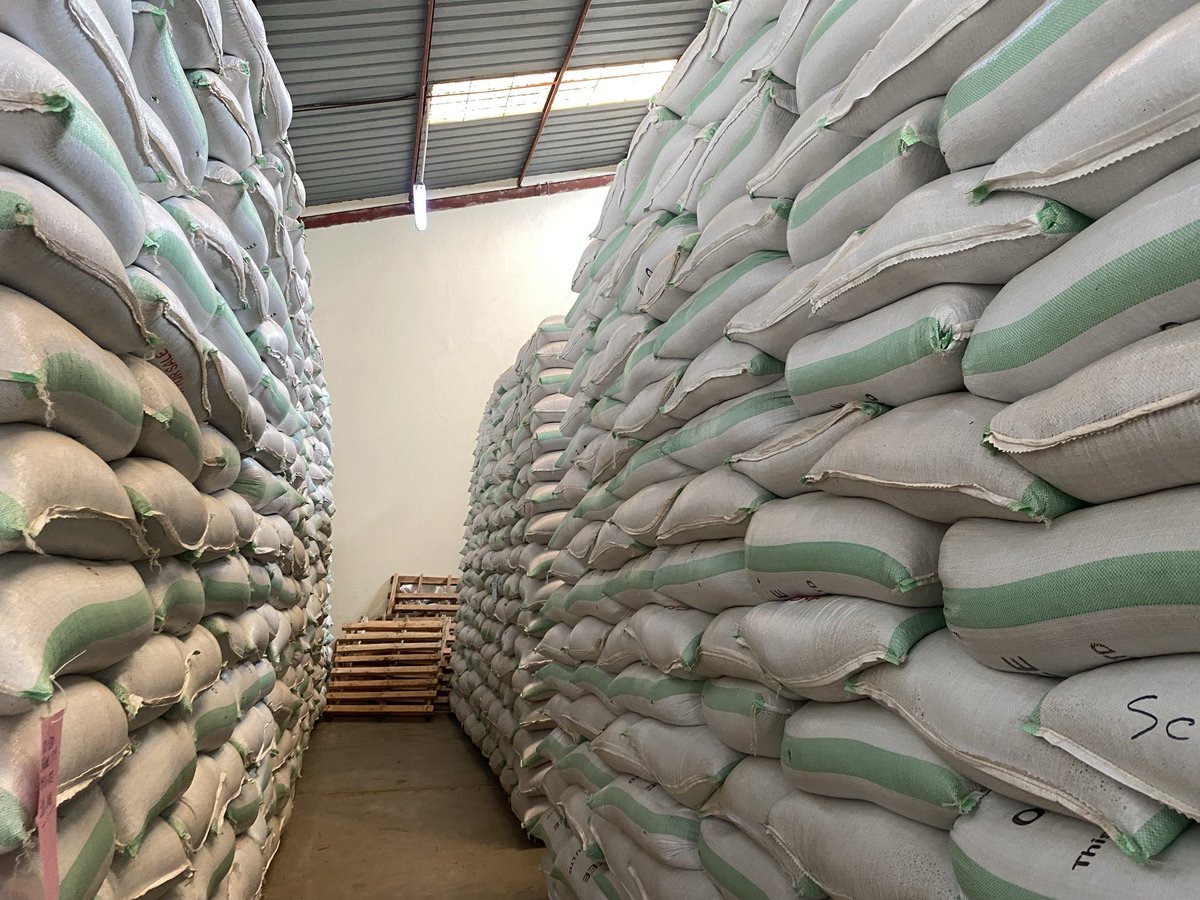
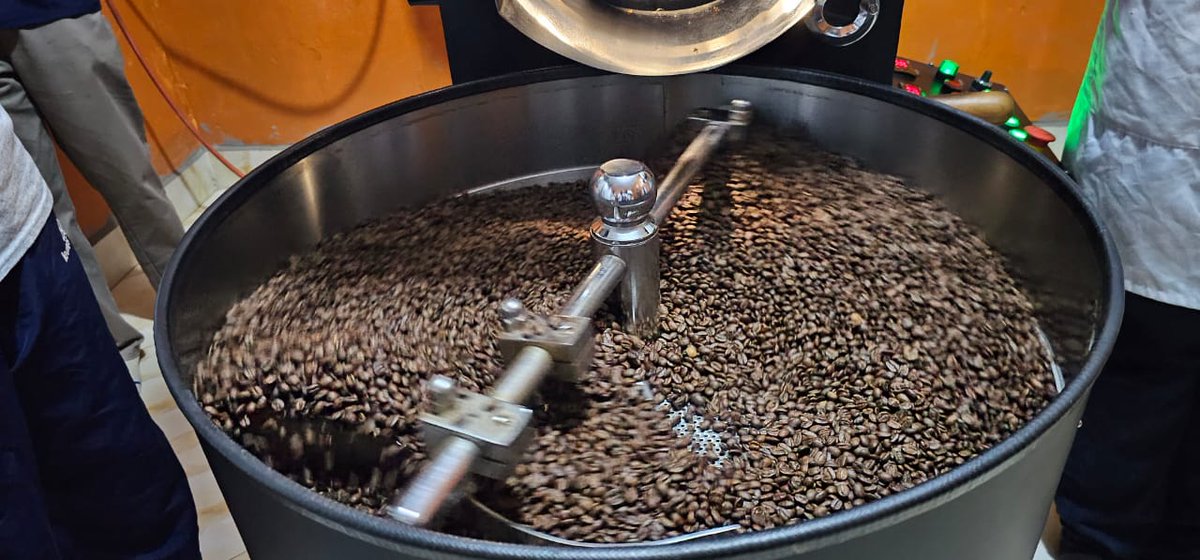
Don't underestimate the old coffee varieties. With good management, they can still give you great yields and often need less attention than KR varieties. Don't wait until you can afford KR seedlings. Start with what you have, grow, and improve as you go.
West Mengo growers cooperative Union got Ugx 2Bn as compensation from Gov't but only received Ugx 50M.
The union wanted to use M/S J.M Musisi advocates to pursue for their compensation. However, they were convinced by Michael Mawanda (PLU) to use M/S Mungoma Justin&Co. advocates.
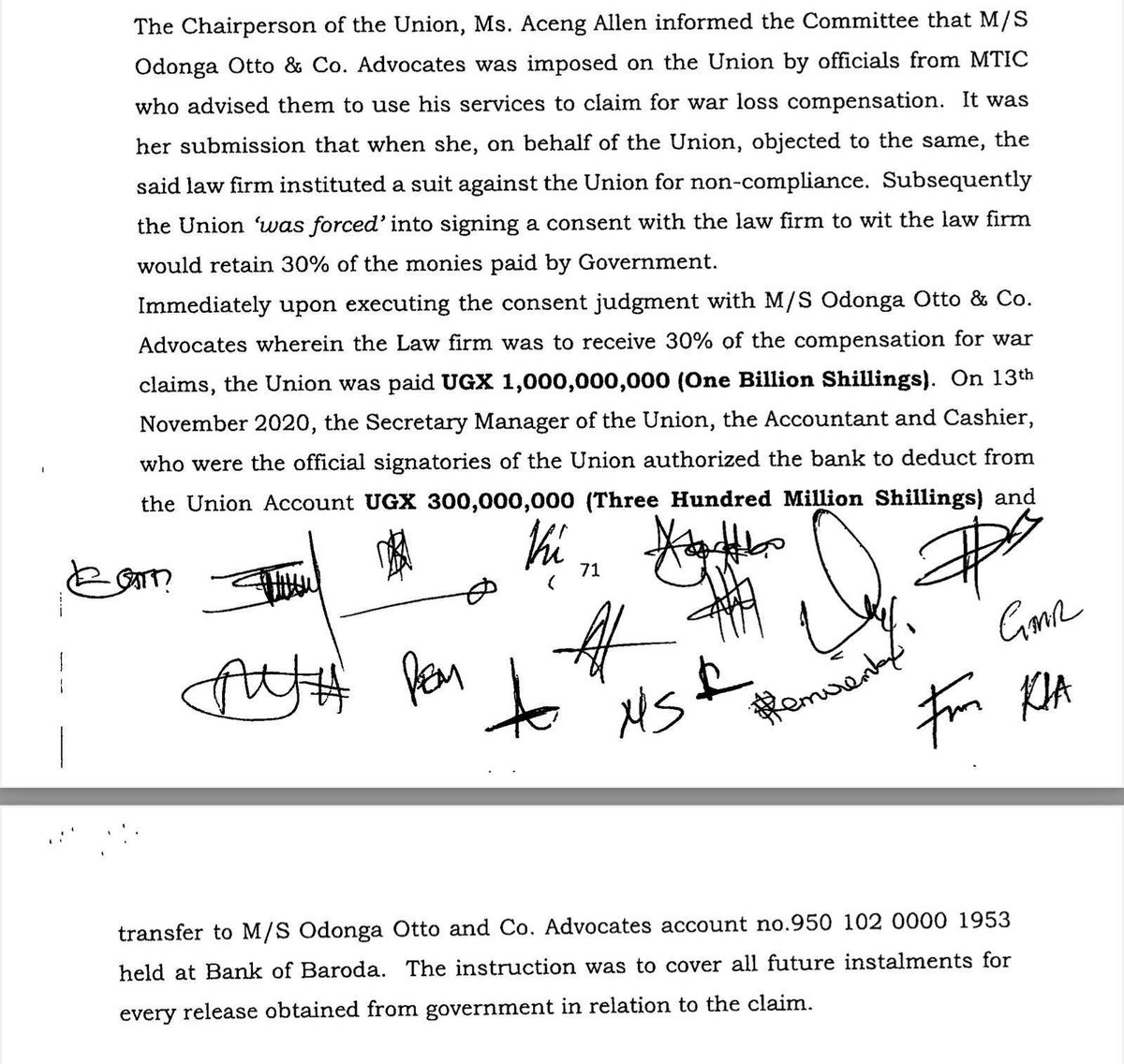
East Acholi Cooperative Union received UGX 1 billion in war compensation.
Odonga Otto's law firm (M/S Odonga Otto & Co. Advocates), "imposed" on the union, took UGX 300 million, ~UGX 100 million was taken by the late Speaker, Jacob Oulanyah, This left the union with only UGX 410M
I highly recommend Kituuza coffee varieties. If you're planning to plant coffee, give them a try. Personally, I recommend KR7 because it's the variety I grow on my farm, and its performance has been very promising so far.
A few years ago, if you had asked me to list careers in the coffee industry, I probably would have mentioned farming, processing, maybe exporting and stopped there.But coffee has a funny way of changing the way you think.
The more I travel, the more I meet people whose lives revolve around coffee yet they don’t own a coffee garden. Every trip leaves me wondering why we keep telling young people that farming is the only doorway into this industry.
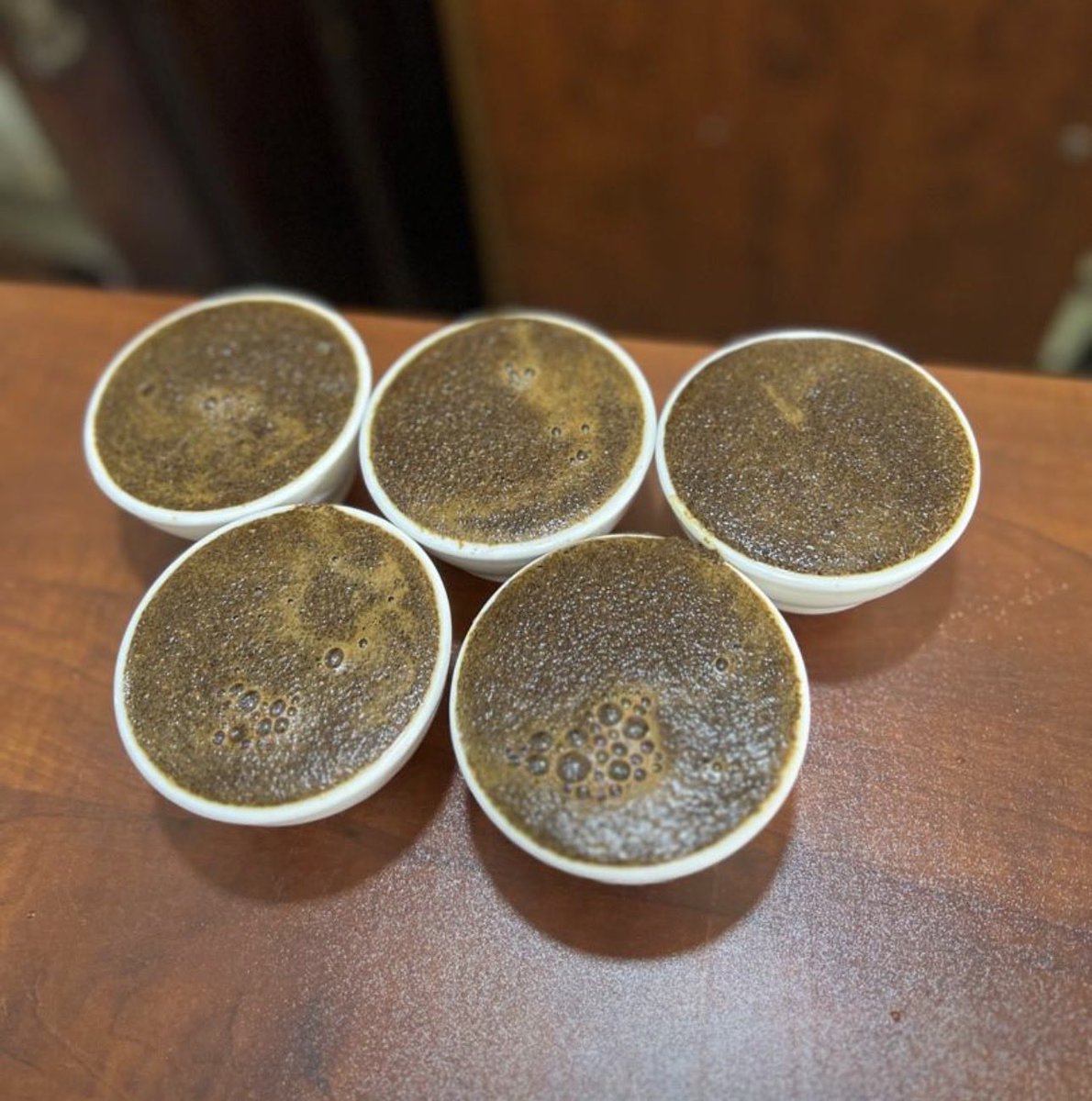
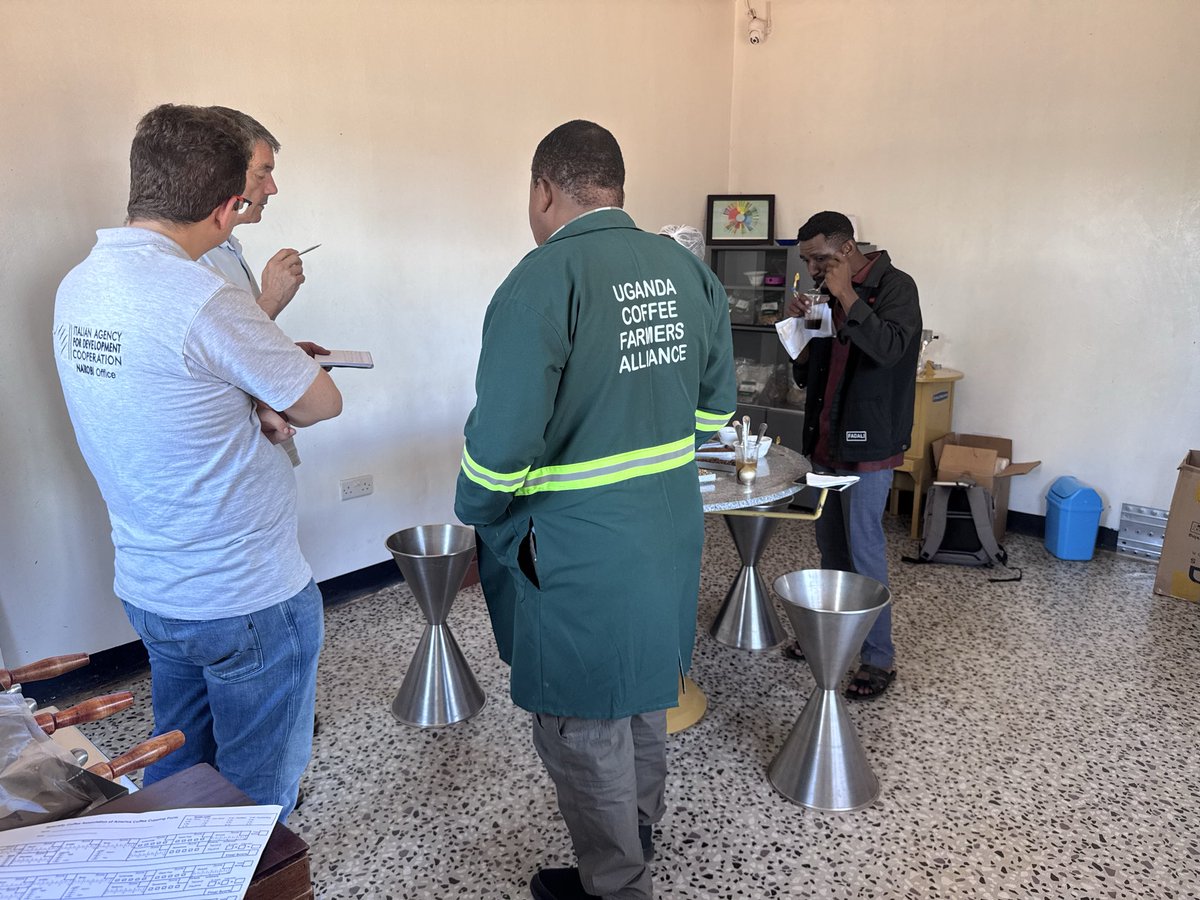
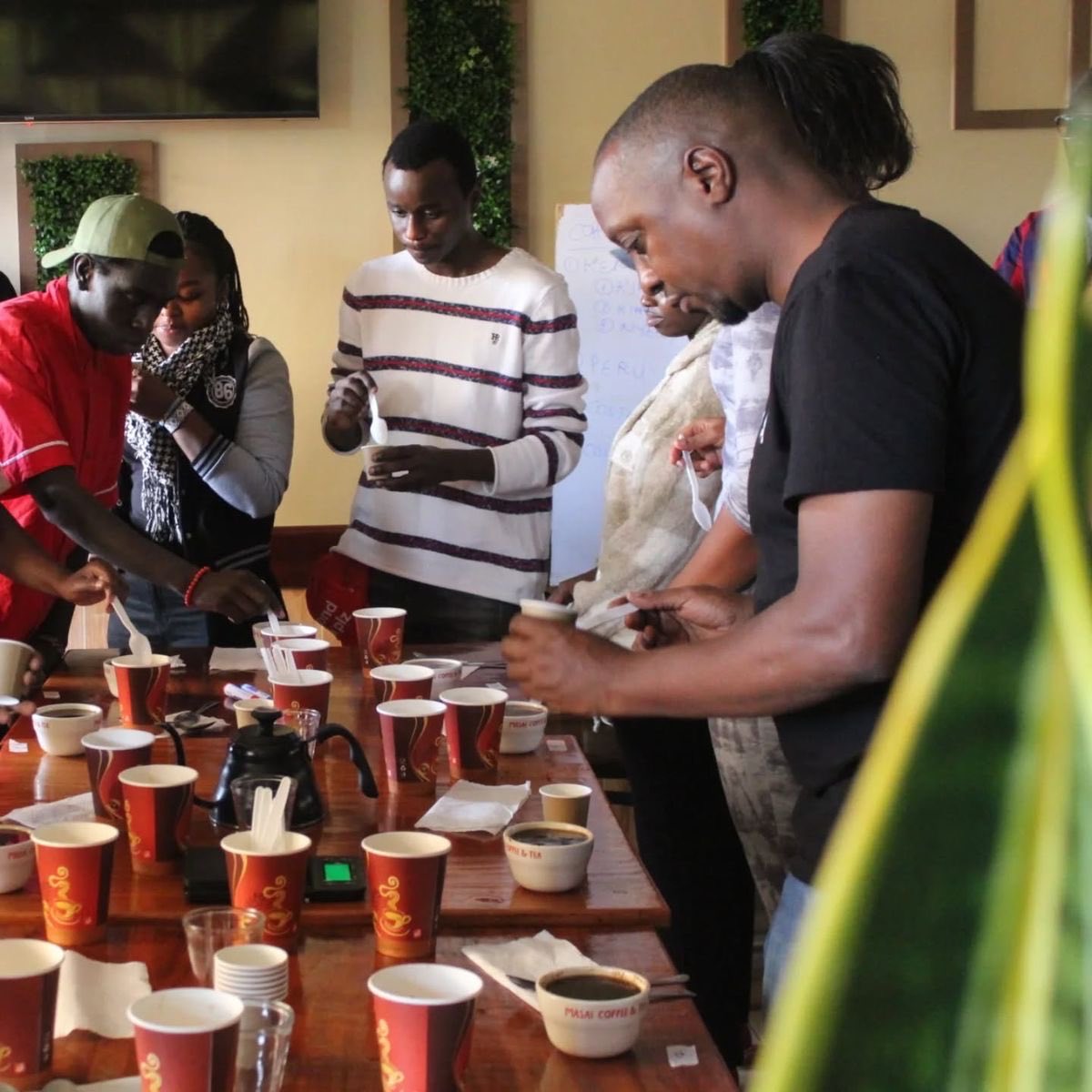
I’ve met young people whose job is to taste coffee every single day and help determine its quality before it reaches international buyers. I’ve met photographers whose work is documenting coffee stories from farm to cup. I’ve met people whose entire career is helping farmers comply with export standards others who design coffee packaging, manage coffee brands, organize farm tours, roast coffee, train baristas, build traceability systems or even simply connect farmers to markets.
None of them introduced themselves as “coffee farmers.” Yet coffee is paying their bills.
It made me realize that maybe we’ve been introducing the coffee industry to young people the wrong way. We keep showing them the coffee tree but rarely the thousands of opportunities growing around it. That’s probably why many young people walk away, convinced that because they don’t own land or come from a farming family, coffee has nothing to offer them.
The truth is, this industry needs more than farmers. It needs communicators, innovators, marketers, researchers, logistics experts, data analysts, designers, technicians, exporters, tour guides, content creators and entrepreneurs willing to solve real problems.
The next generation of coffee leaders won’t all be carrying hoes into the garden every morning like me , Some will be carrying cameras, laptops, sample trays, roasting profiles, business plans and passports as they take Ugandan coffee to the world.
Maybe that’s the conversation we should be having with young people.
Not, “Do you want to be a coffee farmer?”
But, “What role do you want to play in one of the world’s most exciting industries?”
Because coffee has room for all of us we just need to start seeing the opportunities beyond the tree.
So what role would you love to play in the coffee industry, comment below and we shall link you to a mentor in that regard
For God and my country
A few years ago, if you had asked me to list careers in the coffee industry, I probably would have mentioned farming, processing, maybe exporting and stopped there.But coffee has a funny way of changing the way you think.
The more I travel, the more I meet people whose lives revolve around coffee yet they don’t own a coffee garden. Every trip leaves me wondering why we keep telling young people that farming is the only doorway into this industry.
I’ve met young people whose job is to taste coffee every single day and help determine its quality before it reaches international buyers. I’ve met photographers whose work is documenting coffee stories from farm to cup. I’ve met people whose entire career is helping farmers comply with export standards others who design coffee packaging, manage coffee brands, organize farm tours, roast coffee, train baristas, build traceability systems or even simply connect farmers to markets.
None of them introduced themselves as “coffee farmers.” Yet coffee is paying their bills.
It made me realize that maybe we’ve been introducing the coffee industry to young people the wrong way. We keep showing them the coffee tree but rarely the thousands of opportunities growing around it. That’s probably why many young people walk away, convinced that because they don’t own land or come from a farming family, coffee has nothing to offer them.
The truth is, this industry needs more than farmers. It needs communicators, innovators, marketers, researchers, logistics experts, data analysts, designers, technicians, exporters, tour guides, content creators and entrepreneurs willing to solve real problems.
The next generation of coffee leaders won’t all be carrying hoes into the garden every morning like me , Some will be carrying cameras, laptops, sample trays, roasting profiles, business plans and passports as they take Ugandan coffee to the world.
Maybe that’s the conversation we should be having with young people.
Not, “Do you want to be a coffee farmer?”
But, “What role do you want to play in one of the world’s most exciting industries?”
Because coffee has room for all of us we just need to start seeing the opportunities beyond the tree.
So what role would you love to play in the coffee industry, comment below and we shall link you to a mentor in that regard
For God and my country
I’ve been sitting with something for a while.
Every time I sit with young people around coffee and cocoa the story is almost the same… just told in different words.
One will say, “Muganzi, I have a buyer in Dubai for coffee but I don’t have capital.”
Another will say, “I know someone in Europe who wants cocoa but I don’t have export documents.”
Another one just laughs it off and says, “I have the connection but I don’t know how to turn it into business.”
And slowly I started realizing… this is not a few people problem. It’s a pattern.
We have young people who already have access to markets through friends, family, classmates, workmates abroad. Real connections. Real demand for Ugandan coffee and cocoa.But the moment it moves from talk to execution everything stops at the same place: money, documents, systems, logistics. And honestly, that’s where most opportunities die quietly.
So I started thinking… what if we stop trying to make one young person carry the whole burden of trade?
What if we separate the roles?
So I came up with a plan
Bring the market.
I’ll handle the financing, the export documentation, sourcing, logistics and execution using my own resources. I have just secured access to funding of up to USD 2 million from my partners specifically to facilitate transactions under this youth market access collaboration mode that I have called (YOMACOM)
Once the deal is successfully completed, you earn a commission because without your connection that opportunity would never have existed in the first place.
I genuinely believe we have underestimated the power of our networks.
Not every young person will own an export company. Not every young person will have millions to finance shipments.
But many young people already know someone, somewhere in the world looking for authentic Ugandan coffee or cocoa.
Maybe that’s the missing piece we’ve been overlooking.
If this speaks to you, let’s have a conversation.
Let’s stop allowing good markets to disappear because of paperwork and capital. Let’s build partnerships where everyone contributes what they have and everyone wins.The next export deal could already be sitting in your contact list.
Reach out to me via +256701906437 or [email protected] and let’s have a deep conversation about it
For God and my country
We should find and post @ntvuganda content about the misdeeds of the NRM government (especially the Armed Forces) everyday until they reopen.
#OpenNTVUganda
#WorldofCoffeeBrussels2026
Day 3: Uganda’s Presence
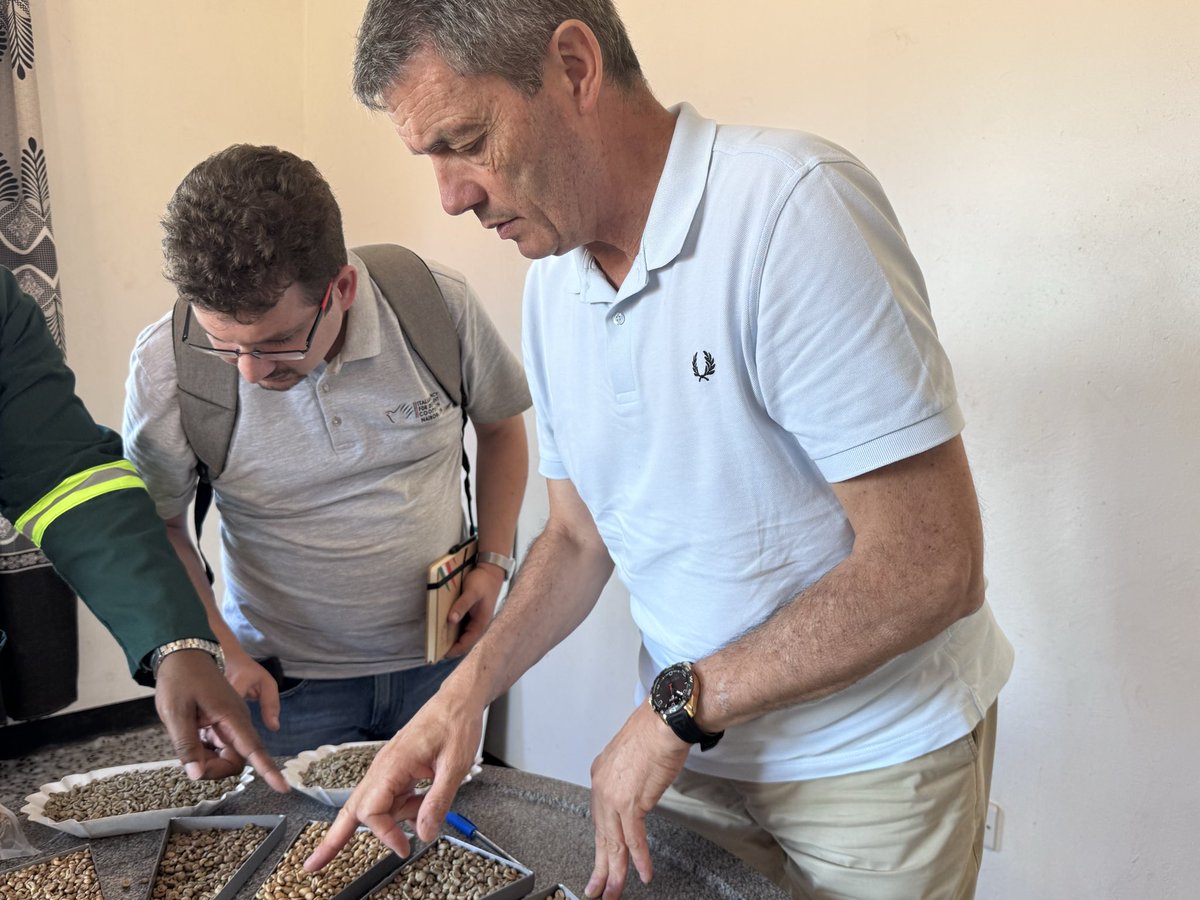
It was still us as Uganda that remained the discussion & attraction. There was a panel discussion to update on child labour initiatives of @ITCnews & @ilo in Uganda under the CLEAR project. @jamesmuhangi of @CoRubanga provided a powerful testimonial by articulating the business benefits and growth arising out of implementing the programme. Uganda has a good case study
I then discovered that beyond the official booth set up by @MAAIF_Uganda, a number of other Ugandan coffee businesses set up their own stalls and they were getting a lot of traffic. Douglas Jagira of Platinum, Teopista with her @iwcawomen1 & the Agri Evolve team. Not to mention the illustrious @KBarigye & @mtnharvestug. Even the guys from the Rwenzori region.
@UgandaMFA has been remarkably aggressive in driving the economic and commercial diplomacy l. I speak about the benefits in the video. The effective team of Amb. @richardkabonero Amb. Arthur & Margaret Kafeero hard at work on this narrative. Brussels Embassy staff have moved offices to the expo to provide local support. @PS_MAAIF & Dr. @GeraldKyalo Commissioner @CoffeeUganda & his assistant Gordon Katwirenabo stayed with us all thru today.
The highlight was listening to Amb. Solomon Rutega who heads Inter African Coffee Organization selling a Chinese buyer in fluent mandarin on the attributes of our @RugyeyoFarmLtd coffee. Being in the actual market does make you think of all sorts of possibilities
One acre of well-managed coffee can change a family's life. The secret is not just planting coffee, but managing it properly. Who else believes coffee is one of Uganda's greatest treasures?
🇺🇬☕ Uganda has been selected as the official “Portrait Country” for the 2026 @worldofcoffeesa Expo in Brussels, placing the Pearl of Africa at the centre of Europe’s largest specialty coffee trade event. The @UgandaBenelux and @MAAIF_Uganda will lead a strategic campaign to showcase Uganda’s premium coffee, attract investment, and deepen trade partnerships. #UgandaCoffee #CoffeeTrade #InvestInUganda #CoffeeDiplomacy #MadeInUganda #ECD ☕🌍
Uganda’s skills deficit is not fundamentally an education problem. It is a commerce and industry problem.
=======
We are largely an economy that trades in raw materials, and at that level very little knowledge is required beyond extraction, basic handling, and transport. You do not need advanced process engineers to export unprocessed coffee beans. You do not need skilled technicians to sell uncut minerals. The structure of the economy simply does not demand deep skills, so those skills do not develop at scale. Yet we expect schools to produce highly skilled graduates for an economy that does not require those skills, and then we blame the schools when graduates struggle. We are putting too much pressure on our teachers to solve a problem that belongs to industry.
Education has its place. It builds foundational knowledge and matures critical thinking. But skills are gained at work. No school has a bread factory as a classroom to fully train bakers, and very few have real construction sites that carry the responsibility, risk, and repetition required to shape competent engineers. If you want to fly a plane, you must fly it and accumulate hours. Work skills are experiential, not merely theoretical. Skills follow industry, not the other way around.
The levels of industrial development make this clear. At the lowest level, economies extract and export raw materials, and the demand for skill is minimal. At the next level, basic processing introduces some technical ability, quality control, and machine operation. At a higher level, manufacturing and fabrication emerge, requiring engineers, technicians, production systems, and structured training pipelines. At the highest level, economies move into advanced manufacturing, systems integration, research, and innovation, where deep expertise becomes essential. Uganda is still largely operating between the first and second levels, and that is why the skills base remains shallow.
This is why value addition is not just an economic slogan. It is a skills strategy. These watches are not just products. They are evidence of what happens when a country begins to consume its own resources. Ugandan gemstones, Ugandan design thinking, and the early steps toward Ugandan metal value chains meeting in one final product. Every silver metal melted, every copper alloy heated to liquid and cast, every gram of gold formed and preserved into wealth on a Ugandan wrist, every polished stone, every fitted dial, and every assembled piece demands knowledge, precision, and repetition. If we export the raw stone, we export the opportunity to learn. If we process, design, and manufacture locally, we create the very skills we claim to lack.
The real question, therefore, is not simply why our schools are failing to produce skills. The real question is what kind of economy we are building that should demand those skills. Until commerce and industry evolve, the skills conversation will remain misplaced. If we want a skilled population, we must deliberately build industries that require skill.
The Sovereignty Bill Is Nothing More Than Immunity for State Failure.
=======
A serious sovereignty law would protect Uganda from illicit financial flows, predatory contracts, tax theft, policy capture, procurement fraud, debt dependency, and the outsourcing of national intelligence, industry, and economic direction. But this bill takes a different route. It does not go after corruption with precision. It does not go after waste with discipline. It does not go after state inefficiency with reform. Instead, it creates broad language that can be used against the very people who expose these things.
Read it carefully. When a law says publishing information that “weakens” the economy can amount to economic sabotage, what exactly is being protected? Because corruption weakens the economy. Theft of public funds weakens the economy. Bad debt weakens the economy. Procurement fraud weakens the economy. Capital flight weakens the economy. Policy laziness weakens the economy. Donor dependency weakens the economy. So if a researcher, journalist, lecturer, activist, or ordinary citizen points to these realities, are they exposing the sickness, or are they now to be treated as the sickness?
That is the trick. A failing state always tries to reverse the mirror. The person who names the rot becomes the problem. The person who questions illegitimacy becomes anti-national. The person who points at waste is accused of undermining confidence. The person who asks why a country rich in brains, minerals, and labor remains trapped in dependency is suddenly framed as serving foreign interests. In such a system, incompetence hides behind patriotism, and impunity wraps itself in the national flag.
True sovereignty is not the right of the powerful to avoid embarrassment. It is the right of the people to know, to question, to correct, and to rebuild their republic. A country does not become sovereign by criminalising criticism. It becomes sovereign by defeating the conditions that make criticism necessary.
If this bill stands as it is, it risks protecting corruption more than country, shielding inefficiency more than sovereignty, and intimidating citizens more than empowering them. Uganda does not need a law that fears scrutiny. Uganda needs a state that can survive it.
The Inspirational Story of Dr. Kanzire.
Meet Dr. Edward Kazire, the Ankole icon who turned a measly UGX 20,000 into a UGX 15 billion business empire. At just 41, he is a household name across Uganda for his Kazire herbal clinics and health drinks. His story is a masterclass in resilience and turning academic knowledge into a multi-million-dollar reality.
The journey to success began with complete failure. After graduating with a Chemistry degree in 2002, Kazire faced endless rejection in Kampala. Unable to find steady work, he retreated to his home village of Buyanja in Rukungiri. He arrived with no job, no money, and a heavy cloud of misery.
Seeking divine intervention, he realized he needed to redefine his degree. A dictionary taught him that a chemist does not just study chemistry; a chemist prepares and sells medicine. Inspired by local waragi distillation, he began extracting oils from eucalyptus leaves to create his first successful cough syrup.
Success did not come easily. Villagers mocked him and called him mad as he spent long hours in the bush gathering herbs. Unbothered, he expanded his formulas to treat ulcers using cabbage and blackjack. He eventually opened the Kazire Clinic of Phototherapy. Word of mouth, fueled by local radio broadcasts, caused his popularity to explode across several districts.
Today, his company, Kazire Herbal Products, is a giant in the Ugandan manufacturing sector. Operating from a massive factory in Mbarara, the company produces over 800 cartons of health drinks daily, including the famous Kazire Red Tonic and Lemon Green Tea. He directly employs over 200 people and supports another 5,000 indirectly.
To sustain this massive production, Dr. Kazire owns over 1,300 acres of land dedicated to growing lemons, pineapples, oranges, and over 100 traditional herbs. He even supplies seedlings to local farmers with an agreement to buy back the harvest, securing his supply chain and empowering the community.
From being laughed at in the village to becoming one of Uganda's youngest billionaires in shilling terms, his net worth sits comfortably above UGX 15 billion. Dr. Kazire proves that with faith, relentless hard work, and a bit of scientific creativity, you can build a lasting legacy.
What have you learned from this story?
AFRICA DOESN'T SHOUT.
It Stares Back. Ask @IShowSpeedHQ.
During an interview by @PriscillaAnyabu , @SHAQ was asked if he’d ever go gorilla trekking in Uganda. His answer was instant: Hell NO. Anything else - fine. #Gorillas? Absolutely not.
He laughed, but the joke carried truth. As an African American, Shaq said gorillas have a way of singling him out, especially -presumably, among other tourists. They look him straight in the eye. That look. "How come you’re out there and we’re in here? Where’s your fur?"
Shaq is 7-foot-1, used to be fearless on the court, dominant by design - yet even he admitted the raw resonance of an African Gorilla gives pause. Africa has that effect. It doesn’t shout. It stares back. Yet Priscilla -in 2024, was brave enough to visit #Bwindi impenetrable National park and view the Gorillas.
Then came a 21-year-old from Cincinnati, Ohio - Darren Jason Watkins Jr. aka @ishowspeedsui #AfricanTour . No mythology. No ancestral caution. Just curiosity, courage, and a camera. #ishowspeed didn’t joke his way around Africa. He stepped into it visiting 20 African countries in 28 Days! Phew!
From the thunder of Mosi-oa-Tunya - "The Smoke That Thunders" -at #VictoriaFalls, to the living cultures of #Ethiopia, #SouthSudan, #Angola, #Namibia, #Ghana, #Nigeria, #Morocco, and #Egypt, iShowSpeed followed the Rhythm of Africa. Not safari-brochure Africa. Not headline Africa. Real Africa.
He drank coffee the Ethiopian way -slow, ceremonial, human. In Addis Ababa, he went back in time. According to the #EthiopianCalendar he was in 2019. He shared injera from one plate. Watched Meskel fires rise not in chaos, but remembrance.
Met communities where history isn’t archived -it’s lived.
He danced when drums demanded it. Ran when the land dared him. Back-flipped in return. Stood where fear lives - and didn’t blink. He streamed.
From Mansa Musa’s crossings to modern explorers chasing wonder instead of gold, Africa has always tested those who enter her heartland. Many hesitate. Some mythologize. A few listen.
#ishowspeedAfricatour listened.
As his African journey closes today, the continent asks only one thing:
GO tell the story.
Tell it as you saw it. Felt it. Lived it.
Africa didn’t shout.
It stared back - and you answered. #Kwaheri #Ahsante
Video/Photos: @PriscillaAnyabu@IShowSpeedHQ@wode_maya