We have been funding the @QuantumBioOrg for over a year.
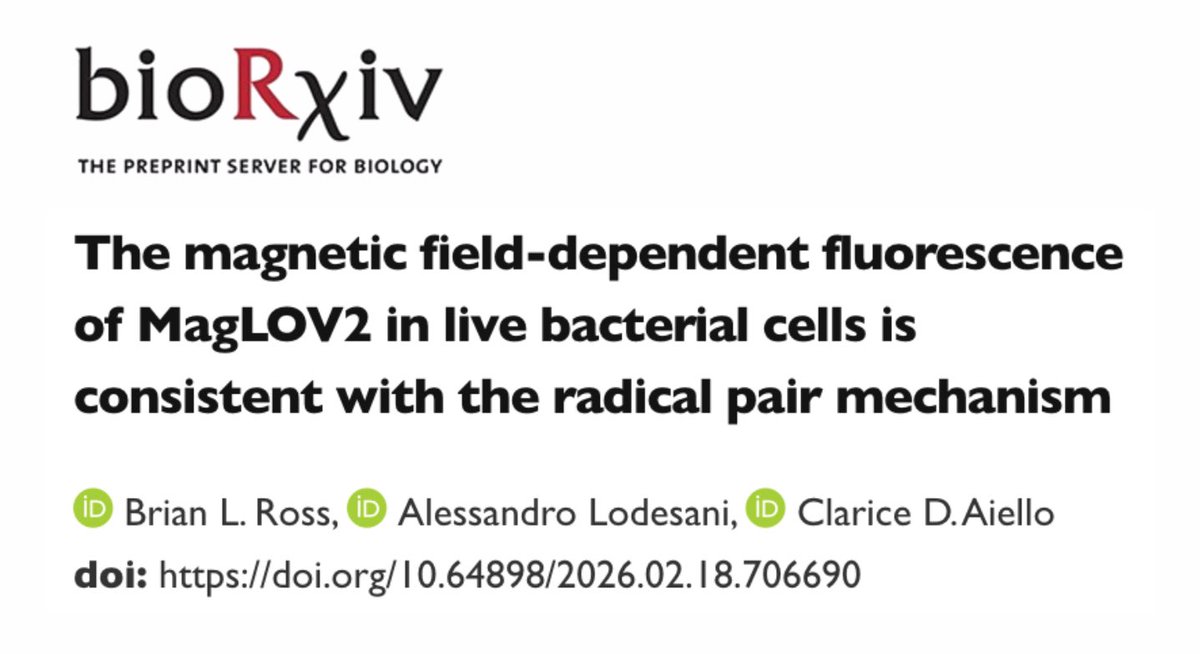
Their new micropublication shows that MagLOV2 exhibits magnetic field dependent fluorescence in living bacterial cells, with behavior consistent with the radical pair mechanism.
Breakdown of the work below 🧵 1/10
I think updating the process of science is the #1 thing we can do to boost scientific progress. Here are my thoughts:
Lean Science https://t.co/gJKD6KZocD
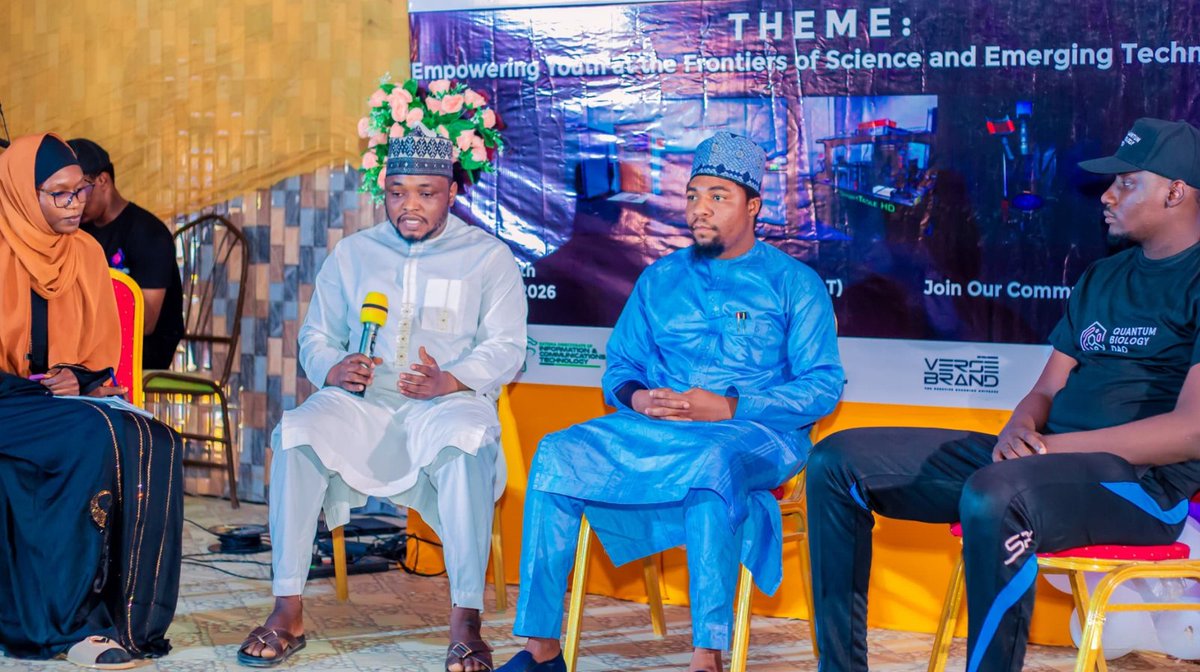
Quantum biology keeps growing! 🇳🇬
Last week, we supported a community member-led event in Nigeria, bringing together hundreds of participants across both in-person and online attendance. Students, researchers, scientists, and people curious about crypto-enabled collaboration gathered for a shared introduction to quantum biology and decentralized science.
The event created space for education, discussion, and community building within Nigeria’s academic and innovation ecosystem, highlighting the role of open collaboration in advancing emerging scientific fields.
Here’s to more quantum biology events and bringing this science to communities around the world. 🌍
Some exciting news to share — we've made the world's first magnetically controlled antibody! What is a magnetically controlled antibody? It's an antibody drug that you can turn on and off, wherever you want in the body. (1/9) https://t.co/eoyawiQAqR
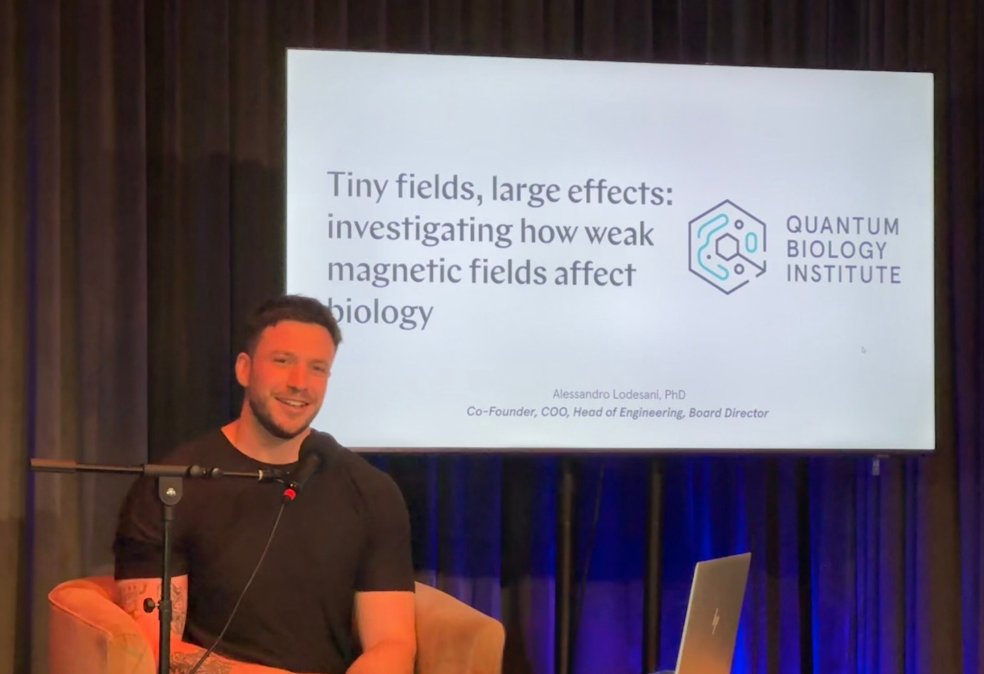
@LodesaniA earlier this week at the AI Cafe in Venice, LA, an open meetup where people come together to explore new ideas in tech and science. Ale spent the morning chatting with folks about the role weak magnetic fields may play in biology and how this research is taking shape.
Let’s keep opening up conversations about quantum biology!!
@QuantumBioOrg and @LodesaniA have developed a new graphical user interface (GUI), built with support from AI, to streamline operations for the bacterioscope— their platform for screening magnetosensitivity in bacterial plates.
The interface makes it easier to run and manage experiments by bringing everything into one clear, coordinated system.
🎥 Video explainer coming soon!
@QuantumBioOrg@LodesaniA Here’s the full demo 🎥
Dr. @LodesaniA walks through the new bacterioscope interface — used to capture fluorescence images of bacteria while switching magnetic fields on and off.
https://t.co/J951SjrQnw
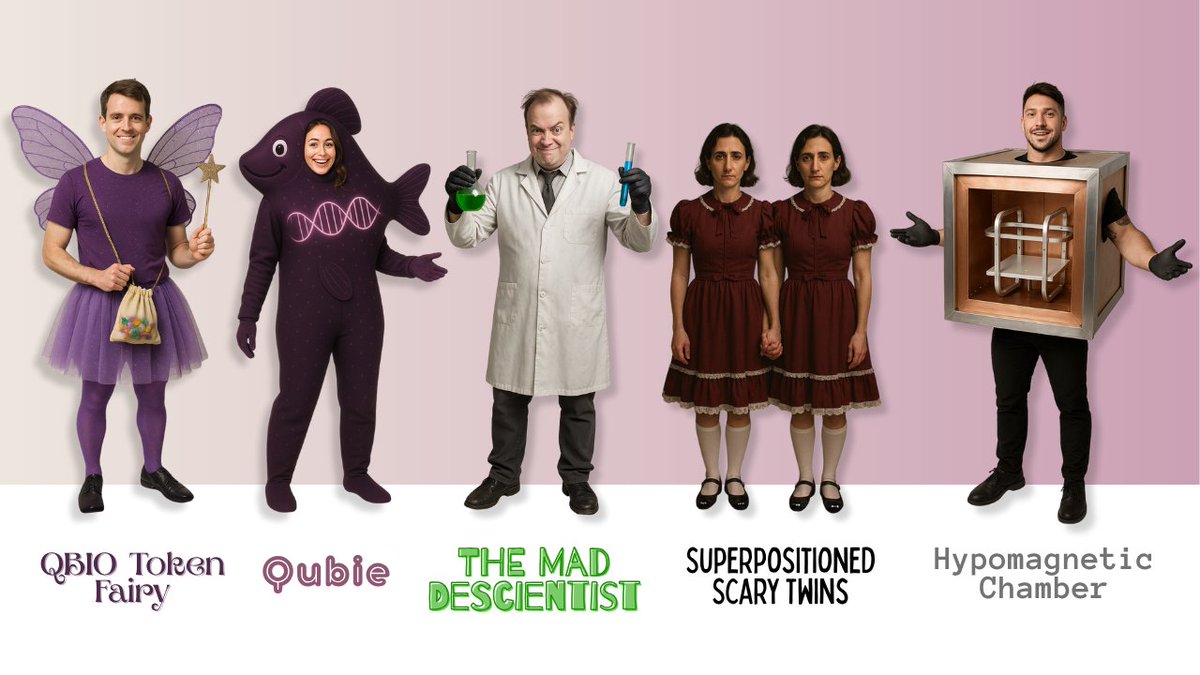
👻 Halloween is just a month away - have you started thinking of your costume?
Here's some inspiration to get you started...
Featuring our models: @geoffanders@keerkat_@ClariceDAiello@LodesaniA
Humanity is undoubtedly space-bound.
But as we consider life beyond Earth, are we paying enough attention to the magnetic fields that surround us?
How might biology respond when those fields change? And what will it take to truly thrive beyond our planet?
At the @QuantumBioOrg, @LodesaniA has taken a big step toward the quantum microscope: successfully testing and calibrating the Institute’s powerful electromagnet. He can now control the magnetic field it produces with Python code. This electromagnet allows the team to test magnetic fields applied in any arbitrary direction over a very large range of intensities, from Earth’s magnetic field (~50 uT) up to about 0.3 T (300,000 uT).
🧭 To demonstrate, Ale programmed a rotating magnetic field, making a compass needle spin at will to visualize. The needle tracked the field almost perfectly, as shown in both the video and a matching plot comparing measured and expected values from a magnetic field sensor.
Why does this matter? It enables precise control of the magnetic field environment at a specific location, a core requirement for studying the effects that electromagnetic fields have on biology.
🤔 What’s going on here?
This is part of the Quantum Biology Institute’s quantum microscope build. Laser light is being sent through a thin glass cable into a setup designed for TIRF microscopy (a method that lights up only the very top layer of a sample).
Right now, the team is testing the system to make sure they can get that effect, which will be crucial for the microscope’s future work studying quantum effects in living cells.
@QuantumBioOrg
@erik_vanwinkle@QuantumBioDAO Hey Erik! Those are mostly power supplies and hardware to control a strong electromagnet. We will use that to control the magnetic field environment in our samples. Just figured out a way to control it via python. We’ll do some content on that soon :))
The Quantum Biology Institute’s Head of Biochemistry has been getting things in place at the LA lab, and he’s here to show off the current state of the biology setup.
This is DeSci in action. More updates to come!
@QuantumBioOrg
There's room for everyone in quantum biology!
Jennilyn, Head of Operations for the Quantum Biology Ecosystem, shares her thoughts on the field and the work underway at the @QuantumBioOrg.
🧪 At the @QuantumBioOrg, a screening platform for magnetosensitivity in bacterial plates is being built.
In this clip, you’ll hear two explanations of what’s going on: One from a confident non-scientist taking a guess, and one from resident scientist @LodesaniA, DAO co-founder and COO at the Institute.
The build is still in its early stages. Still to come: a camera for imaging the plates + petri dishes, filters to isolate the fluorescence signal, shielding to block external light, and more. Stay tuned.
Who explained it better? You decide.
Reminder: nothing Kyra says in this video should be taken seriously.