It's 2026 and absolutely nothing w PH brokers or the PSE has changed
You know why? It's cause all of penoy fintwit complains today and still takes it up the ass tomorrow
No one does anything proactive for themselves like ya know
Closing their acct and leaving the exchange
We are eating fake food, with fake ingredients, funded by fake research.
We are scrolling through fake lives, with fake relationships, who take fake, curated vacations to promote brands that make fake products.
We are voting for fake candidates, who run on fake promises, inside a fake system that was never designed to fix anything.
We are raising kids in fake schools that teach fake history, fake science, which quietly produce fake adults who can't think for themselves.
We are watching fake news, about fake crises, produced by fake journalists, for fake outrage.
GCash, in coordination with the Cybercrime Investigation and Coordinating Center (CICC), has blocked over 3,200 merchants detected to be connected with illicit activities such as illegal online gambling operations since 2025. This action prevents illegal operators from misusing the QRPh payment rail that redirects to fake GCash payment pages. This initiative has been consistently done to enhance consumer protection.
Read more: https://t.co/NzZ7xTOLmG
If you’re about to quit trading because you’re broken by it.
Wait.
Before you walk away, do this once.
Write your rules. Every rule you keep breaking.
Every rule you know you should follow.
Then trade that exact plan for 90 days.
No changes.
No exceptions.
Don’t try to win.
Don’t try to recover. Just execute.
If you still want to quit after that, walk away clean.
But you won’t.
Because the problem was never the market.
It was the version of you that wouldn’t stay still long enough to let consistency work.
The Philippines grows 87% of the world’s abaca fiber. China turns it into textiles. Guess who keeps the margin.
About 200,000 Filipino farming families harvest these stalks by hand. The entire country earns roughly $100M a year from abaca exports, raw fiber and finished products combined. That’s $500 per farming family per year from the strongest natural fiber on earth.
Meanwhile, Chinese textile manufacturers sell finished abaca fabric to Levi’s, Calvin Klein, GAP, and dozens of global brands at markups that make the raw material cost a rounding error. The abaca fiber market is growing at ~8% annually toward $150M by 2029, but that growth is almost entirely in processing and finished goods, not in what farmers earn.
The Philippines actually has a competitive edge here. Nine commercial fiber grades versus Ecuador’s five. High genetic diversity. Centuries of cultivation expertise. PhilFIDA has been trying to move the industry up the value chain for decades. But processing requires capital infrastructure and direct relationships with Western brands that Chinese factories locked up years ago.
This is the same pattern playing out across Southeast Asian commodities. The country with the resource exports raw material. The country with the factories captures the spread. You’re watching a video of Philippine agricultural wealth being converted into Chinese manufacturing margin in real time.
That $100M in Filipino export earnings? A single Chinese denim manufacturer like Black Peony does more than that serving just one brand account.
1st year of Trading
Blew the account.
No risk management.
Overtrading every breakout.
2nd year of Trading
Failed again.
Revenge trading.
No stop-loss discipline.
Chasing signals from Telegram gurus.
3rd year of Trading
Still failing.
Ignored market structure.
Didn’t understand liquidity & manipulation.
Emotional entries, emotional exits.
4th year of Trading
Studied price action.
Learned support & resistance.
Discovered supply & demand.
Backtested strategies.
Still inconsistent.
5th year of Trading
Understood risk-to-reward.
Focused on capital preservation.
Mastered patience — waited like a lion for clean breakouts.
Started journaling trades.
Finally profitable.
6th year of Trading
Built a system.
Respected psychology.
Controlled greed & fear.
Compounded small wins.
7th year of Trading
Started sharing knowledge.
Built a brand.
Started selling courses.
And became a Mentor.
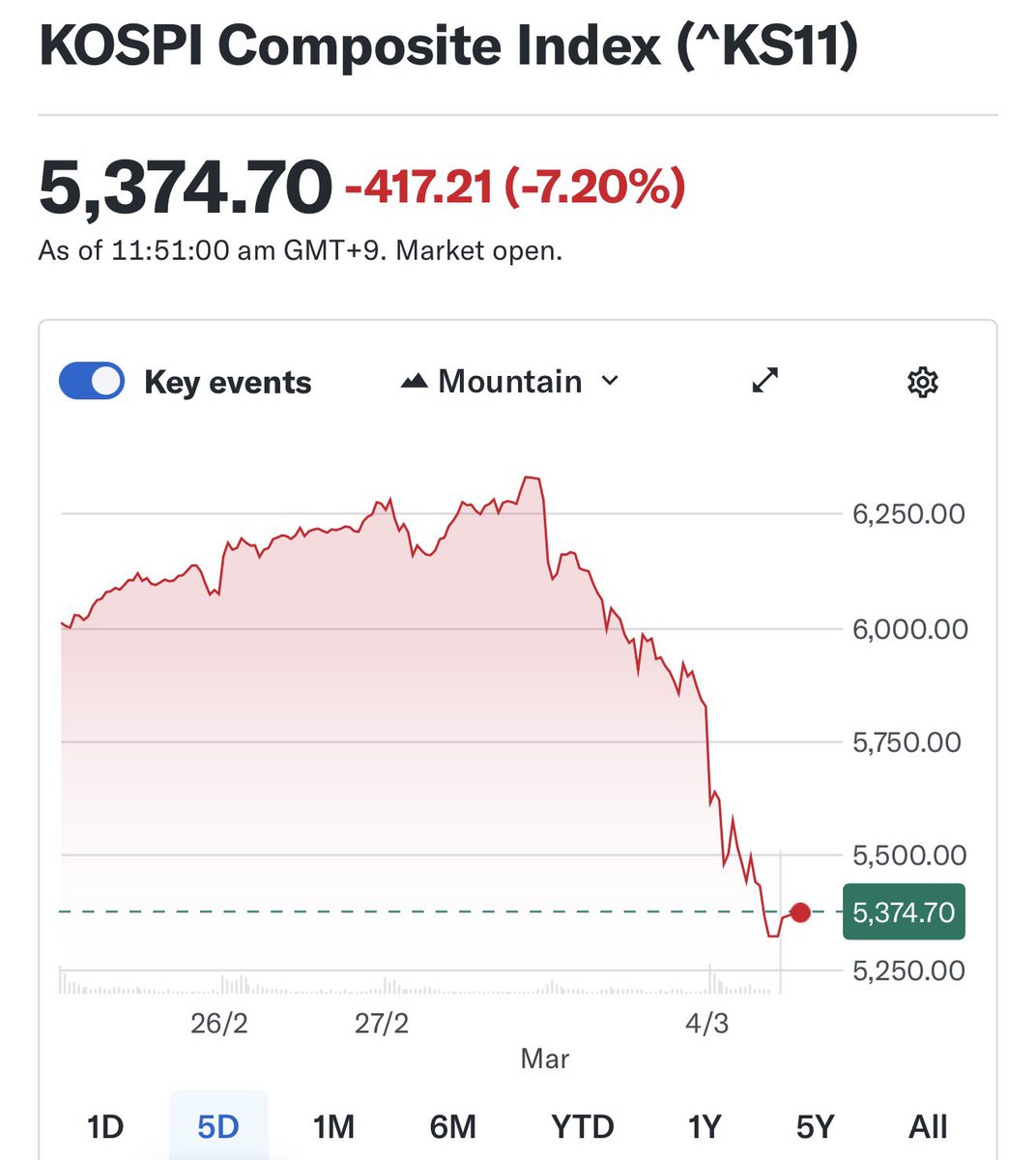
BREAKING: Everyone sees a Korea crash.
Almost nobody sees the AI supply chain crisis hiding inside it.
The KOSPI just lost 15% in 48 hours. Circuit breakers triggered for the first time in 576 days. $270 billion vaporized in a single session. Samsung down 10%. SK Hynix down 12%. The world’s hottest stock market went from all-time highs above 6,300 to freefall below 5,300 in two trading days.
The consensus says geopolitics. Iran strikes, Hormuz threats, oil surging past $80. Standard energy shock narrative.
That is the surface reading.
Here is what is actually happening.
Samsung and SK Hynix together control 67% of global DRAM production and nearly 80% of high-bandwidth memory revenue. HBM is the oxygen of every AI datacenter being built on Earth right now. Every NVIDIA Blackwell chip, every Google TPU, every hyperscaler expansion relies on memory manufactured overwhelmingly in one country.
That country imports 97% of its energy.
Through a strait that Iran just threatened to close.
The KOSPI crash is not a Korea story. It is the first live stress test of the AI infrastructure buildout’s most critical single point of failure. The entire global memory supercycle, projected to exceed $440 billion in 2026, depends on fabs that cannot run without imported oil and LNG flowing through contested waters. Global DRAM inventory sits at 2 to 3 weeks. NAND at 3 to 4 weeks. There is no buffer. If Hormuz disruption persists beyond a month, production cuts become unavoidable and the AI buildout timeline slips in ways no one has modeled.
The market priced a 50% YTD rally into Korean semiconductors on the assumption that AI demand is infinite and supply is guaranteed. The second assumption just got falsified in real time.
Defense stocks tell the real story. Hanwha Aerospace surged 20%. LIG Nex1 up 30%. Capital is not fleeing Korea. It is rotating from the thesis that energy is a solved problem into the thesis that energy is the binding constraint on everything, including the AI future.
What to watch: if oil holds above $85 for more than two weeks, semiconductor production cost models break. If Hormuz stays contested into April, HBM delivery timelines for second-half 2026 become unreliable. If foreign investors continue liquidating at the pace of 5 trillion won per session, the won depreciation compounds import costs in a reflexive spiral that monetary policy cannot arrest without killing domestic demand.
The falsifier is simple. Conflict resolves within 10 days, oil returns below $75, and this was the buying opportunity of the year. That is a real possibility. But the vulnerability it exposed does not disappear with a ceasefire. The structural dependency remains. And now everyone knows it is there.
The AI supercycle has a chokepoint. It is not chips. It is not talent. It is not capital. It is the energy that powers the fabs that make the memory that makes AI possible. And that energy flows through a 21-mile-wide strait controlled by a regime under military assault.
That is the story the KOSPI just told. Listen carefully.
PSE wen?
If Juan Dela Cruz isn’t investing in the PSE, it’s not about financial literacy.
It’s about an exchange that lacks real opportunity because of limited products and outdated features.
So capital goes where it works, off-shore. (or gambling? 😂)
https://t.co/xh2opstZLZ
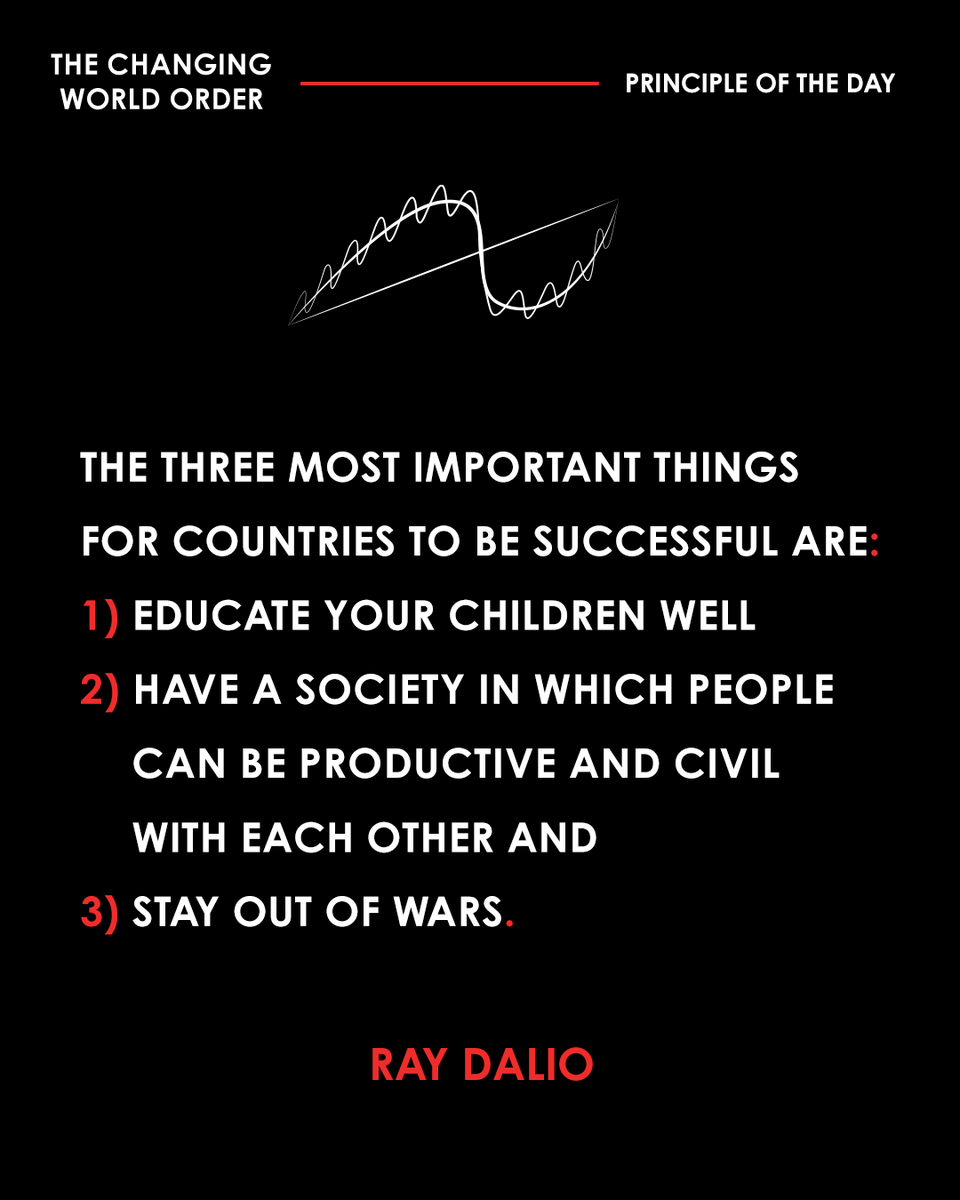
To elaborate, it’s critical to 1) educate your children well so that that can be productive and civil 2) have a society in which people can be productive and civil with each other, ideally with good legals and capital market systems, and 3) stay out of wars, domestic and international. Successful countries are the ones that do these things well and get the fundamentals right, such as earning more than they spend and having more assets than liabilities.
Wild week for retail investors!
The government is essentially forcing us to stick with a Jurassic PSE and local crypto exchanges that are as inefficient as they are expensive and unreliable.
It is clear that regulators are preventing Juan Dela Cruz from flourishing.
The SEC is denying Filipinos access to a world-class market and global products.
If the concern is investor protection, then bring the local market up to par with its peers.
https://t.co/iTT5ptTstM