Think agent memory is simple?
It’s not. But @helloiamleonie made it a bit simpler with this post:
Turns out, agent memory is more nuanced than just ‘saving the chat history.’
At the highest level, agents have two types of memory:
→ 𝗦𝗵𝗼𝗿𝘁-𝘁𝗲𝗿𝗺 𝗺𝗲𝗺𝗼𝗿𝘆 (in-context): Information available in the LLM's context window - both from the current conversation and relevant bits pulled from past sessions.
→ 𝗟𝗼𝗻𝗴-𝘁𝗲𝗿𝗺 𝗺𝗲𝗺𝗼𝗿𝘆 (out-of-context): Information stored externally in databases that the agent can retrieve when needed.
There are competing frameworks for how to categorize agent memory:
𝗧𝗵𝗲 𝗖𝗼𝗔𝗟𝗔 𝗙𝗿𝗮𝗺𝗲𝘄𝗼𝗿𝗸
Inspired by 1980s cognitive science, this treats the agent like a human brain:
- Working memory - current conversation context
- Semantic memory - facts about the user (’dog's name is Henry’)
- Episodic memory - past actions and experiences
- Procedural memory - instructions and how-to knowledge
𝗧𝗵𝗲 𝗟𝗲𝘁𝘁𝗮 𝗔𝗽𝗽𝗿𝗼𝗮𝗰𝗵
This rejects human analogies, arguing that an LLM is a computational function, not a brain. They define memory by its architecture:
- Message Buffer - recent messages from current conversation
- Core Memory - specific information the agent actively manages
- Recall Memory - raw conversation history
- Archival Memory - explicitly stored knowledge in external databases
🛑 𝗧𝗵𝗲 𝗥𝗲𝗮𝗹 𝗖𝗵𝗮𝗹𝗹𝗲𝗻𝗴𝗲: 𝗙𝗼𝗿𝗴𝗲𝘁𝘁𝗶𝗻𝗴
The hardest part isn’t remembering, it’s curation. How do you automate the deletion of obsolete info? Without a ‘forgetting’ strategy, you face memory bloat and quality degradation.
Whether managed explicitly (the agent decides via tools) or implicitly (code-driven intervals), your choice defines the balance between latency and reliability.
🧡 Read Leonie’s full blog post on AI Agent Memory here: https://t.co/1uGI6l5I6u
Thinking about building an llm eval lib in typescript - with all the cool things typescript can offer. And storage adapters to store your experiments / test cases.
What annoys you most about your current eval solution?
Vendor lockin?
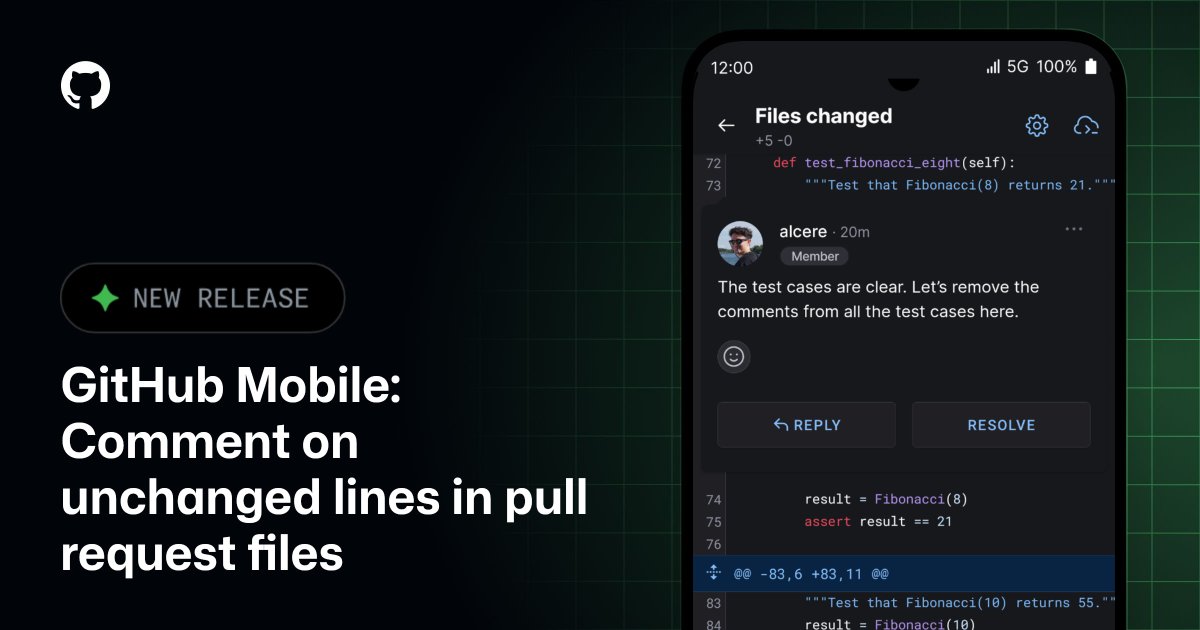
Big update for mobile reviews. 🚨
You can finally comment on unchanged lines in PR files on GitHub Mobile. 📱
Tap any line -> Leave a note -> Keep moving. ✅
Update your app.👇
https://t.co/VSABpHPhFL
Multi-agent AI systems are eating single-agent architectures.
But most teams have no idea how to build them.
As agent systems get more complex, we're seeing a clear shift from single-agent architectures (one agent handles all tasks) to multi-agent architectures that distribute work across specialized components.
The trade-off is real though: multi-agent systems can handle way more complex workflows, but they introduce serious coordination challenges.
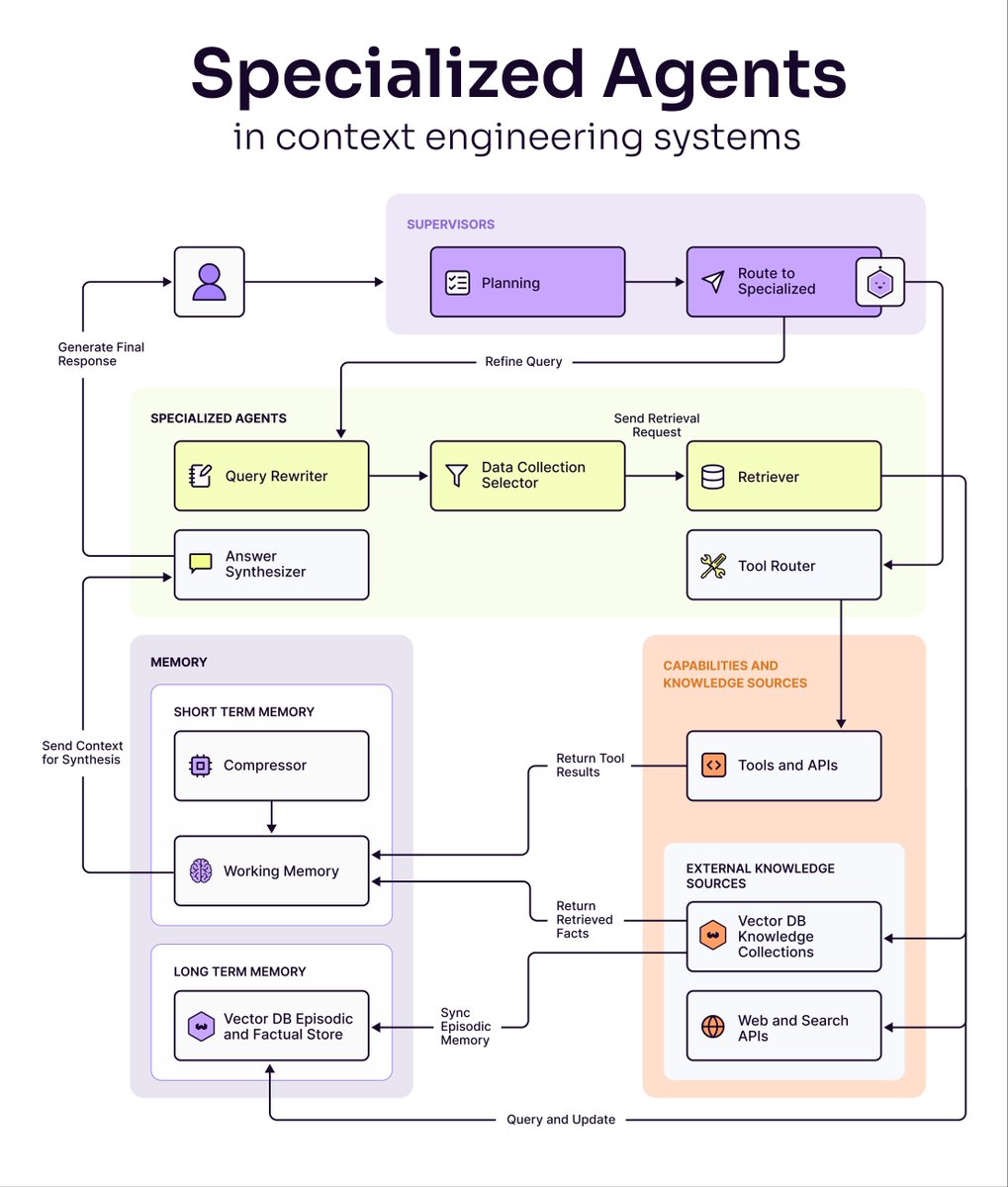
So what does a well-structured multi-agent system actually look like? There are four key components:
𝗦𝘂𝗽𝗲𝗿𝘃𝗶𝘀𝗼𝗿𝘀
The orchestration layer handles planning, routes queries to the right specialized agents, and refines queries as needed. Think of this as the air traffic controller of your agent system.
𝗦𝗽𝗲𝗰𝗶𝗮𝗹𝗶𝘇𝗲𝗱 𝗔𝗴𝗲𝗻𝘁𝘀
Task-specific agents that each do one thing well:
• Query rewriters that reformulate user input
• Data collection selectors that choose the right knowledge sources
• Retrievers that fetch relevant information
• Tool routers that pick the appropriate tools
• Answer synthesizers that generate final responses
𝗠𝗲𝗺𝗼𝗿𝘆
Both short-term (working memory, compression) and long-term (vector databases for episodic and factual storage). This is critical because of the context window challenge - agents need to constantly decide what information stays active, what gets compressed, and what's stored externally for later retrieval.
𝗖𝗮𝗽𝗮𝗯𝗶𝗹𝗶𝘁𝗶𝗲𝘀 𝗮𝗻𝗱 𝗞𝗻𝗼𝘄𝗹𝗲𝗱𝗴𝗲 𝗦𝗼𝘂𝗿𝗰𝗲𝘀
The actual tools, APIs, vector databases, and external knowledge sources that agents can access and interact with.
What makes this architecture powerful is how these components work together. The supervisor coordinates specialized agents, which use memory to maintain state and context, while accessing various capabilities to actually get things done.
But here's the thing - this added complexity means you need robust orchestration. Each specialized agent needs to know its role, communicate effectively with other agents, and handle failures gracefully. The coordination overhead is non-trivial.
Want to make multi-agent systems actually work?
Get your copy of this free Context Engineering Guide and see how to structure queries, memory, agents, and tools for real-world LLMs 🧡
https://t.co/rMtRSApr6Q
The Ancient Origins of a "Parasite"
Most of us know parasites as organisms living off a host at their expense. The word comes from Greek "parasitos" - "one who eats at another's table." Originally, it described temple assistants living from offerings, and later civil officials maintained by the State.
@JaySConfig @AdamBartas actually that thing lived happily 3 more years :)
it immediately turned itself of. I tilted it as quickly as I could and put it into a box of rice (for about a day) not sure if that really solved it but in the end it worked fine.
But still... scared the hell out of me haha
1,5 years in.
It is so interesting how much of founding is not fooling yourself. Not lying to yourself. And fighting against that instinct for instant gratification.
So cliché, but in the end, most of the time, you are the problem. And if not - it still does not mean succeeding
@thesecara Yes and I think most of the time you realise it, it because you already saw a negative effect of it.
What I am more and more doing at the moment is, trying form habits around preventing it.
@eliana_jordan I am really bad in answering i realise.
I mean you learn to love it. But I realised it only makes fun if the setup is great. If you use SST for your IaC its amazing
The process of founding a company, besides all the pain, really brings you into an environment where you have to grow like nowhere else.
Especially for a coder... entering marketing and sales is a very different mindset.
#founding#startup
@eliana_jordan I think its always good to go out and get your head free by trying out something new. But I think the motive really matters. Are you doing it because you are escaping your main product?
Is your product something that can go to market in a couple months?
We have been focusing on providing value to product teams - always with a few lines of code! ⛵ ⌨️
🔍 We now offer built-in #search functionality for #free.
Please reach out to me if you want to some onboarding
You can get started for free here: https://t.co/k9EWLW1O2y