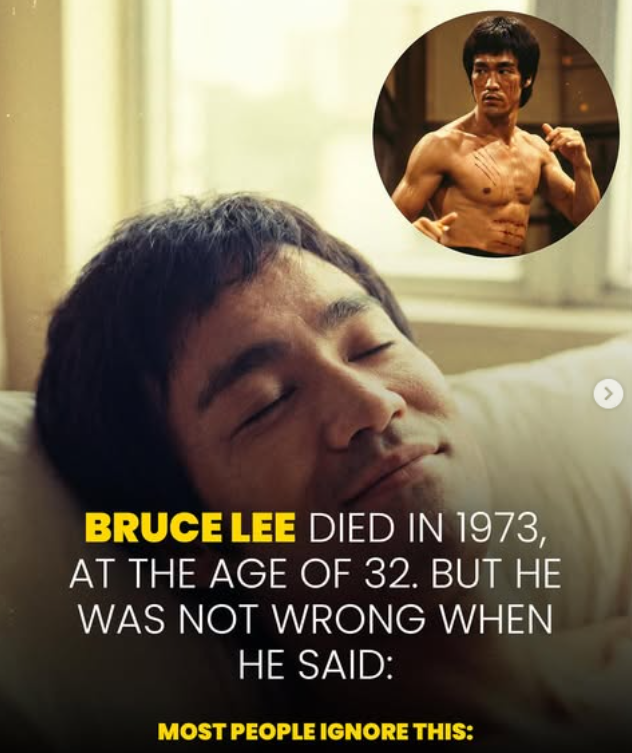
As a man, Be Addicted To Self Respect:
1. Saying no without guilt.
2. Walking away from disrespect.
3. Keeping promises to self.
4. Dressing clean and simple.
5. Speaking less, observing more.
6. Setting personal standards.
7. Protecting emotional energy.
8. Avoiding toxic circles.
9. Valuing personal time.
10. Standing by personal values.
11. Staying calm under pressure.
12. Not begging for attention.
13. Accepting flaws honestly.
14. Choosing growth daily.
15. Treating self with kindness.
Knowing that every desire is ripe grain to him who knows how to think from the end, he is indifferent to mere reasonable probability and confident that through continuous imagination his assumptions will harden into fact.
Call it meditation, call it prayer, or call it silence, any name will do.
But the essential point is to start dropping the mind with all it's noisy thoughts.
- Osho
Feeling is the secret, Neville Goddard wrote a whole book by that name in 1944, and the title is the entire teaching.
Your life is not built by your circumstances, your effort, your luck, or even your thoughts in the ordinary sense, it is built by what you feel as true about yourself.
Your subconscious does not understand sentences the way your conscious mind does, it does not weigh arguments or check for logic, it takes whatever you feel as already true and accepts it as instruction.
Then it arranges your behavior, your attention, your choices, the people you meet, the opportunities you notice, and the moods you wake up in, all around that one felt instruction.
The only language the subconscious reads fluently is feeling.
This is why you can repeat affirmations for years and have nothing happen, the words go in flat with no feeling underneath them and the subconscious files them as noise.
Meanwhile someone walking around feeling in their body that they are already wealthy, already loved, already healthy, shifts their entire life without ever announcing what they are doing, because they are speaking the actual language of the layer that runs the show.
Neville's technique flows straight from this, you pick the version of you that you want to be, you find one short scene that would only be true if you were already that person, and you enter that scene from inside the new self, not watching it from outside like a movie, but feeling the weight of the chair the new you sits in, hearing the voice the new you uses, feeling the calm in the new you's body, the small physical signature of someone for whom the goal is already finished business.
The scene does not need to be long, it needs to be sensory and felt, he called it living in the wish fulfilled.
The reason it works is that the subconscious does not separate vividly felt experience from real experience, both get filed in the same drawer as memory.
Once enough of the new memory is in place your behavior reorganizes around it, you stop acting like the person chasing the thing because something inside you now feels like the person who already has it, and that person makes completely different choices.
The timing matters too, Neville said the strongest window to impress feeling on the subconscious is the drowsy state right before sleep, when the critical conscious mind is offline and whatever you feel as true slips past the guard.
He told people to enter their scene in that state every night and fall asleep inside the feeling, because whatever you fall asleep feeling, you program yourself with for the next eight hours of unconscious work.
The trap most people fall into is wanting, because wanting is actually a feeling of lack, the more you want something the more your subconscious receives the signal "I do not have this" and arranges your life to keep matching that signal.
The correction is to stop wanting and start assuming, to shift from "I hope this comes" to "this is already the case, I am just waiting for the outside to catch up," and that assumed state has a completely different feeling underneath it, calm, settled, almost bored with the matter.
That is the feeling that actually programs the result, because the felt sense of who you already are is the single most powerful instruction your subconscious ever receives, and your life is just the long, faithful answer to that instruction.
Many people wait for external evidence before feeling abundant. But your abundance already exists, even before external evidence appears. And you can start drawing it to you right now. Learn how in Dr Joe’s Abundance Online Course: https://t.co/JmuqAWPyqU
The most powerful man in history:
Marcus Aurelius.
He ruled Rome and wrote all his thoughts in a private journal.
Today, his journal is called Meditation.
It's one of history's most valuable guides to living a happy life.
8 lessons from his book:
Naval Ravikant: "You're going to die. It's all going to zero. What's there to stress about?"
"Stress is when your mind has two conflicting desires at once. You want to be liked, but you want to do something selfish. You don't want to go to work, but you want to make money. You have two conflicting desires, and that's stress."
Naval explains the difference between stress and anxiety:
"Anxiety is this pervasive, unidentifiable stress where you're stressed out all the time and you're not even sure why. The reason is you have so many unresolved problems that have piled up in your life, you can no longer identify what the problems are. There's this mountain of garbage in your mind. A little bit is poking out the top like an iceberg; that's anxiety. But underneath, there's a lot of unresolved things."
He shares his personal anxiety resolver:
"One big anxiety resolver for me is just ruminating on death. You're going to die. It's all going to zero. You cannot take anything with you. If you can keep that idea in front of you at all times, what's there to stress about?"
Naval reframes what "wasted time" really means:
"What is wasted time? Everything is wasted time in a sense because nothing matters in the ultimate. But in each moment, it's the only thing that matters. So if you're doing something you want to do and you're fully there for it it's not wasted time. If your mind is running away, wishing you were somewhere else, anticipating the future, regretting the past, that's wasted time. That's time you're not present for."
He concludes:
"People get worried about dying and no longer being here. But they don't realize that so much of their life is spent not being here in any case."
If I lost all my 14 channels tomorrow, here’s exactly what I’d do to get back to $60K/month.
I’ve built this model twice already. First from zero, then again after a brutal strike wave wiped half my portfolio.
The second time was faster because I stopped doing the dumb shit most faceless creators obsess over.
Most people pick one “good” niche, post whenever they feel like it, chase viral hooks, and pray AdSense saves them. They end up with 3 channels making $1.2k–$3k combined after a year.
Here’s what actually works.
Step 1: Build a portfolio, not a channel
I wouldn’t start with one channel. I’d launch 4 in the first 30 days.
• 2 in “evergreen problem” niches (high RPM + affiliate upside)
• 1 in “curiosity/docs” style (volume machine)
• 1 in “solved-by-product” niche (digital product backend)
Realistic example: Finance-for-25-34s, Luxury Minimalism, Stoic Philosophy, and AI Tool Explainers.
All faceless. All AI voice. All stock footage + simple CapCut edits.
Step 2: The only 3 video formats I’d use
I don’t test 17 formats. I run these three on rotation:
1. List + Story (The $8k/month workhorse) “7 Brutal Truths About Money Nobody Tells Men Over 30” 12–18 minutes. High watch time. Easy to rank.
2. Before/After Transformation “I Tried Minimalism for 90 Days – Here’s What Happened to My Bank Account” These convert like crazy for affiliates and your own products.
3. “The Dark Side” / Controversy “Why Most Side Hustles Are Keeping You Broke in 2026” These get the initial push and comments.
I’d post 5 videos per channel per week for the first 90 days. Yes, 20 videos/week total. Systems make this easy, not hard.
Step 3: The monetization stack (this is where broke creators stay broke)
Month 1-3: Pure AdSense + affiliate
Target: $9k–$12k/month across 4 channels
Month 4-6: Add my own $47–$97 digital product in each niche
Target: $22k–$28k/month
Month 7-9: Launch 4 more channels using the exact same proven scripts and templates
Target: $45k+
Month 10-12: Optimize + add high-ticket offers + backend email flows
$55k–$70k/month
Real numbers I’ve seen: One of my finance channels does 1.1M views/month at $6.80 RPM = ~$7.5k AdSense. The $67 product converts at 4.8% on the backend and adds another $11k. That’s one channel.
The brutal truth most won’t accept:
Your editing style doesn’t matter.
Your “unique voice” doesn’t matter.
Your thumbnail testing obsession doesn’t matter.
What matters is posting the right format in the right niche with the right title at the right frequency while having multiple bets running.
I’ve got students hitting $18k–$34k/month with channels that look “basic” to most people. Because basic that actually ranks and sells beats pretty that flops every single time.
If I had to start over, I’d be at $15k by month 4 and $60k by month 11-12. Not because I’m special. Because I follow the system instead of hoping.
The game is rigged in favor of people who treat this like a real business, not a content creator fantasy.
RT this + comment “REBUILD” and I’ll send you the exact Notion dashboard I use to run 14+ faceless channels (must be following).
This is the backend. Use it.
Most people train their body...
but never their mind.
Bruce Lee understood something deeper…
your peace, your confidence, your power…
it all starts within.