@Rodri_amg@graterol987@FacundoMarino1@lapyme_ar Estamos invirtiendo a full en mejorar nuestra solución mayorista! Me encantaría entender por qué hoy no te sirve Tiendanube.
No te puedo mandar mensaje, yo los tengo abiertos!
Antes, vos manejabas el auto.
Después, el auto se manejaba solo pero vos ibas al volante.
Hoy, vas atrás. El auto maneja. Vos usás el tiempo en lo que querés.
Lo mismo va a pasar con el comercio.
Hoy, vos manejás tu operación.
Después, Lumi va a manejar con vos al volante.
Mañana, vas atrás. Lumi maneja. Vos usás el tiempo en lo que querés.
Ayer lanzamos Lumi, el copilot de @Tiendanube para permitirle a nuestros merchants operar mas facil y mejor.
Con Lumi es posible manejar el catalogo, promociones, ordenes, entender estadísticas del negocio, obtener ayuda, navegar y mas!
Gran laburo de todo el equipo 🫶
@TheNorthFaceArg nos encantaría tener en @Tiendanube a una marca con una historia tan linda.
Les garantizo que van a vender más!
(tengo los mensajes abiertos!)
increíble que en pleno hot sale/cyber monday marcas 'top tier' (como @TheNorthFaceArg) sigan teniendo una usabilidad tan pobre y tantos bugs. el contraste con la fluidez y claridad que sentís cuando estás en una tienda de @Tiendanube es abismal
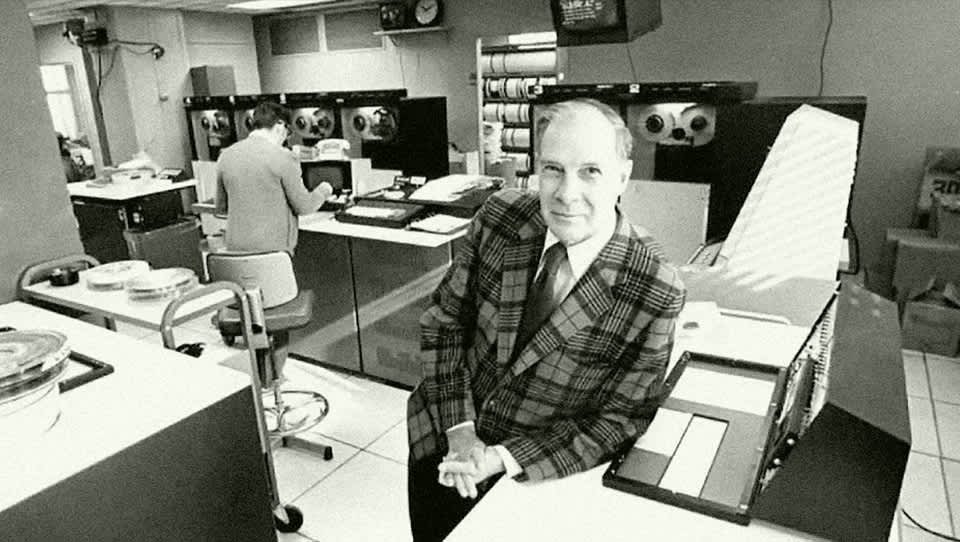
A mathematician who shared an office with Claude Shannon at Bell Labs gave one lecture in 1986 that explains why some people win Nobel Prizes and other equally smart people spend their whole lives doing forgettable work.
His name was Richard Hamming. He won the Turing Award. He invented error-correcting codes that made modern computing possible. And he spent 30 years at Bell Labs sitting in a cafeteria at lunch watching which scientists became legendary and which ones faded into nothing.
In March 1986, he walked into a Bellcore auditorium in front of 200 researchers and told them exactly what he had seen.
Here's the framework that has been quoted by every serious scientist for the last 40 years.
His opening line landed like a punch. He said most scientists he worked with at Bell Labs were just as smart as the Nobel Prize winners. Just as hardworking. Just as credentialed. And yet at the end of a 40-year career, one group had changed entire fields and the other group was forgotten by the time they retired.
He wanted to know what the difference actually was. And he said it wasn't luck. It wasn't IQ. It was a specific set of habits that almost nobody is willing to follow.
The first habit was the one that hurts the most to hear. He said most scientists deliberately avoid the most important problem in their field because the odds of failure are too high. They pick a safe adjacent problem, solve it cleanly, publish it, and move on. And because they never swing at the hard problem, they never hit it. He said if you do not work on an important problem, it is unlikely you will do important work. That is not a motivational line. That is a logical one.
The second habit was about doors. Literal doors. He noticed that the scientists at Bell Labs who kept their office doors closed got more done in the short term because they had no interruptions. But the scientists who kept their doors open got more done over a career. The open-door scientists were interrupted constantly. They also absorbed every new idea passing through the hallway. Ten years in, they were working on problems the closed-door scientists did not even know existed.
The third habit was inversion. When Bell Labs refused to give him the team of programmers he wanted, Hamming sat with the rejection for weeks. Then he flipped the question. Instead of asking for programmers to write the programs, he asked why machines could not write the programs themselves. That single inversion pushed him into the frontier of computer science. He said the pattern repeats everywhere. What looks like a defect, if you flip it correctly, becomes the exact thing that pushes you ahead of everyone else.
The fourth habit was the one that hit me the hardest. He said knowledge and productivity compound like interest. Someone who works 10 percent harder than you does not produce 10 percent more over a career. They produce twice as much. The gap doesn't add. It multiplies. And it compounds silently for years before anyone notices.
He finished the lecture with a line I have never been able to shake.
He said Pasteur's famous quote is right. Luck favors the prepared mind. But he meant it literally. You don't hope for luck. You engineer the conditions where luck can land on you. Open doors. Important problems. Inverted questions. Compounded hours. Those are not traits. Those are choices you make every single day.
The transcript has been sitting on the University of Virginia's computer science website for almost 30 years. The video is free on YouTube. Stripe Press reprinted the full lectures as a book in 2020 and Bret Victor wrote the foreword.
Hamming died in 1998. He gave his final lecture a few weeks before. He was 82.
The lecture that explains why some careers become legendary and others disappear is still free. Most people who could benefit from it will never open it.
Imagine every pixel on your screen, streamed live directly from a model. No HTML, no layout engine, no code. Just exactly what you want to see.
@eddiejiao_obj, @drewocarr and I built a prototype to see how this could actually work, and set out to make it real. We're calling it Flipbook. (1/5)
𝗖𝗼𝗻𝘀𝘁𝗿𝘂𝗶𝗿 𝗻𝘂𝗲𝘃𝗼𝘀 𝗰𝗮𝗺𝗶𝗻𝗼𝘀 💙💛
Junto a Tiendanube, realizamos una charla para socios y socias del club que buscan emprender o potenciar sus proyectos, generando un espacio de aprendizaje, intercambio y nuevas herramientas para dar ese paso. 🤝
Carlini, one of the world best AI security researchers: "I've found more bugs in the last few weeks with Mythos than in the rest of my entire life combined"
That's here. That's home. That's us. On it everyone you love, everyone you know, everyone you ever heard of, every human being who ever was, lived out their lives.
The aggregate of our joy and suffering, thousands of confident religions, ideologies, and economic doctrines, every hunter and forager, every hero and coward, every creator and destroyer of civilization, every king and peasant, every young couple in love, every mother and father, hopeful child, inventor and explorer, every teacher of morals, every corrupt politician, every "superstar," every "supreme leader," every saint and sinner in the history of our species lived there
--on a mote of dust suspended in a sunbeam.
We see our home planet as a whole, lit up in spectacular blues and browns. A green aurora even lights up the atmosphere. That's us, together, watching as our astronauts make their journey to the Moon.
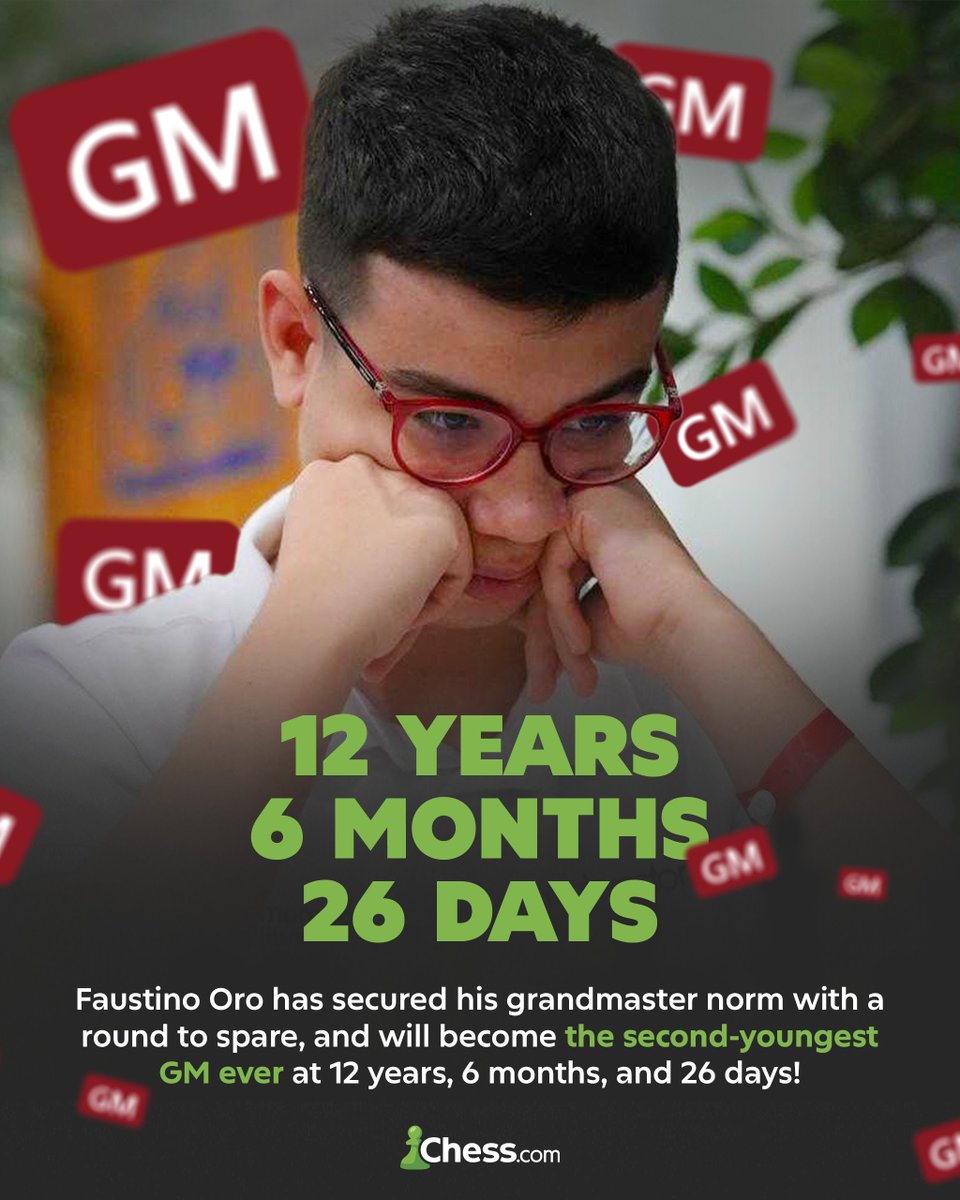
🚨FAUSTINO ORO 🇦🇷 vs EL RUSO GREBNEV 🇷🇺🚨
Mañana es la batalla final por el título de Gran Maestro. A todo o nada, Faustino debe ganar de negras contra el GM ruso Grebnev (2621).
🇦🇷 06:00 AM
🔴EN VIVO por Ajedrez de Primera
👇Retuiteá para que el mundo se entere👇
🚨FAUSTINO PONE CORAZÓN Y LOGRA UNA VICTORIA QUE VALE ORO🚨
Faustino Oro es un luchador con cuerpo de niño. Tiene 12 años, es un buenazo, le cae bien a todo el mundo, pero cuando le ponen un tablero de ajedrez enfrente es un guerrero legendario. Tenía que ganar sí o sí para poder aspirar al récord mundial y lo hizo.
En la Ronda 7, su rival era un indio poco conocido, sin título, pero que estaba jugando a nivel de Gran Maestro. Faustino, además, iba de negras. De negras tenés que esperar, aprovechar errores de tu rival y de a poco obtener una ventaja.
Faustino hizo todo eso. Quedó muy bien en la apertura, logró jugar con mayor velocidad que Lad Mandar Pradip y llegó a dejar a su rival con sólo minutos en el reloj. Pero lo más importante de todo: una posición viva en donde decidir qué jugar no era fácil.
Fue así que Faustino aprovechó un pequeño error de su rival cuando jugó 33.Cf4 y encontró una táctica para ganar peón. El indio se desesperó y buscó complicar la posición. Pero para qué... Faustino en las complicaciones es uno de los mejores del mundo. Y no es exageración.
Encontró táctica tras táctica y en pocas movidas la posición estaba totalmente ganada. En el diagrama (la imagen del post) Faustino sacrificó Txh3 encontrando una maravillosa línea de mate en 5.
Y Lad comió la torre y Faustino le mostró cómo se gana una partida ganada. ¿Podés encontrar el remate increíble de esta partida?
A las 11:00 AM (ARG) se juega la Ronda 8 y Faustino debe intentar ganar una vez más para mantener el sueño vivo de convertirse en el Gran Maestro más joven de la historia.
Con transmisión en vivo por mi canal de Youtube «Ajedrez de Primera».