One of the secrets of Jane Austen’s enduring popularity is that she uses description hardly at all. Susanna Clarke has noted that in the famous Netherfield Ball sequence in Pride & Prejudice, the only description we get is that the guests are given cold ham and chicken. Austen is less interested in what the characters are wearing than in the underlying tensions and relational dynamics: the humiliations of Mary and Elizabeth, the scorn of Darcy, the provocations of Mrs Bennet. Austen does not clutter her stories with an excess of detail; she shows only what she must to paint an image in the reader’s mind.
Over time she developed strategies for sneaking in bits of description without breaking the flow of the narrative. One such strategy is to have things observed by characters who are currently on the move. (“The ladies walked about together, noticing every new face, and almost every new bonnet in the room.”) Another is to have characters imagine a scene rather than see it in front of them: before visiting Blaize Castle, the incorrigibly book-addled Catherine Morland envisions “the happiness of being stopped in their way along narrow, winding vaults by a low, grated door; or even of having their lamp, their only lamp, extinguished by a sudden gust of wind, and left in total darkness.” We can infer from this that she is incurably romantic. Description must never be deployed for its own sake; it must reveal to us something of the interior state of the observer. Her fidelity to character over all is what makes Austen immortal.
Zine은 공동체를 찾고 만들고 교류하려고 만든거임. “창작자는 죽어도 만들어야 하는 사람”이라는 창작자 낭만이 창작자 착취를 당연시 하게함.
관련해서는 진 출판으로 생존과 연대의 실천을 하는 젠더페일의 “생존을 위한 이윤” 선언문을 보면 조음. https://t.co/RdPkj4HQot
"그것 자체는 아무것도 아닐지도 모른다. 아무 생각도 없이 텅 비어 있을 수도 있다. “똑바로 응시하면 [...] 한 글자 한 글자 해체되어 사라져” 버리고 “의미를 위한 공간은 남아 있었지만 비어” 있다.
우리가 보아야 하는 건 그 사이 쩍 벌어진 틈, 피를 흘리는 틈이다."
https://t.co/O0dXCQAfLY
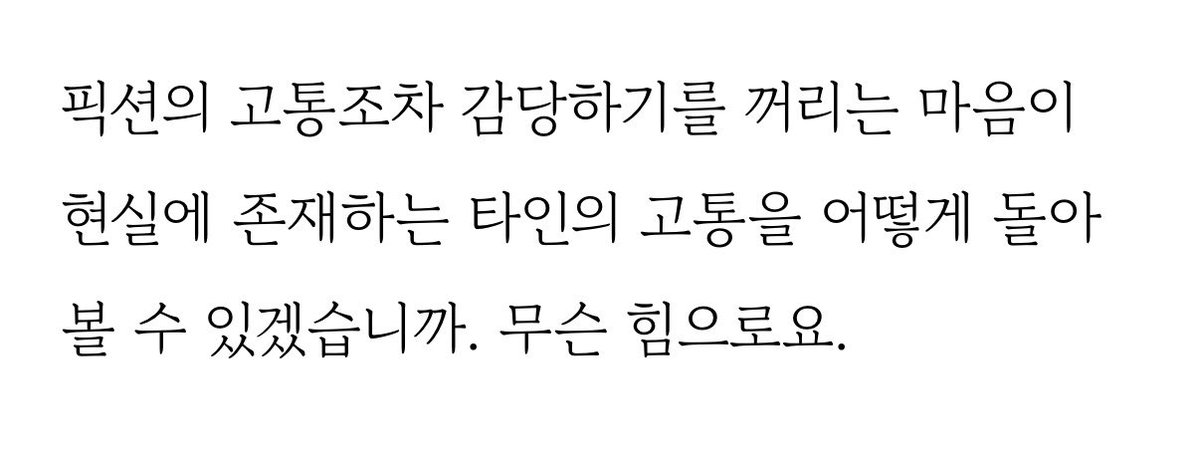
"요즘 글을 쓰기 어렵게 만드는 가장 큰 방해물은 내가 한 단어 한 단어 머릿속을 긁어가며 더듬더듬 힘겹게 울퉁불퉁 어설피 쓰는 글을 기계를 이용하면 순식간에 폭포수처럼 쏟아지게 할 수 있다는 사실이다. 온전하고 완벽하고 매끈하게. 그러나 기표는 늘 과대평가되는 성질이 있다. (+
📢 창작자들이라면 꼭 보세요!
『지』가 탄생하기까지 (연재 시작 편) 1/5|vol.01
작품의 구상 단계에서 작성되는 '플롯'을 공개!
아직 이야기의 형태를 갖추기 전, 그 안에는 어떤 아이디어들이 담겨 있을까?
평소에는 쉽게 접할 수 없는 실제 자료를 통해 『지』가 탄생하기까지의 과정과 창작의 일부를 소개합니다.
구상 단계부터 이미 이렇게 치밀하게 구성되어 있었다니 역시 명작이 탄생하는 데는 이유가 있네요.
* 이미지 번역해서 첨부합니다.