Statement on behalf of UEFA and its 55 National AssociationStatement on behalf of UEFA and its 55 National AssociationStatement on behalf of UEFA and its 55 National AssociationStatement on behalf of UEFA and its 55 National Associations
Wow, this tweet went very viral!
I wanted share a possibly slightly improved version of the tweet in an "idea file". The idea of the idea file is that in this era of LLM agents, there is less of a point/need of sharing the specific code/app, you just share the idea, then the other person's agent customizes & builds it for your specific needs.
So here's the idea in a gist format: https://t.co/NlAfEJjtJV
You can give this to your agent and it can build you your own LLM wiki and guide you on how to use it etc. It's intentionally kept a little bit abstract/vague because there are so many directions to take this in. And ofc, people can adjust the idea or contribute their own in the Discussion which is cool.
LLM Knowledge Bases
Something I'm finding very useful recently: using LLMs to build personal knowledge bases for various topics of research interest. In this way, a large fraction of my recent token throughput is going less into manipulating code, and more into manipulating knowledge (stored as markdown and images). The latest LLMs are quite good at it. So:
Data ingest:
I index source documents (articles, papers, repos, datasets, images, etc.) into a raw/ directory, then I use an LLM to incrementally "compile" a wiki, which is just a collection of .md files in a directory structure. The wiki includes summaries of all the data in raw/, backlinks, and then it categorizes data into concepts, writes articles for them, and links them all. To convert web articles into .md files I like to use the Obsidian Web Clipper extension, and then I also use a hotkey to download all the related images to local so that my LLM can easily reference them.
IDE:
I use Obsidian as the IDE "frontend" where I can view the raw data, the the compiled wiki, and the derived visualizations. Important to note that the LLM writes and maintains all of the data of the wiki, I rarely touch it directly. I've played with a few Obsidian plugins to render and view data in other ways (e.g. Marp for slides).
Q&A:
Where things get interesting is that once your wiki is big enough (e.g. mine on some recent research is ~100 articles and ~400K words), you can ask your LLM agent all kinds of complex questions against the wiki, and it will go off, research the answers, etc. I thought I had to reach for fancy RAG, but the LLM has been pretty good about auto-maintaining index files and brief summaries of all the documents and it reads all the important related data fairly easily at this ~small scale.
Output:
Instead of getting answers in text/terminal, I like to have it render markdown files for me, or slide shows (Marp format), or matplotlib images, all of which I then view again in Obsidian. You can imagine many other visual output formats depending on the query. Often, I end up "filing" the outputs back into the wiki to enhance it for further queries. So my own explorations and queries always "add up" in the knowledge base.
Linting:
I've run some LLM "health checks" over the wiki to e.g. find inconsistent data, impute missing data (with web searchers), find interesting connections for new article candidates, etc., to incrementally clean up the wiki and enhance its overall data integrity. The LLMs are quite good at suggesting further questions to ask and look into.
Extra tools:
I find myself developing additional tools to process the data, e.g. I vibe coded a small and naive search engine over the wiki, which I both use directly (in a web ui), but more often I want to hand it off to an LLM via CLI as a tool for larger queries.
Further explorations:
As the repo grows, the natural desire is to also think about synthetic data generation + finetuning to have your LLM "know" the data in its weights instead of just context windows.
TLDR: raw data from a given number of sources is collected, then compiled by an LLM into a .md wiki, then operated on by various CLIs by the LLM to do Q&A and to incrementally enhance the wiki, and all of it viewable in Obsidian. You rarely ever write or edit the wiki manually, it's the domain of the LLM. I think there is room here for an incredible new product instead of a hacky collection of scripts.
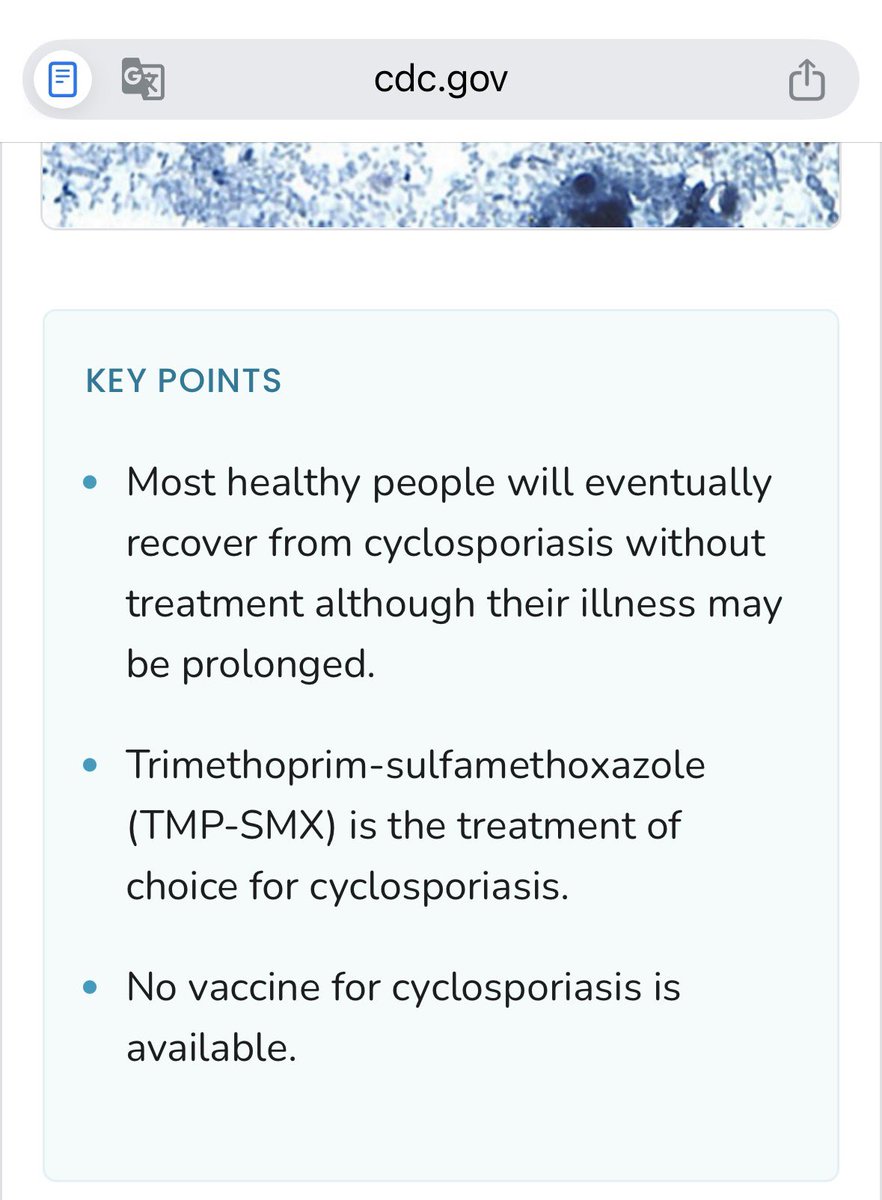
@s_sordo@ChildrenNeedUs_@Javier_Alarcon_ Estás equivocado, si hay medicamentos con propiedades antibióticas que funcionan para parasitos. Este es un caso, el Bactrim F es Literal el medicamento de elección para tratar esto.
@YOloencuentro@leonpalafox De nada sirve decir que el investigador mexicano gana 11x más que la media y que el que está en US solo 5x, si la mediocridad te hace inventar la causalidad más floja o más a modo que pudiste encontrar. Probar causalidad es complejo y para eso hace falta ver más ángulos.
@YOloencuentro@leonpalafox Si te parece bien quedarte con información a medias o manejar conclusiones a modo, bien por ti. Se perfectamente lo que esta comparando la infografía, pero también lo que falta para una imagen más completa, esa es precisamente la critica.
@YOloencuentro@leonpalafox Y de aquí llegamos al mismo problema, no ver todas la perspectivas es preocupante incluso para gente como tu, que piensa que insultando obtiene aunque sea un pequeño toque de superioridad.
@YOloencuentro@leonpalafox Estan comparando el sueldo del cientifico respecto al salario promedio de su pais y ese múltiplo, contra el de otros paises. El salario medio es aùn más alarmante, el mexicano gana 88% menos que el de EU, de ahí el problema no es que el cientifico gane 11x por encima.
@AladinKumar1@DanFreddy90@HighyieldHarry I don’t think someone watching a few games will understand that. For many new viewers 3 pointers are awesome, cause they don’t now any better.