Windows Server 2025 Active Directory Updates Thread!
Server 2025 is in preview, so I took a look at updated features, specifically Active Directory, with a focus on security features.
Article:
What's new in Windows Server 2025 (preview)
https://t.co/MiE8Mi928K
#AD2025🧵
Created a script using ADExplorersnapshot for dumping interesting information from AD into text files. Info such as active server accounts, sccm, printers, laps passwords, asreproast, plaintext password attributes +++
https://t.co/3Af9U7eANa
Decided to go with || as a separator on the out files. Should be easy to parse with cut -d "|"
Tickets for Android kernel security at @hexacon_fr in Paris are now available for purchase https://t.co/obi2Pnhnia
you can reach me on their discord channel if there are any questions
I'm so excited today to announce that I'm launching my own online training platform @CalypsoLabs 🎊
The first course to appear on Labs is "Windows Instrumentation with Frida", check it out:
https://t.co/mmQbvDAsZc
Labs is partnering with @vector35, when you sign up you get a non-commercial Binary Ninja license valued at $299 👀🔥
👹 12 hours of video content
👹 27 labs
👹 Practical, grounded, real-world skills
I have been teaching this course at Black Hat for the last 3 years. Now you can suffer, painfully, at your own pace and really immerse yourself in the mechanics of binary instrumentation on Windows!
Conditional Access Policies in Microsoft Entra ID are super important because they allow granular control of who can access what and under what conditions.
But those policies need to be properly configured and tested. And I almost always see gaps in coverage of conditional access policies.
I put together a list of conditional access policies that I recommend. Feel free to share/like if you like it or comment if you have questions and comments 👇👇
https://t.co/zwpfBpOwrO
#cybersecurity #tips #conditionalaccess #entraid #cap
Recently I played around a bit with HTTP/3. I ended up building a Burp plugin to passively monitor for endpoints and build a minimal client using aioquic. You can read about it in this blog post and find the code linked in this blog: https://t.co/cOfllOE0CE
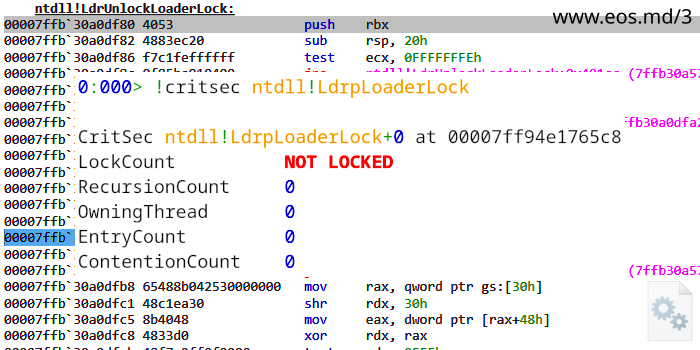
Perfect DLL Hijacking: It's now possible with the latest in security research. Building on previous insights from @NetSPI, we reverse engineer the Windows library loader to disable the infamous Loader Lock and achieve ShellExecute straight from DllMain. 🔍 Link in bio 🔗
Our Principal Consultant, @lorentzenman, has written a guide to enhancing #cybersecurity in education. ✍️
Read how schools can fend off the enemy at the #school gates in Security Brief UK ⬇️
https://t.co/RgWdBpOVd2 @techday_uk
Quick blog post drafted while satisfying my curiosity of how PNG steganography works at the byte level to wrap payloads. Sharing in case anyone else finds this interesting too! https://t.co/VeE0Qb9cj4
New #TunnelCrack flaw can break a large majority of VPNs: we can trick a VPN into leaking traffic outside the protected VPN tunnel. Our tests indicate that this is a widespread design issue. For a demo, more details, and the USENIX Security paper, see https://t.co/1aM2AwTrD0
Today I am pleased to announce the release of a code analyser I’ve been working in my free time - wSAST (https://t.co/0eF9G5b81E)
wSAST aims to make code analysis easier for application security consultants by providing tools to graph relationships, find paths between functions, and identify entry points into codebases as well as perform full dataflow and static analysis using a powerful rules engine.
Rules for analysis can propagate taints, express arbitrary relationships between variables, and attach arbitrary data to variables as they flow through the application during simulated execution. Rules can be written as simple XML format rules (for simpler types such as function rules, variable and type rules, and data rules), or in .NET for completely customised rules which can then be as convoluted as you like.
Multiple sources can be attached to any variable and multiple sinks to any trace, which then come and go from execution scope per a specified scope anchor.
Since wSAST is implemented over a custom intermediate language (WSIL) to which all supported languages are translated it will be able to support multiple languages. At the moment only Java core language support has been completed, and C support is about 95% complete but has no rules at this time.
My plan for the moment is to keep the core engine closed source but make all the rules, the front end, rules engine all open source and .NET based. I plan to make further steps towards this by releasing the code for these components to the wSAST GitHub when developer guides are finished. It will be possible for developers to add custom language support (if they’re brave enough!) using the interfaces provided, and the C to WSIL translator will be open source as an example.
I hope people find this useful! Don’t hesitate to contact me if you have any questions, on here or on @wsastsupport