Time to retire the full length SIGPLAN paper format. Multi-year vision still needed. But individual ideas get executed far too quickly to warrant the long format.
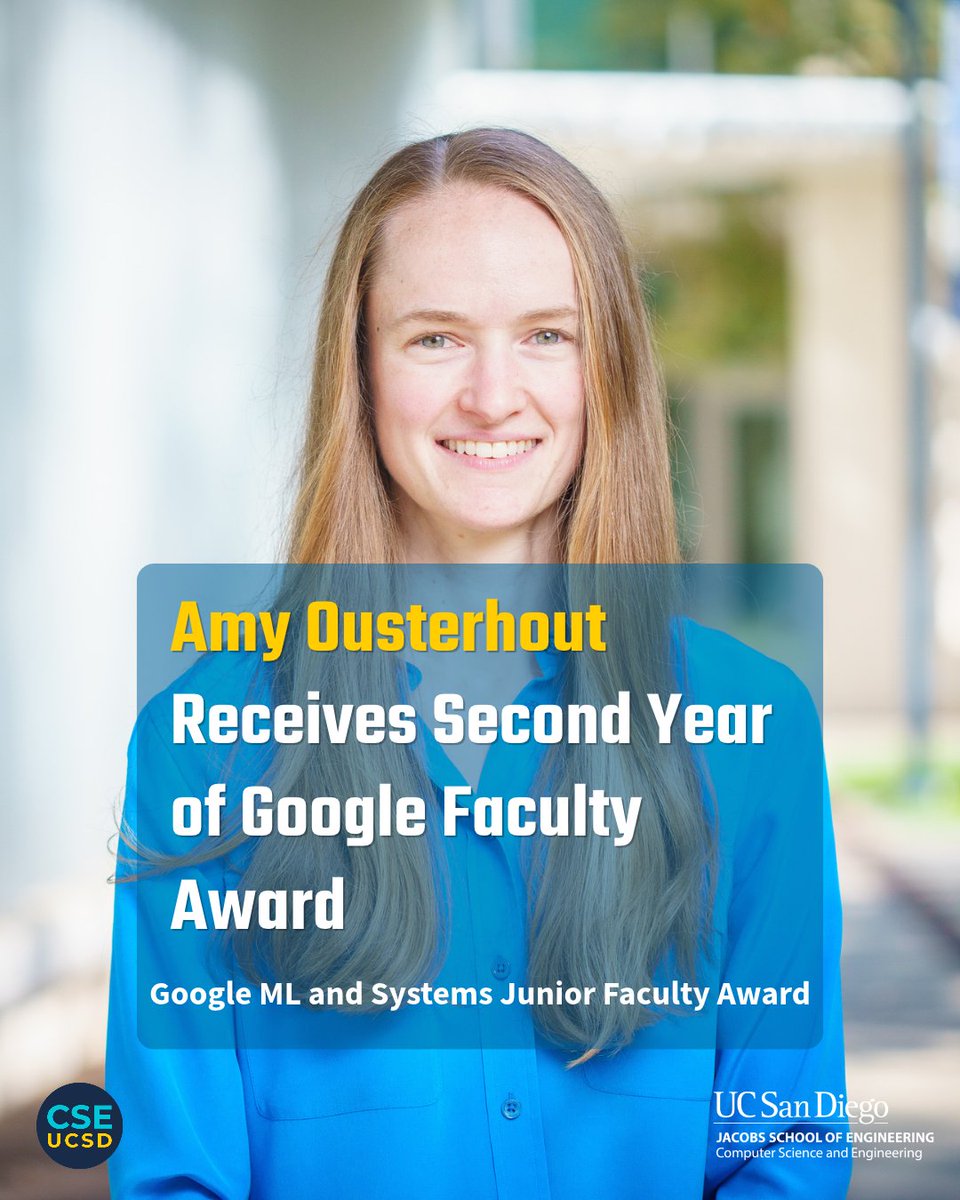
Congratulations to UC San Diego CSE Assistant Professor Amy Ousterhout on receiving a second year of the Google ML and Systems Junior Faculty Award! 🎉
The $100,000 award recognizes her promising research in operating systems and networks.
#UCSDCSE#ComputerScience
Agents don’t lose much expressiveness in the process. They can still do arbitrary side-effect-free computation and spawn subagents with tool access, subject to more policies. LBAC works for filesystem sandboxing, data provenance, and info-flow control.
https://t.co/472KbmWkNQ
How do we make sure an AI agent actually follows the rules?
At NeurIPS26, Timothy Zhou (w/ me+@polikarn) proposes Language-Based Agent Control (LBAC) which follows a programming languages approach to the problem: make the agent correct by writing programs that type-check. 1/
In LBAC agents generate code that must be well typed in the context of the surrounding application. If it would violate a policy (touching files it shouldn’t, losing track of where data came from, leaking sensitive information), the type-checker rejects it. 2/
@krismicinski@TaliaRinger Give me a min and we'll update arxiv. The easiest thing is for you to read related work. All these approaches are attacking the same problems from slightly different angles, that all cause slightly different problems.
@TaliaRinger Adam Chlipala has one I saw on LinkedIn, then the sel4 folks are doing this too, then two other folks I’ll remind you of if I can think of them
What gets lost when AI is used in code translation?
AI translated code can compile successfully but still behave differently from the original. But in safety-critical environments, this behavioral gap is unacceptable - and can have serious consequences.
Our latest research blog post explores how defining good type mappings can close that gap, and how Code Metal approaches the problem from a formal methods perspective.
Check out the full article here 👉️ https://t.co/tCj9WRk3cP
Authored by Ariel Kellison, @lorisdanto and @laura_titolo ✍
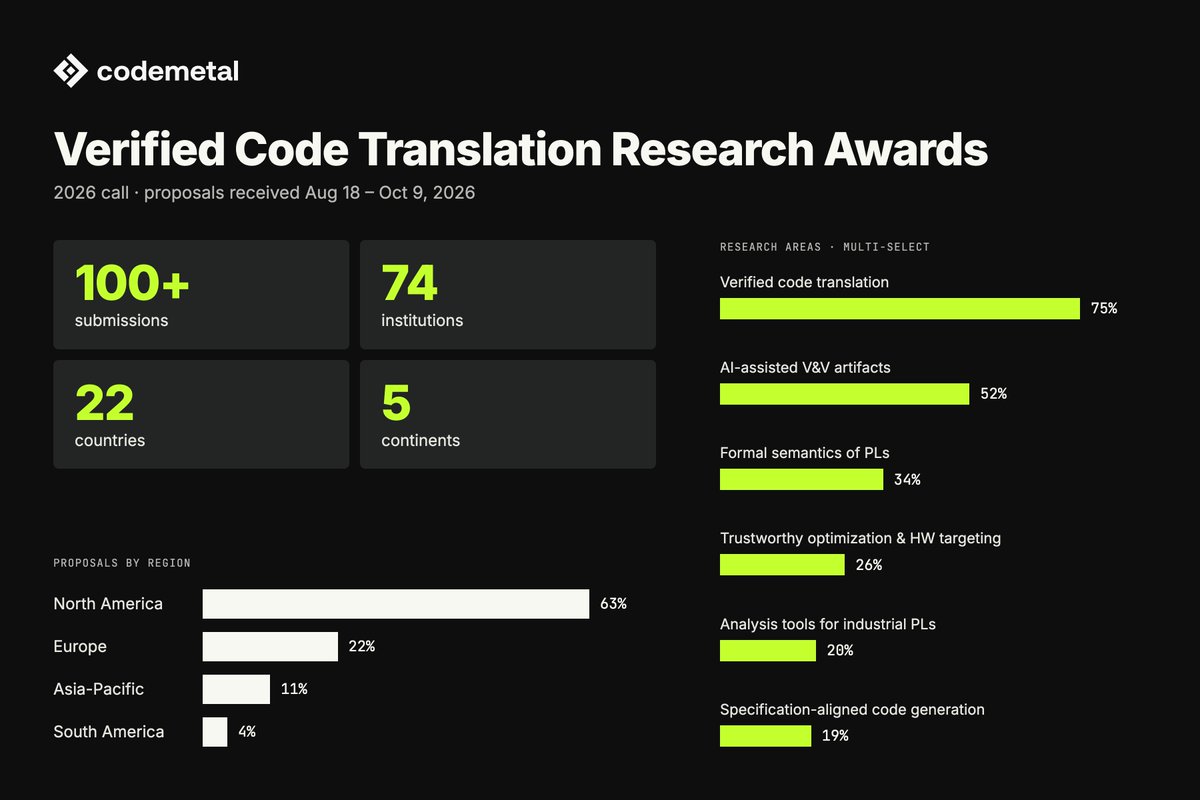
Applications for the Code Metal Verified Code Translation Research Awards are now closed, and the research community did not disappoint!
We received 5X as many submissions as we were anticipating, with applicants across 5 continents, 22 countries, and 74 institutions. The caliber of submissions and topics we received blew us away, across verified code translation, formal semantics, trustworthy optimization and hardware targeting, and so much more.
Thank you to everyone who submitted, we cannot wait to dig into the incredible work these teams put forward. A proud day to be a part of this community! ♥️
Winners will be announced in December - stay tuned!