Your users screenshot your dashboard, paste it into ChatGPT, and ask "what changed since yesterday."
They do this every morning. And they told Reddit about it.
I set up a Claude Routine that finds these moments automatically. Every Monday at 7am, it scans Reddit, Product Hunt, G2, and X for anyone describing the moment they leave a product to use another tool. Categorizes each exit. Posts a ranked report to Slack with frequency counts and user quotes.
Three categories show up. AI_QUERY: user left to ask AI a question the product should answer. EXPORT: user copied data into another tool to process it. DATA_LOOKUP: user opened browser tabs mid-workflow to research competitors.
After three weeks, you stop guessing. The exits that repeat every report are your roadmap. "Dashboard-to-ChatGPT appeared every week. Users leave because in-app AI can't read charts."
Here's the product insight behind every AI_QUERY exit: your AI sidebar is asking users to describe something the product already renders on screen. The user sees the chart. The AI doesn't. So the user screenshots it, leaves your product, and pastes it into a tool that can see.
The screenshot they pasted into ChatGPT is the PRD. The 15-minute Routine that finds it is in today's toolkit.
This solves Claude's robotic writing tone.
5 GitHub repos that make Claude write like a human:
(save this)
1. Humanizer: https://t.co/B0w42PeF1x
2. Humanize Writing: https://t.co/RZne3BpBeO
3. Humanizer Skill: https://t.co/itaW4yqBlN
4. Awesome Claude Prompts: https://t.co/ZgPVbPep96
5. Awesome Claude Skills: https://t.co/62kxBV8HnF
I hope you found this helpful.
this is the current meta for generating insane videos with AI:
first you need an orchestrator, i've tested:
> Gemini 3.5 Flash: strongest creative direction, feels like it has "taste"
> Claude Sonnet 4.6: requires some solid prompting
> Gemini 3: solid but visually behind imo
then you need Seedance 2.0, it's just a beast at rendering whatever you have in mind
AI agents are exceptional at planning, finding the right model, doing the research and producing videos from just a simple prompt
you can build your own system, but requires a lot of tweaking to consistently get great results
Higgsfield supercomputer is probably the easiest option (and it's built on top of Hermes)
Claude is slowly becoming the interface for everything:
- Presentations: PowerPoint → Claude in PowerPoint
- Video Editing: Premiere Pro → Remotion
- Browser: Chrome → Claude for Chrome
- Spreadsheets: Excel → Claude in Excel
- Image / Video: Midjourney → Higgsfield
- Automation: n8n → Claude Routines
- Email: Gmail → Gmail Connector
- Note-taking: Fireflies → Granola
- Research: Google → Perplexity
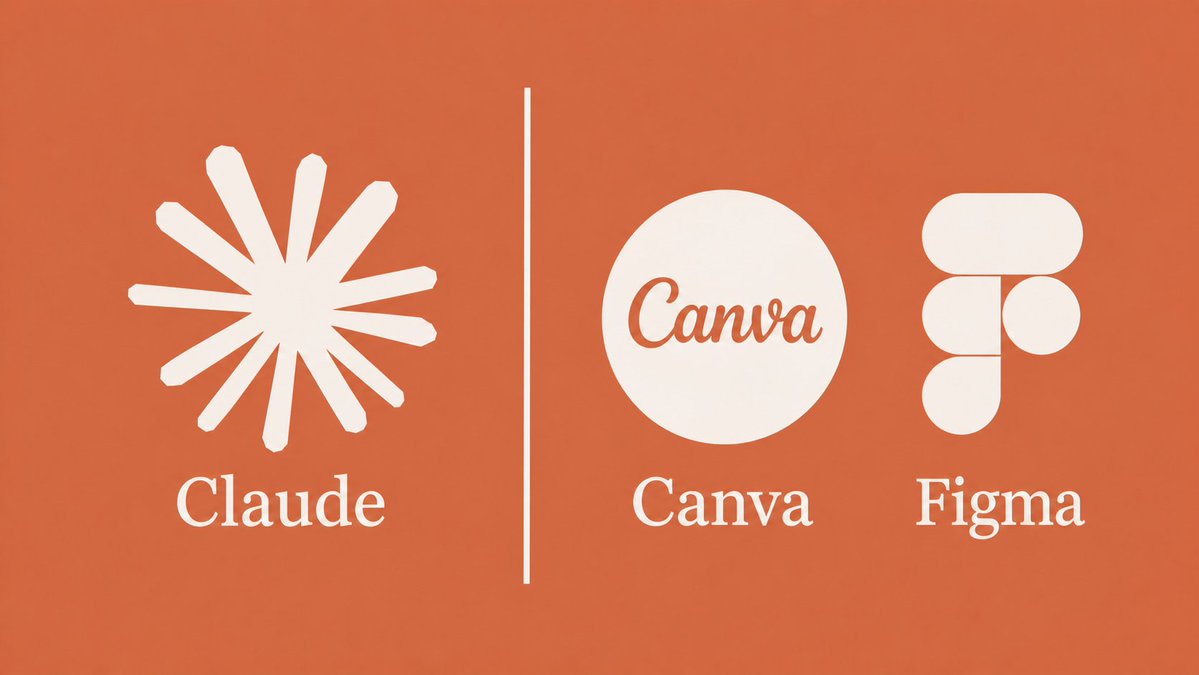
- Design: Canva → Claude Code
- Writing: ChatGPT → Claude
- Search: Google → AI Mode
Infographic credit: @charliejhills
Anthropic CEO: "there are jobs that took generations to build that may disappear"
this is one of the best interviews I've seen in a long time
Dario Amodei talks about how to prepare for what's coming
here's what to expect:
> high GDP growth and high unemployment at the same time
> software becoming essentially free to build
> the gap between people who use AI and people who don't
the scariest part this is not a prediction, this is already happening
to stay competitive you need to adapt fast and you can't do that while ignoring AI
that's why I put together a guide on Claude features that 99% of users have no idea exist
it will completely change how you work with Claude
you can find it below
Most people don’t have a prompting problem.
They have a clarity problem.
Claude 4.7 is scary good… but only if you stop treating prompts like random text messages.
A few things that instantly improve outputs:
• define the exact outcome
• tell it the format + length
• use action verbs instead of vague requests
• give context like you would to a real employee
• structure complex asks properly
The biggest shift for me was realizing this:
AI doesn’t “figure out what you mean” anymore.
The people getting the best results are painfully specific.
That’s the difference between:
“write something about marketing”
vs
“Write a 150-word LinkedIn post explaining why most AI startups fail at distribution. Tone: sharp, conversational, slightly contrarian.”
One gets fluff.
The other gets leverage.
Made a simple infographic with 10 rules that instantly upgrade your Claude prompts ↓
Google’s biggest AI update is not the model.
It’s the shift in behavior.
Old AI waited for you.
New AI works for you.
That sounds simple, but it changes everything.
→ Gemini 3.5 Flash makes AI fast enough to actually use.
→ Spark can keep working when your laptop is closed.
→ Stitch turns website building into a conversation.
→ Pix makes design easier for non-designers.
→ Flow brings video creation into the same prompt-based workflow.
→ Google Search is becoming less like a search box and more like a live answer engine.
My take:
The winners will not be the people who “know about” these tools.
The winners will be the people who put one of them into a real workflow this week.
Save this video, you’ll stop watching AI news and start using it.
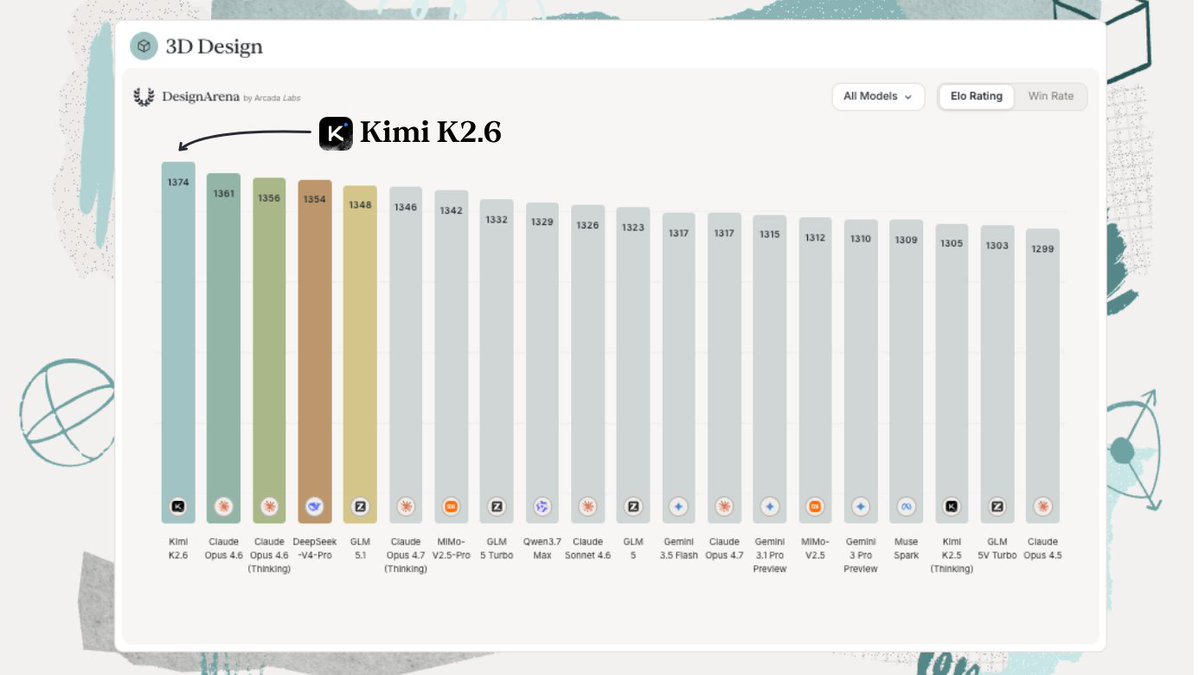
An open source model has returned to #1 on the 3D Design leaderboard by Design Arena.
Kimi K2.6 has reached the top of the leaderboard for 3D Design, ahead of models 10X more expensive like Opus 4.7 by @AnthropicAI, Gemini 3.5 Flash by @GoogleDeepMind, and GPT 5.5 by @OpenAI. This is an 18 position increase from its previous model Kimi K2.5.
In fact, it’s not just Kimi K2.6 - 3D Design is a striking outlier capability that’s mostly dominated by open-weight models, like GLM 5.1 by @Zai_org, MiMo v2.5 by @Xiaomi, amongst others.
Congrats on the @Kimi_Moonshot team for this accomplishment!
Three of the biggest companies in the world are going public at the same time.
The market has never seen anything like this.
And this is how major bubbles peak.
SpaceX is targeting a June 2026 IPO raising up to $75 billion at a $1.5 trillion valuation, the largest IPO in human history, bigger than Saudi Aramco's $29 billion raise in 2019.
OpenAI is filing with the SEC targeting September 2026, raising at least $60 billion at a $1 trillion valuation.
The company is losing $14 billion this year alone and won't be profitable until 2029.
Anthropic just raised $30 billion in February 2026 at a $380 billion valuation.
Its valuation has increased 15x in just 14 months. It is now preparing what could be a $900 billion private round before going public.
Combined, these three IPOs could pull $200 billion from global capital markets. That is real. That is unprecedented.
And here's the real risk.
OpenAI is projected to lose $44 billion cumulatively before reaching profitability.
Anthropic's valuation has risen 15x in 14 months on the same underlying business.
Both companies are being priced for perfection at a moment when the first companies to actually deploy their products at scale are blowing their AI budgets and cancelling licenses.
The real liquidation pressure from these IPOs doesn't even arrive at listing day.
It arrives 180 days later when lock-up periods expire and early investors and employees can finally sell. That is when the real rotation happens.
The S&P 500 concentration risk is genuine. The Magnificent 7 now represent 36% of the entire index, higher than the dot-com peak in 2000.
If any of these companies disappoint, the index follows.
That is not a conspiracy. That is basic math.
Three historically unprecedented IPOs. $44 billion in projected OpenAI losses.
An AI capex cycle that must deliver ROI. Lock-up expirations six months after listing.
That combination is what you must pay attention to, as it often break cycles.
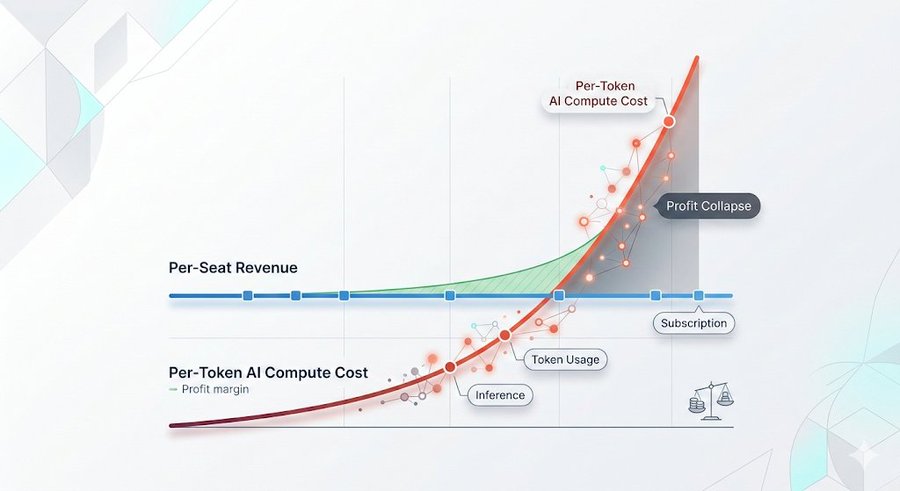
This is the AI pricing problem people have been quietly avoiding.
For the last two years, a lot of AI tools felt artificially cheap because companies were subsidizing usage to win users, train habits, and grab market share.
That phase may be ending.
Grok just turned Cursor data into a coding beast.
> 1.5T params
> 3x the current Grok model
> RL hasn't even started yet
public release in 2-3 weeks.
Grok is coming for Codex and Claude Code...