Biologist lost somewhere between the scales | Biology x ML
@TechnionLive
previously @BIUPasteur @lpiparis_ @Biologie_UNIGE
Opinions are my own& mostly wrong
Our data-to-paper AI is officially out!
https://t.co/wpKcdAElKr
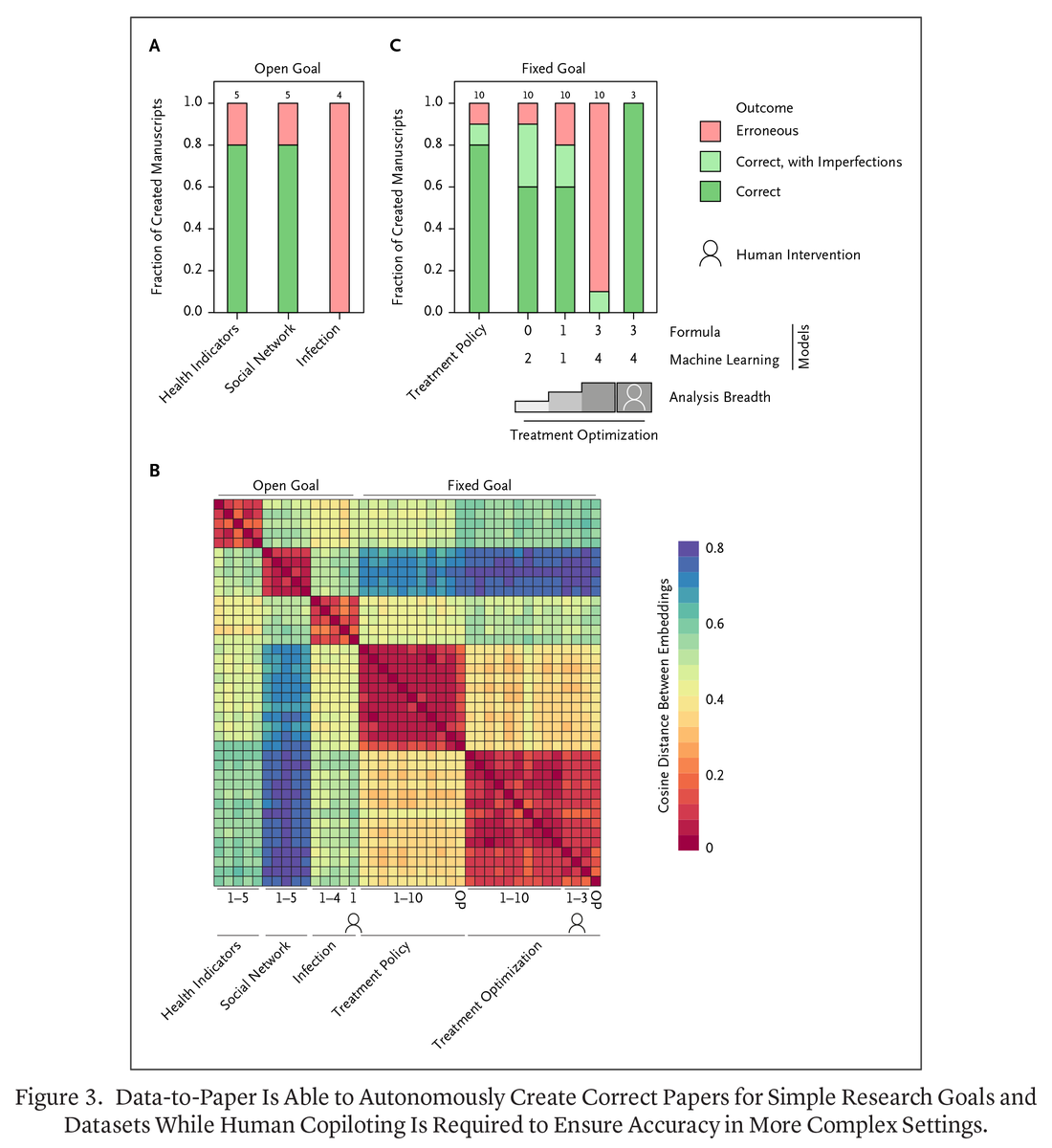
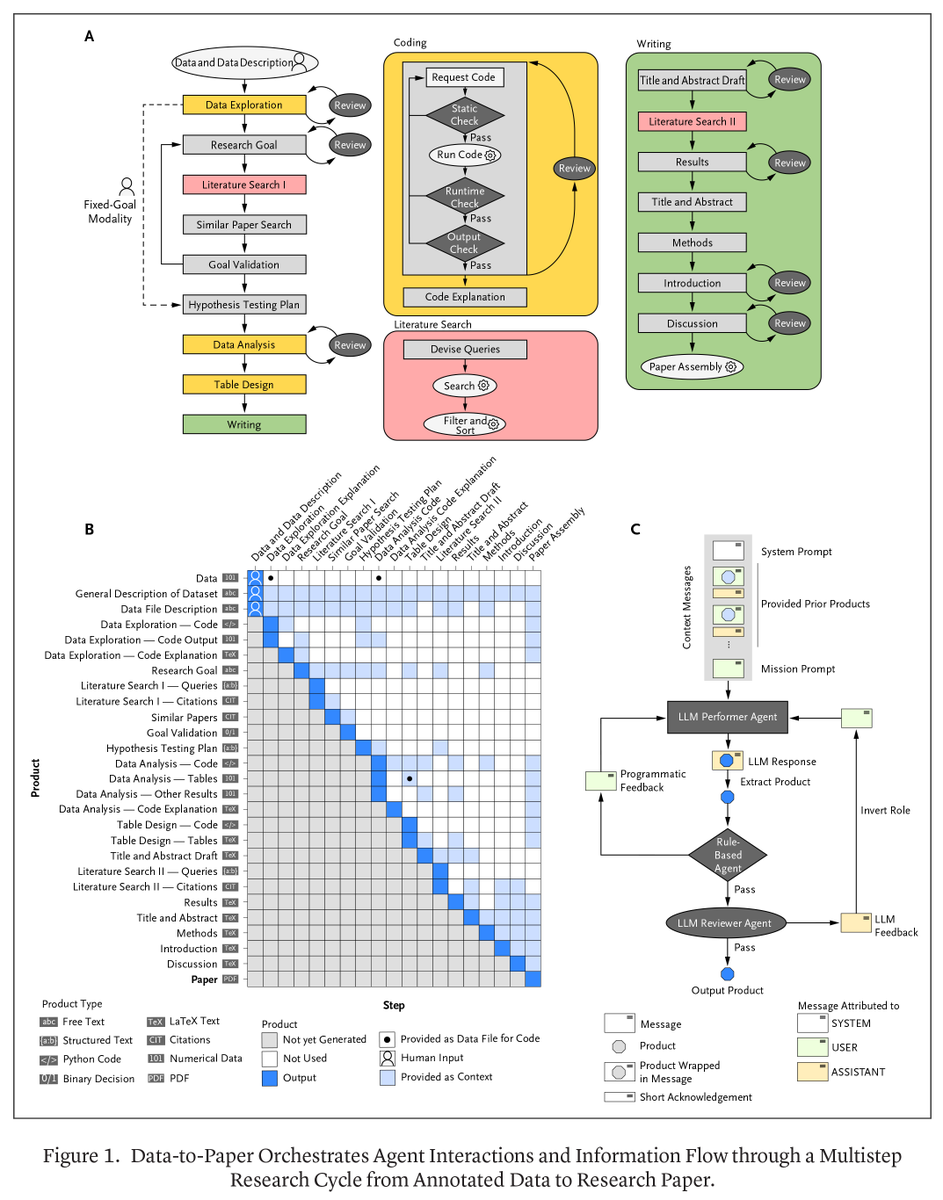
Autonomously analyzes data and writes human-verifiable papers!
Fun AI-human copiloting!
Papers are "data-chained": click-traced to the raw code.
Try it out:
https://t.co/yhqDfTj4aB
@TalIfargan@LostInTranscrip
@caldarellip1 Interesting. But I think the capacity for direction and responsibility will be just completely dependent on the ability of being able to judge in the first place.
Also, to what degree can taste be learned without the need to execute (as it is so cheap)?
1/ Do you have a favorite protein you wish you could dissect residue by residue? 🔬 Excited to share our platform for mutational scanning at endogenous loci in yeast (no ectopic expression needed!) https://t.co/hCs3TGrfay
🌎👩🔬 For 15+ years biology has accumulated petabytes (million gigabytes) of🧬DNA sequencing data🧬 from the far reaches of our planet.🦠🍄🌵
Logan now democratizes efficient access to the world’s most comprehensive genetics dataset. Free and open.
https://t.co/dDBtAjfdYL
How do we build AI systems that enable deeper, not just faster, science? I came across a very thought-provoking article by @nisheethvinoi on “What Counts as Discovery?”
Legitmately thrilled to share our latest work, in which @fernpizza solved an experimental challenge in plasmid biology as old as the field: measuring how plasmids compete and evolve within individual cells!
📢 First paper from my Postdoc is out. The field of stem cell-based embryo models is flourishing. These models mimic critical stages of embryo development, providing powerful tools to study processes that are tricky to dissect in natural embryos. Many approaches are being used to investigate them—what was ours? 👇
https://t.co/MlJ8PUzlSl
We’re releasing Humanity’s Last Exam, a dataset with 3,000 questions developed with hundreds of subject matter experts to capture the human frontier of knowledge and reasoning.
State-of-the-art AIs get <10% accuracy and are highly overconfident.
@ai_risk@scaleai
Listen to this one to hear a debate about some of the best medical AI papers of the past few years, lots of laughter, and a rare long-form glimpse into @zakkohane’s special mentoring style.
Original Article by @TalIfargan et al.: Autonomous LLM-Driven Research — from Data to Human-Verifiable Research Papers https://t.co/jtJEOwCVO7
#ArtificialIntelligence
Indeed, mistakes in research are inevitable, but the key is to leverage AI to address them more effectively and expose them transparently. We should harness AI to make science more reproducible and verifiable.
A study by @TalIfargan and colleagues demonstrates a potential for AI-driven acceleration of scientific discovery in biomedical research and beyond, while enhancing, rather than jeopardizing, traceability, transparency, and verifiability. https://t.co/jtJEOwCVO7
Timely discussion about whether/what guidance is needed in straight-to-publication data-analysed-by-AI @NEJM_AI https://t.co/3HNLOqNgbO Bonus: an Asimov story reference.
@yoginho@pastramimachine I have the impression that already before AI, we had an issue with a "deluge of crap". To filter out the good, verifiable and meaningful content is one of the major challenges we face today in science - independent if it is coming from an AI or a human
@pastramimachine Also, there is the other misconception that AI necesseraly means that no human is involved anymore. But AI-human copiloting can be actually both be fun and powerful
@pastramimachine Maybe bc most scientists think that the use of AI in science must jeopardize key scientific values like verifiability? In data-to-paper, we tried to use AI to enhance them instead: https://t.co/LEMuAFzP82
@ipfconline1@karinv@ConversationEDU@jblefevre60@Khulood_Almani@ahier We also built a (bit different) AI scientist system:
https://t.co/LEMuAFzP82
The mentioned risks can (and should!) be mitigated, as we argue, by using AI in a transparent, verifiable and traceable manner
(+ many issues are not inherent to AI, but to the publication "industry")