Nothing for young Aussies
No tax cuts for young Australians
Didn't make Rent tax deductable
No guarantee that millennial taxes get spent on millennials
Higher taxes for young Australians who start businesses
No forcing universities to pay down HECS debt
Less homes will get built
The new taxes are grandfathered so Whitlam Boomers don't pay them
More debt that Millennials and Gen Z will have to pay off
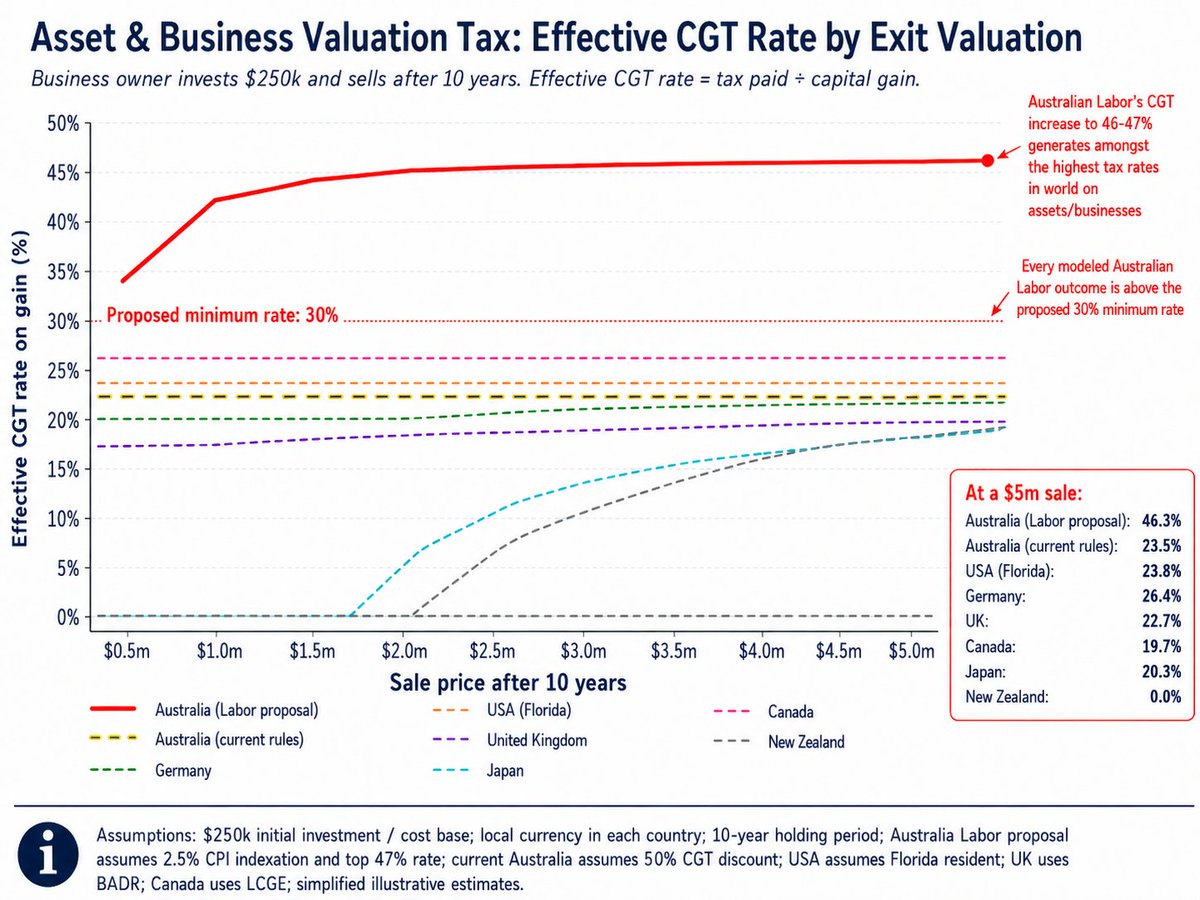
The chart below shows the effective capital gains tax rate facing a business owner who invests $250,000 upfront, holds for 10 years, and then exits at different valuations. The result is striking: under Labor’s proposed CGT changes, Australian founders and investors would face an effective tax rate of up to 46% — roughly double the burden faced in most comparable markets, including the US, UK, Canada, Germany, Japan and New Zealand. And this is not just a founder problem. The same logic applies across all small, medium and large businesses, and any asset, including listed equities, property, private equity, venture capital and crypto. If these changes proceed, Australia will become one of the least attractive places in the developed world to build, invest, take risk and realise gains. The one major asset still sitting outside this tax net is the owner-occupied home, which remains CGT-exempt. That creates a powerful distortion. If investment properties, businesses, shares, commercial property and other assets are hit with materially higher effective CGT rates, capital will rationally look for shelter in the family home. The likely result: less capital for startups and productive enterprise, lower productivity, more pressure on rents as investors retreat from housing, higher inflation and interest rates, weaker demand for risk assets, and even more money being recycled into owner-occupied property — the last great tax haven in Australia. In short: this is not just a profound increase in the tax burden, with zero consultation in the name of giving imprudent politicians more money to waste. It is a major repricing of risk-taking in Australia. It is not reform: it is highly regressive, as it seeks to punish entrepreneurial success, which is the key driver of long-term jobs, incomes, growth and prosperity. It does not boost productivity: it destroys it by actively discouraging innovation and business creation. It will not lower the cost of living: it will lift it by boosting rents and making us much more inefficient. It will not reduce interest rates: alongside rampant and reckless government spending and record migration, it will pressure the RBA to raise our mortgage repayments. What is perhaps most shocking is that only 12 months ago this government was elected on the basis promising to never make these changes...
Framing this budget as being good for young people at the expense of boomers is a blatant lie.
>Historical neg gearing grandfathered
>Pre 1 July 2027 cap gains grandfathered
>Entrepreneurs murdered, no relief from indexation
>Cost base indexation benefiting lower risk and reward assets over higher risk
All the burden is on a go forward basis, pushes value into non-productive PPOR, retirees seeing little of the impact.
References to "promoting dynamism" in the budget docs are an embarrassment.
Is there a single material point where this budget is well judged?
Bullish for ONP and/or New Zealand.
Judging by their employee count, these numbers look pretty legit
https://t.co/dChOToXwjr
As bullish as the restomod market is, the nostalgia window constantly moves forward in time as generations of mankind progress. Eventually the restomod market will be selling $2 million 997s, WRXs, Skylines and C6 Corvettes. We can finally give up when the restomod market reaches 2015.
In a sense this has been done excluding the low price assumption; the restomod market proves there is demand and at a huge price premium. Regulations are the one reason car manufacturers don’t (can’t) build new examples of old or near-original designs (safety regs, certain systems now mandatory, emissions etc).
The increasing shitness of new designs (a pretty new phenomenon of the last ~4 years) is mostly a function of regs (push to electric) and bad consumer taste (values small to mid size SUVs, interior quality and systems over all other aspects).
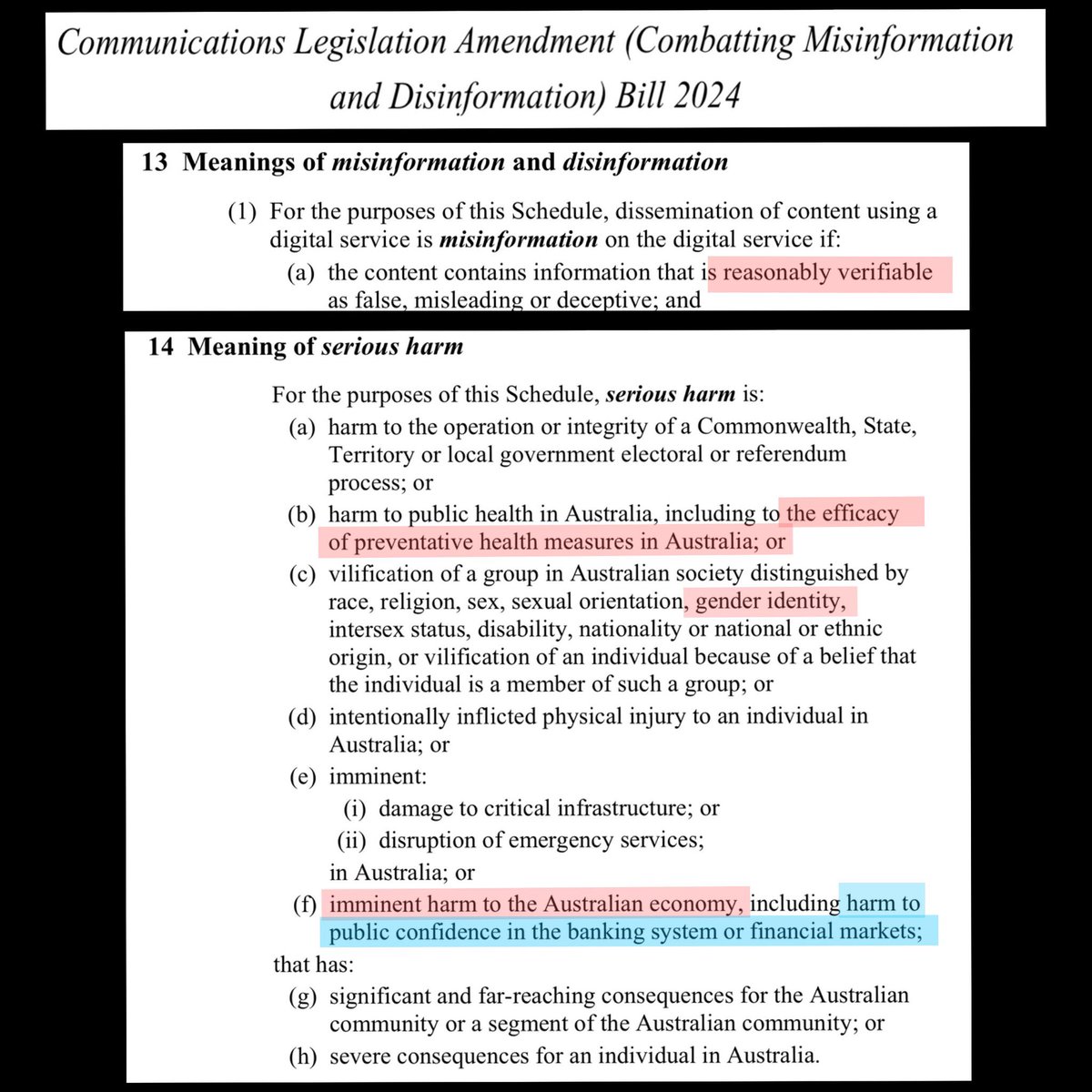
This Misinformation Bill is something else.
Fancy trying to censor criticism of the banking system and the financial markets.
What’s so concerning is how on earth did that clause even get into the bill.
Have the private banks and superannuation funds infiltrated the government to such an extent that they are now dictating what people can say.
Facism is generally defined as when corporations are more powerful than government, and based on this proposal it would appear that in Australia this is certainly the case.
The banks and superannuation funds are even more powerful than I thought! Governments are clearly no longer interested in serving the people.
#auspol
Australia's proposed misinformation laws protect the banks over the right of Australians to speak freely.
If these laws pass you won't be able to say anything that causes harm to "public confidence in the banking system."
So under these laws those who called out the recklessness of mortgage backed securities before the Global Financial Crisis would have been censored.
Why does the Labor party think that our banks have earned the right to be immune from criticism?
The misinformation laws are to protect them, not you.