In celebration of the IWD26.
I joined a challenge and built with CreateOS.
I enjoyed every bit of it and I’m excited to explore more.
My build: https://t.co/mHIHxfh5Ut
#LovelaceChallenge#CreateOS
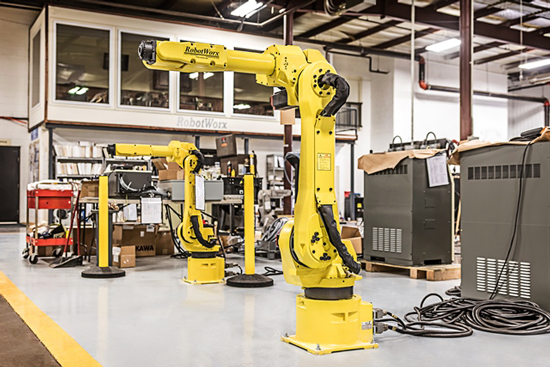
A new asset class is emerging — autonomous machines that work 24/7, generate measurable output, and produce real economic value, and xMaquina is building the decentralized protocol that tokenizes this machine productivity for global participation.
By combining robotics, AI analytics, and on-chain revenue distribution, xMaquina transforms factories, fleets, and automated systems into investable digital assets backed by physical performance.
As automation reshapes industries, xMaquina ensures the ownership of the machine economy is distributed, transparent, and accessible to anyone, anywhere.
@xmaquina
Media is evolving from platform-controlled distribution to creator-owned ecosystems, and Permacast App is building decentralized podcast infrastructure where content is permanently stored, censorship-resistant, and directly monetized.
Through tokenized access, direct listener support, and community-driven governance, Permacast empowers creators to build independent media networks without algorithmic dependency or revenue gatekeepers.
The future of podcasting isn’t rented space on centralized platforms — it’s permanent, sovereign, and powered by decentralized infrastructure.
New individuals are coming onboard with genuine conviction and a forward-looking perspective.
@Zetarium_ is steadily expanding with a strong sense of purpose.
The groundwork is being reinforced gradually, making the project more robust.
Projects like these thrive on dedication
The future of decentralized AI lies in powerful synergy and collaboration, rather than isolated efforts. Projects like @0G_labs, @permacastapp, and @dgrid_ai serve as essential building blocks, forming a high-performance.
Good evening fam
DGrid transforms AI inference from a service into a measurable economic activity.
Every request produces quantifiable signals.
Latency becomes a competitive metric.
Accuracy becomes revenue weight.
Cost efficiency becomes routing priority.
Study @dgrid_ai 🧵🧵
Good Evening Fams 📜
If data disappears tomorrow
What exactly are we decentralizing
Tokens
Trading
Speculation
None of it matters
If the record can vanish
That’s the quiet point behind Permaweb_DAO
It is not building hype
It is building permanence
___________________________________________________
Once content is stored
It stays
No server shutdown panic
No platform collapse wiping archives
No silent deletions
The architecture assumes durability
Not uptime luck
___________________________________________________
Web3 was never supposed to be just charts
It was supposed to be ownership
And ownership without permanence
Is temporary custody
Permaweb DAO shifts that
Creators do not rent space
Communities do not depend on centralized mercy
Data belongs to the people who publish it
And it remains accessible
___________________________________________________
That changes the psychology
You create differently
When you know your work will not evaporate
You build differently
When history cannot be erased
You coordinate differently
When records are stable
___________________________________________________
Decentralization without durable memory
Is incomplete
Permanent infrastructure
Is what makes the rest credible
And that is where @Permaweb_DAO
Is quietly doing the real work
If you want the clean thesis: Web3 cannot onboard the world without portable identity.
@idOS_network is building that missing rail, where users verify once, control access, and move across apps seamlessly.
That unlocks regulated DeFi, stablecoin adoption, and real-world integration without sacrificing privacy. The strongest signals are not in loud marketing, they are in quiet protocol design. Identity is the next liquidity layer, and idOS is playing at the foundation.
The brutal truth?
MetaSoilVerse isn’t fully decentralized today
Finsai retains control until token vesting unlocks in 2028
We sell calculated reality, not fake Web3 utopias
@metasoilverse@BingXOfficial#BingXBlast
Permacastapp changes the way information is captured.
Instead of passively hosting media, it analyzes and structures it.
Key points are extracted, remarks are attributed to their speakers, and every idea is linked to its original context.
Permaweb_DAO Is Building Infrastructure for Permanent Media 📜
Most platforms are engineered for engagement cycles
Content trends
Peaks
Disappears
The architecture assumes expiration
But what if media was designed for longevity
Not virality
That is the shift behind Permaweb_DAO
And its flagship application @permacastapp
___________________________________________________
Permacast is not just hosting content
It is anchoring it
By leveraging decentralized permanent storage
Alongside AI powered organization
Media is not cached
It is archived
Not for weeks
Not for market cycles
But indefinitely
___________________________________________________
This is not about storage alone
It is about power distribution
No centralized gatekeepers
No silent removals
No algorithmic erasure
When you publish
It remains accessible
Verifiable on chain
That changes incentives
Because creators are no longer renting visibility
They are building legacy
___________________________________________________
For podcasters
Writers
Researchers
Independent creators
Permanence means continuity
Audiences do not encounter broken links
Or vanished archives
Work compounds
Context survives
Reputation stabilizes
___________________________________________________
Permanent media is not a feature
It is an architectural standard
One that assumes
Cultural memory should not depend on server contracts
Or subscription payments
Or platform sentiment
@Permaweb_DAO is not chasing engagement
It is engineering longevity
And longevity
Is what turns content
Into infrastructure
Here’s a perspective most people overlook about PermawebDAO:
It’s not just preserving data.
It’s preserving meaning.
Data without context is noise.
But archived discussions, governance debates, research threads, and builder notes?
That’s context.
That’s intellectual capital.
PermawebDAO sits at the intersection of storage and coordination ensuring that what’s valuable doesn’t dissolve into timelines and chat histories.
Let’s break it down.
In traditional tech:
Companies own their servers.
Institutions own their archives.
Gatekeepers control access.
In Web3, the promise is different.
Open systems.
Community ownership.
Permissionless participation.
But that promise only holds if the information layer is durable.
PermawebDAO strengthens that durability.
It encourages ecosystems to treat knowledge as infrastructure.
Because once knowledge becomes infrastructure:
• Builders can reference it
• Researchers can build on it
• Contributors can prove impact
• Communities can evolve intelligently
That’s compounding intelligence.
There’s also a subtle shift in mindset here.
When people know their contributions are permanent, they operate differently.
They think long-term.
They write with clarity.
They build with responsibility.
Permanence shapes behavior.
This is why PermawebDAO feels different.
It’s aligned with long-term thinkers.
Not just traders.
Not just hype amplifiers.
But builders who understand that what survives matters more than what trends.
The deeper thesis?
Web3 won’t just be defined by tokens or protocols.
It will be defined by what it remembers.
And those who help build the memory layer through @Permaweb_DAO are quietly shaping the foundation of decentralized history.
That’s not noise.
That’s legacy in motion.
Most people think AI competes at the model layer.
But models are upstream.
The real leverage sits downstream at settlement.
Intelligence generates decisions.
Decisions generate transactions.
Transactions require settlement.
If settlement is centralized, intelligence remains dependent.
What’s forming across
0G Labs
DGrid AI
PermawebDAO
Dango
is a native settlement architecture for AI-driven activity.
@0G_labs ensures data heavy workloads don’t bottleneck the base layer.
DGrid ensures outputs are verifiable before capital reacts.
@permacastapp anchors the state transitions permanently, creating auditable history.
@dango provides the financial venue where decisions express themselves in markets.
That pipeline matters.
Because once AI decisions can:
• trigger trades
• rebalance portfolios
• provide liquidity
• hedge risk
without relying on centralized intermediaries,
intelligence moves from advisory to executable.
And executable intelligence captures more value.
The long-term opportunity isn’t “AI that suggests.”
It’s AI that settles.
When cognition and settlement converge inside the same composable stack,
you don’t just accelerate decision-making.
You compress the distance between thought and economic action.
That compression is where new financial primitives emerge.
Coordination dgrid_ai becomes hardest precisely when the system is working well.
Growth increases participants, not alignment. More builders, operators, and users introduce parallel priorities that don’t automatically reconcile. Everyone depends on the network, but not in the same way.
Success multiplies viewpoints.
Feature requests diverge.
Timelines conflict.
Local optimizations clash globally.
What helps one segment can burden another.
dgrid_ai treats coordination as a resource with real limits, not an infinite pool of goodwill. Mechanisms that reduce the need for synchronous agreement modular design, clear boundaries, predictable interfaces allow progress to continue without constant negotiation.
That shifts collaboration patterns:
Independent work streams replace large joint efforts.
Compatibility substitutes for consensus.
Integration happens after creation, not before.
Parallelism in decision-making mirrors parallelism in computation.
There’s also a fragility factor. Systems that require broad agreement for routine changes become slow under normal conditions and immobile under stress. Reducing coordination overhead increases both speed and resilience.
Other complex domains learned this lesson earlier. Large organizations decentralize authority to avoid bottlenecks. Open-source ecosystems thrive when contributors can ship improvements without waiting for universal approval. Transportation networks operate through standardized rules rather than real-time negotiation between drivers.
Complexity scales better when agreement requirements shrink.
dgrid_ai positions coordination efficiency as invisible infrastructure
enabling many actors to move forward without stepping on each other.
Not forcing everyone to move together.
Making it safe for everyone to move at once.
Nobody talks about the real tax DeFi quietly charges people who can least afford it.
Not volatility. Not rugs.
The $8 lost to a sandwich bot on a $200 swap.
The $4 gas fee on a $30 trade.
I'm a Social Miner on @TheDAOLabs. @1inch; we need to talk.
Costs dgrid_ai reveal priorities more honestly than roadmaps do.
Architectures can claim neutrality, efficiency, or fairness, but pricing determines actual behavior. When certain actions are cheap, they proliferate. When others are expensive, they quietly disappear regardless of how valuable they might be in theory.
Economics edits possibility.
Frequent small tasks dominate when overhead is low.
Batch processing emerges when setup costs are high.
Precision gives way to approximation when accuracy is expensive.
Users adapt to price signals faster than documentation.
dgrid_ai treats cost not just as accounting but as a steering mechanism. By aligning fees with resource consumption and network impact, it nudges activity toward sustainable patterns without needing constant rule enforcement.
That changes usage dynamics:
Wasteful behavior becomes self-limiting.
Efficient strategies compound advantage.
Scarce resources allocate themselves through price pressure.
The system shapes demand instead of chasing it.
There’s also a long-term effect. Subsidized operations can accelerate growth but risk creating dependencies that collapse when incentives change. Sustainable pricing may grow slower, yet it builds habits that survive market cycles.
Physical economies reflect the same principle. Congestion pricing alters traffic flow more effectively than new signs. Energy tariffs influence consumption patterns without mandating behavior. Storage costs determine whether goods move just-in-time or accumulate in warehouses.
Digital infrastructure is governed by identical forces.
dgrid_ai positions pricing as embedded policy a way to encode values directly into the mechanics of use.
Not telling participants what to do.
Making the most beneficial actions the most affordable ones.
The Technical Differentiator Behind @permacastapp 📜
Why Arweave
Why not IPFS
Why not Filecoin
Because architecture is destiny
Permaweb_DAO made a structural bet
Not a marketing one
___________________________________________________
Arweave’s blockweave model changes the equation
One time payment for permanent storage
Not recurring contracts
Not expiring deals
A storage endowment model
Where yield funds long term retention
JavaScript smart contracts
Which lowers the barrier for millions of developers
And true immutability
Data cannot be altered
Period
That is not a pinning service
That is economic design
___________________________________________________
Then Permacast builds on top
Media optimization
So audio and video are accessible
Distribution tooling
So reach is native not rented
On chain identity verification
So creators are provable
NFT minting automation
So media becomes programmable
This is not just storage
It is media infrastructure
___________________________________________________
The result is simple
Permanence is infrastructural
Not aspirational
No hoping the server bill is paid
No relying on recurring subscriptions
No silent content takedowns
Just content
Forever
Full stop
@Permaweb_DAO
$PWT coordinates that layer
And coordination
Is what turns architecture
Into civilization scale infrastructure