Has your observing site grown brighter—or darker?
Our 2025 light-pollution layer is live, based on the complete annual NOAA VIIRS dataset. Compare 2012–2025 for long-term change.
2025 is the latest completed annual layer; 2026 is an estimate.
https://t.co/PrRPCvzcHx
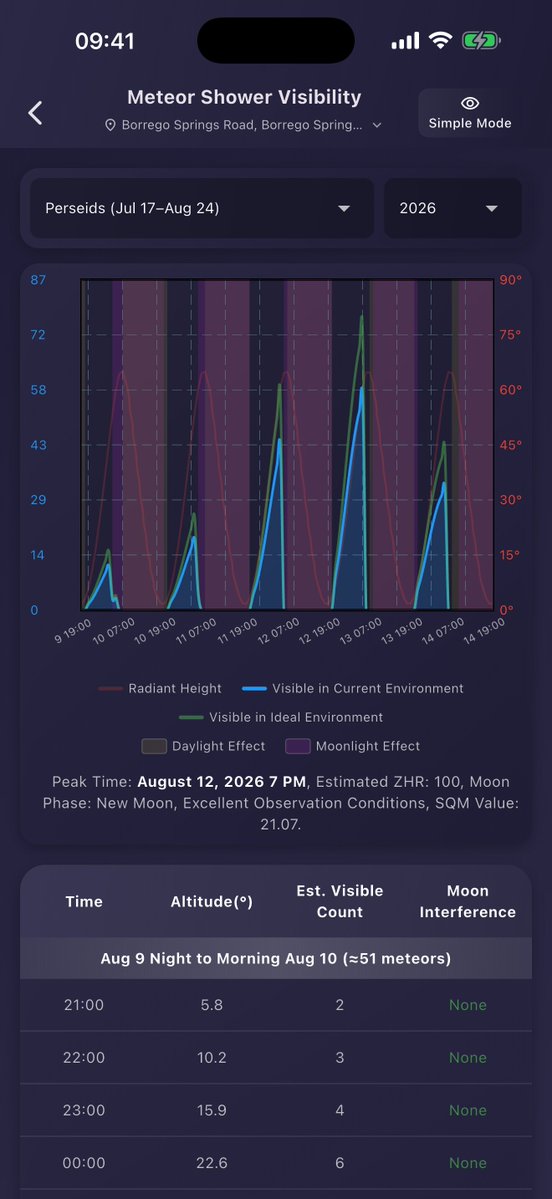
Planning the 2026 Perseids? 🌠
The main maximum arrives Aug 12–13 under a near-new Moon. A few days late can still be worthwhile—especially late night to pre-dawn.
This StargazingHub chart uses Borrego Springs as a location-based example. Check your location:
https://t.co/2NJIh02p2R
An annual light-pollution layer tells you where—not whether tonight will be clear. Before heading out, also check several forecast models, Moon conditions, and the local horizon. That full planning workflow is built into Stargazing Hub: https://t.co/DyTOh9UjZk
Has your observing site grown brighter—or darker?
Our 2025 light-pollution layer is live, based on the complete annual NOAA VIIRS dataset. Compare 2012–2025 for long-term change.
2025 is the latest completed annual layer; 2026 is an estimate.
https://t.co/PrRPCvzcHx
Southern Delta Aquariids peak July 30-31. This year's bright Moon will hide many faint meteors.
Improve your chances:
- face away from the Moon
- keep streetlights out of view
- choose the clearest late-night hours
A peak date is only part of an observing plan.
#Stargazing