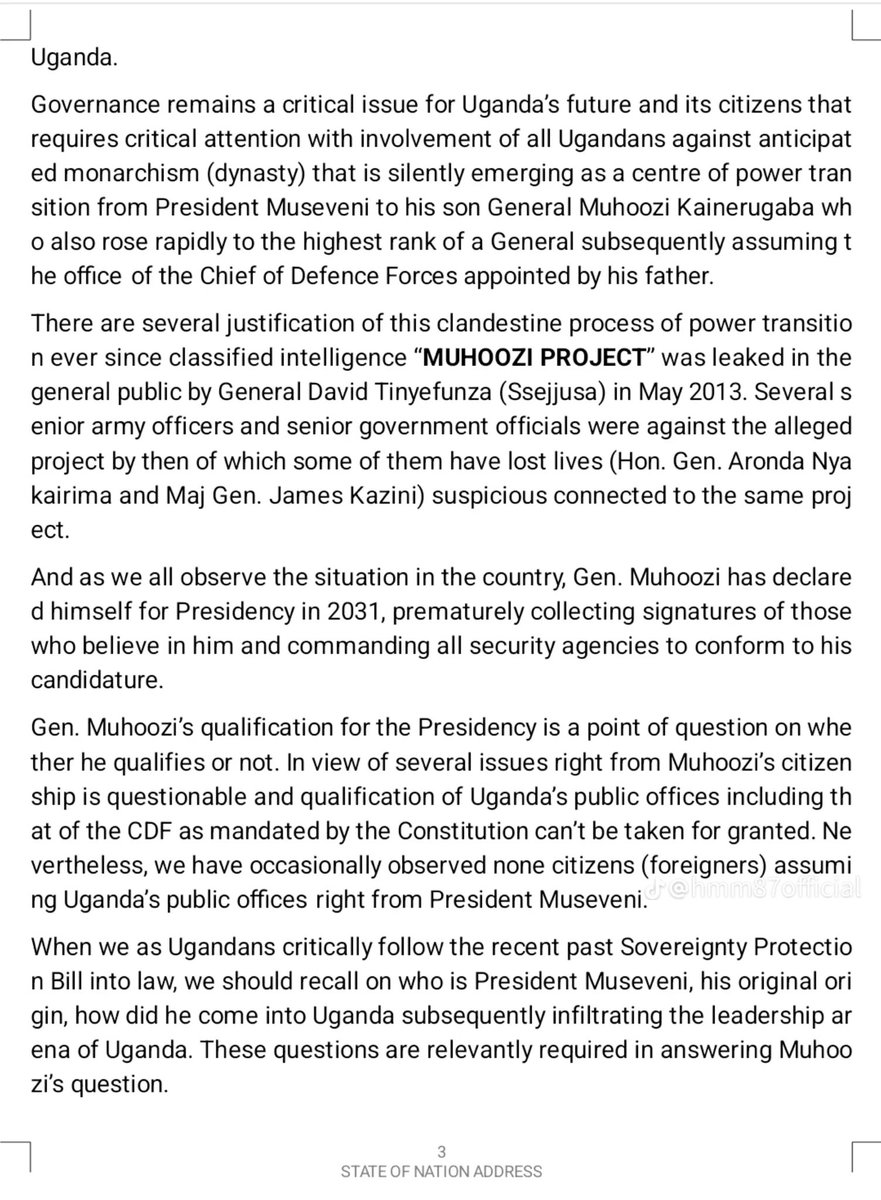
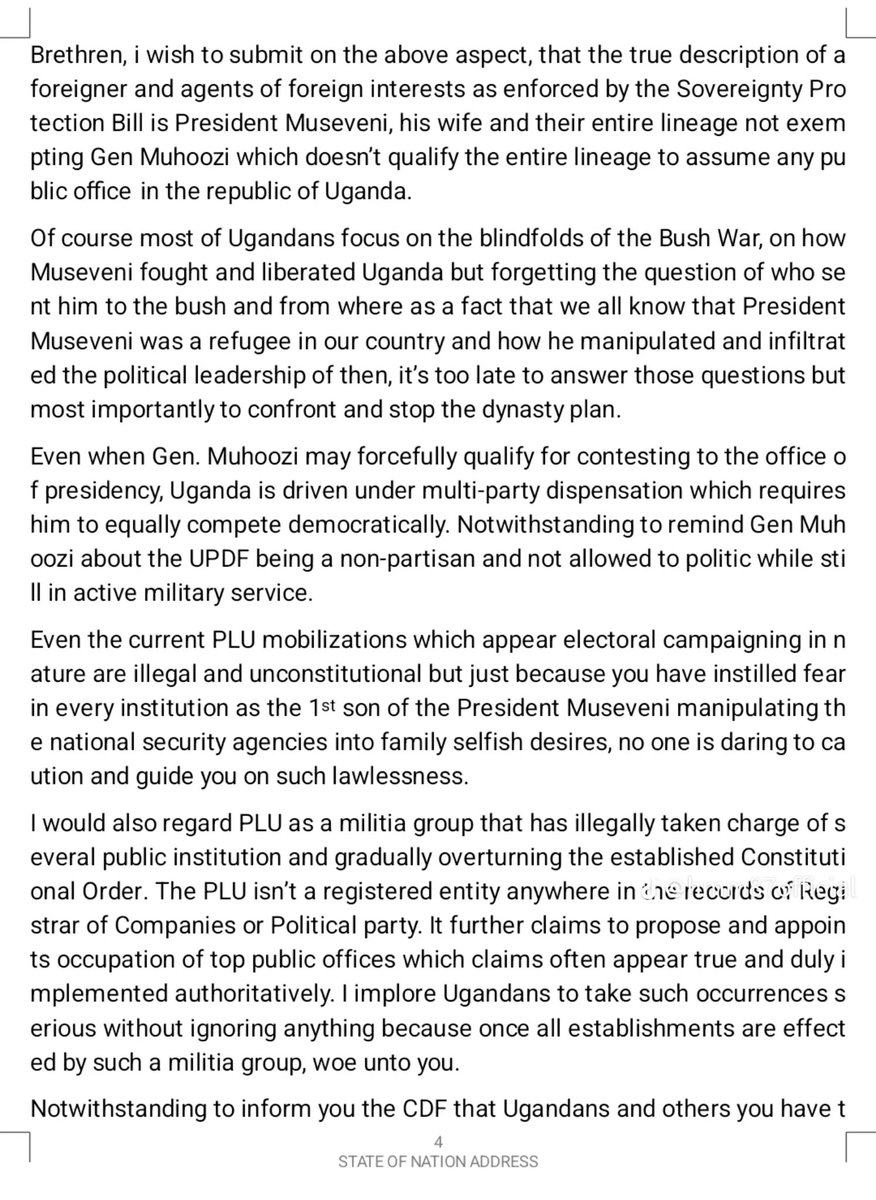
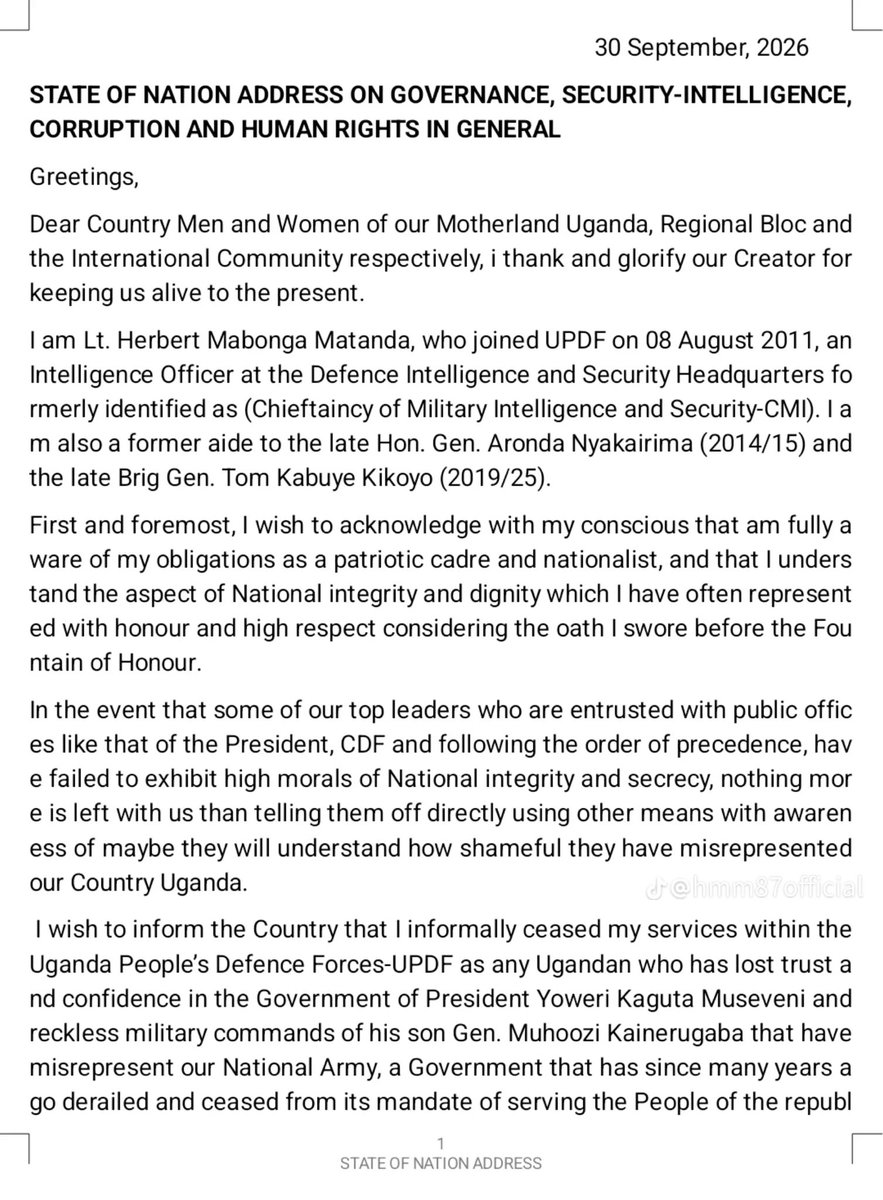
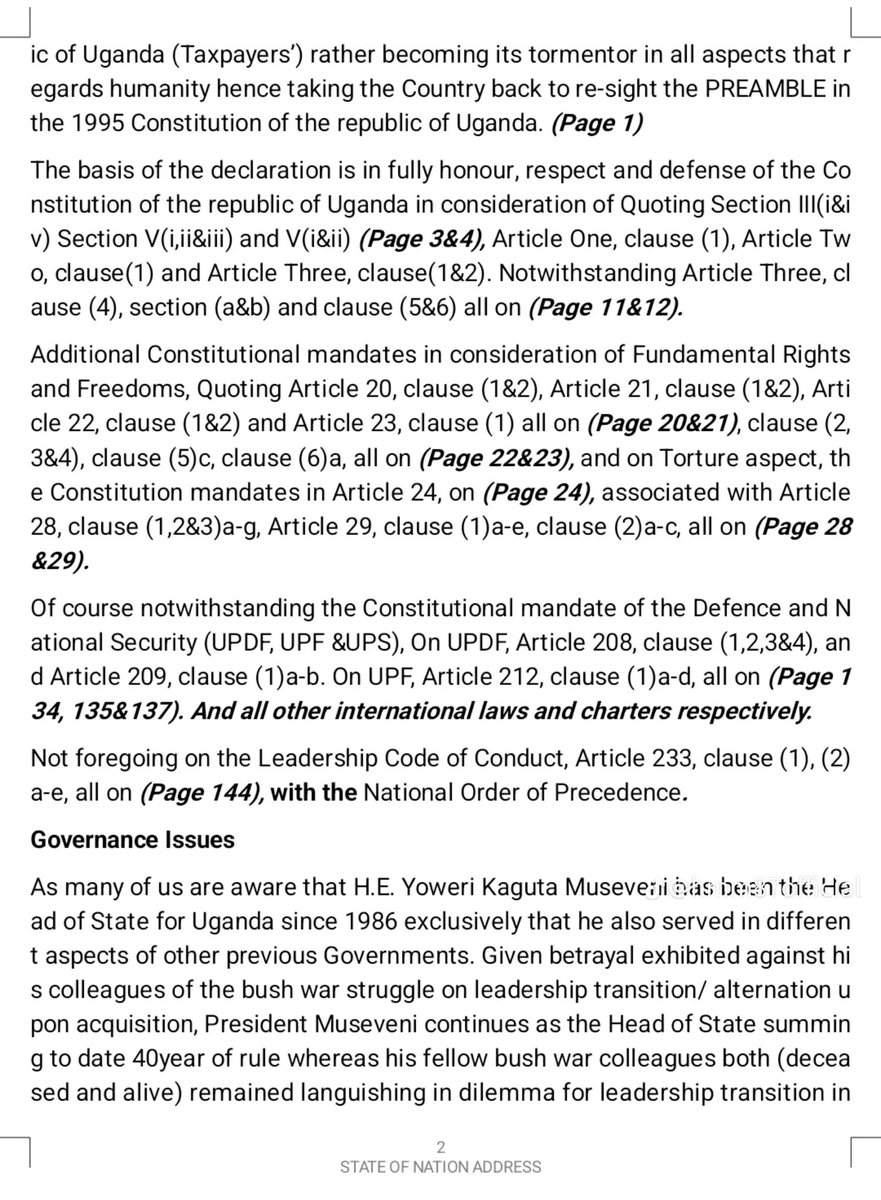
Patriotic League Uganda's rapidly growing influence is likely to cripple the National Resistance Movement, even with claims of PLU being a mere civic organization within the NRM? https://t.co/hkfq48BG87
It takes a certain level of Psychopathy to be successful 🚨. This paper explains why most people can’t be successful in both cooperate spaces and in politics while pointing out the cruciality of psychotic behavior needed to climb up the ladder 🪜.
Normal people are held back by compassion, remorse, and caution, often agonizing over choices that harm others. Psychopaths lack these emotional inhibitions entirely.
They thrive in institutional disorder. While others freeze in a crisis, psychopaths manipulate perception, throw colleagues under the bus, and claim unearned victories. They deploy charisma to blind decision-makers, concealing their core vacuity behind an illusion of elite delivery.
Ultimately, corporate and political structures incentivize this brutality, elevating psychopaths to power while penalizing those who advocate for moral restraint.
https://t.co/9YsKROajkt
@drstellanyanzi@SarahBireete@SpireJim@YusufSerunkuma@KakwenzaRukira@AndrewMwenda
ODPP secures another death sentence
The Court has today afternoon sentenced A1 Lugya Bbosa (in blue) and A2 Lugya Noah alias Fake to suffer death for the murder of Engineer Bbosa Kakeedo former Ndiga clan head.
The accused persons A1 Lugya Bbosa and A2 Lugya Noah alias Fake, pleaded guilty to the offence of murder of the Ndiga clan head Engineer Bbosa Kakeedo which occured on 24th February 2025 at Kikandwa village in Lugujja.
The trial for the remaining 3 accused persons is fixed for 8th September 2026.
The Office of the DPP is represented by Chief State Attorney Joseph Kyomuhendo, Senior State Attorney Marion BenBella and Senior State Attorney Carol Tabaro participating in allocutus before Judge Matovu David.
Kudos to our State Attorneys🙏🏽
In courts reasoning....
Silver Kayondo v Monitor Publications Ltd and Others (Civil Suit No. 222 of 2024) [2026] UGCommC 354 (27 July 2026)
Court awards UGX 185 million after finding Monitor Publications and NTV liable for copyright infringement, false attribution, defamation, negligence, and unlawful processing of personal data arising from the unauthorised republication and alteration of the plaintiff's X post
👉:https://t.co/nOCc9WDqyl
@Jude_Mugabi@bruno_akampa@Samwyri@SilverKayondo@ntvuganda@DailyMonitor
🚨 YOU CAN'T HOLD TWO FULL-TIME UNIVERSITY JOBS AT ONCE.
~ Uganda's Industrial Court Rules
The Industrial Court in Uganda ruled that an employee can't hold two full-time jobs at once. Dr. Fredrick Kiwuwa Lugya, a Cavendish University lecturer, got dismissed after they discovered he was also working full-time at Makerere. The court found his contract's exclusivity clause valid, and said you can't serve two employers in good faith while drawing two full salaries.
Mubiru J on 4-Dec-2023 pg 13✍️Judicial officers should not be afraid of the effect of unpopular but legally sound decision might have on their transfer, elevation, confirmation, promotion or appointment. Unless decisional independence is guaranteed, it would create a temptation⬇️
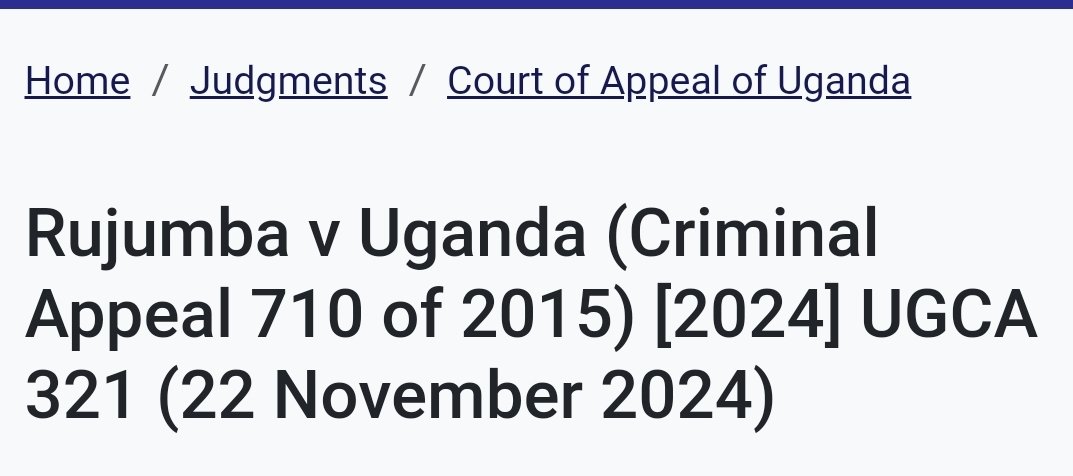
Legal Representation:
Appellant: Mr Simon Kasangaki on state brief
Respondent: Assistant
Director of Public Prosecution and Mr Omaset Ignatius, State Attorney.
Delivered on 22 Nov 2024
Case link: https://t.co/nyxIHxmyUk
Court of Appeal Declares Appeal incompetent ✍️Appeals against sentence are different from appeals against conviction & sentence that are of right✍️Counsel did not exercise vigilance, did not consider the fact that the state paid him to take care of the interests of the Appellant
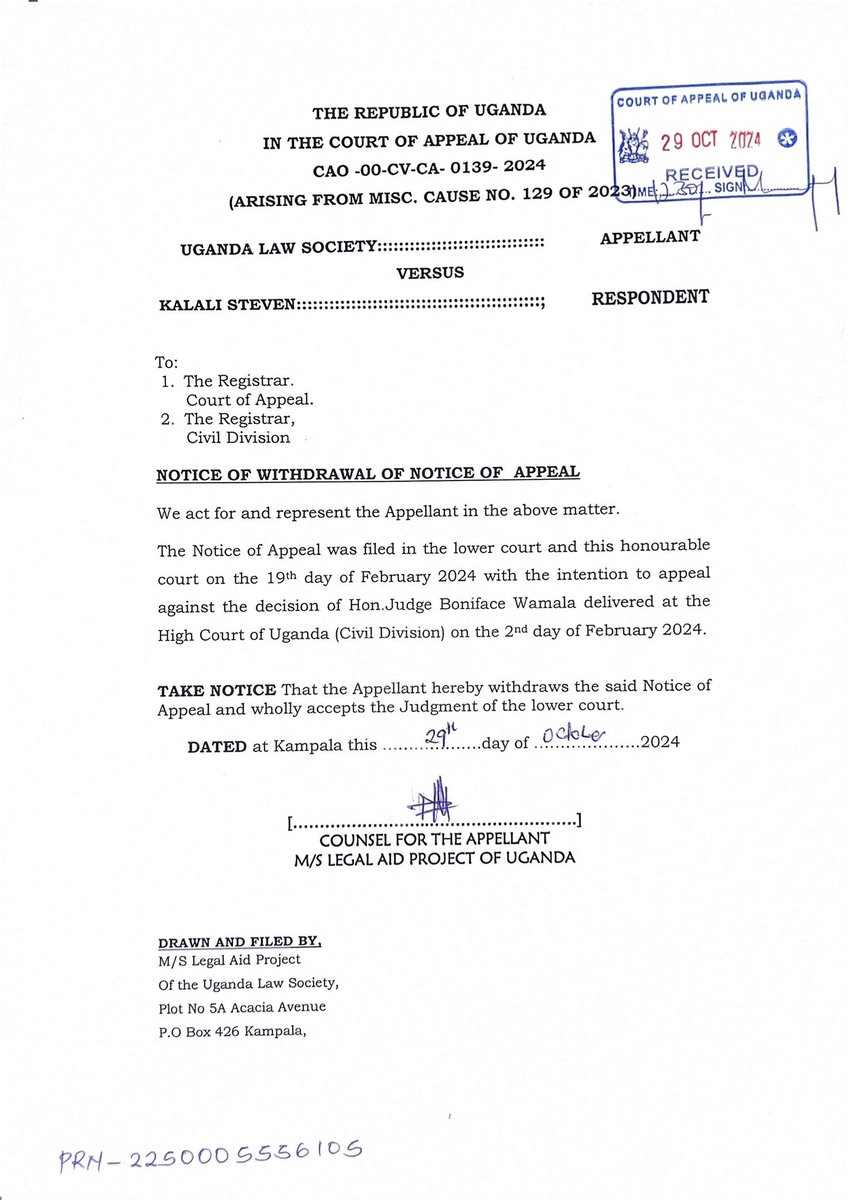
#DEMOCRATIZATION: In accordance with Executive Order RNB No. 2 of 2024, the #RadicalNewBar has officially withdrawn the appeal filed by the Uganda Law Society in February regarding the Civil Division of the High Court's decision in Kalali Steven vs. Uganda Law Society.
This move affirms our recall of Ms. Ruth Sebatindira and Ms. Norah Matovu Winy from representating us at @JSCUganda
#Decolonization #Demilitarization #Democratization #DigitalTransformation #BackOnTrack #BangTheTable
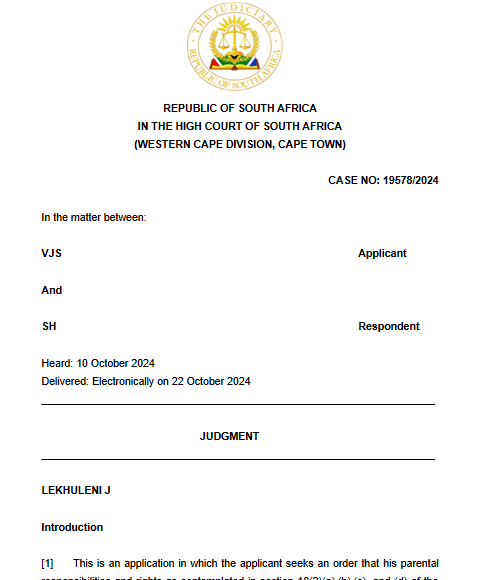
REMOTE COMMISSIONING OF AFFIDAVIT OVER ZOOM VIDEO CALL.
The applicant has been paying maintenance for the minor child but recently came across Whatsapp messages which indicated that he was not the father. He then procured two DNA tests which confirmed that he is not the father.
Since he is currently working in Pakistan, his legal representative transmitted an unsigned version of the founding affidavit to him through e-mail.
Later, the applicant, the commissioner of oaths, and the applicant's legal representative were on a video conferencing call via the Zoom platform. The commissioning of the document was conducted over the Zoom video call. See paras [11]-[15] which detail the procedure used.
Court held that,
The virtual e-signing of affidavits could serve as an easier, faster and more cost-effective measure in civil litigation. The modernisation of the civil litigation process will provide several advantages, including reduced costs, prevention of unreasonable delays, and a quicker resolution of cases.
Evidently, the ability to sign and commission affidavits through video conferencing will significantly save time, reduce travel expenses, and expedite the finalisation of cases.
In the circumstances, it is inherently critical that the Justices of the Peace and Commissioners of Oaths Act and the relevant Regulations should be amended to bring them in line with modernisation by allowing for electronic signing and commissioning of affidavits. In this case, there was substantial compliance with the Justices of the Peace and Commissioners of Oaths Act and the Regulations.
The evidence placed before this court clearly establishes that the purposes of Regulation 3(1) have been complied with.
Read more
https://t.co/WCMsNJiyYF
Two senior Arua city officials who are accused of causing the Government a shillings 24 million loss, have been charged with abuse of office at the Anti-Corruption Court in Kampala.
DETAILS | #VisionUpdates 👇👇https://t.co/qFE5pbukRX
GRATITUDE: As your Clerkship with us comes to a close, we want to extend our heartfelt thanks to each of you for your dedication and hard work. It has been a rewarding experience both for you and for us, as we have learned just as much from you as we hope you have from us. Best of luck in the future and keep aiming high.
A judge has been sanctioned after he was found to have made “overfamiliar and inappropriate comments” to a member of court staff https://t.co/t1ZVygMiNM
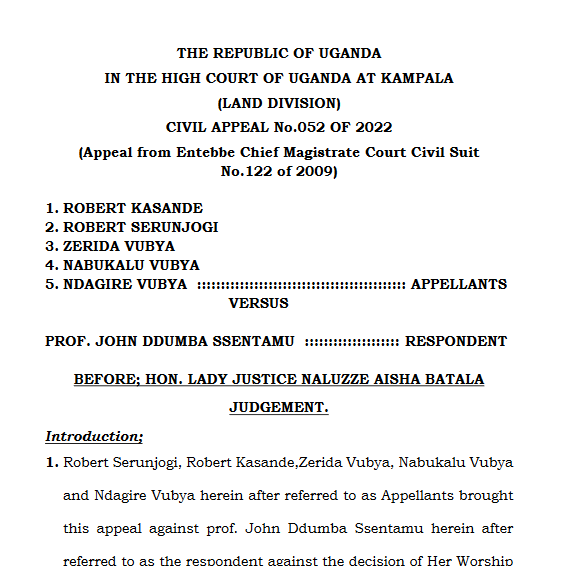
LAND LAW. High Court Reaffirms Requirements for Lawful Occupants of Land
In a recent ruling, the High Court reaffirmed that for a person to claim lawful occupancy of a piece of land, they must prove—on a balance of probabilities—that they lawfully settled on the land.
Referencing the decision in Prince Keefa Wasswa vs Joseph Kiyimba (H.C.C.S No. 482 of 2011), the Court emphasized that failure to provide sufficient evidence of lawful occupancy would result in the dismissal of the claim.
The Court further referenced Section 29(1) of the Land Act (as amended), which defines a "lawful occupant" as:
(a) A person occupying land under repealed laws such as:(i) The Busuulu and Envujjo Law of 1928,
(ii) The Toro Landlord and Tenant Law of 1937, and
(iii) The Ankole Landlord and Tenant Law of 1937;
(b) A person who entered the land with the consent of the registered owner, including purchasers;
(c) A person who had occupied land as a customary tenant but whose tenancy was not disclosed or compensated for when the registered owner acquired the leasehold certificate of title.
Case analysis
In this case, the appellants claimed to be lawful occupants of a kibanja (a form of customary land holding), which they argued entitled them to the "first option" to purchase the land before it was offered to the respondent for sale.
However, upon reviewing the evidence, including the court's site visit (locus in quo), it became apparent that:
The land claimed by the appellants as their father's kibanja was distinct from the land purchased by the respondent.
During the site visit, the appellants failed to clearly identify the boundaries of the land they claimed, with one appellant (DW1) only learning of the boundaries on the day of the visit. This contradicted her earlier testimony, where she claimed to have been cultivating the land since 2007.
The respondent, on the other hand, successfully demonstrated his lawful purchase of the land, supported by the seller's testimony. At the time of purchase, the land was described as "bushy." Court observations confirmed that structures on the land, such as a house and kiosk, were newly constructed, with one witness (DW4) confirming he built the house in 2019.
The Court concluded that the appellants had failed to prove their claim as lawful occupants under the Land Act. Additionally, without evidence of lawful occupancy, they could not claim the right to the "first option" to purchase the land.
Read more
https://t.co/lOJSDgTymw