Today @danrejto and I tell the infuriating story of California’s Low Carbon Fuel Standard, a program that was supposed to decarbonize transportation but ended up forcing CA drivers to pay 18 billion dollars for biofuels that are worse for the climate than fossil fuels (THREAD):
@factory_lock I agree, the dogs weren’t aggressive at all but owner was still worried about it, maybe for liability reasons. The dogs are kept by two elderly peasants and keep them company when they go up to the mountain to farm corn and beans.
Nothing like the Chinese countryside B&B experience. Owner is a peasant completely indifferent to the spectacular landscape who just wants to know the prices of various items in US. Says you can walk there but maybe not over there because of the pack of free roaming dogs.
Something I would like to know is why in the year 2026 the Chinese Communist Party has still not deployed its considerable propagandistic resources toward inculcating a norm of not watching short form video on public transport without headphones
Maybe took my article a bit too
literally but probably fair to say I lived in this hamster wheel when I was younger. It drove me insane! Now I spend my days thinking about the wonkier points of energy policy, and I am much calmer.
Fascinated by this article: the author seems to process life primarily as fodder for her writing: life's secondary to writing — primary. The object of life becomes to have hitherto uncatalogued experiences that the author will then catalogue. A sort of self-designed hamster wheel
If Americans want to buy fuel made from corn and put it in their car, they should be able to do so
But the government shouldn’t force it, subsidize it, or punish those who don’t want it
It makes fuel and food more expensive
Time to end ethanol tyranny
Share if you agree
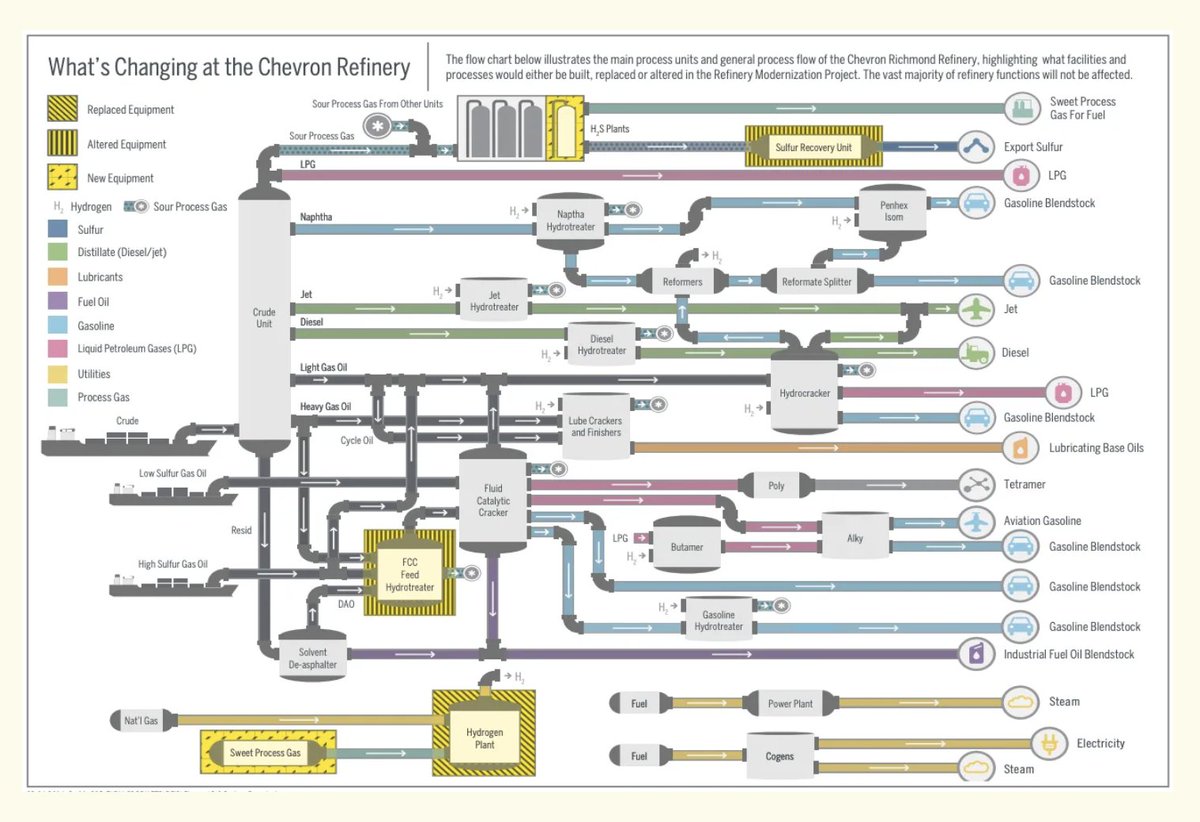
This is awesome and contains this beautiful process diagram of the Chevron Richmond refinery which we have thanks to CEQA filings.
Btw, this helps explain why two refineries in California have converted to biorefineries- the Low Carbon Fuel Standard offers tempting subsidies for renewable diesel and also weakens conventional refinery economics by making petrodiesel less competitive.
Refinery business depends on being able to use every part of the pig, so to speak.
The US consumes over 20 million barrels of oil each day.
But it doesn't consume it directly. Oil refineries take raw crude and turn it into various products - gasoline, diesel, jet fuel - that we can use.
This week, I look at how oil refineries work. https://t.co/4hnjSmfs2d
true story: once in blue danube cafe (next to green apple books) I interacted with a guy performatively voting. he was puzzling over his paper ballot with a whole cup of pencils and he asked me for my advice on down ballot candidates.
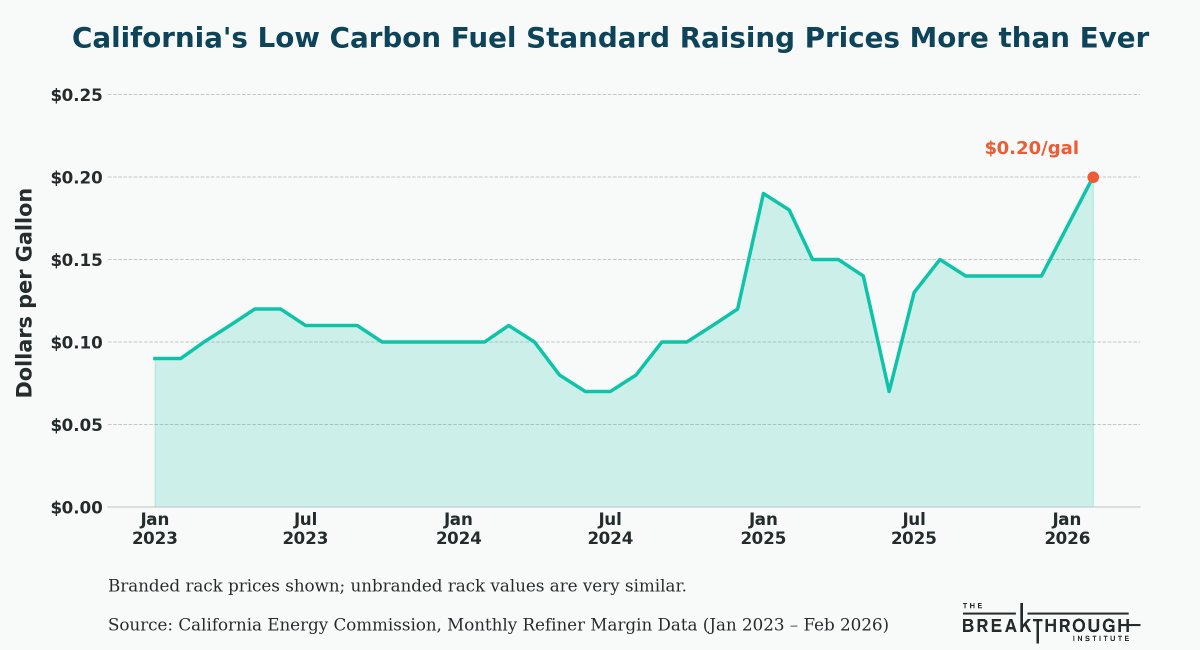
New data: California’s Low Carbon Fuel Standard is now adding about 20¢/gallon to fuel prices, its highest impact yet.
The program largely pushes refiners toward more biofuels, but at a growing cost to drivers and with limited environmental benefit.
Goated article. I would add that you could write almost exactly the same article about corn. Corn isn't people, it doesn't need anti-discrimination legislation or public subsidies, but that is the policy regime we have because of sentimental feelings.
The stats here are kind of remarkable. BART's new fare gates have led to a 1,000-hour decline in clean up time; 41% drop in crime; and $10 million increase in projected revenue. https://t.co/bQMIcgUPal
I wanted to write something pithy, but that would detract from @knowledgeprob's post. If you care about electricity or the grid, you should move this to the front of your reading list. You won't regret it.
link below